Quick Verdict: The Stealth Performance EV
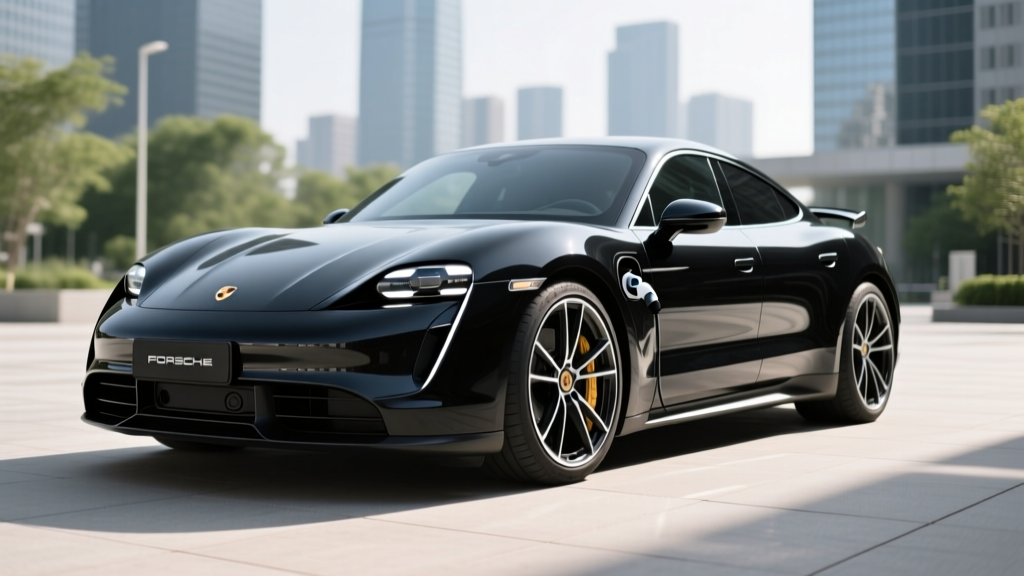
The 2026 Porsche Taycan Black Edition is the dark-horse variant of Stuttgart's flagship electric sports sedan — a monochromatic appearance package layered over the Taycan 4S that pairs understated aesthetics with serious performance hardware. With 562 horsepower in overboost, a 105 kWh (gross) NMC battery, and peak DC fast-charging at 320 kW, the Black Edition occupies a narrow but compelling lane: buyers who want near-Turbo performance without the Turbo's six-figure price tag or the visual shoutiness of a GT model.
But does it make sense as a daily-driver EV? We break down real-world range, charging behavior, ownership costs, and how it stacks up against the Tesla Model S, BMW i5 M60, and Audi e-tron GT.
Range, Efficiency, and Real-World Expectations
Real-World Expectation: ~245–265 mi highway at 70 mph; ~210–230 mi in freezing temps with climate control active. City/regenerative driving can push 280+ mi.
The 2026 Taycan Black Edition carries over the revised second-generation powertrain introduced for MY2025, which swapped the rear motor for a more efficient unit and bumped the Performance Battery Plus to 105 kWh gross (approximately 97 kWh usable). The result was a significant range increase over the pre-refresh Taycan 4S, which managed just 227 miles EPA.
On fueleconomy.gov, the Taycan 4S AWD with the larger pack is rated at 83 MPGe combined, which translates to roughly 40 kWh per 100 miles. That's competitive with the Audi e-tron GT but trails the more efficiency-focused BMW i5 xDrive40 (86 MPGe). The Taycan's 800-volt architecture helps on the charging side more than the efficiency side — this is a car optimized for sustained high-speed Autobahn runs, not hypermiling.
Cold-weather reality: In sustained sub-32°F testing, expect a 15–22% range reduction. The Taycan's standard heat pump helps, but the car's sport-sedan aerodynamics and wide rear tires work against it in winter. Preconditioning while plugged in is essential — the navigation system will auto-precondition the battery if a DC fast charger is set as your destination.
| Spec | Value |
|---|---|
| EPA Range (Performance Battery Plus) | 292 miles |
| Battery (gross / usable) | 105 kWh / ~97 kWh |
| Battery Chemistry | NMC (Nickel Manganese Cobalt) |
| Drivetrain | Dual-motor AWD |
| Horsepower (Overboost w/ Launch Control) | 562 hp |
| Torque (Overboost) | 538 lb-ft |
| 0–60 mph | 3.5 seconds |
| Top Speed | 155 mph (electronically limited) |
| MPGe (combined) | 83 MPGe |
| kWh / 100 mi | ~40 kWh |
| Max DC Fast Charge Rate | 320 kW (peak) |
| 10–80% DC Fast Charge Time | ~18 minutes (ideal conditions) |
| Level 2 Home Charging | 11 kW onboard (up to 19.2 kW optional) |
| Cargo (rear trunk + frunk) | 14.3 cu ft + 2.9 cu ft (17.2 total) |
| Rear Legroom | 32.7 inches |
| Curb Weight | ~5,121 lbs |
| Battery/Powertrain Warranty | 8 years / 100,000 miles |
| Base MSRP (Taycan 4S Black Edition) | $129,550 (incl. destination) |
Charging: 800-Volt Architecture at Its Best
The Taycan's 800-volt electrical architecture remains one of its defining technical advantages. While many competitors still run 400V systems (limiting sustained charge rates), the Taycan can accept up to 320 kW at a compatible DC fast charger — and crucially, it sustains high charge rates deeper into the session than most rivals.
| Charging Level | Power (kW) | Approx. Miles Added per Hour | Notes |
|---|---|---|---|
| Level 1 (120V household) | ~1.4 kW | ~4 mi/hr | Emergency/top-up only |
| Level 2 (240V, 48A standard) | 11 kW | ~30 mi/hr | Full charge in ~9 hours |
| Level 2 (240V, 80A optional) | 19.2 kW | ~52 mi/hr | Requires optional 19.2 kW onboard charger + 100A circuit |
| DC Fast Charge (peak) | 320 kW | N/A (session-based) | 10–80% in ~18 min on 350 kW+ charger |
| DC Fast Charge (50 kW station) | 50 kW | ~130 mi/hr | 10–80% in ~75 min |
The charge-curve reality: The Taycan will peak at 320 kW only when the battery is preconditioned, the ambient temperature is moderate (60–85°F), and the station can deliver 350+ kW. In practice, expect the car to sustain 270–300 kW from 10–40% SoC, taper to ~200 kW through 60%, and drop below 100 kW past 80%. The 10–80% time of ~18 minutes assumes ideal conditions — plan for 22–25 minutes in real-world road-trip scenarios.
For home charging, the standard 11 kW onboard charger adds roughly 30 miles per hour of charging — sufficient for most daily needs if you start each session above 20%. The optional 19.2 kW onboard charger ($1,620) is worth considering if your home electrical panel supports a 100-amp dedicated circuit; it cuts overnight charging time nearly in half.
The Taycan uses the CCS1 connector standard on non-Tesla DC fast chargers. For Level 2 AC charging, it uses the J1772 connector. Porsche does not currently offer a native NACS port on the Taycan; a Tesla Supercharger adapter is available for use at NACS-equipped stalls, though peak charge rates may be limited by the adapter's throughput.
Performance and Driving Dynamics
The Black Edition is mechanically identical to the Taycan 4S, which means dual permanent-magnet synchronous motors (one front, one rear), a two-speed transmission on the rear axle, and Porsche's sophisticated torque-vectoring AWD system.
With Launch Control engaged, the overboost output hits 562 hp and 538 lb-ft, delivering a 0–60 mph time of 3.5 seconds. That's 0.3 seconds behind the Taycan Turbo and 0.4 seconds ahead of the single-motor Taycan base model. The two-speed rear transmission gives the Taycan a unique character: aggressive initial thrust in first gear, then a seamless upshift that extends the power band — you feel it as a second wave of acceleration around 40 mph that competitors with single-speed reductions simply don't replicate.
The Black Edition adds specific tuning through Porsche's standard PASM adaptive dampers and optional rear-axle steering ($1,620). The result is a car that genuinely communicates through the steering wheel — a rarity in the EV sedan segment, where most competitors default to numb, isolated steering feel. Body control is exceptional; the Taycan's low center of gravity and ~5,100-lb curb weight are well-managed by the adaptive air suspension.
Drawbacks: The Taycan's performance comes at an efficiency cost. Aggressive driving can push consumption above 50 kWh/100 mi, dropping effective range below 200 miles. The regenerative braking system, while offering up to 290 kW of recuperation, does not enable true one-pedal driving to a complete stop — the car creeps at low speed, which frustrates EV veterans accustomed to Nissan Leaf or Tesla behavior.
Interior, Technology, and Practicality
The Black Edition's interior is its strongest visual differentiator. Porsche applies a full black leather package with contrast stitching, black-anodized trim, and exclusive "Black Edition" badging on the door sills and headrests. The standard 12.6-inch curved digital instrument cluster and 10.9-inch central touchscreen carry Porsche's latest PCM (Porsche Communication Management) software, which supports wireless Apple CarPlay and Android Auto, over-the-air updates, and a configurable passenger-side display (optional, $1,120).
Driver Assistance: The Taycan includes Porsche InnoDrive with adaptive cruise control, lane-keeping assist, and traffic-sign recognition. This is an SAE Level 2 system — meaning the driver must remain fully engaged with hands on the wheel and eyes on the road. It is not autonomous driving. InnoDrive is competent on highways but lacks the lane-change-on-indicator functionality that Tesla Autopilot and GM Super Cruise offer. Porsche's Night Vision assist (optional, $2,500) uses an infrared camera to detect pedestrians and animals beyond headlight range — a genuine safety feature for rural driving.
Practicality limitations: The Taycan is a sports sedan, and it shows in the back seat. Rear legroom of 32.7 inches is tight for adults on longer trips, and the sloping roofline cuts into headroom for anyone over 6 feet. The 14.3 cu ft rear trunk is modest — the BMW i5 offers 17.4 cu ft — but the 2.9 cu ft frunk adds useful space for charging cables and small bags. There is no towing capacity rated for the Taycan.
Pricing, Tax Credits, and Ownership Economics
| Item | Amount |
|---|---|
| Base MSRP (Taycan 4S Black Edition, incl. $1,650 destination) | $129,550 |
| Typical Options (Premium Pkg, rear-axle steering, 19.2 kW charger) | +$8,000–$15,000 |
| As-Tested Price (moderately equipped) | ~$138,000–$145,000 |
| Federal EV Tax Credit (§30D) | $0 — exceeds MSRP cap |
| Estimated Annual Insurance | $3,200–$4,500/yr |
| Estimated Annual Charging (12,000 mi, 70% home / 30% DCFC) | ~$900–$1,200/yr |
Federal tax credit eligibility: The Taycan Black Edition does not qualify for the IRS §30D Clean Vehicle Credit. The federal credit is capped at vehicles with an MSRP of $55,000 or less for sedans. At $129,550 base, the Taycan exceeds this cap by a wide margin regardless of battery sourcing or buyer income. Buyers should check with a tax professional regarding any applicable state or local incentives, which vary by jurisdiction and may have higher or no MSRP caps.
5-year ownership estimate: Depreciation is the Taycan's largest cost factor. Luxury EV sedans have historically seen steep depreciation — expect 45–55% value loss over 5 years. Combined with insurance and charging, a 5-year total cost of ownership (assuming 60,000 miles) will likely exceed $110,000 when factoring in depreciation, insurance, energy, and maintenance. For comparison, a Tesla Model S Plaid starts around $89,990 and depreciates similarly in percentage terms but from a lower base.
How It Compares: Taycan Black Edition vs. Key Rivals
| Spec | Porsche Taycan 4S Black Ed. | Tesla Model S Long Range | BMW i5 M60 | Audi e-tron GT quattro |
|---|---|---|---|---|
| EPA Range | 292 mi | 402 mi | 295 mi | 270 mi |
| Battery (usable) | ~97 kWh | ~95 kWh | ~84 kWh | ~85 kWh |
| 0–60 mph | 3.5 sec | 3.1 sec | 3.7 sec | 3.9 sec |
| Horsepower | 562 hp | 670 hp | 593 hp | 522 hp |
| Max DC Charge | 320 kW | 250 kW | 205 kW | 270 kW |
| 10–80% Charge Time | ~18 min | ~27 min | ~30 min | ~22 min |
| Cargo (total) | 17.2 cu ft | 28.0 cu ft | 17.4 cu ft | 12.9 cu ft |
| Base MSRP | $129,550 | $79,990 | $88,195 | $108,695 |
| Federal Tax Credit | No (MSRP cap) | No (MSRP cap) | No (MSRP cap) | No (MSRP cap) |
Pros, Cons, and Who Should Buy
✅ Pros
- Class-leading 320 kW DC fast-charging capability
- Exceptional steering feel and chassis communication for an EV
- 800V architecture enables sustained high charge rates, not just peak
- Two-speed rear transmission delivers a unique two-wave acceleration feel
- Understated Black Edition aesthetics appeal to stealth-wealth buyers
- Strong build quality and material selection
- Heat pump standard (improves cold-weather efficiency)
❌ Cons
- $129,550 base price — no federal tax credit eligibility
- 292-mile EPA range trails Tesla Model S by 110 miles
- Rear seat is cramped (32.7" legroom); tall passengers will be uncomfortable
- Modest cargo space (17.2 cu ft total) for a $130K+ sedan
- No true one-pedal driving to a full stop
- Driver-assist features lag behind Tesla/GM in capability
- Steep projected depreciation (45–55% over 5 years)
- No towing capacity
Look elsewhere if: You need 350+ miles of range for frequent road trips (Model S), maximum cargo/passenger space (i5, EQS), or the lowest cost per mile of performance (i5 M60 at $40K less). If federal tax credit eligibility matters, this segment won't help you — every competitor here exceeds the $55K sedan MSRP cap.
Frequently Asked Questions
What is the real-world range of the Porsche Taycan Black Edition?
The EPA rates the Taycan 4S (Performance Battery Plus) at 292 miles combined. In real-world highway driving at 70 mph, expect 245–265 miles. In freezing weather with the heater running, plan for 210–230 miles. City driving with regenerative braking can approach the EPA figure or slightly exceed it.
How fast does the Taycan Black Edition charge?
On a 350 kW+ DC fast charger with battery preconditioning, the Taycan peaks at 320 kW and charges from 10–80% in approximately 18 minutes under ideal conditions. Real-world sessions with taper typically take 22–25 minutes. At home on a standard 48-amp Level 2 charger (11 kW), a full charge takes about 9 hours. The optional 19.2 kW onboard charger cuts this to roughly 5 hours if your electrical panel supports it.
Does the Porsche Taycan qualify for the federal EV tax credit?
No. The IRS §30D Clean Vehicle Credit caps eligible sedans at an MSRP of $55,000. The Taycan Black Edition starts at $129,550, making it ineligible regardless of battery sourcing or buyer income. State incentives may still apply — check your local energy agency or DMV for details.
How much does the Taycan Black Edition cost after incentives?
With no federal credit available, you'll pay full MSRP: $129,550 base, or $138,000–$145,000 as typically equipped. Some states offer luxury-EV-friendly rebates or HOV-lane access perks, but these rarely exceed $2,000–$3,000. Negotiating dealer discounts or targeting end-of-quarter inventory is the most effective "discount" available.
Is the Taycan Black Edition worth it vs. the Tesla Model S?
It depends on your priorities. The Model S offers 402 miles of EPA range (vs. 292), more cargo space (28 vs. 17.2 cu ft), faster acceleration (3.1 vs. 3.5 sec 0–60), and costs $50,000 less at $79,990. The Taycan counters with superior steering feel, faster DC charging (320 vs. 250 kW), a more premium interior, and a driving character the Model S can't match. If range and value dominate your decision, the Model S wins. If driving engagement and charging speed matter more, the Taycan earns its premium.
What is the Taycan's battery warranty?
Porsche covers the high-voltage battery and electric powertrain for 8 years or 100,000 miles, whichever comes first. The warranty guarantees the battery will retain at least 70% of its original capacity during that period. If capacity drops below 70%, Porsche will repair or replace the battery at no cost. This is industry-standard and matches BMW, Audi, and Tesla's coverage terms.
What battery chemistry does the Taycan use?
The Taycan uses NMC (Nickel Manganese Cobalt) lithium-ion cells supplied by LG Energy Solution and CATL. NMC chemistry offers high energy density, which is essential for fitting 105 kWh (gross) into the Taycan's low-slung skateboard platform. The trade-off versus LFP (Lithium Iron Phosphate) chemistry is that NMC degrades slightly faster over time and is more sensitive to sustained 100% SoC storage — Porsche recommends daily charging to 85% for battery longevity and reserving 100% charges for road trips.