Quick Verdict: The Sports Sedan That Charges Like a Supercar
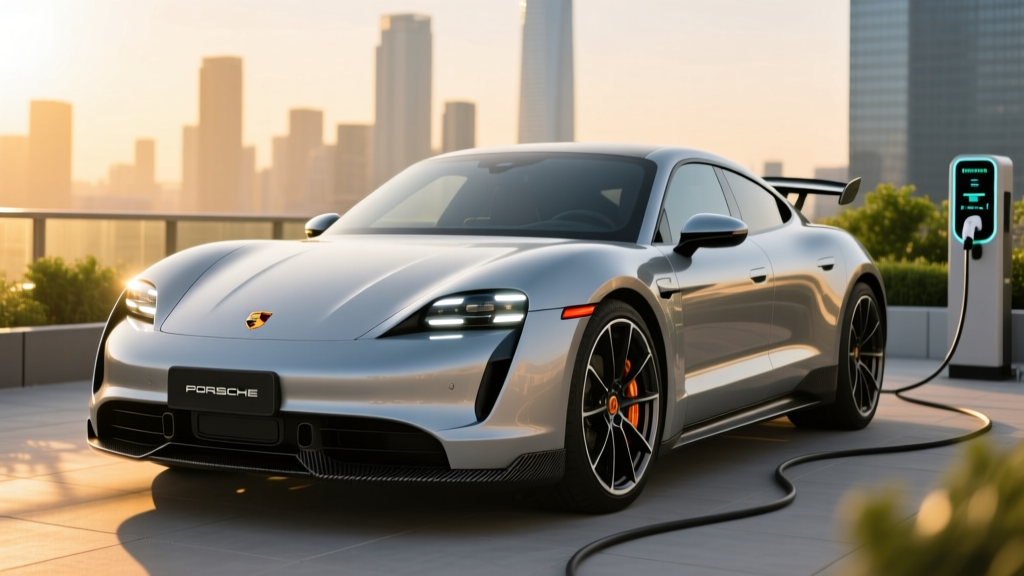
The 2025 Porsche Taycan 4S occupies a rare position in the EV market: it delivers genuine sports-car dynamics while offering some of the fastest DC charging available in any production electric vehicle. With the updated J1 II platform, Porsche addressed the original Taycan's most common criticism — mediocre range — by packing in a larger 105 kWh battery (97 kWh usable) and an 800-volt architecture that enables peak charging rates up to 320 kW at compatible stations.
If you're cross-shopping the Taycan 4S against the Tesla Model S, Lucid Air, or BMW i5 M60, the Porsche wins on driving feel and charging speed but asks you to accept a smaller back seat, limited cargo space, and a price that easily climbs past $130,000 with options. This review breaks down every number that matters — from real-world highway range in cold weather to exactly what you'll pay at the charger versus the pump.
| Specification | Value |
|---|---|
| EPA Range (Performance Battery Plus) | 277 miles |
| Battery Capacity (Usable / Gross) | 97.0 kWh / 105.0 kWh |
| Battery Chemistry | NMC (Nickel Manganese Cobalt) |
| Max DC Fast Charge Rate | 320 kW (peak) |
| 10–80% DC Charge Time | ~18 minutes (at 320 kW station) |
| Level 2 AC Charge Rate | 11 kW (onboard charger) |
| Drivetrain | Dual-motor AWD |
| Horsepower (Launch Control) | 563 hp / 478 lb-ft torque |
| 0–60 mph | 3.5 seconds |
| MPGe (Combined) | 83 MPGe |
| Efficiency | 40 kWh/100 mi |
| Base MSRP | $109,395 |
| Battery Warranty | 8 years / 100,000 miles |
Range & Efficiency: What the EPA Sticker Doesn't Tell You
For the 2025 model year, the Taycan 4S is offered with the Performance Battery Plus (105 kWh gross). According to fueleconomy.gov, the EPA combined range is 277 miles, a significant improvement over the pre-refresh Taycan 4S which topped out around 227 miles.
Real-World Range Expectations
EPA Sticker: 277 miles (combined cycle)
Highway at 70 mph (mild weather): ~240–255 miles
Highway at 70 mph (cold, 20°F): ~195–215 miles
City / mixed commute (mild): ~265–280 miles
Note: The Taycan's 800V heat pump helps mitigate cold-weather losses compared to EVs without active thermal management, but expect 20–30% range reduction in sustained sub-freezing highway driving. Porsche's efficiency of 40 kWh/100 mi is respectable for a 5,000+ lb AWD performance sedan but trails the Lucid Air Pure (28 kWh/100 mi) significantly.
Efficiency comes in at 83 MPGe combined (40 kWh per 100 miles). That's adequate for a heavy, high-performance AWD sedan but noticeably less efficient than the Tesla Model S Long Range (124 MPGe) or Lucid Air Pure (146 MPGe). The trade-off is the Taycan's 800-volt architecture, which enables the charging speeds that partially offset the lower efficiency.
Charging: 800-Volt Architecture Means Real Speed
The Taycan 4S's 800V electrical architecture is its most significant technical advantage for road-trip practicality. Here's what charging looks like across all three levels:
| Charge Level | Power (kW) | Miles Added/Hour | Time (10–80%) |
|---|---|---|---|
| Level 1 (120V household) | ~1.4 kW | ~3–4 mi/hr | ~60+ hours |
| Level 2 (240V home, 48A) | 11 kW | ~28 mi/hr | ~8.5 hours |
| DC Fast (320 kW capable station) | 320 kW peak | ~190 mi in 10 min | ~18 minutes |
| DC Fast (150 kW station) | ~135 kW sustained | ~90 mi/hr avg | ~35 minutes |
Understanding the charge curve: The Taycan 4S peaks at 320 kW only at compatible CCS chargers (such as select Electrify America 350 kW stalls) and only when the battery is preconditioned via the onboard navigation's charge-routing feature. The peak rate is sustained roughly from 10% to 40% State of Charge (SoC), then tapers progressively — by 60% SoC you'll see approximately 180 kW, and above 80% the rate drops below 60 kW. This is why Porsche quotes 10–80% in 18 minutes; charging from 80–100% adds another 25–30 minutes and is best reserved for overnight Level 2 sessions.
At home on a 48-amp Level 2 circuit (the most common residential installation on a 60-amp breaker), the Taycan's 11 kW onboard charger will replenish the battery at roughly 28 miles of range per hour — a full overnight session easily covers daily driving needs. If your electrical panel supports a 60-amp dedicated circuit, you could install a hardwired Level 2 station rated at 11.5 kW (such as the ChargePoint Home Flex or Wallbox Pulsar Plus), which matches the car's maximum AC acceptance rate.
Performance: 563 hp and the Porsche Driving Feel
The dual-motor all-wheel-drive powertrain produces 563 horsepower and 478 lb-ft of torque with Launch Control engaged (442 hp without). The 0–60 mph sprint takes 3.5 seconds, and the car pulls relentlessly through the quarter mile in approximately 11.7 seconds at 120 mph.
Where the Taycan 4S separates itself from competitors isn't straight-line speed — the Tesla Model S Plaid and Lucid Air Sapphire are faster — but chassis communication. The standard adaptive air suspension with Porsche Active Suspension Management (PASM) delivers a ride that's firm but never harsh, and the rear-axle steering (optional, $1,620) makes this 5,060-lb sedan shrink around you on canyon roads. The brake feel is outstanding for an EV, thanks to Porsche's blended regen-to-friction calibration that avoids the vague pedal transitions common in lesser systems.
Regenerative braking recovers up to 290 kW of energy under deceleration — among the highest regen rates in production — but Porsche does not offer true one-pedal driving to a complete stop. You will still use the friction brakes at very low speeds, which some EV veterans find surprising.
Interior, Tech & Cargo: The Compromises of a Sports Sedan
The Taycan's cabin is unmistakably Porsche — clean, driver-focused, and material-rich — but it sacrifices practicality compared to the Model S or Lucid Air.
Passenger & Cargo Dimensions
- Front headroom: 38.0 inches
- Front legroom: 41.2 inches
- Rear headroom: 36.5 inches (tight for passengers over 6'1")
- Rear legroom: 32.7 inches (noticeably less than Model S's 40.9 in)
- Trunk (rear): 14.3 cu ft
- Frunk (front): 2.9 cu ft (fits a small soft bag or charging cables)
The rear seat is best suited for children or adults on short trips. If you regularly carry rear-seat passengers, the BMW i5 or Mercedes EQE offer more generous back-seat accommodations.
Infotainment & Driver Assistance
The Taycan runs Porsche Communication Management (PCM) across a curved 12.6-inch instrument cluster, a 10.9-inch central touchscreen, and an optional 10.9-inch passenger display. The system is responsive but relies heavily on touch controls — climate adjustments via the lower touchscreen require more attention than physical knobs would.
Standard driver assists include adaptive cruise control, lane-keeping assist, and traffic-sign recognition. Porsche's system is a competent SAE Level 2 driver-assist — it does not permit hands-free driving and requires continuous steering-wheel contact. For comparison, GM's Super Cruise and Ford's BlueCruise allow hands-free operation on mapped highways, which the Taycan does not offer.
Pricing, Trims & Federal Tax Credit Eligibility
The 2025 Taycan 4S starts at $109,395 (including destination). Most buyers add the Performance Battery Plus (standard on 4S in the US for 2025), Premium Package ($3,480), and adaptive cruise control ($2,000), pushing a typical build to $118,000–$125,000.
| Item | Amount |
|---|---|
| Base MSRP (Taycan 4S) | $109,395 |
| As-Tested (typical options) | ~$122,000 |
| Federal §30D EV Tax Credit | $0 — exceeds MSRP cap |
| State incentives (varies) | Check local programs |
Does the Taycan 4S Qualify for the Federal EV Tax Credit?
No. Under current IRS §30D rules, the federal EV tax credit is capped at vehicles with an MSRP of $55,000 or less for sedans. The Taycan 4S at $109,395 far exceeds this threshold, making it ineligible regardless of buyer income or battery sourcing. Additionally, the credit phases out for single filers with modified adjusted gross income (MAGI) above $150,000 and joint filers above $300,000. Even if Porsche ever produced a lower-priced variant, many Taycan buyers would exceed the income cap. For the latest rules, consult IRS.gov §30D guidelines or a qualified tax professional.
Some states offer separate EV rebates or HOV-lane access that apply regardless of vehicle price — check your state's energy office or DMV for details.
Ownership Costs & Warranty
Porsche provides a 4-year / 50,000-mile limited vehicle warranty and an 8-year / 100,000-mile battery warranty, covering the high-voltage pack if capacity drops below 70% of original usable capacity. This battery warranty threshold is standard for the luxury EV segment (Tesla, BMW, and Mercedes offer similar terms).
Estimated 5-Year Cost of Ownership
- Electricity (15,000 mi/yr, $0.14/kWh home + public mix): ~$8,400
- Comparable gas sedan (25 MPG, $3.50/gal): ~$10,500
- Maintenance: Minimal — no oil changes; cabin air filter, brake fluid, tire rotation. Budget ~$1,200/5 yrs
- Insurance: Taycan insurance averages $3,200–$4,500/year depending on profile — significantly above a Tesla Model S (~$2,400/yr)
- Depreciation: Taycan values have historically depreciated 45–55% over 5 years, steeper than the Model S. Certified pre-owned demand may soften this.
Pros, Cons & Who Should Buy the Taycan 4S
Pros
- Fastest DC charging in the segment (320 kW peak, 18 min 10–80%)
- Exceptional chassis dynamics and steering feel for an EV
- 800V architecture future-proofs for next-gen charging stations
- Strong regen recovery (290 kW) reduces brake wear
- Premium interior with excellent build quality
- Improved 277-mile EPA range over prior generation
Cons
- Cramped rear seat — not ideal for families or tall passengers
- Small frunk and modest 14.3 cu ft trunk
- No federal tax credit eligibility (MSRP exceeds $55K cap)
- Insurance costs run 30–50% above segment average
- No hands-free highway driving assist (unlike Super Cruise/BlueCruise)
- Efficiency of 40 kWh/100 mi trails Lucid Air and Tesla Model S
Who This EV Suits Best
The Taycan 4S is ideal for the driving-enthusiast commuter who prioritizes handling, charges at home nightly, and takes occasional road trips where fast DC charging minimizes downtime. It works well as a two-person daily driver with weekend-trip capability. It is not the right choice for families needing rear-seat space, high-mileage commuters in states without robust DC charging infrastructure, or buyers who need the federal tax credit to justify the EV switch. If you need four-adult comfort and 400+ mile range, the Lucid Air Pure or Grand Touring is a more practical luxury EV sedan.
Frequently Asked Questions
What is the real-world range of the 2025 Taycan 4S?
The EPA rates the Taycan 4S (Performance Battery Plus) at 277 miles combined. In real-world highway driving at 70 mph in mild conditions, expect 240–255 miles. In cold weather (below 30°F) at highway speeds, plan for 195–215 miles. City driving with regenerative braking can approach or slightly exceed the EPA figure.
How fast does the Taycan 4S charge at home and on the road?
At home on a 240V / 48-amp Level 2 charger, the Taycan 4S charges at 11 kW, adding approximately 28 miles of range per hour (a full charge takes about 8.5 hours). On the road, at a 320 kW-capable DC fast charger, it charges from 10–80% in approximately 18 minutes. At a more common 150 kW station, expect 10–80% in roughly 35 minutes due to the charge curve taper.
Does the Taycan 4S qualify for the $7,500 federal EV tax credit?
No. Under IRS §30D rules, new clean vehicle credits are limited to sedans with an MSRP at or below $55,000. The Taycan 4S starts at $109,395, making it ineligible. Buyer income caps ($150K single / $300K joint filers) would also exclude many Taycan purchasers. Always verify current rules at IRS.gov.
Is the Taycan 4S worth buying over the Tesla Model S or Lucid Air?
It depends on priorities. Choose the Taycan 4S if driving dynamics, charging speed, and Porsche build quality matter most. Choose the Tesla Model S Long Range if you want 402 miles of EPA range, Supercharger network access, and more rear-seat space at a lower starting price (~$79,990). Choose the Lucid Air Pure if you prioritize efficiency (146 MPGe), 419 miles of range, and a spacious rear seat. The Taycan wins on feel; its rivals win on practicality and value.
What battery chemistry does the Taycan 4S use?
The 2025 Taycan 4S uses an NMC (Nickel Manganese Cobalt) lithium-ion battery in a 105 kWh gross / 97 kWh usable configuration. NMC offers higher energy density than LFP (Lithium Iron Phosphate), which is why Porsche uses it in a performance sedan where weight and packaging are critical. LFP batteries (found in some Tesla Model 3 variants and the Ford Mustang Mach-E Standard Range) trade energy density for longer cycle life and lower cost.
What is the Taycan 4S battery warranty?
Porsche covers the high-voltage battery for 8 years or 100,000 miles, whichever comes first. The warranty guarantees the battery will retain at least 70% of its original usable capacity (approximately 67.9 kWh of the 97 kWh usable). If degradation exceeds this threshold within the warranty period, Porsche will repair or replace the battery at no cost.