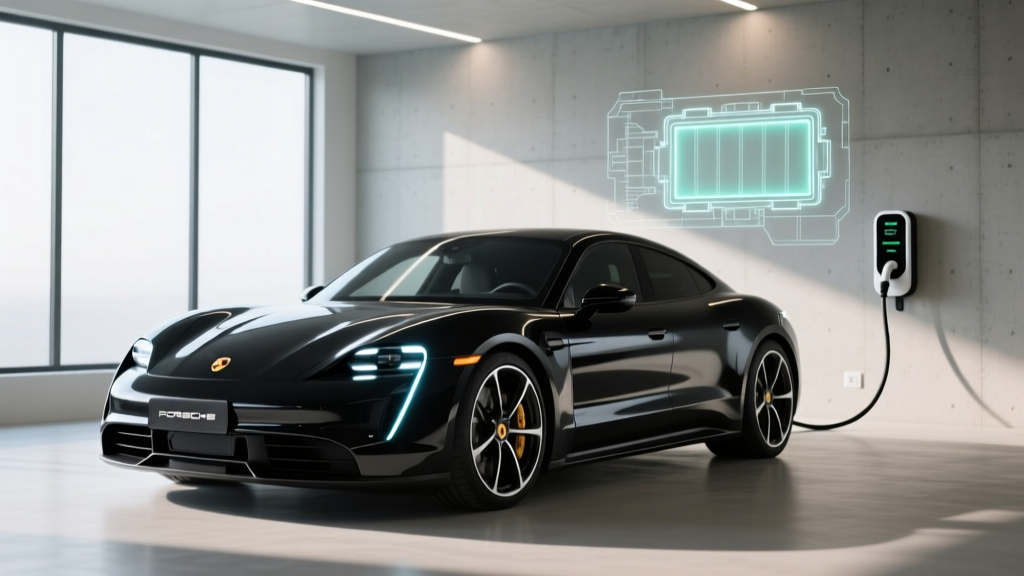
Quick Verdict: The Taycan Is a Driver's EV First, Battery Car Second
The 2023 Porsche Taycan remains the benchmark for how an electric sports sedan should drive. Where rivals prioritize maximum range or autonomous-driving theater, Porsche engineered the Taycan around sustained performance, 800-volt charging architecture, and chassis dynamics that embarrass sedans costing twice as much. The tradeoff is real-world range that trails its EPA sticker — particularly on highway road trips and in cold weather — and a price that climbs quickly past $100,000 before you check a single options box.
For the buyer who values driving feel over range-maximization, and who can charge at home, the 2023 Taycan lineup (sedan, Cross Turismo, and Sport Turismo) delivers an experience no Tesla or Lucid currently matches. But you need to know exactly what you're buying — and what you're giving up — before signing.
2023 Porsche Taycan: Full Spec Sheet
| Spec | Taycan (Base RWD) | Taycan 4S | Taycan Turbo | Taycan Turbo S |
|---|---|---|---|---|
| EPA Range | 225 mi (Performance Battery) | 227 mi (Performance Battery+) | 238 mi | 222 mi |
| Battery (usable) | 71.0 kWh (NMC) | 83.7 kWh (NMC) | 83.7 kWh (NMC) | 83.7 kWh (NMC) |
| Horsepower (Overboost) | 402 hp | 562 hp | 670 hp | 750 hp |
| 0-60 mph | 5.1 sec | 3.8 sec | 3.0 sec | 2.6 sec |
| Drivetrain | RWD (single motor) | AWD (dual motor) | AWD (dual motor) | AWD (dual motor) |
| Peak DC Fast Charge | 225 kW | 270 kW | 270 kW | 270 kW |
| 10-80% DCFC Time | ~23 min | ~22.5 min | ~22.5 min | ~22.5 min |
| Level 2 Charge Rate | 9.6 kW | 9.6 kW | 9.6 kW | 9.6 kW |
| MPGe (combined) | 84 MPGe | 82 MPGe | 78 MPGe | 75 MPGe |
| Base MSRP | $86,700 | $106,500 | $153,500 | $187,600 |
Source: fueleconomy.gov and Porsche USA 2023 specifications. Turbo S 0-60 time reflects factory-claimed figure with Launch Control.
Real-World Range: What the EPA Sticker Doesn't Tell You
Porsche's 800-volt architecture prioritizes power delivery and charging speed over raw efficiency. The Taycan's two-speed rear transmission (unique among production EVs) gives it strong highway passing power but doesn't overcome the car's 4,800–5,100 lb curb weight at sustained speed. Independent testing by multiple outlets has shown the Taycan 4S with the 83.7 kWh Performance Battery Plus achieving 200–215 real-world highway miles on a single charge in 65–75°F conditions.
The smaller 71.0 kWh Performance Battery (standard on the base RWD) is the weakest range link in the lineup. If your commute exceeds 80 miles round-trip or you plan regular road trips, the larger battery is worth the $5,760 upcharge — not just for the extra ~13 kWh of usable capacity, but for the jump from 225 kW to 270 kW peak DC charging.
Cold-weather degradation is real and unavoidable: lithium-ion internal resistance increases below 32°F, and cabin heating draws 3–5 kW continuously. Preconditioning the battery while plugged in (using the Porsche Connect app) mitigates this, but expect a 20–30% range reduction in sub-freezing conditions compared to the EPA sticker.
Charging Speed: 800-Volt Architecture in Practice
| Charging Level | Power | Speed (mi/hr added) | Notes |
|---|---|---|---|
| Level 1 (120V household) | ~1.4 kW | ~4 mi/hr | Emergency/trickle only; full charge takes 3+ days |
| Level 2 (240V home) | 9.6 kW | ~28 mi/hr | Full 0-100% in ~9.5 hrs (83.7 kWh battery); requires 48A circuit |
| DC Fast Charge (CCS) | Up to 270 kW | ~180 mi in 15 min (peak) | 10-80% in ~22.5 min at 350 kW charger; tapers sharply above 80% |
The Taycan was the first production EV with an 800-volt battery architecture, and its charging performance remains among the best available. On a 350 kW Electrify America or Ionity station, the Taycan 4S/Turbo/Turbo S (with Performance Battery Plus) peaks near 270 kW and sustains above 200 kW through roughly 55% State of Charge before tapering. The 10-80% sprint takes approximately 22.5 minutes under optimal thermal conditions.
Key caveat: that peak rate requires a CCS-equipped DC fast charger capable of 350 kW and ambient temperatures between roughly 60–90°F. At 50 kW chargers (still common in many areas), expect 10-80% in roughly 75–80 minutes. Porsche's battery preconditioning feature — activated when you navigate to a DC fast charger in the navigation system — warms or cools the pack to the optimal temperature window, which can shave 5–10 minutes off your charge time in cold weather.
For home charging, the 9.6 kW onboard charger is adequate but not exceptional. A full charge from 10% takes about 8.5 hours on a hardwired Level 2 station (like a ChargePoint Home Flex or Porsche Mobile Charger Connect on a 60A circuit). This is sufficient for overnight replenishment but slower than the Hyundai Ioniq 5's 10.9 kW or the Lucid Air's 19.2 kW onboard charger.
Driving Dynamics and Performance
This is where the Taycan justifies its premium. The dual-motor AWD models (4S, Turbo, Turbo S) deliver all-wheel-drive traction with torque vectoring that makes the car feel rear-biased and alive through corners. The Turbo S's 2.6-second 0-60 time is repeatable — unlike some competitors that overheat after consecutive launches — thanks to Porsche's thermal management system and the two-speed rear axle that keeps the rear motor in its power band.
Even the base RWD Taycan, at 402 hp (overboost) and 5.1 seconds to 60, is genuinely quick by any sports-sedan standard. The single-speed front motor (on AWD models) and two-speed rear motor give the Taycan a unique character: strong initial thrust from the electric motors, with a perceptible "shift" from the rear transmission around 55–60 mph that delivers a second wave of acceleration. It's a sensation no other current EV replicates.
The steering is precise and communicative by EV standards (though still numb compared to a 911), and the optional rear-axle steering ($1,620 on most trims) tightens the turning circle and adds low-speed agility. Air suspension is standard on the 4S and above, providing a ride quality that absorbs highway imperfections while staying flat through aggressive cornering.
Interior, Cargo, and Daily Practicality
The Taycan's cabin is driver-focused and tech-forward, with Porsche's curved 16.8-inch digital instrument cluster and a dual-screen center console (10.9-inch infotainment + 8.4-inch climate/haptic panel). Build quality is exceptional — every surface, switch, and stitch reflects the price point. An optional passenger-side 10.9-inch display ($1,080) adds symmetry but limited functionality.
Practicality is the Taycan's weakest suit compared to the Tesla Model S or Lucid Air:
- Rear cargo (sedan): 14.3 cu ft trunk — adequate for two carry-ons and a garment bag, but shallow due to the rear diffuser design
- Frunk (front trunk): 2.9 cu ft — fits a charging cable and a small duffel, but significantly smaller than the Model S's 5.3 cu ft frunk
- Rear legroom: 32.7 inches — tight for adults over 6'0" on longer trips; the transmission tunnel hump (a packaging compromise for the rear motor) limits the middle seat
- Cross Turismo/Sport Turismo: Hatchback body style increases cargo to 15.7 cu ft (seats up) and 44.6 cu ft (seats folded), making it meaningfully more practical for gear-heavy buyers
The Taycan seats four adults comfortably (the rear middle seat is best left unused). For families with young children in rear-facing car seats, front passenger legroom becomes compromised. This is not a family hauler — it's a grand tourer that happens to have four doors.
Pricing, Tax Credits, and Ownership Costs
| Trim | Base MSRP | As-Tested (Typical Options) | Federal Credit | Est. Out-of-Pocket |
|---|---|---|---|---|
| Taycan (RWD) | $86,700 | $97,000–$105,000 | $0 | $86,700+ |
| Taycan 4S | $106,500 | $118,000–$135,000 | $0 | $106,500+ |
| Taycan Turbo | $153,500 | $165,000–$180,000 | $0 | $153,500+ |
| Taycan Turbo S | $187,600 | $198,000–$215,000 | $0 | $187,600+ |
Options add up fast. Porsche's most popular packages — Premium ($3,420), Adaptive Cruise Control ($2,040), rear-axle steering ($1,620), and metallic paint ($830) — can push a 4S past $120,000 before destination charges. The Turbo S, with its standard carbon-ceramic brakes and PASM sport suspension, has fewer available options but starts at a figure that puts it in supercar territory.
Five-year total cost of ownership is steep but not unreasonable for the segment. Expect insurance premiums of $3,500–$5,200/year (the Taycan is classified as a high-performance vehicle by most insurers), home electricity costs of roughly $600–$900/year for 12,000 miles of driving at $0.14/kWh, and minimal maintenance (no oil changes, reduced brake wear from regen). Porsche's scheduled maintenance plan covers the first year/10,000 miles; after that, expect $400–$700 per annual service visit.
Warranty and Battery Longevity
Porsche provides a competitive but not class-leading warranty package:
- New Vehicle Limited Warranty: 4 years / 50,000 miles
- Battery Warranty: 8 years / 100,000 miles (whichever comes first), covering defects and capacity loss below 70% of original capacity
- Corrosion Perforation: 12 years, unlimited miles
- Roadside Assistance: 4 years / 50,000 miles
The 70% capacity retention threshold at 8 years/100,000 miles is standard for the luxury EV segment (BMW, Mercedes, and Audi use similar terms). Real-world degradation data for the Taycan's NMC (nickel-manganese-cobalt) cells is still limited given the car's 2020 launch, but early reports from high-mileage owners and fleet operators suggest 5–8% degradation over the first 60,000 miles — consistent with well-managed NMC packs. Porsche's liquid thermal management system keeps cells within an optimal temperature band, which is the single biggest factor in long-term battery health.
If the battery does require out-of-warranty replacement, expect a cost of $20,000–$28,000 for the 83.7 kWh pack based on current dealer estimates — a significant financial risk for second- and third-owners.
Technology and Driver Assistance
The Taycan's Porsche Communication Management (PCM) system runs on a 10.9-inch touchscreen with native navigation, Apple CarPlay (wireless), and Android Auto (wired). The interface is responsive and logically organized, though some climate and seat-heating controls are buried in the lower haptic screen — a common complaint. Voice control works well for navigation and media but doesn't extend to vehicle settings the way Mercedes' MBUX does.
Driver assistance is adequate but not ambitious:
- Porsche InnoDrive (adaptive cruise + lane centering): $2,500 option; smooth and predictable, but requires hands on the wheel at all times (SAE Level 2). It reads speed limits via navigation data and adjusts proactively for curves, which is a genuine improvement over basic adaptive cruise.
- Night Vision Assist: $2,400 thermal camera option; highlights pedestrians and animals on the instrument cluster. Useful for rural driving but not essential for most buyers.
- Surround View + Park Assist: Standard on Turbo/Turbo S, optional on 4S. Camera quality is excellent, and the automated parking function handles parallel and perpendicular spots reliably.
Pros, Cons, and the Competition
- Best-in-class driving dynamics and steering feel
- 800V architecture delivers 270 kW DC charging (~22.5 min 10-80%)
- Repeatable launch performance without thermal throttling
- Exceptional build quality and cabin materials
- Cross Turismo variant adds real cargo practicality
- Real-world highway range 15–20% below EPA sticker
- No federal tax credit eligibility (§30D MSRP + sourcing)
- Cramped rear seat and small frunk for the price
- Expensive options escalate price quickly past $130K
- Driver-assist tech lags Tesla/Mercedes in ambition
The Taycan's most direct competitors are the Tesla Model S (more range, faster Supercharger network access, less build quality), the Lucid Air (dramatically more range and interior space, unproven service network), and the Audi e-tron GT (same 800V J1 platform, softer tuning, lower starting price). For buyers who prioritize driving engagement above all else, the Taycan wins. For range-maximizers, the Lucid Air Pure (410 mi EPA) is the rational choice.
Who Should Buy the 2023 Porsche Taycan?
Buy it if: You're a driving enthusiast who wants EV performance without sacrificing chassis communication, you can charge at home (Level 2 is essential given the range), and your daily driving stays under 150 miles. The Taycan is an outstanding commuter and weekend canyon car that happens to be electric.
Look elsewhere if: You need 300+ miles of range for frequent road trips, you regularly carry four adults, you need maximum cargo space, or you're counting on a federal tax credit to make the math work. The Lucid Air, Tesla Model S, or BMW i5 are better suited to those use cases.
Frequently Asked Questions
What is the real-world range of the 2023 Porsche Taycan?
In mixed driving at moderate temperatures (60–80°F), expect 195–220 miles from the 83.7 kWh Performance Battery Plus trims (4S, Turbo). Highway-only driving at 75 mph drops this to 190–210 miles. In freezing weather with cabin heat, plan for 160–180 miles. The base 71.0 kWh battery delivers roughly 185–205 real-world miles in mixed conditions.
How fast does the Taycan charge at home and on the road?
At home on a 9.6 kW Level 2 charger (240V, 48A), the Taycan adds roughly 28 miles of range per hour, with a full charge taking 8.5–9.5 hours depending on battery size. On a 350 kW DC fast charger, the 4S/Turbo/Turbo S peaks at 270 kW and charges from 10-80% in approximately 22.5 minutes. The base RWD peaks at 225 kW, adding roughly 2–3 minutes to that time.
Does the 2023 Porsche Taycan qualify for the federal EV tax credit?
No. Under current IRS §30D rules, the Taycan is disqualified on two grounds: (1) its MSRP exceeds the $55,000 sedan cap, and (2) its battery cells and critical minerals do not meet the North American sourcing requirements. State-level incentives may still apply — check your local DMV or energy office for details.
Is the Taycan worth buying over a Tesla Model S?
If driving dynamics, build quality, and charging speed matter more to you than range and Autopilot functionality, yes. The Taycan's chassis, steering, and braking are in a different league from the Model S. If you need 350+ miles of range, access to the Supercharger network (though the Taycan can now use NACS adapters at Tesla stations as of 2024–2025 agreements), or more interior space, the Model S is the pragmatic pick.
What's the biggest regret Taycan owners report?
The most common complaint in owner forums and long-term reviews is range on road trips. The Taycan's real-world highway efficiency (roughly 2.0–2.2 kWh/mi) means frequent charging stops on 300+ mile journeys — every 180–200 miles in practice. Buyers who road-trip more than 4–5 times per year should test-drive a Lucid Air or Model S before committing.
What battery chemistry does the Taycan use, and does it matter?
The Taycan uses NMC (nickel-manganese-cobalt) lithium-ion cells supplied by LG Energy Solution. NMC offers high energy density and strong power delivery — critical for the Taycan's performance focus — but is less tolerant of frequent 100% charging than LFP (lithium iron phosphate) chemistry. Porsche recommends daily charging to 85–90% and reserving 100% for planned road trips to maximize long-term battery health.