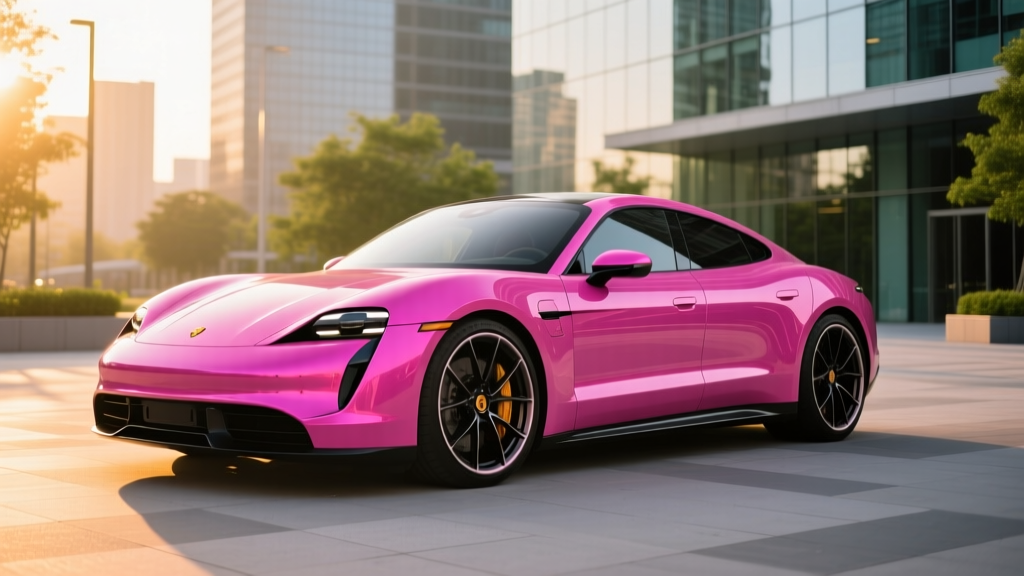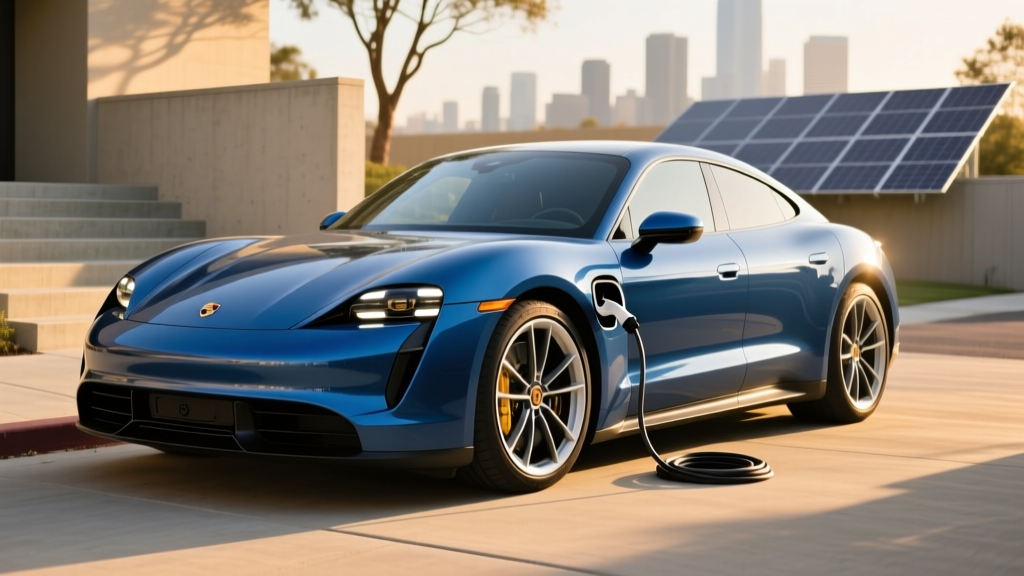
The 2022 Porsche Taycan remains the benchmark for what an electric sports sedan should feel like behind the wheel. While competitors chase maximum range or autonomous-driving theater, Porsche engineered the Taycan around sustained performance, 800-volt charging architecture, and chassis dynamics that embarrass cars costing twice as much. But the Taycan's EPA range numbers tell only part of the story — and for a used-EV buyer in 2026, understanding the real-world ownership picture is essential before writing the check.
This review covers every 2022 Taycan variant — base RWD, 4S, GTS, Turbo, and Turbo S — with exact specs, charging data, and the tax-credit math that determines whether this Porsche is a relative bargain or a full-price indulgence.
2022 Porsche Taycan Spec Overview
| Spec | Base (RWD) | 4S | GTS | Turbo | Turbo S |
|---|---|---|---|---|---|
| EPA Range | 225 mi | 227 mi | 243 mi | 238 mi | 222 mi |
| Battery (usable / gross kWh) | 71.0 / 79.2 | 71.0 / 79.2 (opt. 83.7/93.4) | 83.7 / 93.4 | 83.7 / 93.4 | 83.7 / 93.4 |
| Chemistry | NMC (Nickel Manganese Cobalt) — LG Energy Solution pouch cells | ||||
| Horsepower (Launch Control) | 402 hp | 562 hp | 690 hp | 670 hp | 750 hp |
| 0-60 mph | 5.1 sec | 3.8 sec | 3.5 sec | 3.0 sec | 2.6 sec |
| Drivetrain | RWD, single-speed rear | AWD, 2-speed rear + 1-speed front | AWD | AWD | AWD |
| Max DC Fast Charge | 225 kW | 225 kW (270 kW w/ Perf. Battery+) | 270 kW | 270 kW | 270 kW |
| 10-80% DC Time | ~22.5 min | ~22.5 min (Perf+: ~22 min) | ~22 min | ~22 min | ~22 min |
| Level 2 AC Charge | 9.6 kW (48A) | 9.6 kW (opt. 19.2 kW) | 9.6 kW (opt. 19.2 kW) | 9.6 kW (opt. 19.2 kW) | 9.6 kW (opt. 19.2 kW) |
| Efficiency (MPGe combined) | 84 MPGe | 79 MPGe | 82 MPGe | 75 MPGe | 68 MPGe |
| Base MSRP (2022) | $82,700 | $103,800 | $131,400 | $153,500 | $187,600 |
| Battery/Powertrain Warranty | 8 years / 100,000 miles (70% capacity retention) | ||||
Sources: EPA / fueleconomy.gov, Porsche USA spec sheets.
Real-World Range: What the EPA Sticker Doesn't Tell You
EPA Combined: 222–243 miles (varies by trim)
Real-World Highway (70 mph, mild weather): ~210–230 miles — the Taycan's 2-speed rear gearbox and low drag coefficient (Cd 0.22) help it overperform on the highway relative to its EPA number.
Real-World Highway (cold weather, 30°F): ~160–190 miles. Expect 20–30% range reduction in freezing temps. The Taycan's heat pump (standard on Performance Battery+ models) mitigates cabin energy draw but cannot fully offset battery chemistry limitations.
City/Mixed Driving (mild weather): ~230–250 miles. Regen braking and lower speeds let the Taycan exceed its EPA combined figure in urban use.
Here's the nuance that most reviews gloss over: Porsche was historically conservative with EPA testing methodology for the 2022 Taycan. Independent highway-range tests by outlets like Edmunds and Car and Driver have consistently shown the Taycan 4S (with the 93.4 kWh Performance Battery Plus) delivering 220+ miles at 70 mph — sometimes exceeding its EPA sticker. That's unusual; most EVs fall short on the highway. The Taycan's two-speed rear axle (first gear for launch, second gear for efficient cruising) is the engineering reason.
However, cold weather is the Taycan's Achilles' heel. NMC chemistry loses meaningful capacity below freezing, and while Porsche's thermal management system is competent, it's not class-leading compared to Tesla's or Hyundai's heat-pump systems. Plan for 160–180 miles of usable winter range on the Performance Battery+ variants, and 140–160 on the standard 79.2 kWh pack.
Charging: 800-Volt Architecture That Still Holds Up
The 2022 Taycan was one of the first production EVs built on an 800-volt architecture (alongside the Audi e-tron GT, its platform sibling). This enables DC fast-charge rates that remain competitive in 2026.
| Charge Level | Power (kW) | Miles Added per Hour | Notes |
|---|---|---|---|
| Level 1 (120V, 12A) | 1.4 kW | ~3–4 mi/hr | Emergency/trickle only; full charge takes 3+ days |
| Level 2 (240V, 40A standard) | 9.6 kW | ~25–28 mi/hr | Standard onboard charger; 0-100% in ~9.5 hours (93.4 kWh pack) |
| Level 2 (240V, 80A optional) | 19.2 kW | ~50–55 mi/hr | Optional 19.2 kW onboard charger; requires 100A circuit; 0-100% in ~5 hours |
| DC Fast (peak, Perf. Battery+) | 270 kW | ~650+ mi/hr (at peak) | 10-80% in ~22 min; tapers sharply above 80% |
| DC Fast (50 kW CCS station) | 50 kW | ~130 mi/hr | Common at older public chargers; 10-80% in ~80 min |
Charging-curve reality check: The 270 kW peak rate applies only between roughly 10–40% State of Charge (SoC) on a 350 kW-capable charger (like Electrify America's latest stalls). From 40–60%, the Taycan sustains around 170–200 kW. From 60–80%, it drops to 100–120 kW. Above 80%, expect 50 kW or less — Porsche aggressively tapers to protect the NMC cells. The 22-minute 10-80% claim is achievable at a properly conditioned battery on a 350 kW stall, but at a 150 kW CHAdeMO-to-CCS adapter situation or a degraded Electrify America stall, plan for 30–35 minutes.
Home charging recommendation: The optional 19.2 kW onboard charger ($1,680 when new) is worth seeking in a used Taycan. It cuts overnight charge time nearly in half and requires a dedicated 100-amp circuit — budget $1,500–$3,000 for a licensed electrician to install a hardwired Level 2 unit like the ChargePoint Home Flex or FLO Home X8, plus potential panel-upgrade costs if your home has a 100-amp main panel.
The 2022 Taycan uses the CCS1 connector standard. Porsche has since transitioned to NACS for the 2025+ model year, but as a 2022 buyer, you'll use CCS at public chargers. Tesla Supercharger access requires a CCS-to-NACS adapter (Porsche offers one, approximately $200–$250).
Performance and Driving Dynamics
This is why the Taycan exists. The 2022 model year brought the GTS trim (slotted between the 4S and Turbo) with a sport-tuned air suspension, unique steering calibration, and a distinctive Sport Chrono package tune.
Every AWD Taycan uses a two-speed transmission on the rear axle — first gear multiplies torque for brutal launch-control acceleration, second gear optimizes highway efficiency. The front axle uses a single-speed reduction gear. This is fundamentally different from Tesla's single-speed approach and contributes to the Taycan's superior high-speed composure.
The Turbo S delivers a repeatable 2.6-second 0-60 mph time that doesn't degrade significantly on consecutive launches — Porsche's thermal management keeps the battery and motors in their performance window longer than most competitors. The base RWD model (new for 2022 in the US) trades all-wheel-drive grip for a lower curb weight (~4,700 lbs vs. ~5,100 lbs for the Turbo) and a more traditional Porsche driving feel.
Regenerative braking in the Taycan is notably less aggressive than Tesla or Nissan's one-pedal-driving implementations. Porsche deliberately chose a coasting-first philosophy: lift off the throttle, and the car coasts freely (like a traditional sports car). Tap the brake pedal, and regen blends seamlessly with the mechanical brakes. You can enable regen-on-lift in the settings, but it still won't bring the car to a complete stop. This is a feature, not a bug — but it requires adjustment if you're coming from a Tesla.
Interior, Tech, and Practicality
The Taycan's interior is a study in screen-heavy minimalism done right. The 16.8-inch curved driver display, 10.9-inch central infotainment screen, and 8.4-inch haptic climate-control panel form a cohesive digital cockpit. A passenger-side 10.9-inch screen was optional (and is worth having for navigation previews and media control).
Driver assistance: The 2022 Taycan includes Porsche InnoDrive (adaptive cruise with predictive speed adjustment based on navigation data and road-sign recognition), lane-keeping assist, and night-vision assist (optional). This is SAE Level 2 driver assistance — you must keep your hands on the wheel and eyes on the road. Porsche's system is competent but conservative; it doesn't attempt automated lane changes or intersection navigation like Tesla's FSD Supervised or GM's Super Cruise. InnoDrive's predictive cruise is genuinely excellent on highway drives, pre-emptively slowing for curves and exits.
Cargo and passenger space:
- Rear trunk: 14.3 cu ft (sedan) / 15.7 cu ft (Cross Turismo wagon)
- Front trunk (frunk): 2.9 cu ft — fits a charging cable and a small bag, not much more
- Rear legroom: 32.7 inches — tight for adults over 6 feet on longer trips
- Front headroom: 40.0 inches; rear headroom: 37.8 inches (sedan)
The Taycan is a 2+2 grand tourer, not a family hauler. The Cross Turismo body style (available on 4S, GTS, and Turbo trims) adds ~0.5 inches of rear headroom and a more usable hatchback cargo area, making it the pragmatic choice if rear-seat passengers are regular occupants.
Pricing, Trims, and Federal Tax Credit Eligibility
As a 2026 buyer, you're most likely shopping the 2022 Taycan on the used market. Here's how the pricing landscape looks:
| Trim | 2022 Base MSRP | Typical As-Tested (2022) | 2026 Used Range (est.) | Federal Tax Credit Eligibility |
|---|---|---|---|---|
| Base (RWD) | $82,700 | $90,000–$100,000 | $52,000–$65,000 | Up to $4,000 (used EV credit, §25E) |
| 4S | $103,800 | $115,000–$130,000 | $62,000–$80,000 | Up to $4,000 (used EV credit, §25E) |
| GTS | $131,400 | $145,000–$155,000 | $80,000–$100,000 | Not eligible (exceeds $25,000 used cap) |
| Turbo | $153,500 | $170,000–$185,000 | $90,000–$115,000 | Not eligible (exceeds $25,000 used cap) |
| Turbo S | $187,600 | $200,000+ | $110,000–$140,000 | Not eligible (exceeds $25,000 used cap) |
Tax credit rules (critical details): The $7,500 new-EV credit (§30D) no longer applies to 2022 model-year purchases in 2026 — it was available at the time of original sale, but that window has closed. For used-EV buyers, IRS §25E offers up to $4,000 or 30% of the sale price (whichever is lower), but only if the used sale price is $25,000 or less. In practice, this means only the base RWD and possibly a high-mileage 4S might qualify, and only from a licensed dealer. Income caps apply: modified adjusted gross income must not exceed $75,000 (single) / $150,000 (joint). See IRS §25E guidance for current rules.
The new-vehicle §30D credit was never available for the Taycan when new because it exceeded the MSRP cap ($55,000 for sedans) and its battery sourcing did not meet critical-mineral requirements. This is a Porsche you buy for the engineering, not the incentives.
Taycan vs. Key Competitors: Is It Worth It?
- Best-in-class driving dynamics — steering feel, chassis balance, and brake modulation that no Tesla or Lucid matches
- 800V architecture delivers genuine 270 kW DC fast charging (when battery is preconditioned)
- Repeatable launch-control performance without thermal derating
- Conservative EPA ratings mean real-world range often exceeds the sticker
- Build quality, materials, and cabin insulation are luxury-sedan excellent
- Porsche dealer network and service infrastructure are strong nationwide
- Range is 222–243 mi EPA — 100+ miles less than a Tesla Model S or Lucid Air
- Rear seat is tight; not a practical family sedan
- Frunk is small (2.9 cu ft); cargo capacity trails the Model S significantly
- No Tesla Supercharger access without an adapter (CCS1 native)
- Cold-weather range loss is above average for the segment
- Maintenance and insurance costs are Porsche-tier ($3,500–$5,500/year insurance depending on trim and state)
- Infotainment system is functional but not as intuitive as Tesla or BMW iDrive
Decision framework:
- Choose the Taycan if: Driving dynamics are your top priority, you have reliable home Level 2 charging, your daily commute is under 100 miles round-trip, and you value Porsche build quality and dealer service.
- Choose the Tesla Model S if: You need 350+ miles of range, frequent Supercharger access for road trips, and prioritize over-the-air feature updates and Autopilot capability.
- Choose the Lucid Air if: Maximum range (400+ mi EPA) and rear-seat space are non-negotiable, and you're willing to accept a smaller service network.
- Choose the BMW i4 M50 if: You want a sporty electric sedan under $70,000 with acceptable range (270 mi EPA) and don't need the Taycan's extreme performance ceiling.
Ownership Costs and Battery Longevity
Porsche warranties the Taycan's high-voltage battery for 8 years or 100,000 miles, guaranteeing 70% capacity retention. If the battery drops below 70% State of Health (SoH) within that window, Porsche will repair or replace modules to bring it back above the threshold.
Real-world degradation data for 2020–2022 Taycans (the earliest models now have 4–6 years of field data) shows approximately 5–8% capacity loss at 60,000 miles — well within the warranty buffer. The 800V architecture's thermal management and Porsche's conservative charge/discharge protocols (a sizable top and bottom buffer protects the cells) contribute to slower degradation than some competitors.
Out-of-warranty battery replacement is expensive: expect $20,000–$30,000 for a full pack replacement at a Porsche dealer, though individual module replacement (if only a few cells degrade) can cost $3,000–$8,000. This is a critical factor for high-mileage used buyers — always request a battery health report (SoH percentage) from the dealer or use an OBD-II reader with Porsche-compatible software to check it yourself.
Five-year ownership cost estimates (base RWD, 15,000 miles/year, home charging at $0.14/kWh):
- Electricity: ~$3,200 (vs. ~$9,500 for premium gasoline in a comparable Panamera)
- Insurance: ~$18,000–$27,000 (varies dramatically by trim, age, and state)
- Maintenance: ~$2,500 (brake fluid, cabin filters, tire rotation — no oil changes)
- Tire replacement: ~$2,000–$3,500 (the Taycan's torque and weight wear tires faster; expect 20,000–30,000 miles per set)
- Depreciation: The Taycan has depreciated 35–45% from MSRP by year four — better than some luxury EVs but still steep
Frequently Asked Questions
What is the real-world range of the 2022 Porsche Taycan?
In mild weather at highway speeds (70 mph), expect 210–230 miles from the Performance Battery+ (93.4 kWh) variants. City driving can push 240+ miles thanks to regenerative braking. In freezing temperatures, plan for 160–190 miles of usable range — the Taycan's cold-weather performance is its most significant real-world limitation.
How fast does the 2022 Taycan charge at home and on the road?
On DC fast charging, the Taycan peaks at 270 kW (Performance Battery+ models) and achieves 10-80% in approximately 22 minutes at a 350 kW-capable station. At home on a standard 9.6 kW Level 2 charger, a full charge takes about 9.5 hours. The optional 19.2 kW onboard charger cuts that to roughly 5 hours but requires a 100-amp dedicated circuit.
Does the 2022 Taycan qualify for any federal EV tax credit in 2026?
Not the $7,500 new-vehicle credit — the Taycan never qualified when new due to MSRP caps and battery-sourcing rules. For used purchases in 2026, the §25E used-EV credit offers up to $4,000, but only on vehicles sold for $25,000 or less through a licensed dealer, with buyer income caps of $75,000 (single) / $150,000 (joint). In practice, only the base RWD model at high mileage may qualify. Consult a tax professional for current IRS rules.
Is the 2022 Taycan worth buying over a Tesla Model S?
It depends entirely on priorities. The Taycan wins on driving dynamics, build quality, and repeatable performance. The Model S wins on range (350+ mi EPA), Supercharger network access, cargo space, and Autopilot functionality. If you drive for engagement, the Taycan is the answer. If you drive for efficiency and convenience, the Model S is more practical.
What are the biggest things to check when buying a used 2022 Taycan?
Request the battery State of Health (SoH) report — anything below 92% at under 40,000 miles is worth questioning. Verify whether the 19.2 kW onboard charger was optioned (it's a significant home-charging advantage). Check for software update status (Porsche has issued several PCM and battery-management updates). Confirm whether the car has the Performance Battery (79.2 kWh) or Performance Battery Plus (93.4 kWh) — the latter is strongly preferred for range and charging speed.
Does the Taycan support one-pedal driving?
Not in the way Tesla or Nissan implement it. The Taycan defaults to free-coasting when you lift off the accelerator, which Porsche argues is more energy-efficient. You can enable regenerative braking on lift in the settings, and the car will slow noticeably, but it will not come to a complete stop — you still need the brake pedal for final stopping. Porsche's regen blends excellently with the mechanical brakes, creating a natural pedal feel that avoids the grabby regen of some competitors.