Quick Answer: Is the Macan GTS EV Worth It?
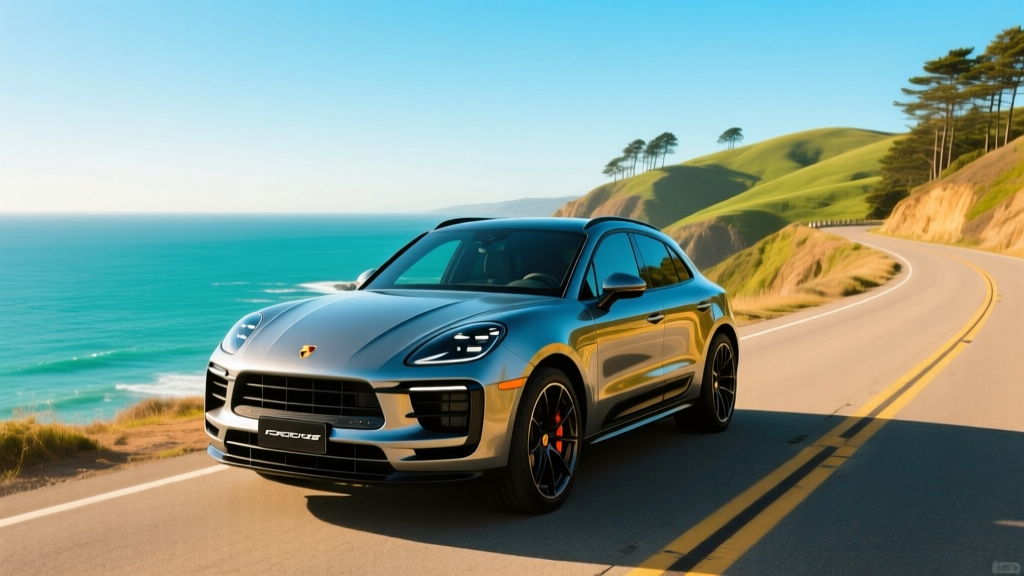
The 2026 Porsche Macan GTS EV is the performance flagship of the all-electric Macan lineup, producing 630 HP, hitting 0-60 mph in 3.3 seconds, and carrying an EPA-estimated 288 miles of range from its 100 kWh (95.8 usable) NMC battery. Starting at approximately $106,000, it does not qualify for the federal §30D tax credit due to its MSRP exceeding the $80,000 SUV cap. Real-world range on the highway drops to roughly 235-250 miles, and in cold weather (below 32°F), expect 200-220 miles. If you want Porsche dynamics in an electric daily driver and have reliable Level 2 home charging, it's one of the best-performance luxury EV SUVs available. If range-per-dollar or tax-credit eligibility is your priority, competitors like the BMW iX xDrive50 or Tesla Model X may serve you better.
2026 Macan GTS EV: Core Specifications
The Macan GTS sits at the top of Porsche's electric Macan range (above the base Macan Electric, Macan 4, and Macan Turbo). It shares the PPE (Premium Platform Electric) architecture co-developed with Audi, featuring an 800-volt electrical system that enables exceptionally fast DC charging. Here are the numbers that matter:
| Specification | 2026 Macan GTS EV |
|---|---|
| EPA Range | 288 miles |
| Battery (Usable) | 95.8 kWh (NMC chemistry) |
| Horsepower | 630 HP (with Launch Control) |
| Torque | 664 lb-ft |
| 0-60 mph | 3.3 seconds |
| Top Speed | 162 mph |
| Max DC Fast Charge Rate | 270 kW (peak) |
| 10-80% DC Charge Time | ~21 minutes |
| Level 2 AC Charge Rate | 11 kW (onboard charger) |
| Level 2 0-100% Time | ~9.5 hours |
| Drivetrain | Dual-motor AWD |
| EPA Efficiency | ~83 MPGe combined |
| Base MSRP | ~$106,000 |
| Battery Warranty | 8 years / 100,000 miles |
| Charging Port | NACS (2026 model year) |
Porsche switched the Macan EV to the NACS connector for the North American market, granting access to Tesla's Supercharger network alongside Electrify America and other CCS-to-NACS-adapted public chargers.
Real-World Range vs. EPA Estimate
The EPA's 288-mile figure is a blended city/highway estimate under ideal conditions. Real-world range depends heavily on speed, temperature, and terrain — and the Macan GTS's performance tuning means it drinks electrons faster than the base Macan Electric when driven aggressively.
Range Reality Check
- EPA Sticker: 288 miles
- Highway (70-80 mph, 75°F): ~235-250 miles
- Cold Weather (20-32°F, mixed driving): ~200-220 miles
- Aggressive / Sport Mode: ~190-210 miles
- City / Moderate (55-65 mph, mild temps): ~270-285 miles
The Macan GTS's wider 21-inch wheels and performance-tuned suspension add rolling resistance compared to the base Macan 4 Electric (EPA 308 miles). If maximum range matters more than 0-60 times, the Macan 4 is the efficiency play.
The 800V architecture does provide one real-world advantage: thermal management under sustained high-speed driving is superior to 400V platforms. On long road trips, the Macan GTS maintains charge-curve performance better than many competitors, meaning your second and third fast-charge stops won't degrade as much as they would in a lower-voltage system.
Charging Speed: Home and Public
The Macan GTS's 800V system is its charging highlight. At a 350 kW-capable Electrify America or Tesla V4 Supercharger stall, the GTS peaks at 270 kW and sustains above 200 kW through roughly 40% SoC before tapering. A 10-80% session takes approximately 21 minutes under optimal conditions (battery preconditioned, ambient temperature above 60°F).
| Charging Level | Power | Miles Added per Hour | Typical Use Case |
|---|---|---|---|
| Level 1 (120V household) | ~1.4 kW | ~3-4 mi/hr | Emergency / overnight trickle only |
| Level 2 (240V, 48A circuit) | 11.5 kW | ~30-33 mi/hr | Home daily charging (full overnight) |
| DC Fast Charge | Up to 270 kW peak | ~400+ mi/hr (peak) | Road trips, 10-80% in ~21 min |
Home charging reality: At 11 kW on a Level 2 home charger (requiring a 60-amp dedicated circuit), a full 0-100% charge takes about 9.5 hours. Most owners who plug in nightly with 40-60% remaining will reach a full charge in 4-6 hours. If your home electrical panel is maxed out (common in older homes with 100-amp service), expect to budget $2,000-$5,000 for a panel upgrade on top of $500-$1,500 for the charger and standard installation.
Preconditioning matters. The Macan GTS's navigation system will automatically precondition the battery when a DC fast charger is set as your destination. Skipping this step — or arriving at a charger with a cold battery — can add 5-10 minutes to your charge session and reduce peak kW significantly.
Cost of Ownership: Macan GTS EV vs. Gas Macan GTS
Let's compare the electric Macan GTS against the outgoing gas-powered Macan GTS (twin-turbo V6, 434 HP, ~$84,000 MSRP) across a 5-year / 75,000-mile ownership horizon. This is where the EV economics become concrete.
| Cost Category | Macan GTS EV (2026) | Gas Macan GTS (Final Model Year) |
|---|---|---|
| Base MSRP | $106,000 | $84,000 |
| Federal Tax Credit (§30D) | $0 (exceeds $80K SUV cap) | $0 |
| Fuel / Energy (75K mi) | $3,200-$4,800 (home + public mix) | $9,800-$12,500 (premium gas, ~19 MPG combined) |
| Maintenance (5 yr) | $1,800-$2,500 (tires, cabin filter, fluid checks) | $4,500-$6,500 (oil, brakes, filters, spark plugs) |
| Insurance (est. annual avg) | $3,200-$4,000/yr | $2,600-$3,400/yr |
| 5-Year Total Operating Cost | ~$21,000-$27,300 | ~$30,100-$39,500 |
| 5-Year Depreciation (est.) | ~$42,000-$48,000 | ~$34,000-$38,000 |
Key takeaway: The Macan GTS EV saves roughly $8,000-$15,000 in operating costs over 5 years (fuel and maintenance), but the $22,000 higher purchase price and steeper depreciation largely offset those savings. This is not an EV you buy to save money — it's an EV you buy for performance, refinement, and daily usability. The savings are real but secondary to the experience.
Insurance is consistently higher for the EV variant. Porsche's repair costs after collision events are elevated due to battery-pack proximity and high-voltage system diagnostics. Get quotes from your insurer before committing — the delta can be $600-$1,000/year.
EV vs. Gas: What Changes in Daily Life?
| Factor | Macan GTS EV | Gas Macan GTS |
|---|---|---|
| "Refueling" Routine | Plug in at home nightly; wake up "full" | Gas station visits 1-2x/week |
| Road-Trip Stops | Every 180-220 mi; 20-25 min each | Every 320-380 mi; 5-8 min each |
| Cold-Weather Start | Instant cabin heat via heat pump; no warm-up | Engine warm-up; slower cabin heat |
| Acceleration Feel | Instant torque, no shift lag | Turbo spool + transmission shifts |
| Regenerative Braking | One-pedal driving possible; less brake wear | Traditional friction braking |
| Cargo / Frunk | Frunk adds ~3 cu ft; total cargo ~17.1 cu ft (rear seats up) | No frunk; total cargo ~17.6 cu ft |
| Home Charging Access Needed | Yes — critical for cost savings and convenience | No — gas stations everywhere |
The single biggest ownership variable is home charging access. If you can install a Level 2 charger in your garage or driveway, the Macan GTS EV transforms your routine — you'll visit a gas station roughly zero times per month for daily driving. If you live in an apartment or condo without charging infrastructure, you'll rely on public DC fast charging or workplace Level 2, which adds time, cost, and frustration. Public DC charging averages $0.35-$0.55/kWh nationally, which erodes the fuel-cost advantage significantly compared to home charging at $0.12-$0.18/kWh.
Common Misconceptions — Fact-Checked
| Myth | Fact |
|---|---|
| "The battery will need replacing in 5 years." | Porsche warranties the battery for 8 years / 100,000 miles at 70% capacity retention. NMC degradation data from PPE-platform testing shows ~8-12% loss over 100K miles with normal use. Full replacement (if ever needed) runs $18,000-$25,000 out of warranty. |
| "288 miles is enough for any road trip." | At highway speeds in winter, real range drops to ~200 miles. Plan stops accordingly. The 21-minute charge time is fast, but add 5-10 minutes for parking, walking, and plug-in — budget 30 minutes per stop. |
| "It qualifies for the $7,500 federal tax credit." | It does not. The IRS §30D credit caps SUV eligibility at $80,000 MSRP. The Macan GTS EV starts at ~$106,000. |
| "EVs need no maintenance." | Tires wear 15-25% faster on heavy EVs due to instant torque and added weight (~5,100 lbs for the GTS). Budget $1,200-$1,800 for a tire set. Cabin air filters, wiper fluid, brake fluid checks, and coolant top-offs remain. |
| "DC fast charging destroys the battery." | Modern thermal management on the 800V PPE platform limits degradation. Occasional DC fast charging (2-3x/week) shows negligible long-term impact. Daily 100% charges and frequent deep discharges to 0% are more harmful. |
Decision Framework: Is the Macan GTS EV Right for You?
Choose the Macan GTS EV If:
- You have Level 2 home charging (garage or driveway with 240V access)
- You want sub-3.5-second 0-60 performance in a luxury compact SUV
- Your daily commute is under 100 miles round-trip (covers 90%+ of driving on a single charge)
- You road-trip 4-6 times per year and can tolerate 20-25 minute charge stops
- You value Porsche's chassis tuning, steering feel, and build quality over maximum range
- Your household income exceeds the §30D caps anyway, making the tax credit irrelevant
Look Elsewhere If:
- You lack reliable home or workplace charging — public-only charging erodes cost savings and convenience
- You need 300+ miles of real-world highway range — consider the BMW iX xDrive50 (EPA 324 mi, ~$87K) or Tesla Model X Long Range (EPA 335 mi, ~$82K)
- Tax-credit eligibility matters — the Cadillac Lyriq (~$59K) and Rivian R1S Dual-Motor (~$79K) may qualify for partial or full §30D credits
- You frequently drive in extreme cold (below 10°F) on long trips — range loss compounds quickly, and charge-stop frequency increases
- Budget is a primary concern — the gas Macan GTS or a Genesis GV70 Electrified (~$67K) delivers luxury at a lower entry point
First-Time EV Buyer Essentials
If the Macan GTS EV is your first electric vehicle, here's what the showroom won't emphasize:
- Budget $1,000-$2,500 for a home Level 2 charger installation (equipment + licensed electrician, assuming your panel has capacity). A 48-amp hardwired unit like the ChargePoint Home Flex or Tesla Wall Connector delivers the full 11 kW the Macan can accept.
- Set your daily charge limit to 80% for NMC battery longevity. Porsche's infotainment lets you schedule this. Charge to 100% only before road trips.
- Download PlugShare or the Electrify America app before your first road trip. Charger reliability varies — having backup options mapped reduces stress.
- Winter range loss is real and predictable. Precondition the cabin while still plugged in (using grid power, not battery) to preserve range. The Macan GTS's heat pump is efficient but can't eliminate cold-weather losses entirely.
- Insurance quotes vary wildly for EVs. Shop at least three insurers — some (like Progressive and USAA) have competitive EV rates; others load significant surcharges for high-value EVs.
Frequently Asked Questions
Does the Macan GTS EV qualify for any federal tax credit?
No. Under current IRS §30D rules, SUVs must have an MSRP at or below $80,000 to be eligible. The Macan GTS EV starts around $106,000. Some states (California, Colorado, New York, and others) offer separate EV rebates or incentives that may apply regardless of MSRP — check your state's energy office or DMV for current programs.
How does the Macan GTS EV compare to the Macan Turbo EV?
The Macan Turbo EV produces slightly more power (approximately 639 HP vs. 630 HP) and carries a higher starting price (~$113,000). The GTS is tuned for a sportier, more engaging driving feel with specific suspension calibration and cosmetic treatment, while the Turbo prioritizes maximum straight-line acceleration. Range is similar between the two (within 5-10 miles EPA).
Can I tow with the Macan GTS EV?
Yes. The Macan GTS EV is rated to tow up to 4,409 pounds when properly equipped. Note that towing will reduce range by 30-50% depending on trailer weight and aerodynamics — plan for 130-180 miles of real-world range while towing.
What is the battery replacement cost if it fails out of warranty?
Full battery pack replacement for the PPE-platform Macan EV is estimated at $18,000-$25,000 including labor. However, module-level repairs (replacing individual degraded cell groups) may be available at lower cost. Battery failure before 100,000 miles is statistically rare based on current NMC data from similar 800V platforms.
Is the Macan GTS EV all-wheel drive?
Yes. It uses a dual-motor configuration (one motor per axle) providing permanent all-wheel drive with torque vectoring. The system can disconnect the front motor under light-load cruising to improve efficiency, re-engaging in milliseconds when traction or acceleration demands increase.