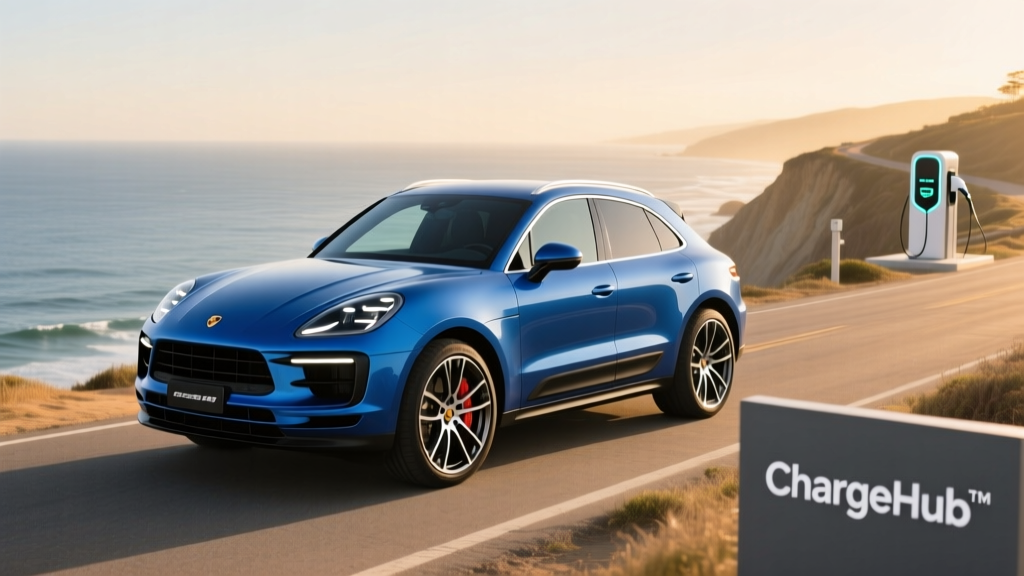
Quick Answer: The 2026 Porsche Macan GTS EV is a high-performance electric SUV delivering 603 horsepower, a 100 kWh NMC battery, and an EPA-estimated range of approximately 280 miles. Starting around $89,000, it does not qualify for the federal §30D tax credit due to its MSRP exceeding the $80,000 SUV cap and its Germany-assembled battery sourcing. Buyers choosing the Macan GTS EV over the outgoing gas Macan GTS trade higher upfront cost and fuel savings for dramatically lower running costs, instant torque, and access to premium DC fast charging at up to 270 kW (10–80% in roughly 21 minutes on a 350 kW charger).
The Macan Goes Electric: What the GTS EV Actually Is
Porsche's transition of the Macan nameplate to its all-electric PPE (Premium Platform Electric) architecture — co-developed with Audi — reached its performance sweet spot with the Macan GTS EV. Sitting between the Macan 4 EV and the Turbo EV, the GTS variant prioritizes driver engagement, chassis tuning, and sustained power delivery over outright luxury or maximum range.
Unlike the first-generation Macan, which was a combustion-only compact SUV, the electric Macan rides on an 800-volt architecture. This enables faster DC charging, lighter wiring harnesses, and more efficient power electronics. The GTS trim adds sport-tuned air suspension, rear-axle steering, and Porsche's Performance battery pack.
Specs at a Glance: Range, Battery, and Performance
| Specification | 2026 Macan GTS EV |
|---|---|
| Battery (usable) | ~95 kWh (100 kWh gross), NMC chemistry |
| EPA Range | ~280 miles |
| Real-World Highway Range | ~235–255 miles (70+ mph, moderate climate) |
| Cold-Weather Range (20°F) | ~195–220 miles |
| MPGe (combined) | ~82 MPGe |
| Efficiency | ~41 kWh/100 mi |
| Horsepower | 603 hp |
| 0–60 mph | 3.3 seconds |
| Top Speed | 162 mph |
| Max DC Fast Charge | 270 kW (peak) |
| 10–80% DC Charge Time | ~21 minutes (on 350 kW station) |
| Level 2 AC Charge Rate | 11 kW (onboard charger) |
| Level 2 Full Charge Time | ~9 hours (0–100%) |
| Drivetrain | Dual-motor AWD |
| Connector | NACS (native, 2025+ model year) |
| Towing Capacity | 4,409 lbs |
| Cargo Volume | 18.4 cu ft (rear seats up) / 46.8 cu ft (folded) |
| Base MSRP | ~$89,000 |
| Battery Warranty | 8 years / 100,000 miles (70% capacity retention) |
Sources: Porsche USA Macan, fueleconomy.gov
Charging the Macan GTS EV: Home, Public, and the 800V Advantage
The 800-volt architecture is the Macan GTS EV's most practical daily advantage. Here's what charging looks like across the three levels:
| Charging Level | Power (kW) | Miles Added per Hour | Best For |
|---|---|---|---|
| Level 1 (120V outlet) | ~1.4 kW | ~3–4 mi/hr | Emergency / overnight trickle |
| Level 2 (240V, 48A) | ~11 kW | ~27–32 mi/hr | Daily home charging |
| DC Fast (350 kW station) | Up to 270 kW peak | ~150+ mi in 10 min | Road trips |
Home charging setup: With the 11 kW onboard charger, a Level 2 home station wired to a 60-amp circuit (48A continuous) will fully replenish the battery in roughly 9 hours. Most owners charging overnight from 20% to 80% will need about 5.5 hours — easily handled by a standard overnight plug-in routine.
Charging curve reality: The 270 kW peak rate is not sustained across the full session. The Macan GTS EV holds above 200 kW from roughly 10–40% state of charge, then tapers progressively. Expect an average rate closer to 170–185 kW across a 10–80% session. This is still excellent — but buyers comparing "peak kW" figures should understand that the 10–80% time (21 minutes) is the more meaningful metric.
Connector: 2026 model-year Macan EVs ship with the NACS (Tesla-style) connector natively, granting access to Tesla Supercharger stations (now open to non-Tesla EVs via the North American Charging Standard) in addition to Electrify America, EVgo, and other CCS networks through adapters where needed.
Macan GTS EV vs. Gas Macan GTS: The Ownership Cost Comparison
The most common cross-shopping decision for Macan GTS buyers is whether to go electric or stick with the outgoing internal-combustion Macan GTS (2024 model year, the last of the ICE generation). Here's how the numbers stack up over 5 years and 60,000 miles:
| Cost Category | Macan GTS EV (2026) | Gas Macan GTS (2024) |
|---|---|---|
| Base MSRP | $89,000 | $80,300 |
| Federal Tax Credit (§30D) | $0 (exceeds $80K SUV cap) | $0 |
| Estimated Insurance (5 yr) | $16,500 | $14,200 |
| Fuel / Electricity (60K mi) | $4,800 (home L2 @ $0.14/kWh) | $12,900 (premium @ $4.30/gal, 19 mpg) |
| Maintenance (5 yr) | $2,200 | $5,800 |
| Estimated Depreciation (5 yr) | $44,500 (50%) | $36,100 (45%) |
| Total 5-Year Cost | ~$157,000 | ~$149,300 |
Key takeaways:
- Fuel savings are substantial: Over 60,000 miles, the EV saves roughly $8,100 in energy costs — assuming predominantly home Level 2 charging at national-average residential electricity rates. Public DC fast charging exclusively would narrow this gap significantly (DC rates average $0.35–$0.50/kWh nationally).
- Maintenance is dramatically lower: No oil changes, no transmission fluid, no spark plugs, and regenerative braking extends pad life. Porsche's EV service intervals are longer and less expensive.
- Insurance runs higher: EV insurance premiums average 15–20% above comparable ICE models due to higher repair costs and battery replacement risk. Get a quote before purchasing.
- Depreciation is the wildcard: EV depreciation has been steeper than ICE for luxury SUVs, though the gap is narrowing. The Macan brand's strong residual values may help, but expect a larger dollar depreciation due to the higher starting price.
Sources: IRS §30D Clean Vehicle Credit, fueleconomy.gov EV side-by-side
Federal Tax Credit: Why the Macan GTS EV Doesn't Qualify
Under current IRS §30D rules, the Macan GTS EV is ineligible for the $7,500 federal tax credit for two independent reasons:
- ❌ MSRP Cap: SUVs must be priced at or below $80,000. The Macan GTS EV starts at ~$89,000.
- ❌ Battery Sourcing: Battery components must be manufactured or assembled in North America, and critical minerals must be sourced from the U.S. or FTA partners. The Macan's battery pack is assembled in Europe.
- ✅ Buyer Income: AGI limits ($300K joint / $150K single) — varies by buyer.
- ✅ Vehicle Class: Must be a new, qualified plug-in EV — the Macan GTS EV qualifies here.
Even if Porsche adjusts pricing on lower trims, the GTS will remain above the MSRP cap. State-level incentives may still apply — check your state's energy office for local rebates.
Who Should Buy the Macan GTS EV — And Who Shouldn't
- You have reliable home Level 2 charging (garage or driveway with 240V access)
- You drive 30–60 miles daily and want near-zero "fueling" effort
- You value instant torque, a low center of gravity, and a silent powertrain for daily driving
- You take road trips 3–5 times per year and can plan 20-minute DC charging stops
- You're coming from a performance SUV and want the EV equivalent without sacrificing engagement
- You live in an apartment or lack any home charging access — public-only charging at DC rates will erase your fuel savings and add time inconvenience
- You regularly drive 300+ miles in a single day in cold climates — the 200-mile winter range means two charging stops
- You need the federal tax credit to justify the purchase — look at the Macan 4 EV or rival EVs under $80,000
- You plan to keep the vehicle 10+ years — long-term battery replacement costs ($15,000–$25,000 out of warranty) are a real financial risk for luxury EVs
Common Misconceptions About the Macan GTS EV
| Myth | Fact |
|---|---|
| "It charges as fast as a Tesla Model Y" | The Macan GTS EV peaks at 270 kW, but its larger 100 kWh battery means a 10–80% session takes ~21 minutes vs. the Model Y's ~15 minutes on a V3 Supercharger. Larger battery = more total energy to move. |
| "280 miles of range means I can drive 280 miles before charging" | You should plan to charge at 10–15% SoC, leaving a practical driving range of ~240 miles in good conditions and ~185 in winter. Never plan to run the battery to zero. |
| "It qualifies for the $7,500 federal tax credit" | It does not. The MSRP exceeds the $80,000 SUV cap, and the battery sourcing does not meet §30D critical-mineral requirements. |
| "EV maintenance is free" | Tires wear 20–30% faster on heavy, high-torque EVs. Cabin air filters, brake fluid, coolant, and wiper fluid still need service. Budget ~$400–$600/year. |
| "The battery will need replacement in 5 years" | NMC batteries in thermally-managed packs like the Macan's typically lose 8–12% capacity over 8 years/100,000 miles. Porsche's warranty guarantees 70% retention. Most owners will never need a full replacement. |
First-Time EV Buyer Essentials for the Macan GTS EV
If this is your first electric vehicle, here are the ownership realities that don't appear on the spec sheet:
Preconditioning Matters
The Macan GTS EV can precondition its battery before you arrive at a DC fast charger — either by navigating to one in the infotainment system or by scheduling departure times. A preconditioned battery charges significantly faster in cold weather. Skipping this step in 30°F weather can add 10–15 minutes to your charging session.
Your Electrical Panel May Need an Upgrade
Installing a 60-amp Level 2 circuit requires 20% headroom on your home's electrical panel. Many older homes with 100-amp service will need a panel upgrade ($1,500–$3,500) before adding a Level 2 charger. Budget $800–$2,500 total for a straightforward installation on a modern 200-amp panel, including the charger unit ($500–$800), electrician labor, and permits. Always get a quote from a licensed electrician before committing.
Public Charging Reliability Varies
While the NACS connector opens the Supercharger network, not all Tesla stations support non-Tesla vehicles yet, and CCS networks (Electrify America, EVgo) still have variable uptime. Download multiple charging apps (PlugShare, ChargePoint, EVgo) and always have a backup station on road trips.
Regenerative Braking Takes Adaptation
Porsche offers adjustable regen levels but does not default to aggressive one-pedal driving like some competitors. Expect a learning period of 1–2 weeks to modulate the brake pedal and regen blending naturally.
Frequently Asked Questions
Does the Macan GTS EV have a frunk?
Yes, but it's small — roughly 2.5 cubic feet, enough for a charging cable bag and a small duffel. The rear cargo area (18.4 cu ft) is the primary storage space.
Can I charge the Macan GTS EV at a Tesla Supercharger?
Yes. 2026 model-year Macan EVs come with the native NACS connector, granting direct access to Tesla Supercharger V3 and V4 stations that support non-Tesla vehicles. No adapter is required.
How long will the battery last before replacement?
Porsche warranties the battery for 8 years or 100,000 miles, guaranteeing at least 70% capacity retention. Real-world data from similar NMC packs suggests 10–15% total degradation over 150,000 miles. Full replacement out of warranty would cost an estimated $18,000–$25,000 including labor — a significant long-term ownership risk.
Is the Macan GTS EV faster than the gas Macan GTS?
Substantially. The gas Macan GTS (434 hp) ran 0–60 mph in approximately 4.3 seconds. The electric GTS (603 hp) does it in 3.3 seconds, with instant torque at any speed and no transmission shift lag.
What's the real cost per mile to drive?
At the national average residential electricity rate of $0.16/kWh and the Macan GTS EV's efficiency of ~41 kWh/100 mi, your cost is roughly $0.066 per mile at home. Compare that to the gas Macan GTS at 19 mpg combined with premium fuel at $4.30/gallon: $0.226 per mile. That's a 70% per-mile energy savings with home charging.
Does the Macan GTS EV come with Porsche's InnoDrive or adaptive cruise?
Yes. Porsche InnoDrive with active lane keeping is available, but it is an SAE Level 2 driver-assistance system — you must keep your hands on the wheel and eyes on the road at all times. It is not self-driving.