Is the Porsche Macan GTS Electric Worth the $96,000+ Price Tag?
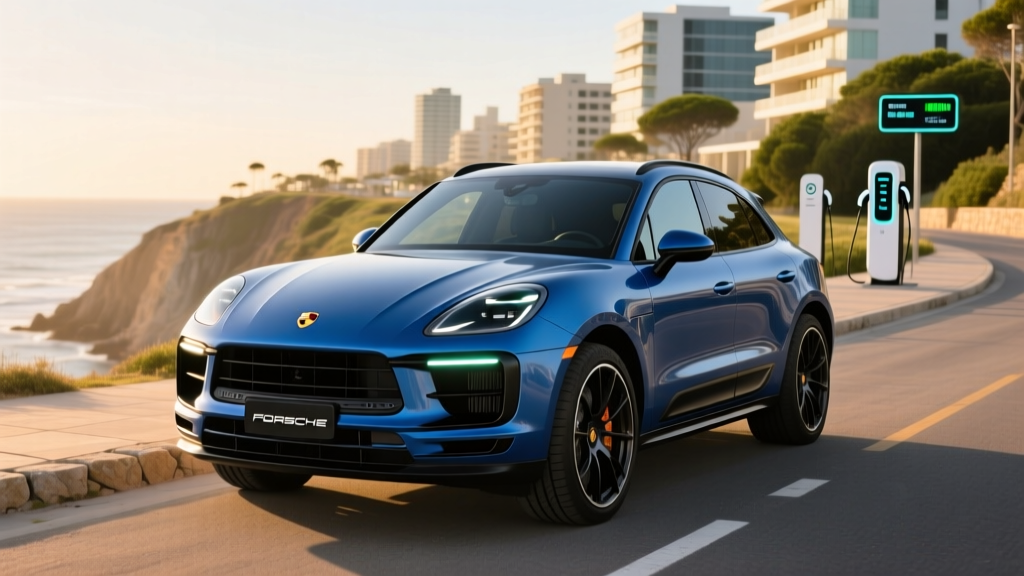
Quick Verdict: The 2026 Porsche Macan GTS Electric delivers 630 hp, a 4.1-second 0–60 mph time, and an EPA-estimated 285 miles of range from its 100 kWh (usable) NMC battery pack. Starting at approximately $96,550 (including destination), it sits well above the IRS §30D federal EV tax credit MSRP cap of $80,000 for SUVs — meaning no $7,500 credit applies. For buyers who want Porsche GTS performance with zero tailpipe emissions and have reliable Level 2 home charging access, it's a compelling luxury performance SUV. For those without home charging or who regularly drive in extreme cold, the calculus changes significantly.
Porsche's all-electric Macan lineup arrived with a promise: no compromises versus the gas Macan that made it a sales darling. The GTS variant sits at the top of the performance hierarchy, trading the turbocharged V6 of its predecessor for a dual-motor all-wheel-drive setup that actually produces more power. But performance specs only tell part of the ownership story. This guide breaks down what it actually costs to buy, charge, insure, and live with the Macan GTS Electric — and how it compares to the gas Macan GTS and key EV rivals.
Range, Efficiency, and Charging: The Numbers That Matter
The Macan GTS Electric uses a 100 kWh gross battery pack (approximately 94 kWh usable capacity) with NMC (nickel-manganese-cobalt) chemistry, built on Porsche's 800-volt Premium Platform Electric (PPE) architecture co-developed with Audi. That 800V system is the key to its charging performance.
| Spec | Value |
|---|---|
| EPA Range | 285 miles |
| Battery (Gross / Usable) | 100 kWh / ~94 kWh |
| Chemistry | NMC |
| Architecture | 800V (PPE platform) |
| Peak DC Fast Charge Rate | 270 kW |
| 10–80% DC Fast Charge Time | ~21 minutes (optimal conditions) |
| Level 2 AC Charge Rate | 11 kW (onboard charger) |
| Level 2 Full Charge Time | ~9.5 hours (0–100%) |
| Efficiency (EPA est.) | ~79 MPGe combined |
| Consumption | ~42 kWh/100 mi |
Real-World Range Reality: The EPA's 285-mile figure assumes mixed driving. On sustained highway runs at 75 mph, expect closer to 240–260 miles. In freezing temperatures (below 32°F), range can drop 20–30%, potentially reducing effective range to 200–230 miles. The Macan GTS Electric does include a heat pump as standard equipment, which mitigates cold-weather cabin-heating losses, but battery chemistry still suffers in extreme cold.
Charging at 270 kW peak is impressive, but as with all EVs, the charge curve matters more than the peak number. The Macan GTS Electric sustains above 200 kW through roughly 40% state of charge before tapering. The 10–80% time of approximately 21 minutes assumes a preconditioned battery and a charger capable of delivering 350 kW (such as Electrify America's latest stalls). At a typical 150 kW DC fast charger — still common on many road-trip routes — expect 10–80% in roughly 32–35 minutes.
Macan GTS Electric vs. Gas Macan GTS: Cost and Performance Compared
The most natural comparison isn't another EV — it's the gasoline Porsche Macan GTS that this model effectively replaces in the lineup. Here's how they stack up on paper and in projected 5-year ownership costs.
| Attribute | 2026 Macan GTS Electric | 2025 Macan GTS (Gas) |
|---|---|---|
| Base MSRP | ~$96,550 | ~$89,050 |
| Powertrain | Dual-motor AWD, 630 hp | 2.9L Twin-Turbo V6, 434 hp |
| 0–60 mph | 4.1 sec | 4.3 sec |
| EPA Range / MPG | 285 mi / 79 MPGe | ~19 city / 24 hwy / 21 combined |
| Fuel/Energy Cost (15k mi/yr) | ~$850–$1,100/yr | ~$2,700–$3,200/yr |
| Annual Maintenance | ~$300–$500 | ~$800–$1,200 |
| Federal EV Tax Credit | $0 (above MSRP cap) | N/A |
| 5-Year Fuel/Energy Cost | ~$4,250–$5,500 | ~$13,500–$16,000 |
The electric GTS commands roughly a $7,500 premium at purchase but earns that back through fuel and maintenance savings in approximately 3 to 4 years, depending on your local electricity rates and how much you drive. At the national average of $0.16/kWh for residential electricity and $3.50/gallon for premium fuel, the annual energy savings run approximately $1,800–$2,100. Maintenance savings add another $400–$700 annually — no oil changes, fewer brake replacements thanks to regenerative braking, and no transmission fluid service.
However, insurance costs for the electric variant tend to run 10–20% higher than the gas Macan GTS, based on current industry data for performance EVs. Factor in roughly $300–$500/year in additional insurance expense.
Total Cost of Ownership: 5-Year Breakdown
| Cost Category | Macan GTS Electric | Gas Macan GTS |
|---|---|---|
| Purchase Price (MSRP) | $96,550 | $89,050 |
| Federal Tax Credit | $0 | $0 |
| Est. State/Local Incentives | $0–$2,000 (varies) | $0 |
| Home Charger Install (Level 2) | $1,200–$2,500 | $0 |
| 5-Year Energy/Fuel | $4,250–$5,500 | $13,500–$16,000 |
| 5-Year Maintenance | $1,500–$2,500 | $4,000–$6,000 |
| 5-Year Insurance (est.) | $14,000–$18,000 | $12,000–$15,000 |
| Est. 5-Year Depreciation | $38,000–$45,000 | $32,000–$38,000 |
| Est. 5-Year Total Cost | $120,000–$138,000 | $118,550–$131,050 |
The 5-year total cost of ownership lands in a similar range for both vehicles, with the electric version offering lower operating costs but higher upfront price, insurance, and potentially steeper depreciation — a pattern common to luxury EVs. Depreciation is the wildcard: Porsche EVs have historically held value less predictably than their gas counterparts, though the Macan nameplate's strong resale reputation may help. Check current Kelley Blue Book projections for the latest resale forecasts.
Home Charging and Infrastructure: What Buyers Need to Know
The Macan GTS Electric's 11 kW onboard AC charger means a full Level 2 home charge takes about 9.5 hours — perfectly suited for overnight replenishment. But this assumes you have adequate home electrical infrastructure.
Minimum requirements for home Level 2 charging:
- A dedicated 240V/48-amp circuit (NEMA 14-50 outlet or hardwired EVSE)
- Electrical panel capacity of at least 200 amps (many older homes have 100–150 amp panels and may require a $1,500–$3,000 panel upgrade)
- A Level 2 charger rated for 48 amps or higher to maximize the 11 kW onboard capability — a 40-amp charger will only deliver ~9.6 kW
Without home charging, ownership becomes significantly less convenient. Public DC fast charging at $0.35–$0.50/kWh raises the Macan GTS Electric's per-mile energy cost to roughly $0.14–$0.20/mile — narrowing the gap with gasoline. If you live in an apartment or lack dedicated parking with electrical access, carefully evaluate your public charging options before committing.
For road trips, the Macan GTS Electric uses the NACS (North American Charging Standard) connector as of the 2026 model year, granting access to Tesla's Supercharger network via native compatibility in addition to CCS-compatible networks like Electrify America. This dual-network access is a meaningful practical advantage for long-distance driving.
Common Misconceptions About the Macan GTS Electric
| Myth | Fact |
|---|---|
| "It qualifies for the $7,500 federal EV tax credit." | At ~$96,550 MSRP, it exceeds the IRS §30D cap of $80,000 for SUVs. No federal credit applies. Check IRS.gov §30D rules for current eligibility details. |
| "285 miles of range means I can drive 285 miles before charging." | You should plan to charge at ~15–20% SoC, giving a practical driving range of about 230–240 miles per charge session under ideal conditions — less at highway speeds or in cold weather. |
| "270 kW charging means it charges at that speed the whole time." | Peak 270 kW is sustained only briefly at low SoC with a preconditioned battery at a 350 kW-capable charger. Average charge rate across a 10–80% session is closer to 160–180 kW. |
| "It's basically a Tesla Model Y Performance with a Porsche badge." | The Macan GTS Electric rides on Porsche's bespoke PPE 800V platform, has a fundamentally different suspension tune, interior quality tier, and driving dynamics. The price gap reflects real engineering differences, not just branding. |
| "EV batteries need replacing after a few years." | Porsche warrants the Macan EV battery for 8 years/100,000 miles against degradation below 70% capacity. NMC batteries in 800V architectures with active thermal management typically retain 85–90% capacity at 100,000 miles based on industry data from similar platforms. |
Who Should Buy the Macan GTS Electric — and Who Shouldn't
Buy the Macan GTS Electric if:
- You have (or can install) Level 2 home charging and drive under 250 miles daily
- You value instant torque and silent performance — the 630 hp dual-motor setup is noticeably more responsive than the gas V6
- You want to reduce operating costs over 5+ years of ownership
- You live in a region with reliable DC fast-charging infrastructure for road trips
- You're upgrading from a gas Macan GTS and want similar dynamics with lower running costs
Consider the gas Macan GTS (or wait) if:
- You lack home charging access and your area has sparse public DC fast chargers
- You regularly drive in sub-zero temperatures where range drops 25–30%
- You plan to keep the vehicle 3 years or less — the upfront premium may not be recouped through fuel savings
- You frequently tow — the gas Macan GTS offers 4,409 lbs towing capacity vs. the EV's ~4,400 lb rating, but range while towing drops dramatically in the electric version (expect 50%+ range reduction)
- The $96,550+ price stretches your budget and the lack of a federal tax credit makes the financial case harder
How It Stacks Up Against EV Rivals
The Macan GTS Electric doesn't exist in a vacuum. Its closest competitors include the BMW iX M60, the Tesla Model X Plaid, and the Audi Q8 e-tron S. Here's how the key specs compare:
| Spec | Macan GTS Electric | BMW iX M60 | Tesla Model X Plaid |
|---|---|---|---|
| Base MSRP | ~$96,550 | ~$111,500 | ~$94,990 |
| EPA Range | 285 mi | ~296 mi | ~326 mi |
| Horsepower | 630 hp | 610 hp | 1,020 hp |
| 0–60 mph | 4.1 sec | 4.4 sec | 2.5 sec |
| Peak DC Charge | 270 kW | ~195 kW | 250 kW |
| 10–80% Time | ~21 min | ~34 min | ~27 min |
| Federal Tax Credit | $0 | $0 | $0 |
The Macan GTS Electric's standout advantage is charging speed — its 800V architecture and 270 kW peak rate outpace both rivals. The Tesla Model X Plaid offers more range and vastly more power at a similar price but in a larger, heavier package with a different interior execution. The BMW iX M60 is pricier and slower to charge but offers slightly more range and a more spacious cabin.
For buyers specifically seeking a compact luxury performance SUV — the segment the gas Macan defined — the electric Macan GTS is currently the only purpose-built option. The others are larger vehicles in different segments.
Frequently Asked Questions
Does the Porsche Macan GTS Electric qualify for any federal tax incentives?
No. The IRS §30D federal EV tax credit has an MSRP cap of $80,000 for SUVs, and the Macan GTS Electric starts at approximately $96,550. It also must meet critical-mineral and battery-component sourcing requirements. Some states offer additional rebates or HOV lane access — check your state's energy office for current programs.
How long will the battery last before needing replacement?
Porsche covers the high-voltage battery with an 8-year/100,000-mile warranty guaranteeing at least 70% capacity retention. Based on data from similar 800V NMC platforms (including the Porsche Taycan, which has shown strong longevity), most owners can expect 85–92% capacity at 100,000 miles. Full battery replacement, if ever needed out of warranty, currently costs approximately $18,000–$25,000 for this class of pack.
Can I charge the Macan GTS Electric at Tesla Superchargers?
Yes. As of the 2026 model year, Porsche has adopted the NACS connector for the Macan Electric lineup in North America, providing native access to Tesla's Supercharger network (V3 and V4 stalls). You can also use CCS-compatible networks like Electrify America and EVgo.
What does it cost to charge at home per month?
At the national average residential rate of $0.16/kWh and assuming 1,250 miles driven per month (15,000/year), you'd consume roughly 525 kWh monthly, costing approximately $84/month. Compare this to roughly $225–$265/month for premium gasoline in the gas Macan GTS at the same mileage. Rates vary significantly by state — California and Northeast buyers may pay $0.25–$0.35/kWh, while some Southern and Midwestern states average $0.11–$0.13/kWh.
Is the Macan GTS Electric good in snow and cold weather?
The dual-motor AWD system provides excellent traction, and the standard heat pump improves cold-weather efficiency. However, expect 20–30% range loss in sustained below-freezing temperatures. Porsche's thermal management system includes battery preconditioning for DC fast charging, which helps maintain charge speeds in cold conditions. If you live in a harsh-winter climate, plan for an effective winter range of roughly 200–230 miles.
How does regenerative braking work in the Macan GTS Electric?
Porsche offers adjustable regen levels selectable through steering-wheel controls. Unlike some competitors, the Macan Electric does not default to aggressive one-pedal driving — Porsche's philosophy favors a coasting mode that maximizes efficiency by reducing unnecessary speed-then-brake cycles. The maximum regen recovery rate is approximately 240 kW during deceleration.