Quick Answer: Is the 2026 Porsche Macan EV Worth It?
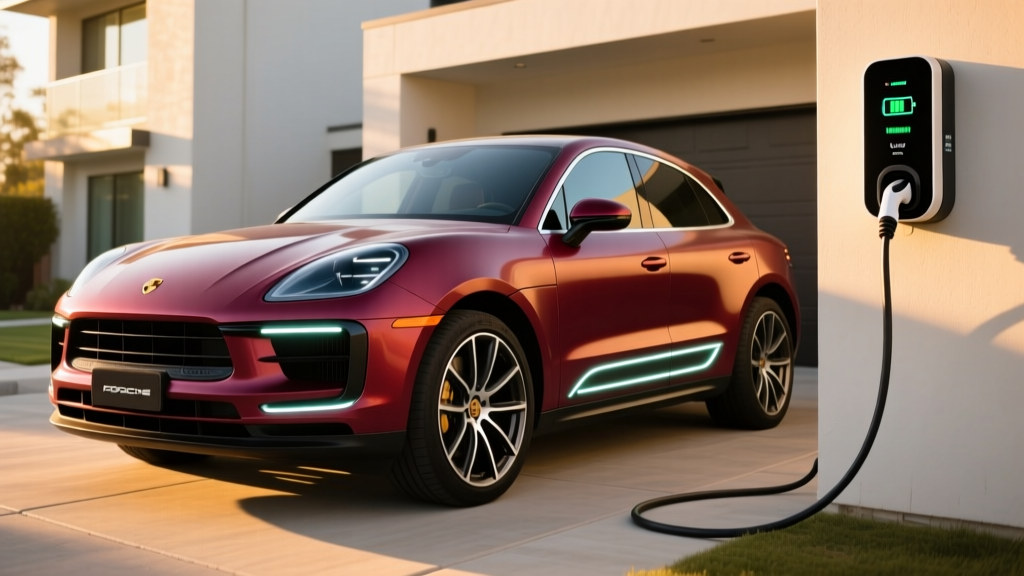
The 2026 Porsche Macan EV (officially the Macan 4 Electric and Macan Turbo Electric) delivers an EPA-estimated 308 miles of range (Macan 4) and up to 630 hp (Turbo), with 800-volt architecture enabling 10–80% DC fast charging in roughly 21 minutes at up to 270 kW. Pricing starts around $78,800 before destination. It does not qualify for the $7,500 federal §30D tax credit because it exceeds the SUV MSRP cap and is assembled outside the US. Compared to the gas Macan, the EV costs more upfront but saves an estimated $1,200–$1,800 annually in fuel and maintenance for a typical driver. The EV is the right pick if you have home Level 2 charging, prioritize performance and refinement, and don't regularly tow or drive in extreme cold without garage parking.
2026 Macan EV Specs at a Glance
Porsche offers the electric Macan in two primary trims for the US market. Both use a 100 kWh battery pack (approximately 95 kWh usable) with NMC (nickel manganese cobalt) chemistry and an 800-volt electrical architecture — the same platform underpinning the Taycan and Audi Q6 e-tron.
| Spec | Macan 4 Electric | Macan Turbo Electric |
|---|---|---|
| Base MSRP | $78,800 | $105,300 |
| EPA Range | 308 mi | 288 mi |
| Battery (usable) | ~95 kWh NMC | ~95 kWh NMC |
| Horsepower | 402 hp | 630 hp (Launch Control) |
| 0–60 mph | 4.9 sec | 3.1 sec |
| Peak DC Charge Rate | 270 kW | 270 kW |
| 10–80% DC Fast Charge | ~21 min | ~21 min |
| Level 2 (AC) Rate | 11 kW | 11 kW |
| MPGe (combined) | 88 MPGe | 83 MPGe |
| Drivetrain | Dual-motor AWD | Dual-motor AWD |
| Battery Warranty | 8 yr / 100,000 mi | 8 yr / 100,000 mi |
Sources: fueleconomy.gov, Porsche USA official specifications.
Real-World Range: What the EPA Number Doesn't Tell You
EPA Sticker: 308 miles (Macan 4) / 288 miles (Turbo)
Expect in real-world highway driving (70–80 mph): ~245–270 miles
Cold weather (below 30°F, no preconditioning): ~200–230 miles
Best-case (city, mild weather, regen-heavy): 310+ miles achievable
The Macan 4's 88 MPGe combined translates to roughly 38 kWh per 100 miles — reasonable for a 5,200-pound performance SUV but not class-leading. The Tesla Model Y Long Range, by comparison, achieves 122 MPGe combined on a smaller battery, highlighting the efficiency penalty of the Macan's weight and performance tuning.
On a 300-mile road trip at highway speeds with air conditioning running, expect to arrive with roughly 10–15% State of Charge remaining in mild conditions. In winter, that same trip may require a 15-minute DC fast-charge stop. Porsche's heat pump (standard on both trims) mitigates cold-weather losses compared to EVs without thermal management, but physics still applies: battery resistance increases in cold, and cabin heating draws significant energy.
Charging Speed and the 800-Volt Advantage
The Macan EV's 800-volt architecture is its strongest ownership asset for road-trip charging. Here's what that translates to in practice:
| Charging Level | Power (kW) | Miles Added Per Hour | Typical Use Case |
|---|---|---|---|
| Level 1 (120V household) | ~1.4 kW | ~3–4 mi/hr | Emergency / overnight trickle |
| Level 2 (240V home) | 11 kW | ~30–33 mi/hr | Daily home charging (~9 hrs 0–100%) |
| DC Fast (350 kW station) | Peak 270 kW | ~160+ mi in 10 min | Road trips (10–80% in ~21 min) |
| DC Fast (150 kW station) | ~130–150 kW | ~90 mi/hr sustained | Common public chargers |
Charging curve reality: The 270 kW peak only holds between roughly 10–35% State of Charge. From 35–60%, expect ~200 kW; from 60–80%, it tapers to ~130–150 kW. Above 80%, charging slows dramatically to protect the NMC cells — a 80–100% top-off can take as long as the 10–80% session. For daily driving, set your charge limit to 80% to preserve long-term battery health; only charge to 100% before long road trips.
At home on an 11 kW Level 2 charger (requiring a 48-amp dedicated circuit), a full charge from empty takes roughly 9 hours. Most owners plugging in overnight after a typical 60-mile daily drive will replenish in about 5–6 hours. If your home electrical panel is maxed at 100 amps, a panel upgrade to 200 amps may be necessary — budget $1,500–$3,000 for that electrical work on top of $600–$1,200 for the charger unit and $800–$2,000 for licensed electrician installation.
Macan EV vs. Gas Macan: The Cost Breakdown
The most common buyer question: does the electric Macan save money compared to the gasoline Macan? Here's a 5-year comparison assuming 12,000 miles/year, $3.80/gallon premium fuel, and $0.14/kWh average electricity (national residential blend of home and public charging).
| Cost Category (5 Years) | Macan 4 Electric ($78,800) | Gas Macan (Base ~$62,900) |
|---|---|---|
| Purchase Price | $78,800 | $62,900 |
| Federal Tax Credit (§30D) | $0 (exceeds MSRP cap) | $0 |
| Fuel / Electricity | $3,990 | $11,400 |
| Maintenance | $1,800 | $4,500 |
| Insurance (est.) | $12,500 | $10,500 |
| Estimated Depreciation | $35,500 | $28,300 |
| Total 5-Year Cost | ~$132,590 | ~$117,600 |
Key takeaways: The EV saves roughly $7,400 in fuel and $2,700 in maintenance over 5 years (no oil changes, fewer brake replacements thanks to regenerative braking, no transmission fluid). However, higher purchase price, steeper projected depreciation (luxury EVs have historically depreciated faster than ICE equivalents), and higher insurance premiums (typically 15–25% more for EVs) eat most of those savings.
The Macan EV breaks even on operating costs around year 6–7 compared to the gas Macan, assuming stable electricity and fuel prices. If you have access to free or discounted workplace charging, or live in a state with low electricity rates (under $0.10/kWh), the EV's economics improve significantly.
Federal Tax Credit: Why the Macan EV Doesn't Qualify
Under current IRS §30D rules, the Macan EV is ineligible for the up-to-$7,500 federal clean vehicle credit for several compounding reasons:
- MSRP Cap: SUVs must have a base MSRP at or below $80,000. The Macan Turbo ($105,300) exceeds this outright. The Macan 4 ($78,800) sits under the cap, but other rules still disqualify it.
- Final Assembly: The Macan EV is assembled in Leipzig, Germany. §30D requires final assembly in North America.
- Battery Sourcing: Even if assembled domestically, the battery's critical minerals and component sourcing must meet phased-in thresholds that many imported vehicles do not satisfy.
- Buyer Income Cap: AGI limits of $150K single / $300K joint still apply to any qualifying vehicle.
Some buyers may benefit from state-level incentives (California's CVRP, Colorado's innovative motor vehicle credit, etc.) or lease pass-through structures where the leasing company captures the commercial clean vehicle credit (§45W) and passes savings to the lessee. Consult a tax professional and check irs.gov for current-year rules before committing.
Common Macan EV Misconceptions — Corrected
| Myth | Fact |
|---|---|
| "It's just a Taycan SUV." | The Macan EV shares the PPE (Premium Platform Electric) architecture with the Audi Q6 e-tron, not the Taycan's J1 platform. It has different tuning, more cargo space (18.4 cu ft rear + 2.9 cu ft frunk), and SUV-specific suspension. |
| "I'll get 308 miles no matter how I drive." | EPA range is a laboratory estimate. Sustained highway driving at 75+ mph typically yields 245–270 miles. Cold weather compounds the loss. |
| "800V means it charges at 270 kW everywhere." | Peak 270 kW requires a 350 kW-capable charger (Electrify America, some EVgo stations). Most public DC chargers max at 50–150 kW, where the Macan charges like any other modern EV. |
| "The battery will need replacing in 5 years." | Porsche warranties the battery for 8 years/100,000 miles against degradation below 70% capacity. Industry data shows NMC packs losing roughly 10–15% capacity over 150,000 miles with proper care (avoiding frequent 100% charges and DC fast-charging exclusively). |
| "It qualifies for the $7,500 federal tax credit." | It does not. German assembly, MSRP, and battery sourcing all disqualify it under current §30D rules. |
Who Should Buy the Macan EV — And Who Shouldn't
Buy the Macan EV If:
- You have reliable home Level 2 charging (garage or driveway with 240V access)
- You want Porsche driving dynamics in an EV and find the Taycan too low-slung for daily practicality
- Your daily commute is under 80 miles and road trips are occasional (1–2 per month)
- You value silent, instant torque and one-pedal driving refinement over maximum efficiency
- You're cross-shopping the BMW iX, Audi Q8 e-tron, or Mercedes EQE SUV and want the sportiest handling in the segment
Skip the Macan EV If:
- You live in an apartment or lack consistent home charging access — public-only charging at $0.35–$0.50/kWh eliminates fuel-cost savings
- You regularly drive 300+ miles in a single day in cold weather — the real-world range ceiling of ~230 miles in winter makes this stressful
- Tax credit eligibility is a dealbreaker — the Rivian R1S, Tesla Model Y, and several others qualify; the Macan does not
- You need more than 18.4 cu ft of rear cargo space — the gas Macan offers 17.6 cu ft (similar), but the Hyundai Ioniq 5 or Kia EV9 offer significantly more utility
- Budget is the primary driver — a gas Macan or a Tesla Model Y Long Range ($48,000, 320 mi range, tax-credit eligible) delivers more value per dollar
First-Time EV Buyer Checklist for the Macan
If the Macan EV is your first electric vehicle, here's what to prepare before delivery day:
- Get a home electrical assessment. A licensed electrician should evaluate your panel capacity. The Macan's 11 kW AC charger pulls 48 amps — you need a 60-amp dedicated circuit. Panel upgrades add $1,500–$3,000 if needed.
- Choose a Level 2 charger. Porsche recommends the Porsche Mobile Charger Connect (~$700), but third-party options like the ChargePoint Home Flex or Emporia Level 2 work identically with the J1772/NACS connector (the 2026 Macan EV uses NACS in North America).
- Download charging apps. Electrify America, EVgo, and ChargePoint cover most public DC fast-charging. The Macan's built-in Porsche Charging Planner routes you through compatible stations and preconditioning the battery for optimal charge speed on arrival.
- Set your daily charge limit to 80%. NMC chemistry degrades faster when held at 100% for extended periods. Use 100% only for road trips.
- Understand your electricity rate. Time-of-use plans (cheaper overnight charging) can cut your fuel cost by 30–40%. Contact your utility about EV-specific rate plans.
- Factor in insurance. Get quotes before purchasing. Luxury EV premiums run $2,000–$3,000/year depending on your profile — 15–25% higher than the gas Macan.
Frequently Asked Questions
Does the Macan EV use NACS or CCS?
The 2026 Macan EV sold in North America uses the NACS (North American Charging Standard) connector, granting native access to Tesla Supercharger stations (via the open Supercharger network) in addition to Electrify America, EVgo, and other CCS networks with adapters if needed.
How does the Macan EV compare to the Tesla Model Y?
These are different vehicles for different buyers. The Model Y Long Range ($48,000, 320 mi EPA, qualifies for $7,500 credit) is lighter, more efficient (122 MPGe vs 88), and far more affordable. The Macan EV costs $30,000+ more but delivers superior build quality, ride refinement, handling dynamics, interior materials, and Porsche brand cachet. It's a luxury performance purchase, not a value one.
What happens if the battery degrades?
Porsche's battery warranty guarantees at least 70% capacity retention over 8 years or 100,000 miles. If the pack falls below that threshold, Porsche will repair or replace it at no cost. Out-of-warranty replacement for a ~95 kWh NMC pack currently costs $15,000–$25,000, though prices are expected to decline as battery costs continue falling industry-wide.
Can I tow with the Macan EV?
Yes. The Macan EV is rated to tow up to 4,400 pounds (braked trailer). However, towing significantly reduces range — expect a 30–50% reduction depending on trailer weight and aerodynamics. A 308-mile range drops to roughly 160–210 miles when towing near max capacity.
Is the Macan EV's Autopilot equivalent actually good?
Porsche's InnoDrive with Active Lane Keeping is a SAE Level 2 driver-assistance system — it handles adaptive cruise control and lane centering on highways, but the driver must remain fully engaged with hands on or near the wheel. It is not self-driving. It's competent for highway cruising but less ambitious than Tesla's FSD Supervised or GM's Super Cruise (which allows hands-off on mapped highways, still Level 2). Porsche prioritizes conservative, predictable behavior over aggressive autonomy claims.