Is Leasing the 2026 Porsche Macan EV a Smart Financial Move?
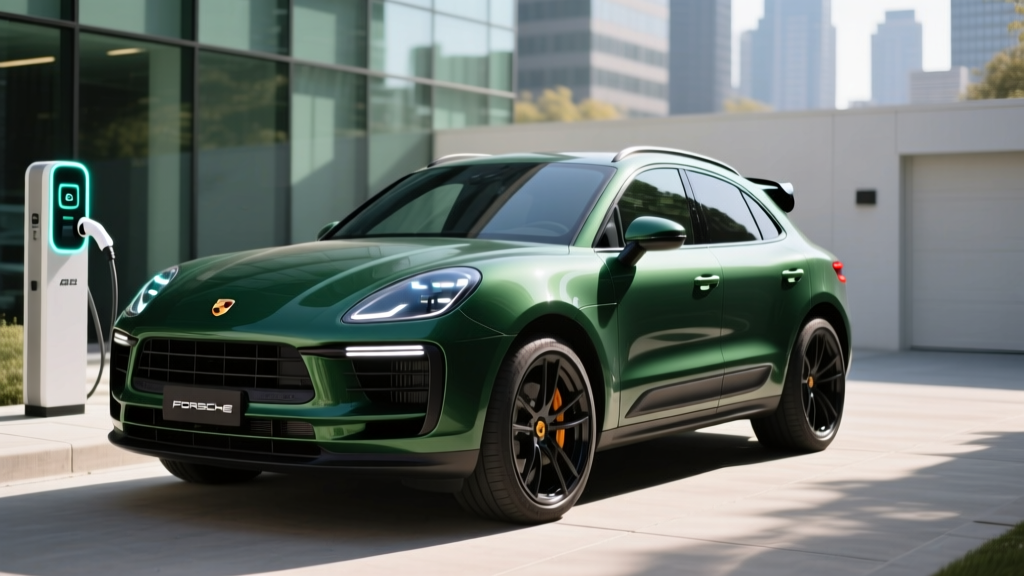
The 2026 Porsche Macan EV has landed as one of the most anticipated luxury electric SUVs in recent memory, bringing Porsche's 800-volt architecture and sports-car DNA to a practical, mid-size package. But with a starting MSRP hovering around $78,800 for the base Macan 4 Electric and climbing past $105,000 for the Macan Turbo, buyers are increasingly turning to lease deals to manage the monthly cash flow and sidestep long-term depreciation risk.
The question isn't just "what's the monthly payment?" — it's what the total cost of ownership looks like over five years when you factor in electricity, insurance, maintenance, tax credits, and resale value. This guide dissects every line item so you can evaluate whether a Porsche Macan EV lease makes financial sense in 2026.
EPA Range: 308 miles (real-world highway: ~260-275 mi; cold weather: ~230-245 mi)
Battery: 100 kWh gross / ~95 kWh usable, NMC chemistry
Max DC Fast Charge: 270 kW (10-80% in ~21 minutes)
Level 2 Charge Rate: 11 kW (AC onboard charger)
0-60 mph: 4.9 seconds | Horsepower: 402 hp
Base MSRP: $78,800 (Macan 4) / $99,500 (Macan 4S) / $105,300 (Macan Turbo)
5-Year Total Cost of Ownership Breakdown
Before we get to lease-specific math, let's establish the baseline cost of owning a 2026 Porsche Macan 4 Electric for five years and 75,000 miles. This gives you a framework to compare against leasing, purchasing, or sticking with a gas-powered luxury SUV like the BMW X5 or Mercedes GLE.
| Category | Estimated Cost | Notes |
|---|---|---|
| Purchase Price (MSRP + dest.) | $79,650 | Before incentives, options add $5K-$25K |
| Federal Tax Credit (§30D) | -$0 to -$7,500 | See eligibility section below |
| Electricity (Charging) | $5,625 | 75K mi @ 3.0 mi/kWh, avg $0.15/kWh (mix of home + public) |
| Insurance (5 years) | $17,500 | ~$3,500/yr avg for luxury EV |
| Maintenance & Repairs | $2,800 | Tires, cabin filter, wipers, brake fluid |
| Depreciation (5-year) | $38,000 | ~48% retained value at 5yr/75K mi |
| Net 5-Year Cost (after credit) | $58,075 - $65,575 | Depends on tax credit eligibility |
The lease advantage: A typical 36-month Macan EV lease in 2026 runs $899-$1,299/month depending on trim, money factor, and down payment. Over three years, that's roughly $32,400-$46,800 in payments plus a potential $7,500 lease credit (applied as a capitalized cost reduction by the lessor). You never absorb the depreciation hit, and you can walk away or upgrade at term-end.
Federal Tax Credit Eligibility: IRS §30D Rules for 2026
The federal EV tax credit under IRS §30D can knock up to $7,500 off the effective cost of a new EV — but the 2026 rules are strict, and eligibility for the Porsche Macan EV is not guaranteed for every buyer.
- MSRP Cap: SUVs must be under $80,000. The Macan 4 Electric ($78,800 base) qualifies; the 4S and Turbo trims exceed the cap and are ineligible.
- Buyer Income Cap: Modified AGI must not exceed $150,000 (single), $225,000 (head of household), or $300,000 (married filing jointly).
- Battery Sourcing: $3,750 requires critical minerals from the US or a free-trade-agreement country; the other $3,750 requires battery components manufactured/assembled in North America. The Macan EV's supply chain is still ramping — verify current-year sourcing compliance on fueleconomy.gov.
- Point-of-Sale Transfer: As of 2024, buyers can transfer the credit to the dealer at purchase, reducing the drive-off price immediately. This applies to purchases, not all lease structures.
- Lease Loophole (§45W): Commercial lessors can claim the credit under §45W (commercial clean vehicle credit) and may pass savings to lessees as a capitalized cost reduction. This is how many Macan EV lease deals advertise "$7,500 lease credit" — it's the lessor's credit, passed through.
Key takeaway for lease shoppers: If your income exceeds the §30D caps, leasing may actually be the only way to capture the $7,500 benefit, since the commercial lessor (§45W) credit has no income cap. Ask the dealer explicitly whether the advertised lease credit reflects a passed-through §45W benefit.
Charging Costs vs. Gasoline: The Per-Mile Math
The Macan 4 Electric achieves an EPA-rated 86 MPGe combined, which translates to roughly 3.0 miles per kWh in mixed driving. Here's how that compares to a gas equivalent like the Porsche Macan GTS (19 MPG combined).
| Metric | Macan 4 Electric | Macan GTS (Gas) |
|---|---|---|
| Energy Economy | 3.0 mi/kWh (86 MPGe) | 19 MPG combined |
| Fuel/Energy Price | $0.15/kWh (home avg) / $0.45/kWh (DC fast) | $3.80/gal (premium) |
| Cost Per Mile (home charging) | $0.050/mi | $0.200/mi |
| Cost Per Mile (public DC fast) | $0.150/mi | $0.200/mi |
| Annual Fuel/Energy (15K mi/yr, 80% home) | $1,050 | $3,000 |
| 5-Year Fuel Savings (EV) | ~$9,750 | |
Real-world caveat: If you rely heavily on public DC fast charging (Electrify America, EVgo) at $0.40-$0.55/kWh, your per-mile cost rises to $0.13-$0.18/mi — still below premium gas, but the savings gap narrows considerably. Home Level 2 charging at off-peak utility rates ($0.08-$0.12/kWh in many regions) is where the Macan EV's economics shine brightest.
With its 270 kW peak DC charge rate, the Macan EV can add roughly 160 miles of range in 10 minutes at a compatible 350 kW charger. Expect the charge curve to taper significantly above 80% SoC — that 10-80% sprint takes about 21 minutes, but 80-100% can add another 20+ minutes.
Maintenance Savings: What You Won't Pay For
EVs eliminate the most common recurring maintenance costs of internal combustion vehicles. Here's what a five-year comparison looks like:
| Service Item | Gas Macan GTS | Macan 4 Electric |
|---|---|---|
| Oil Changes | $1,500 (7-8 changes) | $0 |
| Brake Pads/Rotors | $2,400 (2 sets) | $0-$600 (regen extends life 3-5x) |
| Transmission Fluid | $400 | $0 |
| Spark Plugs | $600 | $0 |
| Engine Air Filter | $300 | $0 |
| Tires (both) | $2,400 | $2,800 (heavier vehicle, EV-specific tires) |
| Cabin Air Filter + Wipers + Fluid | $600 | $600 |
| Brake Fluid Flush | $300 | $300 |
| Total 5-Year Maintenance | $8,500 | $3,700-$4,300 |
Net maintenance savings with the Macan EV: roughly $4,200-$4,800 over five years. The biggest EV-specific expense is tires — the Macan EV's 5,300+ lb curb weight and instant torque wear tires faster than a gas equivalent. Budget for a set of EV-optimized tires (like the Michelin Pilot Sport EV or Pirelli P Zero Elect) around 30,000-35,000 miles.
Porsche's new-vehicle limited warranty covers 4 years/50,000 miles, and the battery pack is warranted for 8 years/100,000 miles against defects and capacity loss below 70% state of health.
Insurance Cost Reality for the Macan EV
Here's where EV ownership gets more expensive, not less. The Porsche Macan EV will cost significantly more to insure than a comparable gas SUV — and even more than some competing EVs.
Why EV insurance costs more:
- Higher repair costs: Battery pack damage, even minor, often triggers total replacement ($20,000-$30,000+ for a 100 kWh pack). Repair shops need specialized EV training and equipment.
- Higher vehicle value: Insurers base premiums partly on replacement cost. A $79K-$105K vehicle commands higher comprehensive and collision premiums.
- Limited collision-repair network: Porsche-certified EV body shops are still relatively scarce, driving up labor rates and claim timelines.
- Performance profile: 402-630 hp and sub-5-second 0-60 times place the Macan EV in a high-performance insurance tier.
Expect to pay $3,000-$4,200 per year for full coverage on a Macan 4 Electric, depending on your driving record, location, and coverage limits. That's roughly 15-30% more than a gas Macan and 10-20% more than a Tesla Model Y (which benefits from a larger repair network and lower base price).
Mitigation strategies: Bundle with home insurance, maintain a clean record, consider higher deductibles ($1,000+), and get quotes from EV-friendly insurers like GEICO, Progressive, and specialty carriers before signing a lease.
Depreciation and Resale Value: The EV Wildcard
Depreciation is the single largest ownership cost for any luxury vehicle, and EVs have historically depreciated faster than their gas counterparts. The Macan EV enters a complex resale landscape in 2026:
Factors working against EV resale:
- Rapid technology advancement (newer models with better range/charging make older EVs feel dated)
- Battery degradation concerns among used buyers (though NMC chemistry at 100 kWh retains well)
- Tesla price cuts in 2023-2025 cascaded through the entire used EV market, resetting expectations
- Federal tax credit availability on new EVs reduces the relative value proposition of used ones
Factors favoring the Macan EV specifically:
- Porsche brand cachet and historical resale strength (911 and Cayenne hold value exceptionally well)
- Limited production volumes relative to mass-market EVs
- 800V architecture and 270 kW charging remain competitive through the late 2020s
- Used EV tax credit (§25E, up to $4,000) makes sub-$25K used EVs more attractive, but the Macan won't hit that price point for years — keeping demand among premium buyers
Projected 5-year retained value: 45-52% of MSRP, depending on trim, mileage, and market conditions. That translates to a 5-year depreciation hit of $38,000-$44,000 on a Macan 4 Electric. This is the primary reason leasing is attractive — you transfer that depreciation risk to Porsche Financial Services.
In a 36-month lease with a 58% residual, you're only paying for the ~42% depreciation during the lease term (~$33,000 on a $79K vehicle), plus the money factor (interest equivalent). If the Macan EV depreciates faster than projected, the lessor absorbs the loss at turn-in. If it holds value better, you can purchase at the favorable residual or simply walk away.
State, Local, and Utility Incentives
Beyond the federal §30D credit, many states, municipalities, and electric utilities offer additional incentives that can stack to reduce your effective cost:
- California: CVRP rebate up to $2,000 (income-dependent); some air districts offer additional $1,500-$4,500 for retirement of older vehicles
- Colorado: State tax credit up to $5,000 for new EVs (income-capped); utility rebates from Xcel Energy up to $1,250
- New York: Drive Clean Rebate up to $2,000 (point-of-sale); ConEdison EV charging rebate up to $500
- Utility Home Charging Rebates: Many utilities (PG&E, SDG&E, National Grid, Duke Energy) offer $250-$1,500 toward Level 2 home charger purchase and installation, plus time-of-use rate discounts
Incentive amounts and availability vary by jurisdiction and change frequently. Check your state energy office and local utility for current programs.
For a California-based Macan EV lessee who qualifies for all available incentives, the combined stack could reach $10,000-$12,000 (federal + state + utility), dramatically improving the lease economics.
Evaluating 2026 Macan EV Lease Deals: A Decision Framework
- Your AGI exceeds §30D income caps but you can capture the §45W lessor credit
- You want to avoid long-term depreciation risk on a first-generation EV platform
- You drive 10,000-15,000 miles/year (within typical lease mileage limits)
- You have reliable home Level 2 charging access
- You plan to upgrade vehicles every 3 years anyway
- You qualify for the full $7,500 §30D credit (income, MSRP, and sourcing all check out)
- You drive under 10,000 miles/year (lease overage penalties add up)
- You plan to keep the vehicle 7+ years (amortizing the higher purchase price)
- You want to modify the vehicle (wraps, wheels, suspension)
- You live in a state with strong EV resale demand (CA, WA, CO, NY)
Frequently Asked Questions
How much does it really cost to own a Porsche Macan EV over 5 years?
Between $58,000 and $66,000 in net cost (purchase price minus residual value, plus energy, insurance, and maintenance, minus applicable tax credits). Leasing for 3 years costs roughly $32,000-$47,000 in payments plus a potential $7,500 lease credit, with no depreciation exposure.
Does the Porsche Macan EV qualify for the $7,500 federal tax credit?
The base Macan 4 Electric ($78,800 MSRP) falls under the $80,000 SUV cap, but you must also meet income limits ($150K/$225K/$300K by filing status) and the battery must meet 2026 critical-mineral and component-sourcing requirements. Verify current eligibility on fueleconomy.gov. Higher trims (4S, Turbo) exceed the MSRP cap and are ineligible for §30D, though the §45W lessor credit may apply on leases.
How much do I save on fuel and maintenance vs. a gas Porsche Macan?
Approximately $9,750 on fuel and $4,200-$4,800 on maintenance over five years (75,000 miles), assuming 80% home charging at $0.15/kWh. Combined savings of roughly $14,000-$14,500 offset a meaningful portion of the EV's price premium.
Are EVs more expensive to insure than gas cars?
Yes, typically 15-30% more for a luxury EV like the Macan. Higher repair costs (especially battery replacement), elevated vehicle values, and a smaller certified repair network all contribute. Expect $3,000-$4,200/year for full coverage.
How well do EVs hold their value in 2026?
The EV resale market has stabilized after the 2023-2025 correction, but luxury EVs still depreciate 48-55% over five years on average. The Porsche Macan EV is projected to retain 45-52% at five years, benefiting from brand strength and limited production — better than most EVs but below Porsche's gas models.
What happens if the Macan EV battery needs replacement out of warranty?
Porsche warrants the 100 kWh battery for 8 years/100,000 miles against defects and capacity loss below 70% SoH. Out-of-warranty replacement would cost an estimated $18,000-$28,000, though real-world NMC degradation data from similar platforms suggests 85-90% capacity retention at 150,000 miles with proper care (avoiding frequent 100% charges and extreme heat exposure).