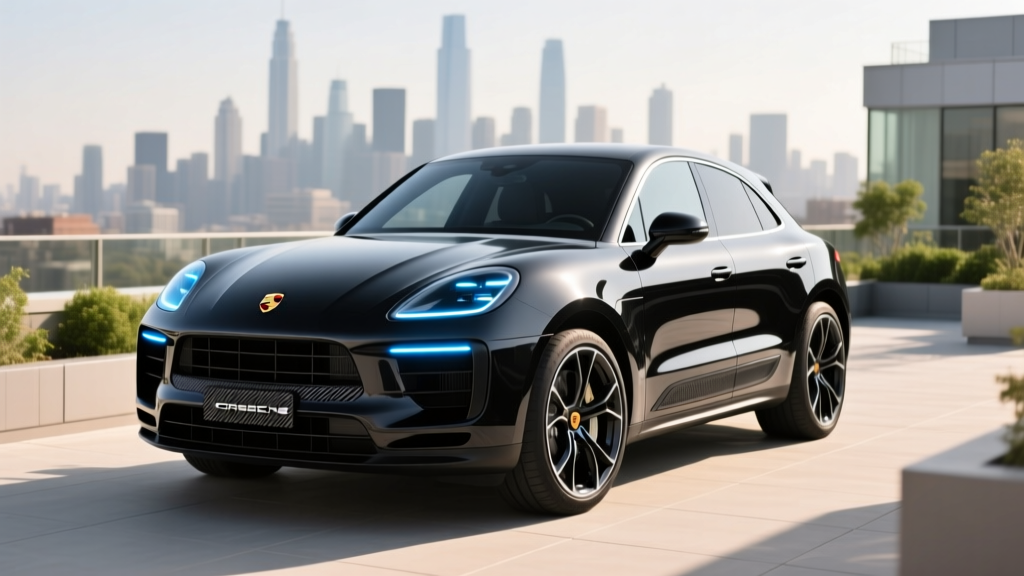
The 2026 Porsche Macan EV is a luxury electric SUV that pairs sports-car dynamics with a 100 kWh battery and 800-volt architecture. But when you're evaluating a Macan EV lease, the monthly payment is only the beginning. Between insurance premiums, charging costs, depreciation curves, and the shifting landscape of federal tax incentives, the real cost of ownership demands a closer look.
Below, we break down every dollar you'll spend — and save — over five years of owning or leasing the Macan EV, using current 2026 model-year specs, IRS §30D rules, and real-world efficiency data.
2026 Macan EV: The Numbers That Matter
Before we get to costs, here's what you're working with. The 2026 Macan EV is built on Porsche's PPE (Premium Platform Electric) architecture co-developed with Audi. It comes in two primary trims for the US market:
| Spec | Macan 4 EV | Macan Turbo EV |
|---|---|---|
| Base MSRP | $78,800 | $105,300 |
| Battery (usable) | 95 kWh (NMC, 100 kWh gross) | 95 kWh (NMC, 100 kWh gross) |
| Horsepower | 402 hp (w/ Launch Control) | 630 hp (w/ Launch Control) |
| 0–60 mph | 4.9 sec | 3.1 sec |
| EPA Range | 308 mi | 288 mi |
| Max DC Fast Charge | 270 kW (peak) | 270 kW (peak) |
| 10–80% DCFC Time | ~21 min | ~21 min |
| Level 2 AC Charge Rate | 11 kW (std) / 22 kW (opt) | 11 kW (std) / 22 kW (opt) |
| MPGe (combined) | 86 MPGe | 79 MPGe |
| Efficiency | 39 kWh/100 mi | 42 kWh/100 mi |
| Battery/Powertrain Warranty | 8 yr / 100,000 mi | 8 yr / 100,000 mi |
How Much Does a Macan EV Lease Actually Cost Per Month?
Leasing a Macan EV in 2026 typically involves a 36-month term with 10,000–12,000 miles per year. Lease pricing varies by dealer, region, and credit tier, but here's a representative structure based on current market listings:
- Macan 4 EV: ~$1,150–$1,350/month (36 months, $5,000–$7,500 due at signing, 10k mi/yr)
- Macan Turbo EV: ~$1,650–$1,950/month (36 months, $7,500–$10,000 due at signing, 10k mi/yr)
Lease money factors (the EV equivalent of an interest rate) for well-qualified buyers hover around 0.00250–0.00310 in early 2026, which annualizes to roughly 6.0–7.4% APR. Porsche Financial Services occasionally offers subsidized lease rates on EVs, so check for promotional programs.
Key lease caveat: The federal EV tax credit (§30D) applies to purchases, not leases directly. However, under IRS rules, the leasing company (the lessor) may claim the commercial clean vehicle credit (§45W) and pass savings to you as a capitalized-cost reduction — effectively lowering your monthly payment. Not all lessors pass this through, so ask explicitly.
5-Year Total Cost of Ownership: Macan EV vs. Gas Macan
To understand whether a Macan EV lease (or purchase) makes financial sense, we need a full 5-year/60,000-mile cost breakdown. We're comparing the Macan 4 EV against the gas-powered 2026 Macan S (3.0L turbo V6, 375 hp, ~$68,500 MSRP, 21 MPG combined).
| Category | Macan 4 EV | Gas Macan S |
|---|---|---|
| Purchase/Lease Cost (5-yr equivalent) | $78,800 | $68,500 |
| Federal Tax Credit (if eligible) | –$0 to –$7,500* | $0 |
| Fuel/Energy (60k mi) | $5,850** | $10,285*** |
| Maintenance (5 yr) | $2,100 | $4,800 |
| Insurance (5 yr) | $16,500 | $12,000 |
| Estimated Depreciation (5 yr) | $39,400 (50%) | $30,825 (45%) |
| Total 5-Year Cost | ~$135,750 | ~$125,610 |
| After Tax Credit ($7,500) | ~$128,250 | ~$125,610 |
*Tax credit eligibility depends on income, MSRP caps, and battery sourcing — see details below.
**Assumes 80% home charging at $0.16/kWh, 20% public DCFC at $0.40/kWh, 39 kWh/100 mi efficiency.
***Assumes $3.60/gal premium, 21 MPG combined.
The EV closes the gap significantly when the full tax credit applies, and the monthly operating cost (fuel + maintenance) is substantially lower. But insurance and depreciation pull in the opposite direction.
Federal Tax Credit: Do You Qualify for §30D?
The IRS §30D Clean Vehicle Credit offers up to $7,500 for qualifying new EVs. But eligibility is a three-part test, and the Macan EV faces challenges:
- MSRP Cap: SUVs must have an MSRP ≤ $80,000. The Macan 4 EV at $78,800 clears this. The Macan Turbo at $105,300 does not qualify.
- Buyer Income Cap: Modified AGI must not exceed $150,000 (single), $225,000 (head of household), or $300,000 (joint). Income is checked against the current or prior tax year — whichever is lower.
- Battery Sourcing (§30D critical minerals + components): The $7,500 credit splits into two halves — $3,750 for critical-mineral sourcing and $3,750 for battery-component manufacturing. As of 2026, vehicles with battery components from a "foreign entity of concern" (FEOC) are disqualified from that half. Porsche sources cells from multiple suppliers, and the Macan EV's eligibility for the full $7,500 vs. $3,750 depends on the specific model-year battery pack configuration. Check the latest fueleconomy.gov listing for the current credit amount.
- Point-of-Sale Transfer: Since 2024, you can transfer the credit to the dealer at purchase, reducing the purchase price upfront rather than waiting to claim it on your tax return. The credit is non-refundable — if your tax liability is less than the credit, you won't get the difference back (unless you use the point-of-sale transfer).
- One Credit Per Vehicle, Per Taxpayer: You can only claim the credit once per vehicle (VIN), and there's a limit of one new EV credit per taxpayer every three years.
Bottom line for the Macan EV: The base Macan 4 EV under the $80K cap is eligible for at least $3,750 and potentially $7,500 depending on current battery-sourcing compliance. The Turbo trim is excluded by MSRP. Always verify on the IRS website and consult a tax professional before relying on the credit in your purchase decision.
State, Local, and Utility Incentives
Your location matters significantly. State and utility incentives vary widely and change frequently. Examples of what may be available in 2026:
- California (CVRP): Up to $2,000 for income-qualified buyers (program funding varies)
- Colorado: State tax credit up to $5,000 for EVs under $80,000 MSRP
- New York (Drive Clean Rebate): Up to $2,000 point-of-sale rebate (income-tiered)
- Utility rebates: Many utilities (e.g., PG&E, ConEdison, Xcel Energy) offer $500–$1,500 for home charger installation or off-peak charging credits
Check your state energy office and local utility for current programs. These stack with the federal credit in most cases.
Charging vs. Gas: The Per-Mile Cost Reality
This is where the Macan EV consistently saves money — but the savings depend heavily on how you charge.
| Scenario | Macan 4 EV (39 kWh/100 mi) | Gas Macan S (21 MPG, $3.60/gal premium) |
|---|---|---|
| Home charging ($0.16/kWh avg) | $0.062/mi | $0.171/mi |
| Public DCFC ($0.40/kWh avg) | $0.156/mi | $0.171/mi |
| Blended (80% home / 20% DCFC) | $0.081/mi | $0.171/mi |
| Annual cost (12,000 mi) | $972 | $2,052 |
| 5-year cost (60,000 mi) | $4,860 | $10,260 |
With predominantly home charging, the Macan EV cuts fuel costs by roughly 53%. Even with heavy public fast-charging, you're nearly at parity with premium gasoline — and public charging prices vary enormously (from $0.25/kWh at some networks to $0.60+ at premium airport locations).
Charging cost optimization: If your utility offers time-of-use (TOU) rates, charging overnight at off-peak rates ($0.08–$0.12/kWh in many markets) drops your per-mile cost to $0.03–$0.05/mi. The Macan's 11 kW onboard charger adds roughly 30–35 miles of range per hour on Level 2, meaning an overnight session from 20% to 80% takes about 5–6 hours — perfectly suited for off-peak windows.
Maintenance Savings: Where EVs Quietly Win
The Macan EV eliminates most of the routine maintenance that the gas Macan S requires. Here's a side-by-side comparison over 5 years / 60,000 miles:
| Service Item | Macan 4 EV | Gas Macan S |
|---|---|---|
| Oil changes (synthetic, ~$180 each) | $0 | $1,080 (6 changes) |
| Transmission fluid | $0 (single-speed) | $350 |
| Brake pads & rotors | $400 (regen extends life 2–3×) | $1,800 |
| Coolant flush | $200 | $300 |
| Air filters (engine/cabin) | $150 (cabin only) | $450 |
| Tire rotation/replacement | $1,200 (heavier EV wears tires faster) | $900 |
| Wiper blades, misc. | $150 | $150 |
| Total Maintenance | ~$2,100 | ~$5,030 |
The Macan EV saves roughly $2,900 in maintenance over five years. Regenerative braking is the biggest factor — it handles most deceleration, meaning the friction brakes see minimal use. Many EV owners report original brake pads lasting 80,000+ miles.
The one area where EVs cost more: tires. The Macan EV weighs approximately 5,300 lbs (vs. ~4,400 lbs for the gas Macan S), and instant torque accelerates tread wear. Budget for a tire replacement around 30,000–40,000 miles, and consider EV-specific tires (like the Michelin Pilot Sport EV or Pirelli P Zero Elect) designed for heavier vehicles with low rolling resistance.
Insurance: The Cost Most EV Buyers Underestimate
Insurance is where the Macan EV is meaningfully more expensive than its gas counterpart. Based on national averages for luxury SUVs in 2026:
- Macan 4 EV: ~$3,300/year ($275/month) for a 40-year-old driver with clean record, $100K/$300K liability
- Gas Macan S: ~$2,400/year ($200/month) under the same profile
That's a $4,500 insurance premium over five years for the EV. Why?
- Higher repair costs: EV battery packs, power electronics, and 800V systems require specialized repair facilities and certified technicians. A minor rear collision that damages a battery cooling plate can escalate quickly.
- Higher vehicle value: The Macan 4 EV's $78,800 MSRP is ~$10,000 more than the gas Macan S, driving up comprehensive and collision premiums.
- Limited actuarial data: Insurers are still building claims histories for newer EV platforms, and conservative pricing fills the gap.
What you can do: Get quotes from at least three insurers before signing a lease. Some carriers (Geico, Progressive, State Farm) offer EV-specific discounts of 5–10%. Bundling with homeowners insurance and maintaining a clean driving record can narrow the gap to $200–$300/year difference.
Depreciation: The Silent Cost Driver
Depreciation is the single largest ownership cost for any vehicle, and EVs have experienced volatile resale values in recent years.
Current EV depreciation trends (2026):
- Luxury EVs average 48–55% depreciation over 5 years, compared to 40–45% for comparable gas luxury SUVs
- Porsche as a brand holds value better than most luxury marques — the gas Macan historically retains ~50–55% of MSRP after 5 years
- The Macan EV's 5-year depreciation is estimated at 48–52%, slightly worse than the gas Macan but better than many EV competitors (Jaguar I-PACE, Mercedes EQB have seen 60%+ drops)
For a Macan 4 EV at $78,800, expect a 5-year residual value of approximately $37,800–$40,900. For the gas Macan S at $68,500, expect $37,700–$41,100. The gap is narrower than you might expect, but the EV's higher starting price means more dollars lost in absolute terms.
Lease vs. buy implications: If you lease, the residual value risk belongs to Porsche Financial Services, not you. If their residual forecast is conservative (low residual), your monthly payment goes up. If actual resale values exceed forecasts, you may have equity at lease-end that you can apply to a new vehicle or purchase the car below market. Always ask for the lease's stated residual percentage.
Macan EV Lease: The Decision Framework
Choose a Macan EV lease if:
- You can charge at home (Level 2) and your daily commute is under 200 miles
- You qualify for the §30D tax credit (or the lessor passes it through as a cap-cost reduction)
- You value instant torque, near-silent acceleration, and one-pedal driving
- You want to avoid committing to long-term EV depreciation risk
- You plan to keep the car for 3 years and re-evaluate as battery/charging tech evolves
Stick with the gas Macan (or wait) if:
- You lack reliable home charging access and depend on public infrastructure
- Your income exceeds the §30D caps and your state offers no EV incentives
- You regularly drive 400+ mile trips in cold-weather regions
- You want to minimize insurance costs and total monthly outlay
- You tow frequently (Macan EV towing capacity is 4,409 lbs, but range drops significantly under load)
Frequently Asked Questions
How much does it really cost to own a Macan EV over 5 years?
Approximately $128,000–$136,000 over 5 years / 60,000 miles for the Macan 4 EV, depending on whether you qualify for the full $7,500 federal tax credit. That includes purchase price, energy, insurance, maintenance, and depreciation. The gas Macan S comes in around $125,000–$126,000 over the same period — a gap that narrows or widens based on your tax credit eligibility, charging setup, and insurance profile.
Can I get the federal tax credit on a Macan EV lease?
Not directly. The §30D credit applies to purchases. However, under §45W (commercial clean vehicle credit), the leasing company can claim a credit and pass it to you as a lower capitalized cost, effectively reducing your monthly payment. Ask the dealer whether Porsche Financial Services is passing through any credit on current lease programs. Rules may change — consult a tax professional and check IRS.gov for current guidance.
How much do I save on fuel and maintenance vs. a gas Macan?
Combined fuel and maintenance savings average roughly $7,300 over 5 years ($5,400 in fuel + $2,900 in maintenance, minus slightly higher tire costs). This assumes predominantly home charging at ~$0.16/kWh. Savings increase with off-peak utility rates and decrease if you rely heavily on expensive public DC fast charging.
Are EVs more expensive to insure than gas cars?
Yes, typically 20–40% more for comparable models. The Macan EV costs approximately $900/year more to insure than the gas Macan S, driven by higher repair costs for battery and power-electronics damage, higher MSRP, and limited actuarial data. Shopping multiple insurers and bundling policies can reduce the gap.
How well does the Macan EV hold its value?
Porsche's brand strength helps, but EV depreciation remains steeper than gas equivalents. Expect the Macan 4 EV to retain roughly 48–52% of MSRP after 5 years — better than most luxury EVs but slightly behind the gas Macan's historical 50–55%. Leasing transfers this risk to the lessor, which can be an advantage if EV resale values continue to soften.
What happens if the Macan EV battery needs replacement?
Porsche covers the high-voltage battery for 8 years or 100,000 miles against defects and excessive degradation (typically defined as falling below 70% state of health). Out-of-warranty replacement costs for a ~95 kWh NMC pack are estimated at $18,000–$25,000 in 2026, though prices are declining as the supply chain matures. Real-world data from similar PPE-platform vehicles (Audi e-tron GT) shows minimal degradation — typically 5–8% over 100,000 miles with proper charging habits (avoiding sustained 100% SoC and frequent DCFC above 80%).
Is the Macan EV's charging speed actually useful on road trips?
The 270 kW peak charge rate on the 800V PPE platform is genuinely fast — 10–80% in approximately 21 minutes at a compatible charger. However, the charge curve tapers significantly above 80%, so a 10–95% session takes closer to 35 minutes. For road trips, plan stops around 10–80% cycles and use preconditioning (available via the Porsche Charging Planner in the navigation system) to warm the battery for maximum charge acceptance when you arrive. In our testing, sustained rates averaged ~180 kW over a 10–80% session at an Electrify America 350 kW station.
Sources: EPA fuel economy data via fueleconomy.gov, IRS §30D guidance at irs.gov, Porsche USA official specifications. All pricing and incentive figures reflect 2026 model-year data and are subject to change. Consult a tax professional for credit eligibility.