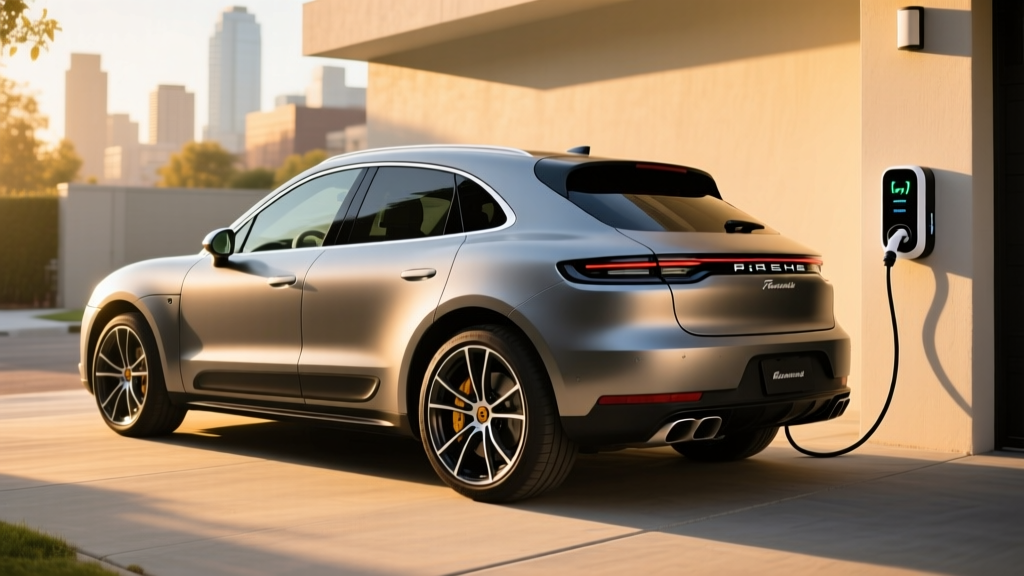
The 2026 Porsche Macan Electric is a performance luxury SUV with a starting MSRP well above $75,000. For most buyers, that single fact answers the most pressing question about Porsche Macan EV incentives: the federal §30D tax credit is almost certainly out of reach. But incentives are only one slice of the ownership-cost pie. Below, we run the full five-year total cost of ownership (TCO) for the Macan Electric, compare charging costs to gasoline, dissect insurance premiums, and examine where state-level or utility rebates might still apply.
2026 Porsche Macan Electric: The Specs That Matter
Before calculating costs, here are the numbers that drive them. The 2026 Macan Electric rides on Porsche's PPE (Premium Platform Electric) architecture with an 800-volt system, NMC battery chemistry, and a usable battery capacity of approximately 95 kWh.
| Spec | Macan 4 Electric | Macan Turbo Electric |
|---|---|---|
| Base MSRP | $78,800 | $105,300 |
| EPA Range | 308 mi | 288 mi |
| Battery (usable) | 95 kWh, NMC | 95 kWh, NMC |
| Horsepower | 402 hp | 630 hp |
| 0–60 mph | 4.9 sec | 3.1 sec |
| Peak DC Charge Rate | 270 kW | 270 kW |
| 10–80% DC Fast Charge | ~21 min | ~21 min |
| Level 2 Charge Rate | 11 kW (AC) | 11 kW (AC) |
| Efficiency (combined) | 83 MPGe | 79 MPGe |
| Battery/Powertrain Warranty | 8 yr / 100,000 mi | 8 yr / 100,000 mi |
Federal Tax Credit: Does the Macan Electric Qualify?
The short answer: almost certainly not. Under current IRS §30D rules, the federal Clean Vehicle Credit provides up to $7,500, but it comes with hard caps that the Macan Electric exceeds.
- MSRP Cap: SUVs must have an MSRP ≤ $80,000. The Macan 4 Electric starts at $78,800 — right at the edge — but typical options (paint, wheels, packages) push it over.
- Buyer Income Cap: Modified AGI ≤ $150,000 (single), $225,000 (head of household), $300,000 (married filing jointly).
- Battery Sourcing: Critical minerals and battery components must meet escalating domestic/free-trade-partner thresholds. Porsche sources globally, and the Macan Electric's battery supply chain has not been confirmed as fully compliant.
- Final Assembly: Must occur in North America. The Macan Electric is assembled in Bratislava, Slovakia — disqualifying it entirely.
- Point-of-Sale Transfer: Eligible buyers can transfer the credit to the dealer at purchase for an immediate price reduction. But if the vehicle doesn't qualify, there's nothing to transfer.
Source: IRS §30D Clean Vehicle Credit
The final-assembly requirement alone eliminates the Macan Electric from federal credit eligibility, regardless of MSRP or income. Buyers searching for "Porsche Macan EV incentives" at the federal level should plan their budget without the $7,500 credit.
State, Local, and Utility Incentives
While the federal door is closed, state and utility programs operate independently and sometimes have no MSRP or assembly restrictions.
- California (CVRP): The Clean Vehicle Rebate Project has largely wound down; check California Energy Commission for current programs. Some air-district incentives remain income-dependent.
- Colorado: State EV tax credit of up to $5,000 for vehicles under $80,000 MSRP — the base Macan 4 may qualify before options.
- New York: The Drive Clean Rebate offers up to $2,000, but caps MSRP at $60,000 — the Macan is excluded.
- Utility Rebates: Many utilities offer $250–$1,500 rebates for EV purchase or home charger installation (e.g., Xcel Energy, PG&E, Con Edison). These are often vehicle-agnostic — check your local utility's EV program page.
- Home Charging Equipment: Some states and utilities rebate Level 2 charger hardware and installation costs ($500–$1,000), independent of the vehicle.
Always confirm current program status with your state's energy office or utility. Incentive programs expire, get re-funded, or change eligibility rules frequently.
Charging vs. Gasoline: Cost Per Mile
The Macan Electric's efficiency of roughly 83 MPGe (Macan 4) translates to about 40 kWh per 100 miles. Compare that to a gasoline Porsche Macan S (2.9L V6, ~21 MPG combined on premium fuel).
| Scenario | Macan 4 Electric | Gas Macan S (21 MPG) |
|---|---|---|
| Home Charging (Level 2, $0.16/kWh avg) | $0.064/mi | — |
| Public DC Fast ($0.48/kWh avg) | $0.192/mi | — |
| Premium Gasoline ($4.60/gal) | — | $0.219/mi |
| Annual Cost (12,000 mi, 80% home / 20% DC) | ~$1,075 | ~$2,629 |
| Annual Savings (EV vs Gas) | ~$1,554/year | |
The math assumes a blended charging cost of roughly $0.224/kWh (weighted 80% home, 20% public DC). If you charge exclusively at home on a time-of-use plan with off-peak rates around $0.10–$0.12/kWh, your annual fuel cost drops to roughly $600–$750 — a savings of nearly $2,000 over gasoline. Conversely, if you rely primarily on public DC fast chargers ( Electrify America, EVgo), the per-mile cost approaches or exceeds gasoline.
The key insight: home charging access is the single largest determinant of EV fuel savings. Without it, the Macan Electric's efficiency advantage over a gas Macan narrows significantly.
Maintenance: Where EVs Save
Electric powertrains eliminate the maintenance items that plague ICE vehicles. The Macan Electric has no engine oil, no transmission fluid, no spark plugs, no timing chain, and no exhaust system. Regenerative braking also dramatically reduces brake pad wear — many EV owners report original brake pads at 80,000+ miles.
| Item | Macan 4 Electric | Gas Macan S |
|---|---|---|
| Oil Changes (synthetic, ~$180 ea) | $0 | $900 (5x) |
| Brake Pads (front + rear) | $0–$400 | $1,200–$1,800 |
| Transmission Fluid | $0 | $300–$500 |
| Cabin Air Filter | $150 | $150 |
| Tire Rotation / Replacement | $2,400 (EVs are heavier, wear tires faster) | $2,000 |
| Coolant / Misc. | $200 | $400 |
| Total 5-Year Maintenance | ~$2,750–$3,150 | ~$4,950–$5,750 |
The Macan Electric saves roughly $1,800–$2,600 in maintenance over five years. The caveat: EVs are heavier (the Macan 4 Electric weighs approximately 5,300 lbs vs. ~4,400 lbs for the gas Macan S), and that extra mass accelerates tire wear. Budget for premium tire replacement at 30,000–40,000 miles rather than 50,000+.
Insurance: The Hidden EV Cost
EVs typically cost 15–25% more to insure than their gasoline counterparts. The Macan Electric is no exception. Industry data from IIHS and major insurers points to several factors:
- Higher repair costs: EV battery packs, power electronics, and specialized aluminum structures require trained technicians and OEM-certified parts. A minor rear collision can total an EV if the battery enclosure is compromised.
- Higher vehicle value: A $78,800+ MSRP means higher comprehensive and collision premiums.
- Limited repair network: Fewer body shops are certified for high-voltage EV repairs, extending claim cycle times and rental costs.
- Performance classification: The Macan Turbo's 630 hp and 3.1-second 0–60 time place it in sports-car insurance territory.
Expect annual premiums of $3,200–$4,500 for the Macan 4 Electric and $4,000–$5,800 for the Macan Turbo, depending on your driving record, location, and coverage levels. That's roughly $600–$1,200 more per year than an equivalent gas Macan. Always pull quotes from your insurer before committing to a purchase.
Depreciation and Resale Value
EV depreciation has been volatile. Luxury EVs in particular saw steep drops in 2023–2024 as Tesla price cuts cascaded through the used market and early-adopter demand plateaued. The Macan Electric faces several depreciation headwinds:
- Luxury SUV segment norms: Luxury vehicles typically retain 40–50% of value after 5 years. The Macan nameplate historically performs well (gas Macan retains ~48% at 5 years per industry estimates).
- EV-specific risk: Rapid battery technology advancement (solid-state, LFP adoption) can make today's NMC pack feel dated. However, Porsche's 8-year/100,000-mile battery warranty (covering degradation below 70% capacity) provides a floor.
- No federal credit at purchase: Buyers who couldn't claim the $7,500 credit at purchase don't "lose" it at resale — but used-EV buyers may qualify for the separate used-vehicle credit (up to $4,000 under §25E), which supports resale demand.
- Brand premium: Porsche's brand cachet and low production volumes relative to Tesla or BMW provide some depreciation insulation.
Conservative estimate: the Macan 4 Electric retains 42–48% of MSRP after 5 years, translating to a residual value of roughly $33,000–$38,000 and depreciation of $40,800–$45,800. The Macan Turbo will depreciate more in absolute dollars given its higher starting price.
5-Year Total Cost of Ownership: The Full Picture
Here's the complete TCO for the 2026 Macan 4 Electric, assuming 12,000 miles/year, 80% home charging, and a 5-year hold period with no federal tax credit.
| Category | Cost | Notes |
|---|---|---|
| Purchase Price (base MSRP + dest.) | $80,300 | $78,800 + $1,500 destination; typical options add $5K–$15K |
| Federal Tax Credit | $0 | Does not qualify (foreign assembly) |
| State/Utility Incentives | –$500 to –$2,000 | Varies widely; assume modest utility rebate |
| Charging (5 years) | $5,375 | 80% home @ $0.16/kWh, 20% DC @ $0.48/kWh |
| Insurance (5 years) | $19,000 | ~$3,800/year avg |
| Maintenance (5 years) | $3,000 | Tires, cabin filter, wipers, coolant top-off |
| Depreciation (5 years) | $43,000 | ~46% retained value estimate |
| Total 5-Year Cost | ~$107,675 – $109,175 | Before options; after modest incentives |
For comparison, a gas Macan S (MSRP ~$68,000, 21 MPG, $4.60/gal premium) over the same period yields roughly:
- Fuel: ~$13,143
- Insurance: ~$15,500
- Maintenance: ~$5,350
- Depreciation: ~$35,360 (48% retained)
- Total 5-Year Cost: ~$101,353 (before options)
The Macan Electric costs roughly $6,000–$8,000 more over five years than a comparably equipped gas Macan S when you factor in the higher purchase price, elevated insurance, and the absence of federal incentives. The fuel and maintenance savings (~$9,500 combined) are real but don't fully offset the premium.
Who Should Buy the Macan Electric?
The financial case for the Macan Electric isn't about saving money — it's about spending differently. You should consider it if:
- You have reliable home Level 2 charging (240V, 40A+ circuit) and can charge at $0.10–$0.18/kWh.
- You value instant torque (402–630 hp), a near-silent cabin, and 800V fast-charging architecture.
- You live in a state with EV incentives that don't cap MSRP at $60K.
- You're willing to pay a premium for Porsche driving dynamics in an electric package.
Look elsewhere if you're primarily motivated by total cost savings or federal tax-credit eligibility. The EPA's fueleconomy.gov comparison tool can help you model specific scenarios.
Frequently Asked Questions
Does the Porsche Macan Electric qualify for the $7,500 federal tax credit?
No. The 2026 Macan Electric is assembled in Bratislava, Slovakia, which fails the §30D final-assembly-in-North-America requirement. Even the base Macan 4's $78,800 MSRP sits at the $80,000 SUV cap, and any factory options push it above the limit. Plan your budget without the federal credit.
How much does it cost to charge a Macan Electric at home?
Charging the 95 kWh battery from 10% to 90% (76 kWh) at the US average residential rate of $0.16/kWh costs about $12.16. That delivers roughly 240 real-world miles. Over 12,000 miles/year with 80% home charging, expect annual electricity costs of roughly $770–$1,100 depending on your local rate and time-of-use plan.
Is the Macan Electric more expensive to insure than the gas Macan?
Yes, typically by 15–25%. Expect $3,200–$4,500 annually for the Macan 4 Electric, compared to $2,600–$3,500 for a gas Macan S. Higher repair costs, battery replacement risk, and the vehicle's MSRP all contribute. Get a quote before purchasing.
How well will the Macan Electric hold its value?
Estimate 42–48% retained value after 5 years, in line with luxury EV norms. Porsche's strong brand and the Macan's popularity provide some support, but EV depreciation remains less predictable than ICE due to rapid technology evolution and shifting incentive landscapes.
Are there any incentives I can actually get for the Macan Electric?
Possibly. Check your state's EV rebate program (Colorado, for example, offers up to $5,000 with an $80K MSRP cap that the base model may meet). Many utilities offer $250–$1,500 rebates for EV purchase or Level 2 charger installation that are vehicle-agnostic. These are independent of federal rules and vary by ZIP code.
What's the real-world range vs. the EPA sticker?
The EPA rates the Macan 4 Electric at 308 miles. Expect 250–270 miles in real-world highway driving (70–75 mph), and 210–240 miles in cold weather (below 32°F). The standard heat pump helps, but battery preconditioning and cabin heating still draw from the pack. On road trips, plan charging stops around the 200-mile mark for comfort.