Should You Buy the 2026 Porsche Macan EV?
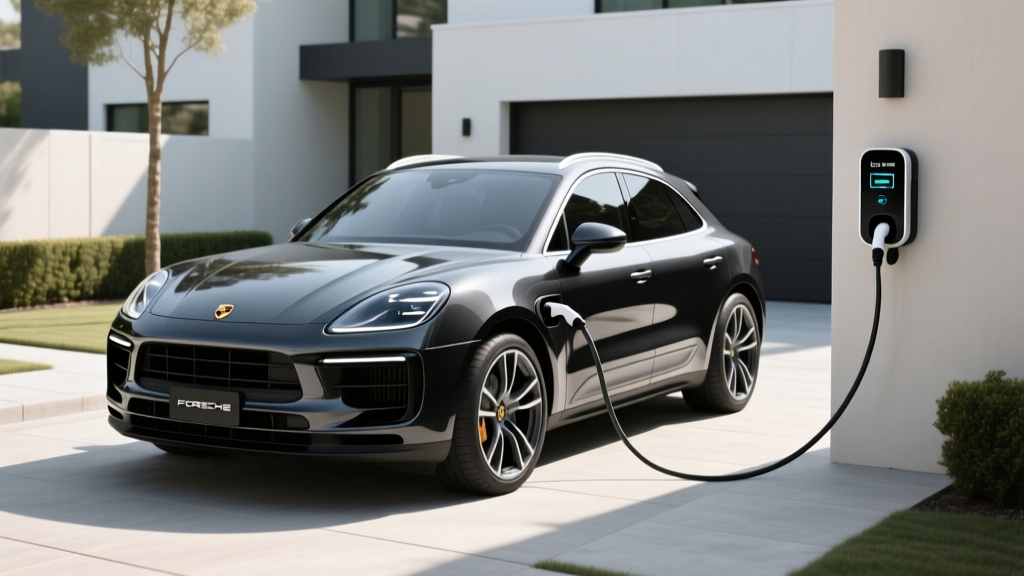
The 2026 Porsche Macan EV is a high-performance electric luxury SUV starting at $78,800 (Macan 4) with up to 308 miles of EPA range (RWD trim), 270 kW peak DC fast charging (10–80% in ~21 minutes), and up to 630 horsepower in the Turbo variant. It does not qualify for the $7,500 federal §30D tax credit due to its MSRP exceeding the IRS SUV cap of $80,000 on most trims and foreign battery sourcing. Buy it if you want sports-sedan dynamics in an electric crossover and have reliable home Level 2 charging. Skip it if you need maximum range-per-dollar, federal incentive eligibility, or third-row seating.
2026 Porsche Macan EV at a Glance: Specs by Trim
Porsche offers the electric Macan on its dedicated PPE (Premium Platform Electric) architecture co-developed with Audi. Here is what each 2026 trim delivers:
| Spec | Macan (RWD) | Macan 4 | Macan 4S | Macan Turbo |
|---|---|---|---|---|
| Base MSRP | $75,300 | $78,800 | $86,400 | $105,300 |
| Drivetrain | Rear-wheel drive | Dual-motor AWD | Dual-motor AWD | Dual-motor AWD |
| Horsepower | 335 hp | 402 hp | 509 hp | 630 hp |
| 0–60 mph | 5.5 sec | 4.9 sec | 3.9 sec | 3.1 sec |
| Battery (usable) | 95 kWh (NMC) | 95 kWh (NMC) | 95 kWh (NMC) | 95 kWh (NMC) |
| EPA Range | 308 mi | 288 mi | 274 mi | 259 mi |
| MPGe (combined) | 93 MPGe | 89 MPGe | 86 MPGe | 82 MPGe |
| Peak DC Charge Rate | 270 kW | 270 kW | 270 kW | 270 kW |
| 10–80% DC Fast Charge | ~21 min | ~21 min | ~21 min | ~21 min |
| Level 2 (11.5 kW) Charge | ~9.5 hrs | ~9.5 hrs | ~9.5 hrs | ~9.5 hrs |
| Battery Warranty | 8 yr / 100,000 mi | 8 yr / 100,000 mi | 8 yr / 100,000 mi | 8 yr / 100,000 mi |
Real-World Range vs. EPA Sticker
The 308-mile EPA figure on the RWD trim is achievable in mild-weather city and suburban driving. Expect ~240–265 miles on the highway at 75 mph, and ~200–230 miles in sub-freezing winter conditions (below 30°F) where NMC chemistry loses efficiency and cabin heating draws additional power. The Turbo trim's 259-mile EPA rating drops to roughly 190–210 miles in cold highway driving. Always precondition the battery via the Porsche app before DC fast charging in cold weather to restore charge-curve speed.
Porsche Macan EV vs. Gas Macan: Cost & Efficiency Compared
The gas-powered Porsche Macan (still sold alongside the EV in 2026) starts around $62,900 for the base model. Let's compare real ownership costs over five years and 75,000 miles, assuming the Macan 4 EV ($78,800) versus the gas Macan ($65,000 comparably equipped):
| Cost Factor (5 yr / 75k mi) | Macan 4 EV | Gas Macan (AWD) |
|---|---|---|
| Purchase Price | $78,800 | $65,000 |
| Federal Tax Credit (§30D) | $0 (MSRP & sourcing ineligible) | $0 |
| Fuel / Electricity | $4,200 (home L2 @ $0.14/kWh) | $10,500 (@ $3.80/gal, 22 MPG) |
| Maintenance | $1,800 (tire rotation, cabin filter, fluid top-off) | $4,500 (oil changes, brakes, transmission) |
| Insurance (avg) | $12,500 | $10,200 |
| Estimated Depreciation | $31,500 (40%) | $26,000 (40%) |
| 5-Year Total Cost | $131,300 | $116,200 |
Key takeaway: The EV saves roughly $6,300 in fuel and $2,700 in maintenance over five years, but the higher purchase price, steeper insurance premiums (common on luxury EVs), and lack of federal incentives widen the gap. The EV breaks even on energy and maintenance savings in about 4.5 years versus the gas Macan — but the upfront premium of ~$13,800 means total cost parity is unlikely within a typical ownership cycle.
Charging the Macan EV: What You Actually Need
The Macan EV uses the NACS (Tesla-style) connector for 2026, giving it native access to Tesla Supercharger V3/V4 stalls as well as Electrify America, EVgo, and other networks transitioning to NACS. Here is what charging looks like in practice:
| Charging Level | Power (kW) | Miles Added per Hour | Full 0–100% Time |
|---|---|---|---|
| Level 1 (120V household) | 1.4 kW | ~4 mi/hr | ~68 hours |
| Level 2 (240V / 48A home) | 11.5 kW | ~35 mi/hr | ~9.5 hours |
| DC Fast Charge (peak) | 270 kW | ~180 mi in 10 min | 10–80% in ~21 min |
Charging-curve reality: The 270 kW peak only sustains between approximately 10–35% state of charge. From 35–60%, expect ~200–220 kW; from 60–80%, it tapers to ~120–150 kW. Above 80%, charging slows dramatically to protect the NMC battery, dropping below 50 kW. On a road trip, plan stops around the 10–80% window for the fastest throughput — charging from 80–100% adds roughly 20 extra minutes for only ~50 miles of range.
Home charging setup: A Level 2 home charger (such as the Porsche Mobile Charger Connect or a ChargePoint Home Flex) on a 60A circuit delivers the full 11.5 kW. Budget $800–$1,500 for the charger unit and $500–$2,500 for electrician installation, depending on panel proximity. If your home has a 100A electrical panel, a $1,500–$3,000 panel upgrade to 200A may be required — get a quote from a licensed electrician before committing.
Federal Tax Credit and Incentives: The Hard Truth
The 2026 Porsche Macan EV is not eligible for the IRS §30D federal clean vehicle credit. Here is why:
- MSRP cap: SUVs must have an MSRP at or below $80,000. The Macan 4 ($78,800) technically clears this, but the 4S ($86,400) and Turbo ($105,300) do not. Options can push the Macan 4 over the cap as well.
- Battery sourcing: The §30D credit requires critical minerals and battery components to meet escalating domestic/free-trade sourcing thresholds. Porsche's PPE battery supply chain does not currently meet these requirements for 2026.
- Income caps: Even if eligible, buyers must fall under $300,000 (joint), $225,000 (head of household), or $150,000 (single) modified AGI.
State incentives may apply. States like California, Colorado, and Massachusetts offer additional rebates or HOV-lane access, but these vary by jurisdiction. Check your state's energy office or the Alternative Fuels Data Center for current local incentives.
Common Misconceptions About the Macan EV
| Myth | Fact |
|---|---|
| "It qualifies for the $7,500 federal tax credit." | It does not. Battery sourcing and MSRP on most trims disqualify it under §30D rules. Verify at IRS.gov. |
| "308 miles of range means I'll always get 308 miles." | EPA range is a lab estimate. Highway driving at 75 mph yields ~240–265 mi; cold weather drops it further. Plan conservatively. |
| "270 kW charging means 21 minutes every time." | Peak rate requires a 350 kW-capable DC station, a preconditioned battery, and warm ambient temps. Cold, unconditioned batteries may peak at 150–180 kW. |
| "The EV Macan is heavier, so it handles worse." | The EV is ~5,200 lb (heavier than the gas Macan), but its low center of gravity and rear-biased torque distribution deliver sharper turn-in. Porsche's engineering compensates for mass effectively. |
| "I can charge it at any public station." | The 2026 model uses NACS natively. Older CCS-only stations without NACS adapters won't work. Tesla Superchargers and NACS-equipped networks are your primary options. |
Real-World Ownership: What First-Time EV Buyers Must Know
If this is your first EV, the Macan comes with a learning curve. Here is what matters:
Home Charging Is Non-Negotiable for Most Owners
Public DC fast charging costs $0.35–$0.55/kWh (versus $0.12–$0.18/kWh at home), making exclusive public charging nearly as expensive as gasoline. Without a Level 2 home setup, daily convenience drops significantly. Confirm your home's electrical capacity before purchasing.
Cold Weather Demands Planning
The Macan EV's NMC battery loses 20–30% of its usable range in sustained sub-freezing temperatures. Porsche includes a heat pump (standard on 2026 models), which mitigates cabin-heating energy draw but does not eliminate range loss. Precondition while plugged in whenever possible to preserve range and restore fast-charging speed.
Maintenance Is Minimal, but Tires Are Not
Expect no oil changes, no transmission fluid, and significantly less brake wear (regenerative braking handles most deceleration). However, the Macan EV's weight and instant torque wear through tires faster than a gas equivalent. Budget $1,200–$1,800 for a set of premium tires every 25,000–35,000 miles. Porsche recommends specific EV-rated tires (like the Michelin Pilot Sport EV) for noise and rolling-resistance optimization.
Insurance Costs Are Higher
Luxury EVs carry 15–25% higher insurance premiums than comparable gas vehicles due to higher repair costs, specialized parts, and elevated purchase prices. Get quotes from your insurer before buying — the delta can add $1,500–$3,000 per year.
Decision Framework: Is the Macan EV the Right Choice for You?
Choose the Porsche Macan EV If:
- You want a luxury performance SUV with sports-car acceleration (3.1 sec 0–60 in the Turbo) and daily-driver practicality.
- You have a garage or driveway where you can install a 240V Level 2 charger.
- You drive under 250 miles per day and rarely take road trips exceeding 200 miles without a charging stop.
- You value driving dynamics over maximum range or lowest cost-per-mile.
- You are comfortable spending $80,000–$110,000+ on a vehicle without expecting a federal tax credit.
Choose an Alternative If:
- Budget is a priority: The Hyundai Ioniq 5 ($42,000, 310 mi EPA, tax-credit eligible) or Tesla Model Y ($46,000, 320 mi EPA) deliver strong range and performance at half the cost.
- You need maximum range: The Lucid Gravity (up to 440 mi EPA) or Rivian R1S (352 mi EPA) offer more distance per charge.
- You want a plug-in hybrid bridge: The Porsche Cayenne E-Hybrid (PHEV, ~35 mi electric-only, 455 hp combined) gives you electric commuting without range anxiety on long trips.
- You rely entirely on public charging: Without home charging, the Macan's premium electricity costs at public DC stations erode its ownership advantage.
Frequently Asked Questions
What is the real-world range of the Porsche Macan EV?
The RWD trim rates at 308 miles EPA, but expect 240–265 miles in real-world highway driving and 200–230 miles in cold weather (below 30°F). The Turbo trim delivers roughly 200–220 miles on the highway in mild conditions. Source: fueleconomy.gov.
Does the Porsche Macan EV use NACS or CCS?
The 2026 Macan EV uses the NACS (North American Charging Standard) connector natively, granting direct access to Tesla Superchargers and other NACS-equipped networks. No adapter is needed.
How long does it take to charge the Macan EV at home?
On a Level 2 home charger at 11.5 kW, a full charge from 0–100% takes approximately 9.5 hours. Most owners plug in overnight and wake to a full battery. A standard 120V outlet (Level 1) adds only about 4 miles per hour — impractical for daily use on a 95 kWh battery.
Is the Macan EV eligible for any tax credits?
It is not eligible for the $7,500 federal §30D credit due to battery sourcing and MSRP limitations. State incentives may apply depending on your jurisdiction. Consult a tax professional and check IRS.gov for current rules.
How does the Macan EV compare to the Tesla Model Y Performance?
The Model Y Performance ($52,490, 303 mi EPA, 3.5 sec 0–60) is significantly less expensive, slightly longer in range, and eligible for the federal tax credit. The Macan EV offers superior interior materials, a more refined ride, Porsche's chassis tuning, and a more traditional luxury-crossover experience. You pay a ~$26,000+ premium for the Porsche badge, build quality, and driving feel.
What is the battery replacement cost for the Macan EV?
Porsche has not published an exact replacement figure, but comparable luxury EV battery packs in the 90–100 kWh range typically cost $15,000–$25,000 out of warranty. The 8-year/100,000-mile battery warranty covers defects and capacity loss below 70% state of health. NMC batteries in this class typically retain 85–90% capacity after 100,000 miles based on industry degradation data.