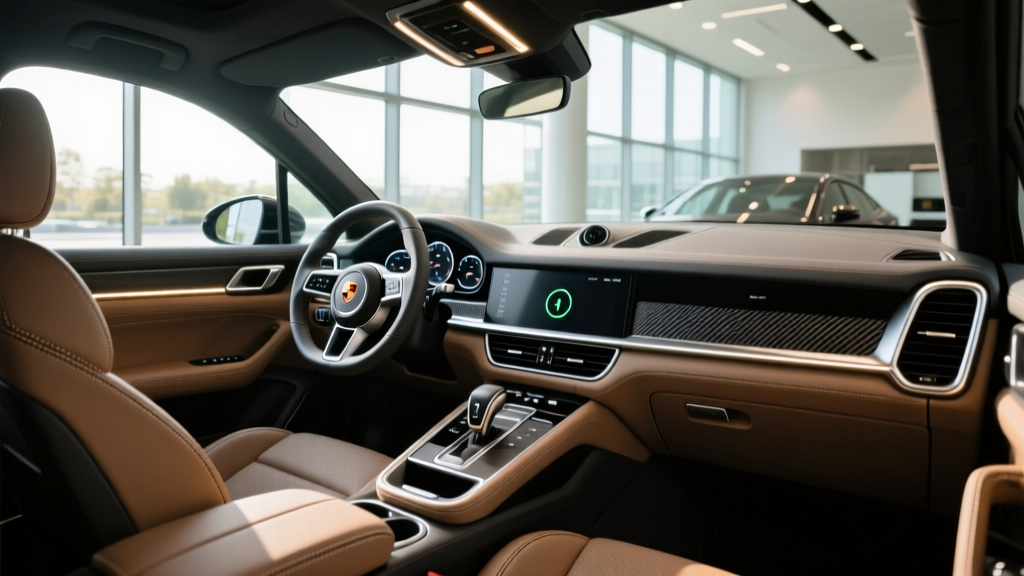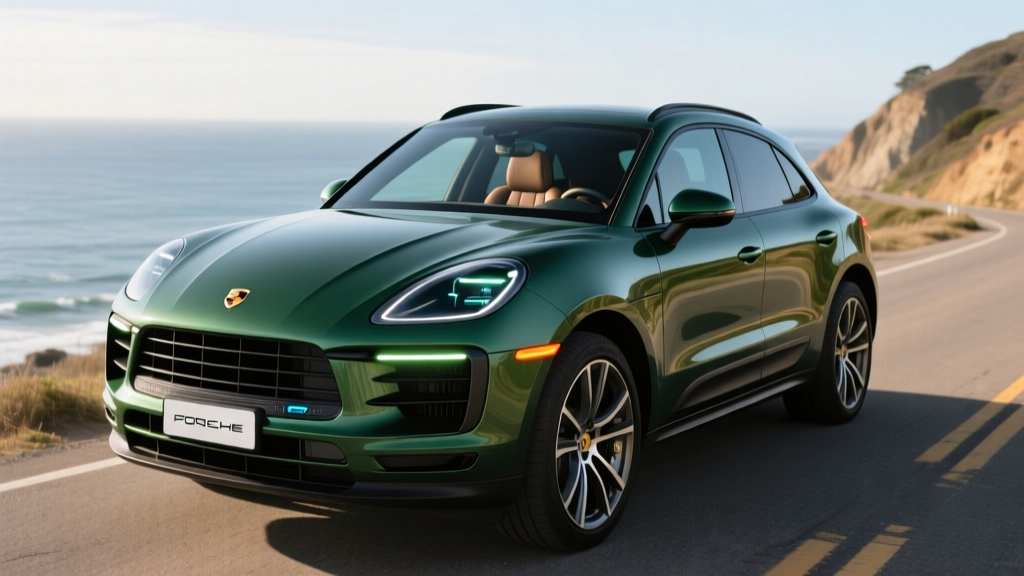
If you're researching the Porsche Macan EV 4, here's the practical verdict: it delivers 308 miles of EPA range, charges from 10-80% in roughly 21 minutes at a 270 kW DC fast charger, and starts around $78,800 before incentives. It's a compelling luxury electric SUV, but whether it saves you money over a gas Macan depends entirely on your home charging access, annual mileage, and electricity rates. Buyers with Level 2 home charging and moderate-to-high annual miles will see meaningful fuel and maintenance savings; those relying solely on public charging in high-rate areas may break even or pay more per mile than the gas equivalent.
Quick Answer: Is the Porsche Macan EV 4 Worth It?
Yes, if you have home Level 2 charging, drive 10,000+ miles annually, and value performance plus refinement. Think twice if you lack reliable home charging, frequently drive in extreme cold, or expect the $7,500 federal tax credit — the Macan EV 4's MSRP and battery sourcing currently make full credit eligibility uncertain under 2026 IRS §30D rules.
Porsche Macan EV 4: Core Specs at a Glance
| Specification | Porsche Macan EV 4 (2025/2026) |
|---|---|
| EPA Range | 308 miles (real-world: ~260-280 mi highway; ~220-240 mi in cold weather) |
| Battery Capacity | 100 kWh gross / ~94 kWh usable (NMC chemistry) |
| DC Fast Charge (Peak) | 270 kW (10-80% in ~21 minutes) |
| Level 2 Charge Rate | 11 kW onboard charger (~9 hours for full charge) |
| 0-60 mph | 4.9 seconds |
| Horsepower | 402 hp (with launch control) |
| Drivetrain | Rear-wheel drive (single motor) |
| Base MSRP | $78,800 (before options, destination) |
| EPA Efficiency | ~3.0 kWh/mi (~111 MPGe combined) |
| Battery Warranty | 8 years / 100,000 miles (70% capacity retention) |
A few notes on these figures. The 308-mile EPA rating assumes mixed driving in moderate temperatures. On a 75 mph highway run in 70°F weather, expect closer to 260-280 miles before you need to stop. Drop the thermometer to 25°F and you're looking at 220-240 miles of real range — the Macan EV 4's heat pump helps, but cold still saps 15-25% of lithium-ion capacity. The 270 kW peak charge rate is impressive, but remember that charge curves taper: you'll see 270 kW only in the 10-30% state-of-charge window, with rates dropping to roughly 150 kW by 60% and below 80 kW above 80%. That 21-minute 10-80% claim is realistic at a properly rated 350 kW station (Electrify America, EVgo 350, or Tesla Supercharger V4 with NACS adapter), but a 150 kW station will stretch that to 30-35 minutes.
Porsche Macan EV 4 vs Gas Macan: Cost & Efficiency Comparison
The natural comparison is the gasoline Porsche Macan (base 2.0L turbo, starting ~$62,900 in 2025). Let's look at the numbers over five years and 60,000 miles.
| Factor | Macan EV 4 | Gas Macan (2.0T) |
|---|---|---|
| Base MSRP | $78,800 | $62,900 |
| Federal Tax Credit (§30D) | $0-$7,500 (eligibility uncertain; see below) | $0 |
| Efficiency | 3.0 kWh/mi (111 MPGe) | 21 mpg combined |
| Fuel/Energy Cost (60k mi) | $5,400 (@ $0.15/kWh home) to $10,800 (@ $0.35/kWh public) | $10,285 (@ $3.60/gal) |
| Maintenance (5 yr) | ~$1,800 (tires, cabin filter, brake fluid) | ~$4,200 (oil, filters, brakes, spark plugs) |
| Insurance (annual avg) | ~$2,800-$3,400 | ~$2,200-$2,700 |
| 5-Year Total (est.) | $97,000-$115,000 | $96,000-$102,000 |
The Macan EV 4 carries a $15,900 upfront premium. If you qualify for the full $7,500 federal credit, that gap narrows to $8,400. Home charging at $0.15/kWh saves roughly $4,800 over gas across 60,000 miles, and you'll spend $2,400 less on maintenance. Combined, that's $7,200 in operational savings over five years — enough to nearly offset the remaining price gap. But if you rely on public DC fast charging at $0.35-$0.50/kWh (common in urban areas and highway corridors), your energy costs actually exceed gasoline, and the EV becomes more expensive to own.
Federal Tax Credit: Does the Macan EV 4 Qualify?
Under 2026 IRS §30D rules, the $7,500 federal EV tax credit has three main hurdles: MSRP caps, buyer income limits, and battery component/mineral sourcing requirements. Here's where the Macan EV 4 stands:
- MSRP Cap: SUVs must be under $80,000. The Macan EV 4's $78,800 base MSRP clears this — but add options and you may exceed the cap.
- Income Cap: Modified AGI must be under $150,000 (single) / $300,000 (joint). Many Porsche buyers exceed this threshold.
- Battery Sourcing: Critical minerals and battery components must meet increasing domestic/free-trade-partner percentages. Porsche sources the Macan EV's NMC cells from suppliers that may not fully satisfy 2026 sourcing thresholds.
- Point-of-Sale Transfer: If eligible, you can transfer the credit to the dealer at purchase, reducing your out-of-pocket cost immediately.
As of early 2026, Porsche has not confirmed full §30D eligibility for the Macan EV 4. Check the latest IRS qualified vehicles list before purchase, and consult a tax professional for your specific situation.
Charging the Macan EV 4: What You Actually Need
The Macan EV 4 uses an 800-volt architecture, which enables that 270 kW peak charge rate — but you need the right infrastructure to exploit it.
| Level | Power | Miles Added/Hour | Use Case |
|---|---|---|---|
| Level 1 (120V) | 1.4 kW | ~4-5 mi/hr | Emergency/overnight trickle |
| Level 2 (240V, 48A) | 11.5 kW | ~35-38 mi/hr | Daily home charging (9 hr full) |
| DC Fast (270 kW peak) | 270 kW | ~200+ mi in 15 min | Road trips (10-80% in ~21 min) |
Home charging is non-negotiable for Macan EV 4 ownership. Level 1 (standard 120V outlet) adds only 4-5 miles per hour — inadequate for daily driving unless your commute is under 30 miles round-trip. A Level 2 home charger (240V, 48-amp circuit) is the practical minimum, adding ~35 miles per hour and fully replenishing the 100 kWh battery in about 9 hours. Installation costs typically range from $800-$2,500 depending on panel capacity, conduit run length, and local permitting. If your electrical panel is maxed out, a 200-amp service upgrade adds $1,500-$3,500.
For road trips, the Macan EV 4's NACS port (standard on 2025+ models) gives you access to Tesla Superchargers, Electrify America, EVgo, and other networks via adapter or native compatibility. At a 350 kW-capable station, you'll see peak rates near 270 kW — but verify the station's actual output before assuming 21-minute stops.
Real-World Ownership: What First-Time EV Buyers Should Know
Transitioning from a gas Macan to the Macan EV 4 involves behavioral shifts, not just mechanical ones:
- Preconditioning matters: Use the Porsche app to precondition the battery 10-15 minutes before DC fast charging. Cold batteries charge slower — preconditioning warms the cells and enables peak 270 kW rates.
- Regen braking takes adjustment: The Macan EV 4 offers adjustable regen, including one-pedal driving mode. Expect 1-2 weeks to build muscle memory.
- Tire wear increases: EVs are heavier and deliver instant torque. Expect 20,000-30,000 miles on OEM tires vs 40,000+ on a gas Macan. Budget $1,200-$1,800 for replacement rubber.
- Insurance is higher: EV repair costs and battery replacement risk push premiums 20-40% above gas equivalents. Shop quotes before purchase.
- Cold weather is real: If you live in sub-30°F climates, plan for 20-25% range loss and longer charge times. Garage parking and preconditioning mitigate this.
Common Misconceptions About the Macan EV 4
| Myth | Fact |
|---|---|
| "It charges at 270 kW the whole time" | Peak rate applies only in the 10-30% SoC window; expect 150 kW by 60%, <80 kW above 80%. |
| "I'll save $7,500 on taxes" | Federal credit eligibility is uncertain for 2026; verify on IRS.gov before purchase. |
| "308 miles means I can drive 308 miles" | Highway driving at 75 mph yields ~260-280 miles; cold weather drops it to ~220-240 miles. |
| "EVs need no maintenance" | Tires, cabin filters, brake fluid, and wiper fluid still require service — just less than gas cars. |
| "Public charging is cheap" | DC fast charging at $0.35-$0.50/kWh often costs more per mile than gasoline. |
Decision Framework: Should You Buy the Porsche Macan EV 4?
Choose the Macan EV 4 if:
- You have (or can install) Level 2 home charging
- You drive 10,000+ miles annually (more miles = more savings)
- Your electricity rate is under $0.20/kWh
- You value instant torque, quiet refinement, and Porsche driving dynamics
- You live in a moderate climate or have garage parking
Stick with the gas Macan (or wait) if:
- You lack home charging access and rely on public infrastructure
- Your public charging rates exceed $0.35/kWh
- You frequently drive 400+ miles in a single day (road-trip heavy)
- You live in extreme cold climates without garage access
- You expected the $7,500 federal credit to make the math work
Frequently Asked Questions
What's the real-world range of the Porsche Macan EV 4?
EPA-rated at 308 miles, but expect 260-280 miles on highway trips at 70-75 mph in moderate weather. In sub-30°F cold, plan for 220-240 miles. The 100 kWh battery (94 kWh usable) and heat pump help, but physics still applies.
How long does it take to charge the Macan EV 4 at home?
On a Level 2 (240V, 48A) home charger delivering 11.5 kW, a full 0-100% charge takes roughly 9 hours. Most owners charge overnight and wake up to a full battery daily.
Does the Macan EV 4 qualify for the $7,500 federal tax credit?
Uncertain for 2026. The base MSRP clears the $80,000 SUV cap, but battery sourcing requirements and buyer income limits may disqualify many purchasers. Check the IRS qualified vehicles list and consult a tax professional.
Is the Macan EV 4 faster than the gas Macan?
Yes. The Macan EV 4 hits 0-60 mph in 4.9 seconds (402 hp with launch control), compared to ~6.0 seconds for the gas Macan 2.0T (261 hp). The EV's instant torque and lower center of gravity also improve responsiveness in daily driving.
What does it cost to charge the Macan EV 4 vs fueling a gas Macan?
At $0.15/kWh (home), charging the 94 kWh usable battery costs ~$14 for 260-280 real-world miles. Fueling a gas Macan (21 mpg combined, 17.9-gallon tank) costs ~$64 for 375 miles. Per mile, home charging costs ~$0.05/mi vs ~$0.17/mi for gas — but public DC fast charging at $0.40/kWh pushes EV costs to ~$0.13/mi, nearly matching gas.
How long will the Macan EV 4's battery last?
Porsche warranties the battery for 8 years / 100,000 miles with a 70% capacity retention threshold. Industry data suggests NMC batteries retain 85-90% capacity at 100,000 miles with proper care (avoiding frequent 100% charges and extreme heat). Replacement cost, if needed out of warranty, is estimated at $18,000-$25,000.