Quick Verdict: Is Leasing the Macan Electric the Smart Move?
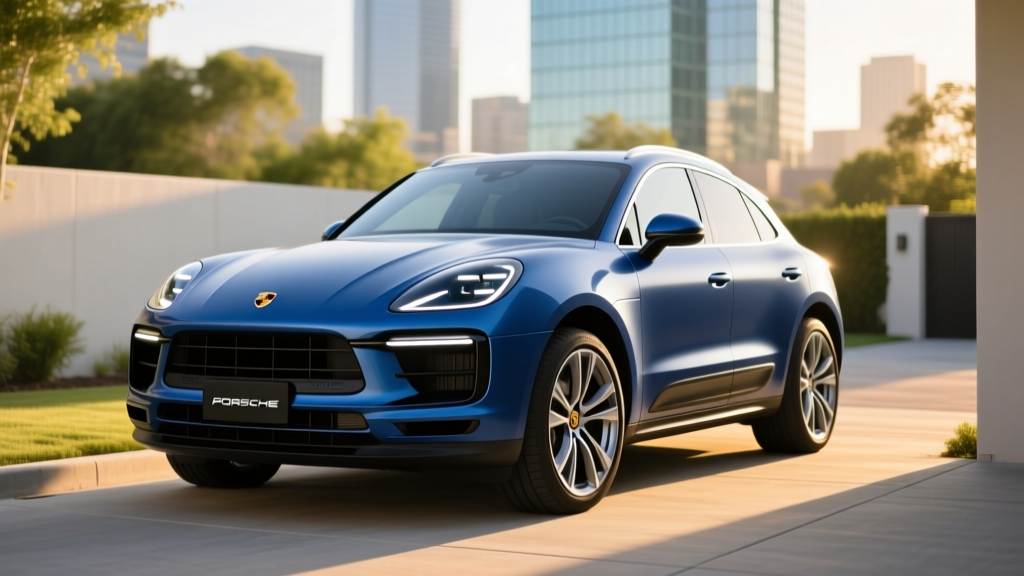
The 2026 Porsche Macan Electric arrives with a starting MSRP of approximately $78,800 for the base model and climbs to $96,500+ for the Turbo variant. With luxury EV leasing becoming increasingly attractive as battery technology evolves rapidly, many buyers are searching for Porsche Macan Electric estate lease deals that make this performance SUV financially viable. But beyond the monthly payment, what does ownership actually cost?
This analysis cuts through marketing claims to deliver hard numbers: 5-year total cost of ownership, federal tax credit eligibility under current IRS §30D rules, real-world charging costs versus premium gasoline, insurance premiums, and the depreciation reality that makes leasing particularly compelling for luxury EVs.
2026 Porsche Macan Electric: Key Specifications
| Specification | Macan Electric (Base) | Macan 4 Electric | Macan Turbo Electric |
|---|---|---|---|
| Starting MSRP | $78,800 | $84,900 | $96,500 |
| Battery Capacity (usable) | 95 kWh (NMC) | 95 kWh (NMC) | 95 kWh (NMC) |
| EPA Range | 308 miles | 288 miles | 283 miles |
| Real-World Range (highway/cold) | ~250-270 miles | ~235-255 miles | ~230-250 miles |
| Horsepower | 335 hp | 402 hp | 576 hp (Launch Control) |
| 0-60 mph | 5.4 seconds | 4.9 seconds | 3.3 seconds |
| Max DC Fast Charge Rate | 270 kW | 270 kW | 270 kW |
| 10-80% DC Fast Charge Time | ~21 minutes | ~21 minutes | ~21 minutes |
| Level 2 Charge Rate | 11 kW | 11 kW | 11 kW |
| MPGe (combined) | 88 MPGe | 84 MPGe | 82 MPGe |
| Battery/Powertrain Warranty | 8 years/100,000 miles | 8 years/100,000 miles | 8 years/100,000 miles |
Federal Tax Credit: Do You Actually Qualify?
The federal EV tax credit under IRS §30D offers up to $7,500, but eligibility for the Porsche Macan Electric is not guaranteed. Here's what you need to know for 2026:
- MSRP Cap: SUVs must have an MSRP under $80,000. The base Macan Electric at $78,800 qualifies, but the Macan 4 ($84,900) and Turbo ($96,500) exceed the cap and are ineligible.
- Income Limits: Modified adjusted gross income (MAGI) cannot exceed $300,000 for joint filers, $225,000 for heads of household, or $150,000 for single filers.
- Battery Sourcing Requirements: The credit splits into two components — $3,750 for critical minerals and $3,750 for battery components. Both must meet domestic content or free-trade-agreement sourcing thresholds that increase annually. Porsche has not publicly confirmed whether the Macan Electric's battery meets 2026 thresholds.
- Point-of-Sale Transfer: As of 2024, you can transfer the credit to the dealer at purchase, reducing the upfront cost rather than waiting for a tax refund. This applies to leases as well, with the leasing company typically capturing the credit and passing savings through reduced payments.
5-Year Total Cost of Ownership Breakdown
Let's model a realistic 5-year ownership scenario for the base Macan Electric ($78,800 MSRP) versus a comparable gasoline luxury SUV (BMW X5 xDrive40i at ~$68,000 MSRP, 24 MPG combined). Assumptions: 12,000 miles/year, home Level 2 charging at $0.14/kWh average, premium gasoline at $4.50/gallon.
| Cost Category (5 Years) | Macan Electric (Base) | Gasoline SUV Baseline |
|---|---|---|
| Purchase Price (after incentives) | $71,300 (assuming $7,500 credit) | $68,000 |
| Energy/Fuel Costs | $4,200 (60,000 mi ÷ 3 mi/kWh × $0.14/kWh) | $11,250 (60,000 mi ÷ 24 MPG × $4.50/gal) |
| Maintenance | $1,800 (cabin filters, wipers, tire rotation) | $4,500 (oil changes, filters, spark plugs, belts) |
| Insurance (average) | $15,600 ($260/month) | $12,000 ($200/month) |
| Depreciation (est. 50%) | $35,650 | $34,000 |
| Total 5-Year Cost | $128,550 | $129,750 |
| Cost Per Mile | $2.14/mile | $2.16/mile |
The Macan Electric edges out the gasoline alternative over five years, but the margin is thin — roughly $1,200 in savings. The real financial story emerges when you factor in the federal tax credit, which only applies if you meet all eligibility criteria. Without the credit, the Macan Electric costs approximately $6,300 more over five years.
Charging Cost Reality Check
Home charging at $0.14/kWh delivers roughly 3 miles per kWh for the Macan Electric, translating to about $0.047 per mile. Public DC fast charging averages $0.35-$0.48/kWh depending on network and location, pushing costs to $0.12-$0.16 per mile — still cheaper than premium gasoline at $0.19/mile, but the gap narrows significantly.
If you rely heavily on public charging (apartment living, frequent road trips), your energy costs could double or triple the home-charging baseline. This is the single biggest variable in EV ownership economics.
Why Leasing Makes Sense for the Macan Electric
Luxury EV depreciation remains the wildcard that makes leasing attractive. Here's what the data shows:
EV Depreciation Trends
According to iSeeCars analysis, electric vehicles depreciated an average of 49% over five years as of 2024, compared to 38% for gasoline vehicles. Several factors drive this:
- Rapid technology advancement: Newer models with longer range and faster charging make older EVs less desirable
- Battery degradation concerns: Used buyers worry about expensive battery replacements, even though most modern EVs retain 85-90% capacity after 100,000 miles
- Tax credit resets: New buyers can access federal credits, reducing demand for used EVs that don't qualify for the used-EV credit (limited to $4,000 on vehicles under $25,000)
- Luxury segment volatility: High-end EVs from Porsche, Mercedes, and BMW have shown steeper depreciation curves than mainstream models
For a $78,800 Macan Electric, expect residual values around 45-50% after five years — roughly $35,000-$39,000. Leasing transfers this depreciation risk to the lessor, and you can walk away or upgrade when technology leapfrogs.
Typical Lease Structure
Based on current market offerings, expect Macan Electric lease deals in this range:
- 36-month lease, 10,000 miles/year: $1,100-$1,400/month (depending on trim and money-down)
- Capitalized cost reduction: $5,000-$10,000 (including any tax credit pass-through)
- Residual value: 55-58% (set by lessor, protects you from market depreciation)
- Money factor: 0.00200-0.00250 (equivalent to 4.8-6.0% APR)
Leasing also allows you to capture the federal tax credit benefit even if you wouldn't have sufficient tax liability to use it in a single year, since the leasing company claims the credit and reduces your payments accordingly.
Insurance: The Hidden Cost Premium
EV insurance costs 15-30% more than comparable gasoline vehicles, and luxury EVs sit at the high end of that range. For the Macan Electric, expect monthly premiums of $240-$320 depending on your location, driving record, and coverage levels.
Why the premium?
- Higher repair costs: EV-specific components (battery packs, power electronics, thermal management systems) require specialized training and parts
- Total loss thresholds: Battery damage in a collision often triggers total-loss declarations, even with minor structural damage
- Limited repair network: Fewer certified EV repair shops create bottlenecks and higher labor rates
- Vehicle value: Higher purchase prices translate to higher comprehensive and collision premiums
Shop quotes from multiple insurers before committing. Some companies (Geico, Progressive, State Farm) now offer EV-specific policies with competitive rates, while others still price EVs conservatively.
Maintenance Savings: Where EVs Win Clearly
| Maintenance Item | Gasoline SUV (5 Years) | Macan Electric (5 Years) |
|---|---|---|
| Oil Changes (synthetic, 7,500-mi intervals) | $1,200 | $0 |
| Air Filters (engine + cabin) | $400 | $200 (cabin only) |
| Spark Plugs | $600 | $0 |
| Transmission Fluid | $300 | $0 (single-speed reduction gear) |
| Brake Pads/Rotors | $1,200 | $400 (regen braking extends life 2-3×) |
| Coolant Flush | $200 | $200 |
| Tire Rotation | $300 | $300 |
| Wiper Blades | $200 | $200 |
| Miscellaneous (belts, sensors) | $100 | $300 (EV-specific sensors/software) |
| Total Maintenance | $4,500 | $1,800 |
The Macan Electric saves roughly $2,700 in maintenance over five years. Regenerative braking is the biggest single factor — drivers who use one-pedal driving modes report brake pad life exceeding 100,000 miles.
State and Local Incentives: The Variable Bonus
Beyond the federal credit, many states and utilities offer additional incentives:
- California: Up to $2,000 rebate through Clean Cars 4 All (income-dependent)
- Colorado: $5,000 state tax credit for EVs under $80,000 MSRP
- New York: Up to $2,000 point-of-sale rebate
- Utility rebates: Many electric companies offer $500-$1,500 for home charger installation or off-peak charging credits
- HOV lane access: Available in CA, CO, FL, GA, MD, NJ, NY, and others (varies by state)
These incentives can reduce effective purchase costs by $2,000-$7,000 depending on your location, but they're highly jurisdiction-specific and subject to funding availability. Check your state's energy office website and contact your local utility for current programs.
Frequently Asked Questions
How much does it really cost to own a Porsche Macan Electric over 5 years?
Approximately $128,550 total ($2.14/mile) assuming you qualify for the full $7,500 federal tax credit and charge primarily at home. Without the credit, costs rise to ~$136,050. This is comparable to a gasoline luxury SUV when you factor in fuel savings offsetting higher insurance and depreciation.
Do I qualify for the federal tax credit on the Macan Electric?
Only the base model ($78,800 MSRP) qualifies, and only if your income is under the caps ($300K joint, $150K single) and the battery meets 2026 sourcing requirements. The Macan 4 and Turbo exceed the $80,000 MSRP cap and are ineligible. Verify current eligibility on IRS.gov before purchasing.
How much do I save on fuel and maintenance?
Home charging saves roughly $7,050 in fuel costs over five years versus premium gasoline. Maintenance savings add another $2,700. Combined savings of ~$9,750 offset a significant portion of the EV price premium, but only if you have reliable home charging access.
Are EVs more expensive to insure?
Yes, typically 15-30% more. For the Macan Electric, expect $240-$320/month versus $180-$220/month for a gasoline equivalent. Higher repair costs, specialized parts, and total-loss thresholds drive the premium. Shop multiple insurers for competitive quotes.
How well do EVs hold their value?
Luxury EVs like the Macan Electric are projected to retain 45-50% of value after five years, versus 55-60% for gasoline luxury SUVs. Rapid technology advancement, battery degradation concerns, and tax credit dynamics pressure EV resale values. This makes leasing particularly attractive — you transfer depreciation risk to the lessor.
Should I buy or lease the Macan Electric?
Leasing is generally the smarter financial play for luxury EVs in 2026. You capture tax credit benefits without needing sufficient tax liability, avoid depreciation risk, and can upgrade as battery technology improves. Buying makes sense only if you drive under 10,000 miles/year, plan to keep the vehicle 8+ years, and qualify for the full federal credit.