Quick Verdict: Is the Porsche Macan 4 Electric Worth It?
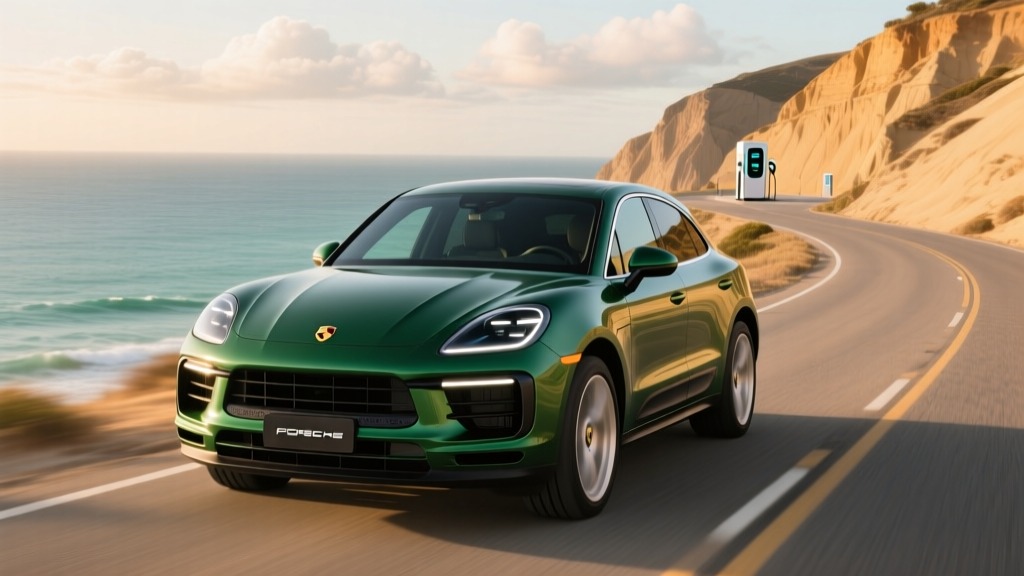
The 2026 Porsche Macan 4 Electric delivers an EPA-estimated 308 miles of range, peaks at 270 kW on DC fast chargers (10–80% in roughly 21 minutes), and starts at $84,600 before incentives. It costs approximately $2,100 less per year to fuel and maintain than a gasoline Macan, but higher insurance premiums, the lack of a federal §30D tax credit (MSRP exceeds the $80,000 SUV cap), and the necessity of reliable home Level 2 charging make it best suited for buyers with a 240V garage circuit and predictable daily driving under 200 miles. If you value Porsche dynamics without tailpipe emissions and can charge at home, it's a compelling luxury EV SUV. If you frequently road-trip through charging deserts or rely solely on public infrastructure, weigh the convenience trade-off carefully.
Range, Battery, and Efficiency: The Numbers That Matter
The Macan 4 Electric rides on Volkswagen Group's Premium Platform Electric (PPE), co-developed with Audi, and packs a 100 kWh gross battery (approximately 95 kWh usable) using NMC (nickel-manganese-cobalt) chemistry. Porsche prioritized energy density and sustained power delivery over the cycle-life advantages of LFP chemistry—a choice consistent with the performance-oriented buyer this vehicle targets.
| Spec | Value |
|---|---|
| EPA Range | 308 miles |
| Battery (gross / usable) | 100 kWh / ~95 kWh (NMC) |
| Efficiency | 87 MPGe combined (approx. 31 kWh/100mi) |
| Motor Output | 402 hp (300 kW) / 479 lb-ft torque |
| 0–60 mph | 4.9 seconds |
| Top Track Speed | 136 mph |
| Max DC Fast Charge Rate | 270 kW (800V architecture) |
| 10–80% DC Fast Charge | ~21 minutes (ideal conditions) |
| Level 2 AC Charge Rate | 11 kW (onboard charger) |
| Level 2 0–100% Time | ~10 hours |
| Cargo Volume (rear seats up) | 18.4 cu ft (+ 3.0 cu ft frunk) |
| Base MSRP (Macan 4 Electric) | $84,600 |
| Battery / Powertrain Warranty | 8 years / 100,000 miles |
Real-World Range vs. EPA Sticker
EPA: 308 miles. Expect roughly 250–275 miles during sustained 75-mph highway driving in moderate temperatures. In cold weather (below 32°F), plan for 210–240 miles of usable range before needing a charge, as the cabin heater and battery thermal management draw additional energy. Porsche's heat pump (standard) mitigates some of this loss, but physics is physics—cold electrolyte moves ions more slowly, and cabin warmth demands watts. Always precondition the battery via the Porsche Charging Planner before arriving at a DC fast charger to hit that 270 kW peak; without preconditioning, your initial charge rate may start below 100 kW.
Charging Speed and Infrastructure: What You'll Actually Experience
The Macan 4 Electric's 800-volt architecture is its most practical engineering feature. On a 350 kW-capable charger (such as Electrify America's newest stalls or Tesla Superchargers with a NACS adapter), the Macan 4 sustains above 200 kW through roughly 40% of the charge session before tapering. The "21-minute 10–80%" figure assumes a preconditioned battery at an optimal charger—real-world sessions on 150 kW hardware stretch to 30–35 minutes.
| Charging Level | Power (kW) | Miles Added per Hour | Typical Use Case |
|---|---|---|---|
| Level 1 (120V household) | ~1.4 kW | ~4 mi/hr | Emergency / trickle only |
| Level 2 (240V, 48A home) | ~11.5 kW | ~37 mi/hr | Overnight home charging |
| DC Fast (150 kW station) | ~150 kW peak | ~480 mi/hr (at peak) | Public highway stops |
| DC Fast (350 kW station) | ~270 kW peak | ~870 mi/hr (at peak) | Fastest public charging |
Home charging reality: The Macan 4's 11 kW onboard charger means you need a 60-amp dedicated circuit (delivering 48 amps continuous) to maximize Level 2 speed. A typical home installation for a ChargePoint Home Flex or Wallbox Pulsar Plus runs $800–$2,500 for equipment and electrician labor if your panel has capacity. If your home has a 100-amp main panel already near capacity, a panel upgrade to 200 amps can add $1,500–$3,500. Consult a licensed electrician for a site-specific assessment—this is not a DIY decision.
Porsche includes three years of complimentary 30-minute charging sessions at Electrify America stations, which adds meaningful value for road-trippers during the early ownership period.
Porsche Macan 4 Electric vs. Gas Macan: Cost and Capability Comparison
The most common cross-shop is the gasoline Porsche Macan (which Porsche has discontinued in the U.S. for the 2025+ model years, making the EV the sole Macan offering stateside). But many buyers are comparing against their current gas SUV or considering whether to keep a gas vehicle in the garage alongside the Macan EV. Here's how the numbers stack up against a representative gas luxury SUV baseline (2024 Macan S, the closest predecessor):
| Category | Macan 4 Electric | Gas Luxury SUV (Baseline) |
|---|---|---|
| Purchase Price (base MSRP) | $84,600 | $68,800 |
| Federal Tax Credit (§30D) | $0 (exceeds $80K SUV cap) | $0 |
| Annual Fuel/Energy Cost (12,000 mi/yr) | ~$620 (home charging at $0.14/kWh) | ~$2,520 (premium gas at $4.20/gal, 21 MPG) |
| 5-Year Fuel/Energy Total | ~$3,100 | ~$12,600 |
| Annual Maintenance | ~$400 (tire rotation, cabin filter, fluid top-off) | ~$1,100 (oil, filters, brakes, spark plugs) |
| 5-Year Maintenance Total | ~$2,000 | ~$5,500 |
| Estimated Annual Insurance | ~$3,200 | ~$2,600 |
| 5-Year Insurance Total | ~$16,000 | ~$13,000 |
| 5-Year Total Operating Cost (fuel + maint. + ins.) | ~$21,100 | ~$31,100 |
The takeaway: Over five years, the Macan 4 Electric saves roughly $10,000 in operating costs, but starts approximately $15,800 higher in purchase price. The break-even point on fuel and maintenance alone arrives around year 8 for a typical driver. If your state offers additional EV rebates (check your local utility and state energy office—amounts vary by jurisdiction), that gap narrows. The higher insurance premium—typically 15–25% above the gas equivalent—partially offsets the fuel savings and is driven by higher repair costs for EV-specific components and the vehicle's performance profile.
According to fueleconomy.gov, efficiency figures may vary by trim and wheel option; always confirm the window-sticker MPGe for your specific configuration.
Federal Tax Credit and Incentive Reality Check
The 2026 Porsche Macan 4 Electric does not qualify for the federal §30D clean vehicle tax credit. Under current IRS rules, SUVs must have an MSRP at or below $80,000 to be eligible, and the Macan 4's $84,600 starting price exceeds this cap before any options are added. This is a firm rule—there is no workaround via trim selection or dealer negotiation on MSRP.
§30D Tax Credit Requirements (2026 Rules)
- MSRP Cap: $80,000 for SUVs, pickups, and vans; $55,000 for sedans — Macan 4 fails this test
- Buyer Income Cap: $150K single / $225K head of household / $300K joint filers
- Battery Sourcing: Critical minerals and battery components must meet escalating domestic/free-trade-partner thresholds
- Point-of-Sale Transfer: Eligible buyers can apply the credit as a down-payment reduction at the dealer (requires eligibility confirmation)
- Assembly: Final assembly must occur in North America
Source: IRS Clean Vehicle Credit eligibility page. Consult a tax professional for your specific situation.
Some states and utilities offer their own EV incentives that are not subject to the federal MSRP cap. Check your state energy office and local utility for rebates on the vehicle or home charger installation—these vary significantly by jurisdiction and change frequently.
First-Time EV Buyer: What You Need to Know Before Signing
Common Misconceptions About the Macan 4 Electric
| Myth | Fact |
|---|---|
| "The battery will need replacing in a few years." | Porsche warranties the battery for 8 years/100,000 miles against degradation below 70% capacity. Industry data from similar NMC packs shows typical degradation of 8–12% over 150,000 miles with normal use. |
| "I can charge it on any public charger." | The Macan 4 uses the NACS (Tesla-style) connector as standard for the 2026 model year. CCS1 stations require an adapter; CHAdeMO stations are largely incompatible and increasingly rare. |
| "Fast charging will destroy the battery." | Occasional DC fast charging is fine. Porsche's thermal management system actively cools the pack during high-power sessions. The concern is exclusive DC fast charging without ever using Level 2—vary your charging habits when practical. |
| "It drives just like a gas Macan." | The EV is heavier (approximately 5,300 lbs vs. ~4,400 lbs for the gas Macan S), which you'll feel in parking lots and tight corners. But the instant torque and lower center of gravity make it feel quicker and more planted at highway speeds. |
| "I don't need home charging if there are Superchargers nearby." | Public DC fast charging costs 2–4x more per kWh than home charging. Relying solely on public infrastructure can erase the fuel-cost advantage and add 20–40 minutes to your weekly routine. Home Level 2 is the economic backbone of EV ownership. |
Cold-weather ownership: If you live in a region with sustained sub-freezing winters, budget for 20–30% range reduction and plan charging stops accordingly. The Macan 4's heat pump helps, but it cannot eliminate the thermodynamic reality of heating a cabin and battery from ambient temperatures. Garage parking and scheduled preconditioning are your best tools.
Tire costs: EVs are heavier and deliver instant torque, which accelerates tire wear. Expect to replace tires every 25,000–35,000 miles rather than the 40,000–50,000 miles typical on a gas SUV. Budget $1,200–$2,000 for a set of Porsche-spec EV-rated tires.
Decision Framework: Is the Macan 4 Electric Right for You?
Choose the Macan 4 Electric If:
- You have (or can install) a 240V / 60A circuit at home for overnight Level 2 charging
- Your daily round-trip commute is under 200 miles, leaving comfortable range buffer
- You value instant torque, a low center of gravity, and near-silent cruising
- You're willing to pay a premium for Porsche build quality, interior materials, and driving dynamics
- Your road trips are planned along routes with reliable DC fast-charging infrastructure (interstate corridors, major metro areas)
- You understand the vehicle does not qualify for the federal tax credit and have budgeted accordingly
Look Elsewhere If:
- You live in an apartment or condo without charging access and cannot install a home charger
- You frequently drive in rural areas with sparse charging infrastructure
- Your budget is tightly constrained and the lack of a $7,500 federal credit creates a financial gap
- You need maximum cargo volume — the Macan 4's 18.4 cu ft (seats up) trails competitors like the Hyundai Ioniq 5 or Tesla Model Y
- You regularly tow — the Macan 4's 4,409-lb towing capacity is modest for the segment
Frequently Asked Questions
Does the Porsche Macan 4 Electric qualify for any tax credits?
Not the federal §30D credit—its $84,600 MSRP exceeds the $80,000 SUV cap. Some state and utility incentives may still apply. Check your state energy office and IRS guidelines for current rules.
How long does it take to charge the Macan 4 Electric at home?
On a Level 2 charger at 11 kW (48 amps, 240V), a full 0–100% charge takes approximately 10 hours. Most owners plug in overnight and wake to a full battery. A typical daily top-up from 30% to 80% takes about 4–5 hours at this rate.
What is the real-world highway range?
Expect roughly 250–275 miles at 75 mph in moderate temperatures (60–80°F). In cold weather below freezing, plan for 210–240 miles. The EPA estimate of 308 miles reflects a blended city/highway cycle—sustained highway speeds at higher velocities reduce efficiency due to aerodynamic drag.
Can I use Tesla Superchargers with the Macan 4 Electric?
Yes. The 2026 Macan 4 Electric comes equipped with the NACS charge port natively, giving you direct access to Tesla's Supercharger network without an adapter. This is one of the strongest public-charging advantages available in the U.S. market.
How does the Macan 4 Electric compare to the Macan Turbo Electric?
The Macan Turbo Electric produces 630 hp and 834 lb-ft of torque, hits 0–60 mph in 3.3 seconds, but sacrifices range (EPA 288 miles) due to higher energy draw. It also starts at approximately $105,000. The Macan 4 is the efficiency and value play within the electric Macan lineup.
What happens if the battery degrades significantly?
Porsche's battery warranty guarantees at least 70% capacity retention over 8 years or 100,000 miles, whichever comes first. If the battery falls below this threshold within the warranty period, Porsche will repair or replace it. Out-of-warranty battery replacement costs are estimated at $15,000–$25,000 based on current NMC pack pricing, though costs are expected to decline as the battery supply chain matures.
Is the Macan 4 Electric self-driving?
No. Porsche's driver-assistance suite (including adaptive cruise control, lane-keeping, and Porsche InnoDrive) is classified as SAE Level 2—meaning the driver must remain fully attentive and keep hands on or near the steering wheel at all times. This is a driver-assist system, not autonomous driving. No production Porsche offers Level 3 or higher automation as of 2026.
For the latest safety ratings, check NHTSA.gov and the IIHS once crash-test results for the electric Macan are published. Porsche's official specifications and configurator at porsche.com remain the authoritative source for trim-level details and option pricing.