Quick Answer: Is a Porsche EV Worth It in 2026?
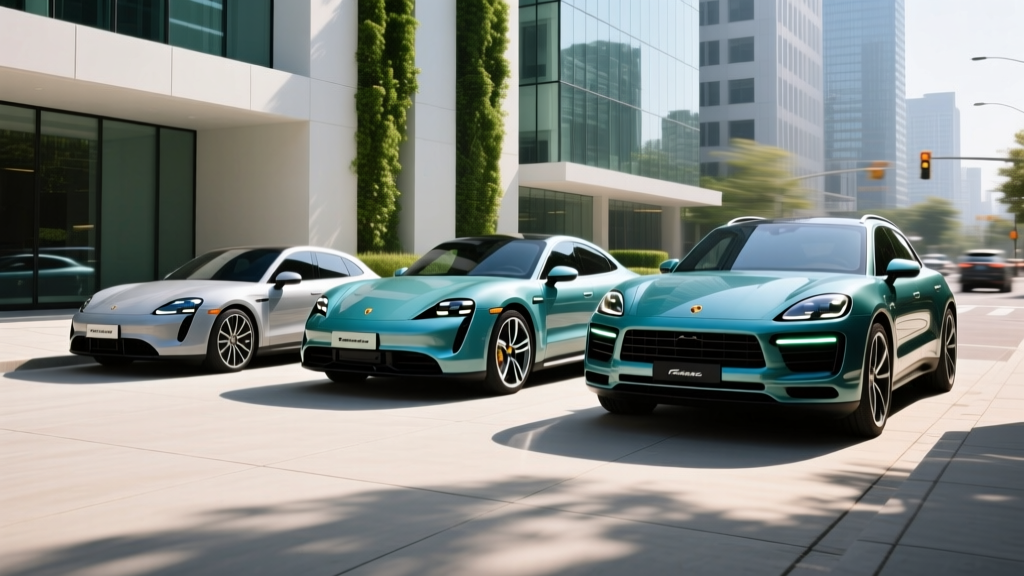
Porsche's 2026 EV lineup — the Taycan (sedan/wagon), Macan Electric (compact SUV), and newly introduced Cayenne Electric (full-size SUV) — targets buyers who want sports-car dynamics without tailpipe emissions. Expect real-world range of 230–310 miles depending on model, DC fast charging from 10–80% in 18–22 minutes at peak rates up to 320 kW (Taycan), and base MSRPs from ~$72,000 (Macan) to ~$105,000+ (Cayenne). Federal §30D tax credit eligibility is limited by MSRP caps and battery-sourcing rules — most Porsche EVs exceed the $55,000 sedan / $80,000 SUV cap, meaning buyers typically pay full sticker. These are premium performance EVs, not budget commuters.
Porsche's 2026 EV Lineup at a Glance
Porsche has committed fully to electrification, and by the 2026 model year, three core EVs anchor the brand. The refreshed Taycan (including Cross Turismo and Sport Turismo variants) received a significant battery and powertrain update for 2025 that carries into 2026, boosting range and charge speed. The Macan Electric, built on the PPE (Premium Platform Electric) architecture co-developed with Audi, is Porsche's volume play in the luxury compact SUV segment. The Cayenne Electric, announced for 2026, extends electrification into the large luxury SUV class.
| Spec | Taycan (Base RWD) | Taycan Turbo GT | Macan Electric (Base) | Macan Turbo | Cayenne Electric (announced) |
|---|---|---|---|---|---|
| EPA Range | ~310 mi | ~269 mi | ~288 mi | ~255 mi | ~310 mi (est.) |
| Battery (usable) | ~97 kWh (NMC) | ~97 kWh (NMC) | ~95 kWh (NMC) | ~95 kWh (NMC) | ~110 kWh (NMC, est.) |
| Peak DC Charge Rate | 320 kW | 320 kW | 270 kW | 270 kW | ~350 kW (est.) |
| 10–80% DC Charge Time | ~18 min | ~18 min | ~21 min | ~21 min | ~18 min (est.) |
| Level 2 AC Charge (kW) | 11 kW (22 kW optional) | 11 kW (22 kW optional) | 11 kW | 11 kW | 11–22 kW (est.) |
| Horsepower | 402 hp | 1,019 hp (Launch Control) | 335 hp | 630 hp | ~550+ hp (est.) |
| 0–60 mph | 4.6 sec | 2.1 sec | 5.4 sec | 3.3 sec | ~3.7 sec (est.) |
| Base MSRP | ~$101,400 | ~$240,000 | ~$72,100 | ~$106,000 | ~$105,000 (est.) |
| Drivetrain | RWD | AWD | RWD | AWD | AWD |
| Battery Warranty | 8 yr / 100,000 mi | 8 yr / 100,000 mi | 8 yr / 100,000 mi | 8 yr / 100,000 mi | 8 yr / 100,000 mi (est.) |
Sources: fueleconomy.gov, Porsche USA. Cayenne Electric figures are preliminary estimates for an announced model not yet on sale.
Real-World Range: What the EPA Sticker Doesn't Tell You
EPA range estimates are tested under controlled conditions that don't always reflect your Tuesday commute or a cross-country road trip. Here's what Porsche EV owners actually experience:
Range Reality Check
Taycan Base (EPA 310 mi): Expect ~260–280 mi on highway drives at 70–75 mph. In freezing weather (below 32°F), plan for 210–240 mi. The Taycan's heat pump (standard on 2025+ models) mitigates cold-weather loss compared to earlier model years, but physics still applies — battery chemistry slows and cabin heating draws energy.
Macan Electric Base (EPA 288 mi): Real-world highway range sits around 240–260 mi. The Macan's taller, less aerodynamic SUV profile costs efficiency at speed. City driving with regenerative braking recovers more energy, yielding closer to EPA figures.
Taycan Turbo GT (EPA 269 mi): With sticky performance tires and aggressive powertrain calibration, expect 200–230 mi in spirited driving. This is a track-capable car, not a hypermiler.
The Taycan's updated 97 kWh (usable) Performance Battery Plus uses NMC (nickel manganese cobalt) chemistry optimized for both energy density and charge acceptance. Unlike LFP batteries found in some budget EVs, NMC offers higher specific energy but requires more careful thermal management. Porsche's 800-volt architecture is the key enabler for both sustained high-speed charging and efficient power delivery — it runs lower current at higher voltage, reducing heat and I²R losses in the cabling.
Charging Speed and Infrastructure: The 800V Advantage
Porsche's 800-volt platform isn't just marketing. It translates directly into faster DC charging and the ability to sustain higher charge rates before the battery management system tapers current to protect the cells.
| Charging Level | Power (kW) | Miles Added per Hour | Typical Use Case |
|---|---|---|---|
| Level 1 (120V household) | ~1.4 kW | ~3–4 mi/hr | Emergency/trickle only |
| Level 2 (240V, 48A home charger) | 11 kW | ~28–32 mi/hr | Overnight home charging (8–10 hr for full) |
| Level 2 (240V, optional 22 kW onboard) | 22 kW | ~55–60 mi/hr | Faster home/destination charging (Taycan option) |
| DC Fast (150 kW station) | 150 kW (sustained) | ~350+ mi/hr equivalent | Common public chargers; not peak Porsche speed |
| DC Fast (350 kW station, Taycan) | 320 kW (peak) | ~700+ mi/hr equivalent | 10–80% in ~18 min; requires compatible charger |
| DC Fast (270 kW, Macan) | 270 kW (peak) | ~600+ mi/hr equivalent | 10–80% in ~21 min |
The Charge Curve Reality
Peak kW is not sustained kW. When you plug a Taycan into a 350 kW Electrify America stall at 10% State of Charge (SoC), it ramps quickly to ~300–320 kW and holds roughly 270+ kW up to about 50–55% SoC. Above that, the curve tapers progressively — by 80% SoC, you're typically seeing 80–120 kW. Above 90%, charging slows dramatically to protect the NMC cells. This is why manufacturers quote 10–80% times, not 0–100%.
Preconditioning matters. If you navigate to a DC fast charger using the Porsche Communication Management (PCM) system, the car preheats the battery to its optimal charge temperature window (~30–35°C). Without preconditioning — say, pulling into a charger on a cold morning without navigation guidance — peak charge rates may be 30–50% lower for the first several minutes. Always use the built-in nav for charge stops.
Porsche EV vs. Gas Porsche: The Ownership Cost Equation
The most common question from Porsche shoppers: does going electric actually save money, or are you paying a premium for performance and tech? Let's compare the Taycan (Base) against a similarly positioned Porsche Panamera (gas), and the Macan Electric against the Macan S (gas).
| Cost Category | Taycan Base (EV) | Panamera (Gas) | Macan Electric (EV) | Macan S (Gas) |
|---|---|---|---|---|
| Purchase Price (MSRP) | $101,400 | $103,000 | $72,100 | $68,800 |
| Fed. Tax Credit (§30D) | $0 (MSRP exceeds cap) | $0 | $0 (MSRP exceeds SUV cap) | $0 |
| Fuel/Energy (5 yr) | ~$5,200* | ~$14,500** | ~$4,800* | ~$12,800** |
| Maintenance (5 yr) | ~$2,800 | ~$5,500 | ~$2,500 | ~$5,000 |
| Insurance (5 yr est.) | ~$18,000 | ~$15,500 | ~$12,500 | ~$11,000 |
| Depreciation (est. 5 yr) | ~$52,000 | ~$48,000 | ~$35,000 | ~$30,000 |
| Est. 5-Year Total | ~$179,400 | ~$186,500 | ~$126,900 | ~$127,600 |
*Assumes 70% home charging at $0.14/kWh national avg, 30% DC fast charging at $0.40/kWh. **Assumes premium gasoline at $4.20/gal, Panamera at 21 MPG combined, Macan S at 22 MPG combined (source).
Key takeaway: The Macan Electric and gas Macan S nearly break even over five years, with the EV offering lower running costs offsetting a slightly higher purchase price and steeper insurance premiums. The Taycan vs. Panamera comparison favors the EV by roughly $7,000 over five years, primarily from fuel and maintenance savings — but depreciation remains the largest cost for both.
Maintenance specifics: Porsche EVs eliminate oil changes, spark plugs, transmission fluid (the Taycan's 2-speed rear axle has sealed fluid), and exhaust system repairs. Brake pad life is dramatically extended thanks to regenerative braking — many Taycan owners report 60,000+ miles on original pads. What remains: cabin air filters, brake fluid flushes (every 2 years), coolant checks, tire rotations, and tire replacement (EVs wear tires faster due to instant torque and heavier curb weight — budget $1,200–$2,000 per set for Porsche-spec rubber).
Federal Tax Credit and Incentives: The Hard Truth
Under current IRS §30D rules, the federal EV tax credit offers up to $7,500 for qualifying new EVs. However, Porsche EV buyers face significant hurdles:
- MSRP Cap: Sedans must be under $55,000; SUVs, vans, and trucks under $80,000. The Taycan (~$101K+) and Cayenne Electric (~$105K+) are categorically ineligible. The Macan Electric Base at ~$72,100 qualifies under the SUV cap, but higher trims (Macan 4, Macan Turbo at ~$106K) exceed it.
- Income Limits: Buyer AGI must not exceed $300,000 (married filing jointly), $225,000 (head of household), or $150,000 (single).
- Battery Sourcing: The full $7,500 requires meeting both critical-mineral and battery-component sourcing requirements. As of 2026, vehicles with battery components from a "foreign entity of concern" (FEOC) are disqualified. Porsche sources battery cells from suppliers including CATL and Samsung SDI — verify current-year eligibility at IRS.gov before purchase.
- Point-of-Sale Transfer: If eligible, the credit can be transferred to the dealer at purchase, reducing your out-of-pocket cost directly rather than waiting for a tax return.
Bottom line: Most Porsche EV buyers should not count on the federal credit. The Macan Electric Base is the only model with a realistic path to partial or full eligibility, and even that depends on battery-sourcing compliance for the specific model year. Consult a tax professional and check the IRS clean vehicle credit page for the latest sourcing determinations.
Home Charging Setup: What Porsche Owners Need
Charging at home is where EV ownership either thrives or frustrates. Porsche includes a basic Level 2 mobile charger with most models, but a dedicated wallbox is the standard for serious ownership.
| Component | Cost Range | Notes |
|---|---|---|
| Level 2 Wallbox (48A, hardwired) | $500–$900 | Porsche Mobile Charger Connect or ChargePoint Home Flex |
| Electrical Permit | $50–$300 | Varies by municipality |
| Electrician Labor (standard install) | $800–$2,000 | 240V/50A circuit, ~20 ft run from panel |
| Electrical Panel Upgrade (if needed) | $1,500–$4,000 | Required if existing panel lacks capacity (common in older homes) |
| Total (standard install) | $1,350–$3,200 | Without panel upgrade |
| Total (with panel upgrade) | $2,850–$7,200 | With 200A service upgrade |
Key considerations for Porsche owners:
- The Taycan's optional 22 kW onboard charger is only beneficial if your home charger and electrical circuit can deliver it (requires a 100A/240V dedicated circuit — expensive). Most homes max out at 48A (11.5 kW), which fills a Taycan overnight in about 9–10 hours. The 22 kW option shines more at commercial/destination Level 2 stations.
- Garage vs. outdoor installation matters: if your charger is outdoors, choose a NEMA 4-rated unit and budget for a weatherproof enclosure.
- Always have a licensed electrician assess your panel's available amperage before purchasing equipment. A 200A panel with existing high-draw appliances (electric range, dryer, HVAC) may need a load-management device or panel upgrade.
What If You Can't Charge at Home?
Apartment dwellers and street-parkers face the biggest EV ownership challenge. If you rely exclusively on public DC fast charging:
- Cost: At $0.35–$0.50/kWh (typical Electrify America or EVgo pricing), your "fuel" cost nearly doubles vs. home charging — roughly $8,000–$10,000 over 5 years instead of $5,000.
- Convenience: Plan 20–30 minute charging stops 2–3 times per week. This works for some routines but adds friction.
- Battery health: Exclusive DC fast charging accelerates battery degradation slightly. Porsche's battery management system is conservative (large buffer), but NMC cells prefer slower, cooler charging cycles. Expect 2–4% additional capacity loss over 5 years compared to primarily Level 2 charging.
Common Porsche EV Misconceptions
| Myth | Fact |
|---|---|
| "The Taycan's range is too low for road trips." | At 310 mi EPA (Base), the Taycan matches or exceeds many luxury EVs. With 320 kW charging, you add ~180 mi of range in a 15-minute stop. Cross-country trips require planning but are entirely practical on the Electrify America/Supercharger network. |
| "Porsche EVs depreciate faster than gas Porsches." | Early Taycan models (2020–2022) did see steep depreciation. The 2025+ refresh with improved range and charging, plus growing EV adoption, has stabilized values. The Macan Electric is too new for long-term data, but Porsche brand strength supports residual values. |
| "I'll get the $7,500 tax credit on any Porsche EV." | Most Porsche EVs exceed the §30D MSRP cap. Only the Macan Electric Base (~$72K) has potential eligibility, contingent on battery-sourcing rules and buyer income. Verify at IRS.gov before committing. |
| "The battery will need expensive replacement in 5 years." | Porsche warranties the battery for 8 years/100,000 miles with a 70% capacity retention threshold. Real-world data from 2020–2024 Taycans shows ~3–6% degradation at 50,000 miles. A full out-of-warranty replacement would cost $20,000–$30,000, but most owners will never need one within typical ownership periods. |
| "EV insurance is always wildly more expensive." | Insurance premiums for Porsche EVs run 10–20% higher than comparable gas models, primarily due to higher repair costs for battery-adjacent damage and specialized labor. Shopping multiple insurers (especially those with EV-specific programs) can narrow the gap significantly. |
Decision Framework: Which Porsche EV Is Right for You?
Choose Your Porsche EV
Choose the Taycan if: You prioritize driving dynamics above all else, want the fastest charging in the Porsche lineup (320 kW), prefer a sedan or wagon body style, and your budget starts at $100K+. The Cross Turismo variant adds cargo versatility and mild off-road capability for wagon buyers. Best for: enthusiasts who drive daily and road-trip 2–4 times per year.
Choose the Macan Electric if: You want a practical luxury compact SUV with Porsche badge cachet, your budget is $72K–$110K, and you need SUV cargo space and ride height. The Base model is the value play (and the only one with potential tax credit eligibility). The Turbo model delivers absurd performance (630 hp, 3.3-sec 0–60) for buyers who want supercar acceleration in a grocery-getter. Best for: families and daily commuters who want an EV but aren't ready for a sedan.
Choose the Cayenne Electric if: You need three-row or large SUV space, regularly carry 4+ passengers, tow (estimated 7,700+ lb capacity), and have a budget above $105K. Note: this model is announced but not yet available for delivery — final specs and pricing are preliminary. Best for: current Cayenne owners transitioning to electric who don't want to downsize to the Macan.
Stick with a gas Porsche (or wait) if: You lack reliable home or workplace charging access, regularly drive in extreme cold (below 0°F) where range loss exceeds 30%, frequently tow heavy loads over long distances, or your typical daily drive exceeds 250 miles without access to DC fast charging along your route. A Porsche EV is an outstanding car, but infrastructure gaps are real in rural areas and the Mountain West.
Frequently Asked Questions
Does the Porsche Taycan use Tesla's NACS charging connector?
As of the 2026 model year, Porsche EVs sold in North America use the CCS1 connector for DC fast charging. Porsche has announced adoption of the NACS (Tesla) connector for future models, and adapters are available for accessing Tesla Supercharger stalls. Check with your dealer for the latest adapter availability and compatibility with your specific model year.
How long does a Porsche EV battery last?
Porsche warranties its EV batteries for 8 years or 100,000 miles, whichever comes first, guaranteeing at least 70% of original capacity. Real-world data from early Taycan owners shows approximately 3–6% degradation after 50,000 miles with mixed Level 2 and DC fast charging. At that rate, reaching the 70% threshold would require well over 200,000 miles. NMC chemistry in Porsche's thermally managed pack is designed for longevity, but avoid routinely charging to 100% and leaving the car at high SoC in extreme heat.
Can I tow with a Porsche EV?
The Macan Electric has a towing capacity of approximately 4,400 lbs (braked). The Cayenne Electric is expected to tow 7,700+ lbs based on preliminary specs. The Taycan is not rated for towing in the US market. Towing significantly reduces range — expect a 30–50% reduction depending on trailer weight and aerodynamics.
What's the real cost to charge a Porsche Taycan at home?
At the US national average of ~$0.14/kWh, fully charging a Taycan's ~97 kWh battery from empty costs about $13.60. With typical driving efficiency of ~3.0 mi/kWh, that's roughly $0.047 per mile. Compare this to a Panamera at 21 MPG combined with premium fuel at $4.20/gal: $0.20 per mile. Home charging saves approximately $0.15 per mile driven.
Is Porsche's InnoDrive adaptive cruise any good compared to Tesla Autopilot?
Porsche InnoDrive (available on Taycan and Macan Electric) is an SAE Level 2 driver-assistance system that combines adaptive cruise control with lane centering and predictive speed adjustment based on navigation data and road-sign recognition. It's competent for highway cruising but requires continuous driver engagement — hands on wheel, eyes on road. It is not "self-driving." Unlike Tesla's FSD (Supervised) or GM's Super Cruise, Porsche does not currently offer hands-free highway driving or automated lane changes. It's a well-tuned Level 2 system, not a Level 3 or Level 4 autonomous feature.
Should I buy a certified pre-owned Taycan instead of new?
CPO Taycans from 2022–2024 offer significant value — depreciation has already absorbed the steepest drop, and Porsche's CPO warranty extends coverage to 7 years from original in-service date with no mileage limit. However, pre-2025 Taycans have the older 79.2 kWh (Performance Battery) or 93.4 kWh (Performance Battery Plus) packs with slower peak charge rates (~225–270 kW) and lower EPA range (200–256 mi for pre-refresh models). If range and charging speed are priorities, the 2025+ refresh is a meaningful upgrade worth the premium.