Quick Answer: Is the Porsche EV Macan Worth It in 2026?
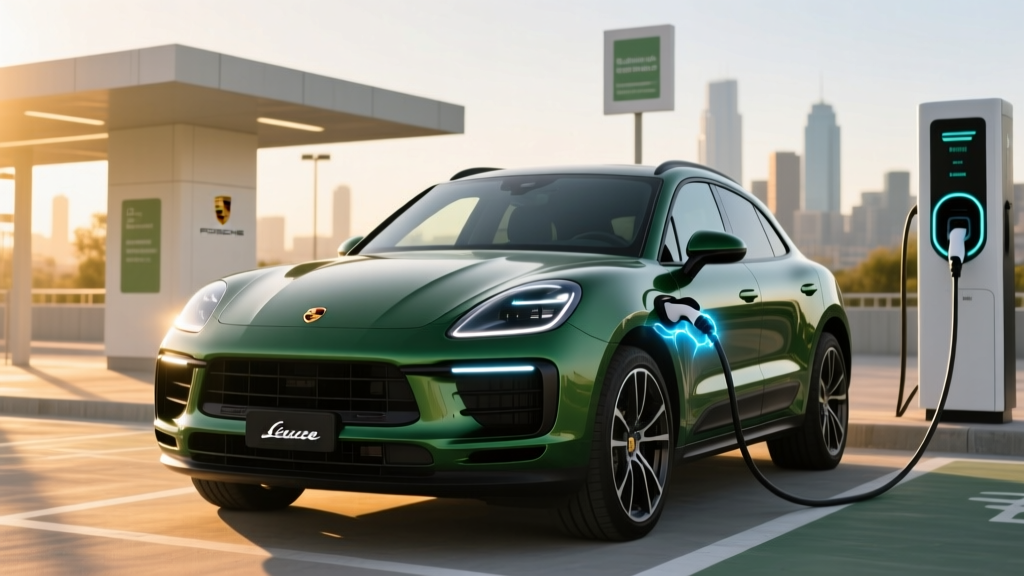
The 2026 Porsche Macan Electric is a performance-first luxury SUV starting around $78,800 (Macan 4 Electric) with an EPA-estimated range of 308 miles on its 100 kWh (95 kWh usable) NMC battery. It charges from 10–80% in roughly 21 minutes at a peak 270 kW DC fast charger. Compared to the gas Macan, you'll save an estimated $1,200–$1,600/year on fuel if you charge primarily at home on a Level 2 setup. However, it does not qualify for the federal §30D new EV tax credit due to battery sourcing and MSRP cap constraints. Real-world highway range drops to approximately 250–270 miles, and cold-weather driving can reduce that further by 15–25%.
Porsche EV Macan at a Glance: 2026 Specs
Porsche offers the electric Macan in two primary trims for the 2026 model year. Both ride on the VW Group's PPE (Premium Platform Electric) architecture with an 800-volt electrical system, which is the key enabler of its class-leading charge speeds.
| Spec | Macan 4 Electric | Macan Turbo Electric |
|---|---|---|
| Base MSRP | $78,800 | $104,900 |
| EPA Range | 308 mi | 288 mi |
| Battery (usable/total) | 95 kWh / 100 kWh (NMC) | 95 kWh / 100 kWh (NMC) |
| Horsepower | 402 hp | 630 hp |
| 0–60 mph | 4.9 sec | 3.1 sec |
| Peak DC Charge Rate | 270 kW | 270 kW |
| 10–80% DC Fast Charge | ~21 min | ~21 min |
| Level 2 (AC) Charge Rate | 11 kW (included onboard charger) | 11 kW (optional 22 kW) |
| MPGe (combined) | 88 MPGe | 83 MPGe |
| Drivetrain | Dual-motor AWD | Dual-motor AWD |
| Battery/Powertrain Warranty | 8 yr / 100,000 mi | 8 yr / 100,000 mi |
Sources: EPA fueleconomy.gov, Porsche USA
Real-World Range vs. the EPA Sticker
EPA Estimate: 308 miles (Macan 4) / 288 miles (Turbo)
Real-World Highway Expectation: ~250–270 miles at 70–75 mph
Cold-Weather (below 30°F): ~210–240 miles without preconditioning
The EPA cycle includes low-speed and stop-and-go driving, which favors regenerative braking efficiency. In sustained highway driving at 70+ mph, the Macan 4 Electric typically delivers 2.8–3.0 miles per kWh — translating to roughly 265 miles from its 95 kWh usable pack. The Turbo model's wider tires and higher performance tuning drop that slightly.
Cold weather is the bigger variable. Without preconditioning the battery, an NMC pack in sub-freezing temperatures can lose 20–30% of its effective range. The Macan Electric includes a heat pump as standard equipment, which mitigates cabin heating losses, but battery chemistry itself becomes less efficient in the cold. If you live in a climate with harsh winters, plan road trips around a 210–230 mile practical range buffer.
One practical advantage: the Macan Electric's navigation system includes route-based battery preconditioning. When you set a DC fast charger as your destination, the car warms the battery to optimal temperature before arrival, enabling those advertised 21-minute 10–80% sessions. Skip preconditioning and a cold battery might only accept 100–130 kW, doubling your charge stop.
Charging: Speeds, Costs, and the 800V Advantage
The Macan Electric's 800-volt architecture isn't just marketing — it directly enables sustained high-power charging that 400V competitors can't match. Here's what to expect at each charging level:
| Charging Level | Power (kW) | Miles Added Per Hour | Full Charge Time (10–100%) |
|---|---|---|---|
| Level 1 (120V household) | ~1.4 kW | ~4–5 mi/hr | ~65+ hours |
| Level 2 (240V home, 48A) | 11 kW | ~32–35 mi/hr | ~9 hours |
| Level 2 (240V, optional 22 kW onboard) | 22 kW | ~65–70 mi/hr | ~4.5 hours |
| DC Fast (350 kW station) | Peak 270 kW | ~150+ mi in 10 min | 10–80% in ~21 min |
Understanding kW vs. kWh: kW (kilowatts) measures the rate of energy flow — like water pressure from a hose. kWh (kilowatt-hours) measures total energy stored — like the size of the bucket. The Macan's 95 kWh battery is the bucket; a 270 kW charger is a very high-pressure hose filling it.
The charge curve matters. The Macan sustains above 200 kW up to roughly 55–60% state of charge, then tapers progressively. Charging from 80–100% at DC fast speeds is painfully slow — plan to charge to 80% on road trips and move on. That 10–80% in 21 minutes figure assumes a 350 kW-capable station (like Electrify America or Ionity) with the battery preconditioned.
Cost to Own: Porsche EV Macan vs. Gas Macan
This is where the math gets interesting — and where the EV Macan either saves you serious money or costs you more, depending entirely on your charging setup.
| Cost Category (Annual) | Macan 4 Electric | Gas Macan (2.0T, AWD) |
|---|---|---|
| Purchase Price (base MSRP) | $78,800 | $62,900 |
| Fuel/Energy (12,000 mi/yr, home L2) | ~$540/yr | ~$2,100/yr |
| Fuel/Energy (12,000 mi/yr, public DC) | ~$1,440/yr | ~$2,100/yr |
| Maintenance | ~$350/yr | ~$850/yr |
| Insurance (national avg estimate) | ~$2,800/yr | ~$2,200/yr |
| Federal Tax Credit (§30D) | $0 (not eligible) | N/A |
| Estimated 5-Year Total Fuel + Maint. | ~$4,450 (home) / ~$8,950 (public) | ~$14,750 |
Assumptions: $0.15/kWh home electricity, $0.40/kWh public DC fast charging, $3.50/gal premium fuel, 22 MPG combined for gas Macan. Insurance varies significantly by driver profile and state.
The home-charging advantage is decisive. At a national average residential rate of $0.15/kWh, driving 12,000 miles costs roughly $540 per year in electricity — about a quarter of the gas Macan's fuel bill. But if you rely exclusively on public DC fast charging at $0.35–$0.45/kWh, that advantage shrinks to roughly $660/year in savings. Over five years, home charging saves approximately $10,300 in fuel alone compared to gas.
Maintenance savings are real but smaller than many assume. You eliminate oil changes, spark plugs, and transmission fluid. Brake pads last far longer thanks to regenerative braking. But tire wear on a 5,300-lb EV with instant torque is often higher than on the gas equivalent. Budget for premium tire replacement every 25,000–35,000 miles.
Federal Tax Credit & Incentive Reality Check
Here's the hard truth: the 2026 Porsche Macan Electric does not qualify for the §30D federal EV tax credit of up to $7,500. There are two primary reasons under current IRS rules:
- MSRP Cap: The §30D credit applies only to SUVs with an MSRP at or below $80,000. The Macan 4 Electric at $78,800 technically clears this, but the Turbo at $104,900 does not.
- Battery Sourcing Requirements: The critical minerals and battery component sourcing thresholds for 2026 are stringent. Porsche's NMC battery supply chain does not currently meet the domestic-content and free-trade-agreement sourcing percentages required for either the $3,750 critical-minerals or $3,750 battery-components half-credits.
- Buyer Income Caps: Even if the vehicle qualified, buyers must have an adjusted gross income at or below $150,000 (single) / $300,000 (joint) to claim the credit.
Some state-level incentives may still apply — check your state's energy office or AFDC state incentive database for specifics. States like California, Colorado, and Massachusetts offer additional rebates that don't have the same sourcing restrictions.
Common Misconceptions: Myths vs. Facts
| Myth | Fact |
|---|---|
| "The EV Macan has the same range as the gas Macan." | Gas Macan gets ~380 miles per tank. EV Macan EPA is 308 mi, real-world highway ~250–270 mi. Gas still wins on raw road-trip range, but the EV's charge speed partially offsets this. |
| "I'll save $7,500 on the federal tax credit." | The Macan Electric does not currently qualify for §30D due to battery sourcing rules. Don't factor this into your purchase math. |
| "Charging takes too long for road trips." | At 270 kW peak with preconditioning, 10–80% takes ~21 minutes. A typical road trip stop (stretch, food, restroom) takes 20–30 minutes anyway. The gap has narrowed significantly. |
| "The battery will need replacing in 5 years." | NMC batteries in modern EVs with active thermal management (like the Macan's liquid-cooled system) typically retain 85–90% capacity at 100,000 miles. Porsche warranties the battery for 8 years/100,000 miles against dropping below 70% capacity. |
| "I can charge on any public charger." | The Macan Electric uses the NACS connector (Tesla-style) for 2026. Adapters are available for CCS stations, but native NACS compatibility means full access to Tesla Supercharger V3/V4 stations via adapter or native port depending on production date. |
Decision Framework: Should You Buy the Porsche EV Macan?
Buy the Macan Electric IF:
- You have reliable home Level 2 charging (garage or driveway with a 240V/48A circuit). This unlocks the $540/year energy cost and eliminates daily range concerns.
- Your daily commute is under 100 miles round-trip. You'll rarely use more than 40% of the battery daily and can charge overnight.
- You value performance and driving dynamics. The Macan Turbo Electric's 3.1-second 0–60 and low center of gravity outperform the gas Macan GTS in every measurable metric.
- You plan to keep the car 5+ years. The fuel and maintenance savings compound over time and partially offset the higher purchase price.
- You live in a moderate or warm climate. Cold-weather range loss is manageable but real — NMC batteries are less tolerant of sub-freezing temps than LFP.
Stick with the Gas Macan (or Consider a PHEV) IF:
- You cannot install home charging. Relying exclusively on public charging erases most cost savings and adds daily friction. Apartment/condo dwellers without workplace charging should reconsider.
- You frequently drive 400+ mile road trips in rural areas. DC fast charging infrastructure in the Mountain West and rural Midwest remains inconsistent. A gas Macan's 380-mile range and 5-minute refuels are still superior here.
- Your budget is strictly under $65,000. The EV Macan's $78,800 entry price is $15,900 more than the gas base model, and no federal credit bridges the gap.
- You live in extreme cold (frequent sub-10°F). Expect 25–30% range loss in deep winter. A 308-mile EPA range becomes a 215-mile practical range, which may not suit your needs.
First-Time EV Buyer Essentials: What Porsche Won't Tell You
If the Macan Electric is your first EV, a few ownership realities don't appear in the brochure:
Home charging installation costs $800–$2,500+ for a Level 2 wallbox (like the Porsche Mobile Charger Connect or a ChargePoint Home Flex), assuming your electrical panel has capacity. If you need a 200-amp panel upgrade, add $1,500–$3,500. Get a quote from a licensed electrician before committing to the car.
Insurance premiums run 15–25% higher than the equivalent gas Macan. EV repair costs after collisions are higher due to battery proximity, specialized labor, and parts availability. Shop quotes from multiple insurers before purchase.
Tire costs are real. The Macan Electric weighs approximately 5,300 lbs and delivers instant torque. Expect to replace tires every 25,000–35,000 miles — and EV-optimized tires (with low rolling resistance and foam noise insulation) typically cost $250–$400 per corner.
Public charging reliability varies. While Electrify America and Tesla Superchargers have improved uptime, you will occasionally encounter broken stalls, occupied chargers, or slower-than-advertised speeds. Download multiple charging apps (PlugShare, ChargePoint, EA) and always have a backup charging plan on road trips.
The 800V system is future-proof. As charging networks continue upgrading to 350 kW and beyond, the Macan Electric is already equipped to take full advantage — unlike 400V competitors that will be bottlenecked by their architecture.
Frequently Asked Questions
Does the Porsche EV Macan qualify for any tax credits?
As of 2026, the Macan Electric does not qualify for the federal §30D new clean vehicle credit due to battery component and critical mineral sourcing requirements. Some state-level incentives may apply — check your state's EV rebate program and the AFDC database.
What's the real-world range on a road trip?
Expect 250–270 miles at highway speeds (70–75 mph) in moderate temperatures. In cold weather (below 30°F), plan for 210–240 miles. Always leave a 30–40 mile buffer for detours and charger availability.
How long does it take to charge at home overnight?
With the standard 11 kW onboard charger on a 240V/48A circuit, a full 10–100% charge takes approximately 9 hours. Most owners arrive home with 30–50% remaining and wake up fully charged in 4–6 hours. The optional 22 kW onboard charger cuts this in half if your home electrical setup supports it.
Is the Macan Electric more expensive to insure than the gas Macan?
Yes, typically 15–25% more. Average annual premiums for the Macan Electric run approximately $2,600–$3,200 depending on your driving record, location, and coverage level, compared to roughly $2,000–$2,500 for the gas model. Always get personalized quotes before purchasing.
What happens if the battery degrades?
Porsche warranties the high-voltage battery for 8 years or 100,000 miles against capacity dropping below 70%. Real-world data from similar PPE-platform vehicles suggests NMC batteries with active liquid cooling retain 85–90% capacity at 100,000 miles. Full battery replacement (outside warranty) would cost approximately $18,000–$25,000, though this is rarely needed within the vehicle's typical ownership life.
Can I use Tesla Superchargers with the Macan Electric?
Yes. The 2026 Macan Electric is equipped with the NACS (North American Charging Standard) port, granting access to Tesla's Supercharger network. For legacy CCS stations, a NACS-to-CCS adapter is available. This dual compatibility gives Macan Electric owners access to the largest and most reliable fast-charging networks in North America.