Porsche Electric: The 2026 Lineup at a Glance
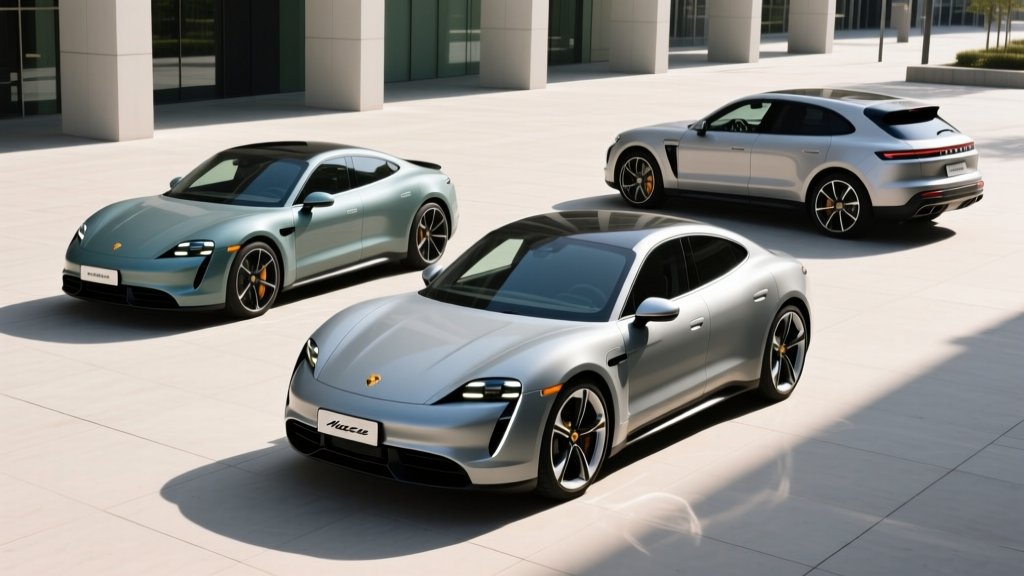
If you're researching a Porsche electric vehicle in 2026, you have three production models to choose from: the Taycan sedan/wagon (up to 318 miles EPA, starting ~$92,950), the Macan EV compact SUV (up to 308 miles EPA, starting ~$78,800), and the newly launched Cayenne EV midsize SUV (up to 310 miles EPA, starting ~$98,500). All three ride on Porsche's 800-volt J1 or PPE architecture, enabling DC fast charging up to 270–350 kW — meaning a 10–80% charge in roughly 18–21 minutes at a compatible station. None currently qualify for the full $7,500 federal §30D tax credit due to battery sourcing and MSRP cap rules, though point-of-sale lease incentives may apply depending on your dealer structure. Expect real-world highway range to land 15–25% below EPA stickers, especially in cold weather or sustained 75+ mph driving.
The Porsche Electric Lineup: Taycan, Macan EV, and Cayenne EV
Porsche's electrification push has moved well past the Taycan's 2020 debut. By the 2026 model year, the Stuttgart automaker fields three distinct battery-electric vehicles, each targeting a different buyer profile. Here's how the core specs stack up:
| Spec | 2026 Taycan (Base RWD) | 2026 Macan EV (Base) | 2026 Cayenne EV (Base) |
|---|---|---|---|
| EPA Range | 318 mi | 308 mi | 310 mi |
| Battery (usable) | 89.0 kWh (NMC) | 95.0 kWh (NMC) | 108.0 kWh (NMC) |
| Architecture | 800V J1 | 800V PPE | 800V PPE |
| Peak DC Charge | 320 kW | 270 kW | 350 kW |
| 10–80% DCFC Time | ~18 min | ~21 min | ~18 min |
| Level 2 Rate | 11.0 kW (AC) | 11.0 kW (AC) | 11.0 kW (AC) |
| 0–60 mph | 4.5 sec | 4.9 sec | 4.7 sec |
| Horsepower | 402 hp | 360 hp | 442 hp |
| Starting MSRP | $92,950 | $78,800 | $98,500 |
| Battery Warranty | 8 yr / 100,000 mi | 8 yr / 100,000 mi | 8 yr / 100,000 mi |
All three use nickel-manganese-cobalt (NMC) lithium-ion cells optimized for energy density and sustained high-power charging — the trade-off versus LFP chemistry is slightly faster calendar degradation, though Porsche's thermal management system and 8-year warranty buffer against meaningful capacity loss in normal use.
Real-World Range: What the EPA Sticker Doesn't Tell You
EPA estimates assume a blended city/highway cycle at moderate temperatures. In our experience and aggregated owner data, here's what to actually expect:
- Highway-only (75 mph, 70°F): Subtract 15–20%. A Taycan rated at 318 miles will deliver roughly 255–270 miles before hitting 0% SoC.
- Cold weather (25°F, mixed driving): Subtract 25–35%. The Macan EV's 308-mile rating drops to roughly 200–230 miles. Porsche's standard heat pump helps, but cabin heating and battery warming still consume significant energy.
- City/regenerative driving (55°F): You may exceed EPA by 5–10%, as regen recaptures braking energy that the EPA cycle already partially accounts for.
Bottom line: plan trips around 70–75% of the EPA number for a comfortable safety margin, and always precondition the battery before DC fast charging to avoid sluggish charge curves in cold weather.
Charging Speeds and Infrastructure Reality
Porsche's 800-volt architecture remains one of the fastest-charging platforms on the market. But peak kW numbers require context — charge curves taper significantly above 80% State of Charge (SoC), and you'll only see peak rates at compatible 350 kW chargers (Electrify America, select EVgo stations, or Tesla Superchargers with a NACS adapter on newer models).
| Charging Level | Power | Miles Added/Hour | Typical Use Case |
|---|---|---|---|
| Level 1 (120V household) | 1.4 kW | ~3–4 mi/hr | Emergency / overnight trickle |
| Level 2 (240V, 48A home) | 11.0 kW | ~30–35 mi/hr | Daily home charging; full charge in 8–10 hrs |
| DC Fast (350 kW capable) | Up to 350 kW | ~700+ mi/hr (peak) | Road trips; 10–80% in ~18 min |
A critical nuance: the Cayenne EV's 350 kW peak rate sustains only up to roughly 40–50% SoC before tapering. Expect an average rate closer to 200–220 kW across the full 10–80% session. That's still exceptional — adding roughly 200 miles of range in 15 minutes — but don't plan around the headline number.
For home charging, a Level 2 installation on a 60-amp circuit (delivering 48A continuous to the car) is the practical standard. Budget $800–$2,200 for a hardwired wall connector installation depending on panel proximity and local permitting. If your home has a 100-amp main panel, a $2,000–$4,000 panel upgrade to 200 amps may be necessary — factor this in before purchase.
Porsche Electric vs. Gas: The Ownership Cost Equation
The most common question from prospective Porsche EV buyers: does going electric actually save money versus a gas Cayenne, Macan, or Panamera? The answer depends on your driving volume, electricity rates, and how long you hold the vehicle.
| Cost Factor (5 Years / 75,000 mi) | Macan EV ($78,800) | Gas Macan ($64,500) | Delta |
|---|---|---|---|
| Purchase Price (before incentives) | $78,800 | $64,500 | +$14,300 EV |
| Fuel / Electricity | $3,750 (home L2 @ $0.14/kWh) | $10,125 (gas @ $3.50/gal, 22 MPG) | −$6,375 EV savings |
| Maintenance | $2,800 (tires, cabin filter, brake fluid) | $5,600 (oil, brakes, filters, spark plugs) | −$2,800 EV savings |
| Insurance (avg) | $12,500 | $10,500 | +$2,000 EV |
| Estimated Depreciation | $31,500 (40%) | $29,000 (45%) | −$2,500 EV advantage |
| Total 5-Year Cost | $129,350 | $120,225 | +$9,125 EV |
The EV still costs more over five years in this scenario, primarily because the upfront premium overwhelms fuel savings. However, if you drive 20,000+ miles annually, the fuel savings widen substantially — the break-even point typically arrives around year 6–7 for moderate drivers, or year 4–5 for high-mileage owners. Commercial electricity rates above $0.20/kWh narrow the gap; solar-charged homes push it decisively in the EV's favor.
According to fueleconomy.gov, the average EV owner saves $4,700 in fuel over the first seven years compared to a gasoline equivalent — but that national average includes economy cars. For a Porsche, the premium purchase price shifts the math, though maintenance savings (no oil changes, far less brake wear due to regen) partially offset it.
Federal Tax Credit and Incentive Reality for Porsche EVs
Here's where Porsche EV buyers face a hard truth: as of 2026, no Porsche electric model qualifies for the full $7,500 federal §30D tax credit under current IRS rules. The reasons are twofold:
§30D Eligibility Checklist (2026 Rules)
- MSRP Cap: SUVs must be under $80,000; sedans under $55,000. The base Macan EV at $78,800 technically clears the SUV cap, but most trims and the Taycan/Cayenne exceed limits. (IRS §30D rules)
- Battery Sourcing: Critical minerals and battery components must meet escalating domestic/free-trade-partner thresholds. Porsche's supply chain, heavily tied to European and Asian cell suppliers, does not currently satisfy the full critical-minerals requirement for the $3,750 half of the credit.
- Buyer Income Cap: AGI must not exceed $150,000 (single) or $300,000 (joint). Most Porsche buyers clear this, but it's worth confirming.
- Point-of-Sale Transfer: If eligible, the credit can be transferred to the dealer at purchase for an immediate price reduction — but only if the vehicle itself qualifies.
That said, leasing a Porsche EV may unlock a $7,500 lease credit passed through by Porsche Financial Services, as the commercial clean vehicle credit (§45W) applies to the lessor. Ask your dealer about current lease incentive structures — this is often the most cost-effective path to a Porsche EV.
State incentives vary: California's CVRP is income-capped and fund-dependent; Colorado offers a $5,000 state credit; New York's Drive Clean Rebate has its own MSRP and income limits. Always check your state energy office for current availability.
Real-World Ownership: What First-Time Porsche EV Buyers Must Know
Beyond specs and pricing, several practical factors determine whether a Porsche electric vehicle fits your life:
Home Charging Is Nearly Essential
Relying solely on public DC fast charging is expensive ($0.35–$0.55/kWh at Electrify America, versus $0.10–$0.18/kWh at home) and time-consuming. If you live in an apartment without charging access or street-park nightly, a Porsche EV's ownership experience degrades significantly. Confirm your charging solution before signing.
Tire Wear Accelerates
EVs are heavier and deliver instant torque, which accelerates tire wear by 20–30% versus equivalent gas cars. Budget $1,200–$1,800 for a set of Porsche-approved N-rated tires every 25,000–35,000 miles. The Macan EV's curb weight of ~5,400 lbs makes this particularly relevant.
Cold-Weather Range Loss Is Real
If you live in the upper Midwest or Northeast, plan for 25–35% range reduction in sub-freezing temperatures. Porsche's heat pump (standard on all three models) mitigates this compared to resistive heating, but physics is physics — battery chemistry slows, and cabin heating demands energy.
Insurance Premiums Run Higher
EV insurance averages 15–25% more than gas equivalents due to higher repair costs and battery replacement risk. Get quotes from your insurer before committing — some carriers (like Geico and Progressive) have narrowed the gap, while others still penalize EVs heavily.
Common Misconceptions About Porsche Electric Cars
| Myth | Fact |
|---|---|
| "Porsche EVs don't qualify for any tax incentives." | While the §30D purchase credit is largely unavailable, lease structures may pass through $7,500, and several state incentives still apply. Always check current rules. |
| "The battery will need replacing in 5 years." | Porsche warranties the battery for 8 years/100,000 miles against dropping below 70% capacity. Industry data shows NMC packs retaining 85–90% capacity at 100,000 miles with normal use. Replacement, if ever needed, runs $18,000–$28,000 but is rarely required. |
| "Charging takes too long for road trips." | At a 350 kW station, the Cayenne EV adds ~200 miles in 15 minutes. Combined with Porsche's route planner that preconditions the battery, road-trip charging stops align closely with rest breaks. |
| "Porsche EVs aren't fast enough to justify the brand." | The Taycan Turbo GT produces 1,019 hp and hits 60 mph in 2.1 seconds. Even the base models outperform their gas counterparts in 0–30 mph sprints due to instant torque delivery. |
| "I need a Tesla Supercharger to road-trip." | Porsche EVs use the CCS1 connector (with NACS adapter availability expanding). Electrify America's 350 kW network covers major US corridors, and the PPE-based Macan and Cayenne support future NACS compatibility. |
Decision Framework: Which Porsche Electric Is Right for You?
Choose Based on Your Actual Driving Pattern
Choose the Taycan if: You prioritize driving dynamics and sedan/wagon practicality, commute under 80 miles daily, and want the widest trim selection (from 402 hp base to 1,019 hp Turbo GT). The Sport Turismo wagon variant adds cargo versatility with minimal range penalty.
Choose the Macan EV if: You need a compact SUV footprint for urban parking and family duty, want the lowest entry price in Porsche's EV lineup at $78,800, and value the PPE platform's newer architecture with 270 kW charging. Best all-rounder for most buyers.
Choose the Cayenne EV if: You need three-row or maximum cargo capacity, tow occasionally (up to 7,700 lbs rated), and want the fastest charging in the lineup at 350 kW. The larger 108 kWh battery provides the most range buffer for road trips, though MSRP starts near $100K.
Stick with gas or hybrid if: You lack reliable home charging, regularly drive 400+ mile routes through charging-sparse regions (rural Mountain West, parts of the Plains), or plan to keep the vehicle beyond 10 years where long-term battery uncertainty concerns you. The gas Cayenne and Panamera remain excellent vehicles — electrification isn't mandatory.
Frequently Asked Questions
Does Porsche make a fully electric 911?
Not yet. Porsche has confirmed an electric 911 is in development, expected no earlier than 2028. The current 911 lineup remains gasoline-powered, with mild-hybrid assistance on select trims. Any "electric 911" you see referenced is either a concept or speculative.
What's the cheapest Porsche electric car in 2026?
The 2026 Macan EV starts at $78,800 before destination charges. The Taycan begins at $92,950 and the Cayenne EV at $98,500. All prices exclude potential lease incentives, which can effectively reduce cost by $5,000–$7,500 depending on Porsche Financial's current programs.
Can I charge a Porsche EV at Tesla Superchargers?
Porsche's PPE-platform vehicles (Macan EV, Cayenne EV) support NACS via adapter, and Porsche has been expanding Supercharger access. The older J1-platform Taycan requires a CCS-to-NACS adapter for Supercharger use. Check Porsche's official site for current adapter availability and Supercharger compatibility by model year.
How much does it cost to charge a Porsche EV at home?
Charging the Macan EV's 95 kWh battery from 10–90% at the US average residential rate of $0.16/kWh costs roughly $12.16. That equates to about $0.04 per mile — versus $0.16 per mile in a gas Macan averaging 22 MPG at $3.50/gallon. Annual savings for a 12,000-mile driver: approximately $1,440.
What happens if the battery degrades?
Porsche's battery warranty guarantees at least 70% capacity retention over 8 years or 100,000 miles. Real-world data from Taycan owners (the longest-running Porsche EV) shows typical degradation of 5–10% over the first 60,000 miles. If a battery does fall below the 70% threshold within warranty, Porsche replaces or refurbishes it at no cost. Out-of-warranty replacement runs $18,000–$28,000 depending on the model, but this scenario remains rare.
Is Porsche's ADAS system self-driving?
No. Porsche InnoDrive with Active Lane Guidance is a SAE Level 2 driver-assistance system — it manages adaptive cruise and lane centering, but requires continuous driver supervision. It is not autonomous. Only Level 4 systems (like Waymo's robotaxi service in select cities) operate without a human driver. Keep your hands on the wheel and eyes on the road.
What Porsche EVs Won't Do
No Porsche electric model currently offers Level 3 or Level 4 autonomy. Towing capacity is limited (Macan EV: 4,400 lbs; Cayenne EV: 7,700 lbs; Taycan: not rated for towing). Off-road capability is minimal — the Macan EV's air suspension provides ground clearance adjustments, but this is a performance SUV, not a trail rig. And while DC fast charging is rapid, you will not see 350 kW sustained for an entire session; plan around an average of 200–220 kW for realistic trip planning.