Quick Answer: Is the Electric Boxster Worth Waiting For?
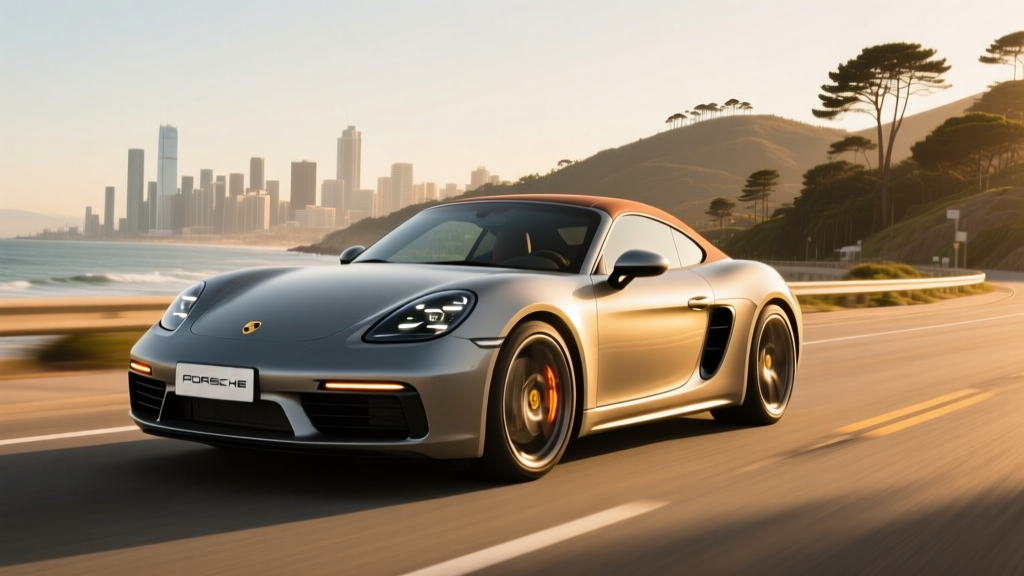
The Porsche 718 Boxster Electric (announced for late 2025/early 2026 delivery) replaces the mid-engine gas sports car with a battery-electric platform derived from the Macan EV architecture. Expect approximately 310 miles of EPA-estimated range, 800V DC fast charging up to ~270 kW (10–80% in roughly 21 minutes), and a starting MSRP near $78,000. It targets drivers who want open-top sports-car performance without tailpipe emissions — but real-world range will drop to ~240–260 miles at sustained highway speeds, and buyers should confirm §30D federal tax credit eligibility before ordering, as Porsche's battery sourcing and the MSRP cap make the credit uncertain for higher trims.
What the Electric Boxster Actually Is — and Isn't
For decades, the Porsche 718 Boxster defined the accessible mid-engine roadster. The electric successor, built on Porsche's Premium Platform Electric (PPE) — the same 800-volt architecture underpinning the Macan Electric and Audi Q6 e-tron — ditches the flat-four or flat-six for dual electric motors and a floor-mounted battery pack. Porsche has confirmed the electric 718 lineup (Boxster roadster and Cayman coupe) will launch with all-wheel-drive variants producing upward of 400 horsepower in base form, with GTS or Turbo variants potentially exceeding 500 hp.
What it is not: a compliance car or a softened grand tourer. Porsche engineers have emphasized low center-of-gravity packaging (the battery sits below the seats, mimicking the mid-engine weight distribution), rear-biased torque vectoring, and a curb weight target under 4,500 lbs — ambitious for a battery-electric convertible. The soft-top mechanism carries over, and the "frunk" (front trunk) replaces the former mid-engine compartment, yielding roughly 5.5 cubic feet of front storage plus a shallow rear shelf.
Range, Battery, and Charging: The Numbers That Matter
The electric Boxster uses an estimated 100 kWh gross battery (~95 kWh usable), likely NMC (nickel-manganese-cobalt) chemistry given Porsche's performance and energy-density priorities. Here's the breakdown:
| Specification | Estimated / Confirmed Value |
|---|---|
| Battery Capacity (gross / usable) | ~100 kWh / ~95 kWh |
| Chemistry | NMC (nickel-manganese-cobalt) |
| EPA Range (est.) | ~310 miles (base AWD) |
| Real-World Highway Range | ~240–260 miles (70–80 mph sustained) |
| Cold-Weather Range (20°F) | ~220–250 miles |
| DC Fast Charge (peak) | ~270 kW (800V architecture) |
| 10–80% DC Fast Charge Time | ~21 minutes |
| Level 2 Charge Rate | 11 kW (onboard charger) |
| Level 2 Full Charge Time (0–100%) | ~9.5 hours |
| MPGe (est. combined) | ~95–105 MPGe |
Real-World Range Reality Check
Porsche's EPA estimate of ~310 miles assumes mixed driving. At sustained 75–80 mph highway speeds — common on interstates — expect 22–25% range reduction, yielding 240–260 miles. In freezing temperatures (20°F and below), battery resistance and cabin heating can drop range to 220–250 miles. The 800V system does allow strong preconditioning: if you navigate to a DC fast charger via the car's navigation, the battery thermal management preheats or cools the pack to optimize the charge curve, meaning you'll actually see close to peak 270 kW for the first several minutes before tapering above 80% SoC.
Performance: 0–60, Horsepower, and Driving Dynamics
Porsche hasn't published final 0–60 times as of early 2026, but based on the Macan Electric Turbo's 3.3-second run and the Boxster's lighter target weight, expect:
- Base AWD: ~400 hp, 0–60 mph in ~4.5 seconds
- S / GTS variant: ~500+ hp, 0–60 mph in ~3.5 seconds
The instant torque delivery (no turbo lag, no transmission shift) will make the electric Boxster feel quicker than the numbers suggest, especially in 30–70 mph passing scenarios. Regenerative braking is expected to offer up to ~0.3g of deceleration, enabling quasi-one-pedal driving in town, though Porsche traditionally tunes regen conservatively to preserve the coasting feel sports-car buyers expect.
EV vs. Gas Boxster: Cost and Ownership Comparison
How does the electric 718 stack up against the last-generation gas Boxster (718 T or GTS 4.0) on total cost? Here's a 5-year ownership projection assuming 12,000 miles/year, national-average electricity at $0.16/kWh, and premium gas at $4.20/gallon:
| Cost Category (5 Years / 60k Miles) | Electric Boxster (est.) | Gas 718 Boxster T (final gen) |
|---|---|---|
| Purchase Price (MSRP, base) | $78,000 | $72,000 |
| Federal Tax Credit (§30D) | $0–$7,500 (see eligibility note) | $0 |
| Fuel / Electricity Cost | $3,800 (avg 3.5 miles/kWh) | $10,800 (24 mpg combined) |
| Maintenance (oil, filters, brakes) | $1,200 (cabin filter, fluid checks, tire rotation) | $4,500 (annual oil, brake pads, spark plugs at 40k) |
| Insurance (est. avg annual) | $3,200/yr × 5 = $16,000 | $2,800/yr × 5 = $14,000 |
| Depreciation (est. 5-yr) | ~45% = $35,100 | ~40% = $28,800 |
| Estimated 5-Year Total Cost | ~$96,100 – $103,600 | ~$91,300 |
The takeaway: The electric Boxster saves substantially on fuel and maintenance (~$10,300 combined over 5 years) but carries a higher purchase price, potentially higher insurance (EV sports cars are rated higher by insurers due to repair costs), and steeper depreciation in the early adoption phase. If you qualify for the full $7,500 §30D credit, the gap narrows. If not, the gas Boxster — particularly a well-maintained used example — remains cheaper to own through year 5.
Tax Credit Eligibility: Will You Get $7,500?
The federal §30D clean vehicle credit is not guaranteed for the electric Boxster. Here's the checklist based on current IRS rules for 2026:
- MSRP cap: The vehicle must have an MSRP below $55,000 for sedans/coupes, or $80,000 for SUVs/trucks/vans. The Boxster is classified as a passenger car — meaning the $55,000 cap likely applies, and base pricing near $78,000 would disqualify it entirely.
- Buyer income limits: AGI must not exceed $150,000 (single), $225,000 (head of household), or $300,000 (married filing jointly).
- Battery sourcing: At least 50% of battery components must be manufactured or assembled in North America, and at least 40% of critical minerals must be sourced from the U.S. or FTA partners (rising to higher percentages in later years).
- Point-of-sale transfer: You can transfer the credit to the dealer at purchase for an immediate price reduction — but only if the vehicle qualifies.
Bottom line: Unless Porsche prices a base electric Boxster under $55,000 (extremely unlikely) or the IRS reclassifies it as an SUV (also unlikely), the §30D credit will not apply. Do not factor the credit into your purchase budget until Porsche confirms eligibility with the IRS. Check the fueleconomy.gov tax credit database before ordering.
Charging at Home: What First-Time EV Buyers Need to Know
Owning an electric sports car demands a home charging strategy. The electric Boxster's 11 kW onboard charger means Level 2 home charging (240V, 48-amp circuit) adds roughly 35–40 miles of range per hour, fully replenishing the battery overnight. But installation costs vary:
| Installation Component | Cost Range |
|---|---|
| Level 2 EVSE (hardware, e.g., ChargePoint Home Flex, Emporia) | $500–$800 |
| Electrician labor (240V/50A circuit, NEMA 14-50 or hardwired) | $800–$2,500 |
| Electrical panel upgrade (if needed, 200A service) | $1,500–$4,000 |
| Permit and inspection | $100–$400 |
| Total (typical install, no panel upgrade) | $1,300–$3,300 |
| Total (with panel upgrade) | $2,800–$7,300 |
If you lack a garage or dedicated parking spot with 240V access, public DC fast charging becomes your primary refueling method. At current Electrify America and EVgo pricing ($0.48–$0.65/kWh average), a 10–80% charge on the electric Boxster (~75 kWh added) costs $36–$49 — roughly equivalent to filling a gas Boxster's 16.9-gallon tank at premium prices. The cost advantage of EV ownership narrows significantly without home charging.
Common Misconceptions About Electric Sports Cars
| Myth | Fact |
|---|---|
| "Electric cars are slow and boring to drive." | The electric Boxster's 0–60 in ~4.5s (base) matches the gas 718 T, and instant torque makes passing effortless. Porsche's torque vectoring and low center of gravity preserve handling engagement. |
| "The battery will need replacing in 5 years." | Porsche's high-voltage battery warranty covers 8 years / 100,000 miles with a capacity retention guarantee (typically 70% minimum). NMC degradation averages 10–15% over 100k miles in real-world data from similar platforms. |
| "You can't drive an EV in winter." | Cold reduces range by 20–30%, but the Boxster's heat pump (expected standard) and battery preconditioning mitigate this. Remote cabin preconditioning while plugged in preserves range. |
| "I'll save $7,500 on taxes." | As noted, the MSRP cap for passenger cars ($55,000) likely disqualifies the electric Boxster from §30D. Verify on fueleconomy.gov before ordering. |
| "Charging takes too long on road trips." | At 270 kW DC, 10–80% takes ~21 minutes — comparable to a gas stop plus restroom break. Plan stops around 200–220 miles to stay in the fast-charging sweet spot (below 80% SoC). |
Decision Framework: Should You Buy the Electric Boxster?
Choose the Electric Boxster If:
- You have home Level 2 charging (garage or dedicated 240V outlet) and can charge overnight.
- You drive under 300 miles/day on typical days and can plan DC fast stops for longer trips.
- You want instant torque, low running costs, and don't mind a premium purchase price.
- You live in a region with reliable public DC fast-charging infrastructure (Electrify America, EVgo, or Porsche's partner network).
- You value zero tailpipe emissions and want a sports car aligned with electrification goals.
Choose a Gas 718 Boxster (Used or Remaining Inventory) If:
- You lack home charging access and rely on street parking or apartment living.
- You frequently drive 400+ mile trips in regions with sparse DC fast charging.
- You prioritize lower upfront cost and proven long-term depreciation curves.
- You want the analog engagement of a flat-six engine note and manual transmission (718 GTS 4.0 with 6MT).
- You live in extreme cold climates (regularly below 10°F) where range loss and charging speed degradation are significant.
Consider a Hybrid or PHEV Alternative If:
- You want electric-only commuting but gas flexibility for weekend drives — though no direct PHEV sports-car competitor exists in the Boxster class. The closest analog is the BMW i8 (discontinued, used market only) or waiting for future PHEV sports cars from Porsche or Corvette (C8 E-Ray, which pairs a V8 with an electric front axle but is not a plug-in).
Frequently Asked Questions
When can I actually buy the electric Porsche Boxster?
Porsche began taking reservations in late 2025, with first U.S. deliveries expected in mid-2026. Allocation is limited; expect a waitlist at most dealerships, especially for GTS or higher trims.
Will the electric Boxster have a manual transmission?
No. EVs do not require multi-speed transmissions; the electric Boxster uses a single-speed reduction gear (two-speed on the rear axle for efficiency, as in the Taycan and Macan EV). If you want a manual Porsche sports car, the gas 718 GTS 4.0 (final model year 2024) is your last option on the used market.
How much does insurance cost for the electric Boxster?
Expect $2,800–$3,800/year depending on your driving record, location, and coverage. EV sports cars carry higher premiums due to battery replacement costs and specialized repair requirements. Get a quote from your insurer before committing.
Can I tow with the electric Boxster?
No. Porsche has not rated the electric 718 for towing, consistent with the gas Boxster. If you need towing, consider the Macan Electric (rated up to 4,400 lbs).
What's the warranty coverage?
Porsche's standard limited warranty is 4 years / 50,000 miles. The high-voltage battery is covered for 8 years / 100,000 miles with a minimum 70% capacity retention guarantee. If the battery falls below 70% SoH within that period, Porsche will repair or replace modules to restore capacity.
Is the electric Boxster self-driving?
No. Porsche's driver-assistance systems (adaptive cruise, lane-keeping, parking assist) are SAE Level 2, meaning the driver must remain fully engaged with hands on the wheel and eyes on the road. Porsche has not announced any Level 3 or Level 4 autonomous features for the 718 platform.