Quick Answer: Is There a Porsche Cayman EV?
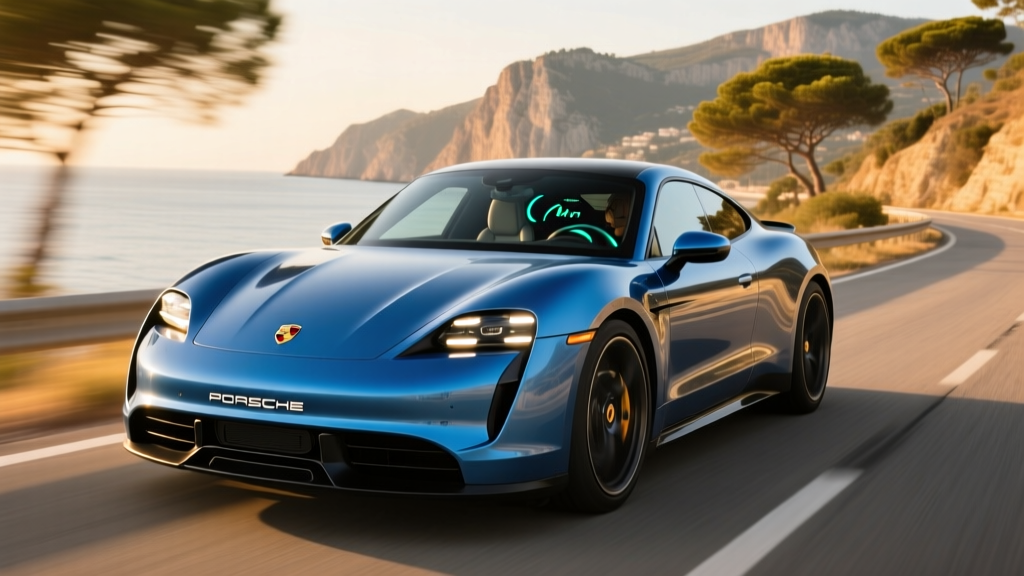
As of early 2026, Porsche has not yet released an electric Cayman (or Boxster). The next-generation 718 sports car lineup is expected to debut with battery-electric powertrains built on Porsche's PPE (Premium Platform Electric) architecture, with production models likely arriving for the 2027 model year. Porsche CEO Oliver Blume confirmed in 2024 that the 718 EV is in development, targeting a 2025–2026 reveal window. Until then, the current 718 Cayman remains a turbocharged flat-four/flat-six gas vehicle. Below, we break down everything confirmed or reasonably projected about the Cayman EV based on Porsche's EV roadmap, the Macan EV (which shares PPE underpinnings), and industry analysis.
What We Know About the Porsche Cayman EV Platform
Porsche's upcoming electric sports cars will ride on a variant of the PPE (Premium Platform Electric) architecture co-developed with Audi. This is the same 800-volt platform underpinning the Taycan sedan and the Macan EV. For a mid-engine sports car application, Porsche will likely use a heavily modified PPE variant optimized for a lower center of gravity and rear-biased weight distribution.
Key platform expectations based on PPE capabilities:
- 800V architecture: Enables peak DC fast-charging rates above 270 kW (as demonstrated by the Taycan and Macan EV)
- Battery placement: Likely a "skateboard-plus" layout with cells concentrated behind the cabin to mimic mid-engine weight bias, rather than a flat floor pack
- Dual-motor AWD option: Base models may be single-motor RWD; GTS/GT4 variants likely dual-motor
- Two-speed rear transmission: Porsche used a two-speed gearbox on the Taycan for strong launch and highway efficiency — expect this to carry over
Projected Cayman EV Specs: Range, Battery, and Performance
No official EPA figures exist yet. The projections below are based on the Macan EV's published specs, the Taycan's efficiency data from fueleconomy.gov, and Porsche's engineering patterns. Treat all numbers as preliminary estimates subject to change at launch.
| Spec | Cayman EV (Est.) | Cayman EV GTS/GT4 (Est.) | Current 718 Cayman (Gas) |
|---|---|---|---|
| Battery (usable) | ~80 kWh (NMC) | ~95 kWh (NMC) | N/A (16.9-gal tank) |
| EPA Range | ~250–280 mi | ~230–260 mi | ~320 mi (21/27 mpg) |
| Motor Config | Rear single-motor | Dual-motor AWD | Mid-mounted flat-4/flat-6 |
| Horsepower | ~350–400 hp | ~500–550 hp | 300 hp (base) / 414 hp (GTS 4.0) |
| 0–60 mph | ~4.5 sec | ~3.2 sec | 4.9 sec (base) / 3.9 sec (GTS 4.0) |
| Peak DC Charge Rate | ~270 kW | ~270+ kW | N/A |
| 10–80% DC Charge Time | ~21 min | ~22 min | N/A |
| Level 2 (AC) Rate | 11 kW (est.) | 11 kW (est.) | N/A |
| Base MSRP (est.) | ~$78,000–$85,000 | ~$105,000–$115,000 | $68,300 (2025 base) |
Real-World Range Reality Check
A sports car's aerodynamic profile, sticky performance tires, and aggressive driving style all work against range. If the Cayman EV carries a ~80 kWh battery, expect ~220–240 miles on highway road trips and potentially under 200 miles during spirited canyon driving or track sessions. Cold weather (below 32°F) could reduce range by 20–30%, bringing effective winter range to roughly 175–210 miles. These are estimates based on Taycan real-world data — the Cayman EV's smaller frontal area may help, but performance tires increase rolling resistance.
Charging: How Fast Will the Cayman EV Charge?
Porsche's 800V architecture is among the best in the industry for DC fast charging. The Macan EV peaks at 270 kW and charges from 10–80% in approximately 21 minutes under ideal conditions. Expect the Cayman EV to match or exceed this.
| Charging Level | Power | Miles Added per Hour | Use Case |
|---|---|---|---|
| Level 1 (120V) | ~1.4 kW | ~4–5 mi/hr | Emergency/trickle only |
| Level 2 (240V, 48A) | ~11.5 kW | ~35–40 mi/hr | Home overnight charging |
| DC Fast (350 kW station) | Up to ~270 kW | ~150+ mi in 10 min | Road-trip stops |
Charging curve caveat: Like all EVs, the Cayman EV will not sustain peak 270 kW for the entire session. Expect peak rate from roughly 10–40% State of Charge, then a taper to ~150 kW through 60%, and further taper above 80%. A 10–80% session at a capable 350 kW Electrify America or Porsche Charging Service station should take ~21 minutes; 10–90% will take closer to 35 minutes.
Porsche includes three years of complimentary charging at Electrify America stations (30-minute sessions) with new EV purchases — expect this to continue with the Cayman EV.
Cayman EV vs. Gas 718 Cayman: Cost and Ownership Comparison
Here's how a projected Cayman EV stacks up against the outgoing gas 718 Cayman over five years of ownership. Gas prices assumed at $3.60/gal national average; electricity at $0.16/kWh national average.
| Cost Factor (5-Year) | Cayman EV (Est.) | 718 Cayman Gas |
|---|---|---|
| Purchase Price | $82,000 (est. base) | $68,300 (2025 base) |
| Federal Tax Credit (§30D) | Uncertain — see below | $0 |
| Fuel / Energy (60,000 mi) | ~$2,880 (home charging) | ~$7,200 (premium 91 octane) |
| Maintenance | ~$1,800 (tires, cabin filter, fluid top-offs) | ~$4,500 (oil, brakes, spark plugs, belts) |
| Insurance (avg.) | ~$12,000 (higher for EVs) | ~$10,500 |
| Estimated Depreciation | ~$32,800 (40%) | ~$27,300 (40%) |
| 5-Year Total (est.) | ~$65,880 | ~$52,500 |
Fuel savings are real but won't close the price gap. Over five years, the Cayman EV saves roughly $4,300 in energy and $2,700 in maintenance. However, the higher purchase price, potentially higher insurance premiums, and uncertain resale value mean the gas Cayman remains cheaper to own in absolute terms — unless the EV qualifies for incentives or Porsche prices it more aggressively than projected.
Will the Cayman EV Qualify for the Federal Tax Credit?
This is genuinely uncertain. Under current IRS §30D rules, eligibility depends on:
§30D Federal Tax Credit Requirements
- MSRP cap: Sedans and sports cars must be under $55,000 — the Cayman EV will almost certainly exceed this, making it ineligible for the new-vehicle credit
- Buyer income cap: $150K single / $300K joint (likely irrelevant given MSRP cap)
- Battery sourcing: Critical minerals and battery components must meet phased-in domestic/FTEA sourcing thresholds
- Vehicle class reclassification: If Porsche classifies the Cayman EV as an SUV (unlikely but not unprecedented — the Mustang Mach-E qualified as an SUV), the cap rises to $80,000
Bottom line: Expect the Cayman EV to not qualify for the $7,500 federal credit due to the $55,000 MSRP cap on passenger cars. State-level incentives (California's CVRP, Colorado's innovative motor vehicle credit, etc.) may offer partial offsets — check your state's current programs.
Real-World Ownership Considerations for a Cayman EV
Home Charging Access Is Essential
A sports car EV without reliable home charging is a compromised experience. Level 1 (120V) charging adds only ~4–5 miles per hour — inadequate for daily use. You'll need a Level 2 (240V) home charger installed on a dedicated 40–60 amp circuit. Budget $1,200–$3,500 for the charger hardware plus licensed electrician installation, more if your panel needs a 200-amp upgrade ($2,000–$4,000 additional). Always get a final spec from a licensed electrician before committing.
Track Days and Performance Driving
If you plan to take the Cayman EV to track events, understand that sustained high-speed laps generate enormous battery heat. Porsche's thermal management is best-in-class (the Taycan handles repeated launches well), but expect significant range depletion during track sessions — potentially burning through 50%+ of battery in a 20-minute session. You'll also need to plan charging logistics at tracks, which rarely have DC fast chargers on-site.
Cold-Weather Performance
Lithium-ion batteries lose efficiency below freezing. Expect 20–30% range reduction in sustained sub-32°F conditions. Porsche equips its EVs with heat pumps (standard on Macan EV), which help cabin efficiency but don't fully eliminate cold-weather range loss. If you live in Minnesota, Montana, or New England, plan around ~180–210 miles of effective winter range.
Driving Patterns That Favor EV Ownership
The Cayman EV makes the most sense if:
- You can charge at home overnight (covers 90%+ of daily driving)
- Your typical drives are under 200 miles round-trip
- You live in a region with reliable DC fast-charging infrastructure (Electrify America, Tesla Supercharger network via NACS adapter, or Porsche Charging Service)
- You value instant torque delivery and a low center of gravity for handling
Decision Framework: Should You Wait for the Cayman EV?
Choose the Cayman EV (Wait) If:
- You want a zero-tailpipe-emission sports car and don't need a car in the next 12–18 months
- You have home Level 2 charging and drive mostly under 200 miles/day
- You prioritize instant electric torque and low center of gravity over engine sound and manual transmission engagement
- You're willing to pay an estimated $10,000–$15,000 premium over the outgoing gas Cayman for EV performance benefits
Choose the Gas 718 Cayman (Buy Now) If:
- You want a sports car today — the current 718 is in its final model years and may become a collector's item
- You live in a charging desert or lack home charging access
- Engine sound, lightweight feel (~3,300 lbs gas vs. est. ~4,400+ lbs EV), and manual transmission matter to you
- You regularly drive 300+ miles without stopping or take frequent road trips through rural areas
- You want to minimize upfront cost and keep total ownership expense lower
Consider a Used Taycan Instead If:
- You want Porsche EV performance now — a certified pre-owned Taycan (2022–2024) offers 200–250 miles of range, 800V charging, and prices starting around $55,000–$65,000
- Practicality matters — the Taycan is a four-door with more cargo space
Common Misconceptions About the Cayman EV
| Myth | Fact |
|---|---|
| "The Cayman EV will be just as light as the gas version." | Unlikely. Battery packs add significant mass. Expect the Cayman EV to weigh 4,200–4,600 lbs vs. the gas Cayman's ~3,300–3,500 lbs. Porsche will use rear-axle steering and torque vectoring to mask weight, but physics is physics. |
| "It will charge in 10 minutes." | No EV charges fully in 10 minutes. Expect 10–80% in ~21 minutes at a 350 kW station, and 10–100% in ~35–40 minutes. The 800V system is fast, but not magic. |
| "Porsche will offer a manual transmission." | EVs don't use multi-speed manual transmissions. Expect a single-speed or two-speed automatic with simulated gear-shift feel (Porsche has explored this in concept vehicles). |
| "The Cayman EV will definitely qualify for the $7,500 tax credit." | Almost certainly not — the §30D MSRP cap for passenger cars is $55,000, and the Cayman EV will cost significantly more. |
| "EV sports cars can't handle like gas ones." | The low battery placement gives EVs an extremely low center of gravity, which benefits cornering. However, the added mass affects braking distances, tire wear, and transitional handling feel. Different, not categorically worse — but purists will notice. |
What First-Time EV Buyers Should Know Before Waiting
If the Cayman EV would be your first electric vehicle, prepare for these ownership realities:
- Plan your charging before you buy the car. Confirm your electrical panel can support a Level 2 charger. Get an electrician quote early.
- Understand kW vs. kWh. kW (kilowatts) is the charge rate — how fast energy flows. kWh (kilowatt-hours) is the battery capacity — how much energy is stored. A 270 kW charge rate filling an 80 kWh battery is like a fire hose filling a bucket.
- Download charging apps now. PlugShare, Electrify America, and ChargePoint will be your road-trip companions. Familiarize yourself with route planning before delivery day.
- Insurance will likely cost more. EVs generally carry 15–25% higher premiums due to repair costs and battery replacement risk. Get quotes before ordering.
- Tire costs are higher. EVs wear tires faster due to instant torque and heavier weight. Budget for premium tire replacements every 20,000–30,000 miles on a performance EV.
Frequently Asked Questions
When will the Porsche Cayman EV be available to buy?
Porsche has not announced an exact on-sale date. Based on the company's roadmap and the Macan EV's 2024 launch timeline, expect a reveal in late 2025 or 2026 with customer deliveries beginning for the 2027 model year. This timeline could shift based on battery supply or platform development.
Will Porsche also make an electric Boxster?
Yes — the 718 Boxster (roadster) and 718 Cayman (coupe) have always shared a platform. Both are expected to go electric simultaneously, just as they shared the gas-powered 718 architecture.
Will the Cayman EV use NACS (Tesla) or CCS charging?
Porsche has committed to adopting NACS (North American Charging Standard) for future EVs in the US market. The Macan EV launched with CCS but Porsche has confirmed NACS adoption for upcoming models. Expect the Cayman EV to feature NACS natively, granting access to Tesla Superchargers.
How will the Cayman EV's weight affect its handling?
Expect the Cayman EV to weigh roughly 800–1,100 lbs more than the gas version. Porsche will counteract this with a lower center of gravity (battery mass sits below the axle line), rear-axle steering, adaptive dampers, and aggressive torque vectoring. On-paper lateral grip may match or exceed the gas car, but drivers will feel the mass during direction changes and under braking.
Will there be a Cayman EV GT4 or track-focused variant?
Porsche's Motorsport division has expressed interest in electric performance variants, but a GT4-level track EV faces challenges: battery cooling under sustained high load, weight, and the lack of trackside charging infrastructure. Expect a GTS-level performance trim first; a full GT4 EV is possible but likely years after launch.
Should I buy the current gas Cayman before it's discontinued?
If you want a lightweight, naturally aspirated, mid-engine Porsche sports car with a manual transmission, the current 718 Cayman (especially the GTS 4.0 and GT4 RS) represents the end of an era. These models may appreciate in value once discontinued. If EV performance and daily-driver practicality matter more, waiting for the Cayman EV is reasonable — but you'll wait 12–24 months and likely pay more.
Sources: Porsche AG press releases and Porsche Newsroom; EPA fuel economy data at fueleconomy.gov; IRS clean vehicle credit rules at irs.gov. All projected specs are estimates based on publicly available platform data and are subject to change at official launch.