The Quick Answer: Is There a Porsche Cayman EV You Can Buy in 2026?
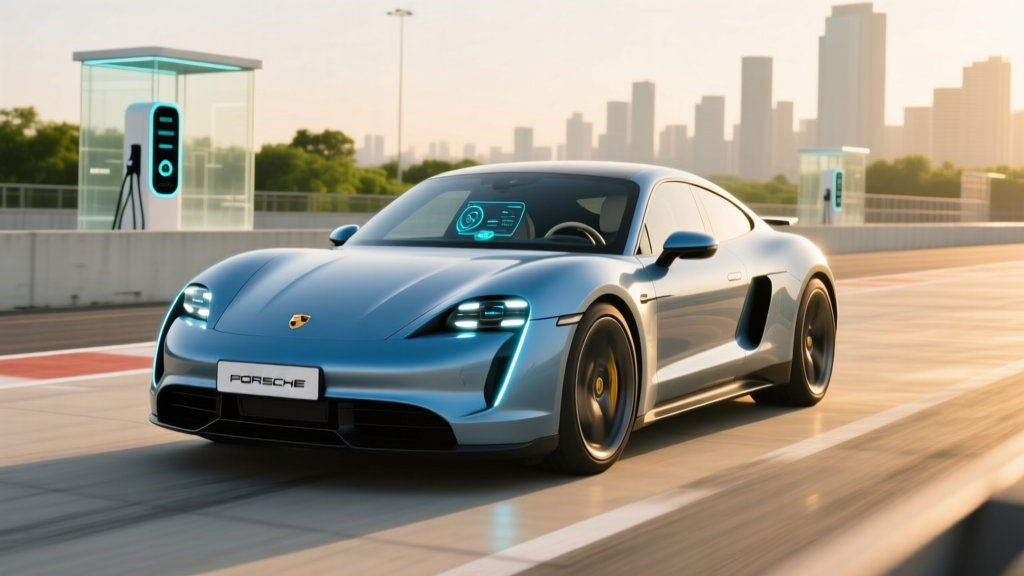
Not yet. As of early 2026, Porsche has not officially unveiled or released an all-electric Cayman (the next-generation 718 EV). However, Porsche CEO Oliver Blume confirmed in 2022 that the next-generation 718 Boxster and Cayman will be fully electric, built on the PPE (Premium Platform Electric) architecture co-developed with Audi. The electric Macan launched on this platform in 2024, and industry consensus places the Porsche Cayman EV debut in late 2026 or 2027 as a 2027/2028 model-year vehicle. If you're shopping for a Porsche sports car today, the gas-powered 718 Cayman remains in production, while the all-electric option is still upcoming.
What We Know About the Porsche Cayman EV Platform and Expected Specs
The Cayman EV will ride on Volkswagen Group's PPE architecture — the same 800-volt platform underpinning the electric Macan, Audi Q6 e-tron, and the upcoming electric Audi A6. This gives us a strong baseline for projecting specs before Porsche makes them official.
| Specification | Projected / Estimated | Basis |
|---|---|---|
| Platform | PPE (800V architecture) | Confirmed by Porsche |
| Battery Capacity (usable) | ~85–100 kWh | Macan EV: 95 kWh usable |
| Battery Chemistry | NMC (Nickel Manganese Cobalt) | Performance-oriented Porsche standard |
| EPA Range (est.) | 250–310 miles | Macan 4 Electric: 308 mi EPA |
| Peak DC Fast Charge Rate | 270 kW | Macan EV verified peak |
| 10–80% DC Charge Time | ~21 minutes | Macan EV: 21 min (Porsche data) |
| Level 2 AC Charging | 11 kW (onboard charger) | Standard PPE configuration |
| Horsepower (base est.) | 400–450 hp | Macan 4 Electric: 402 hp |
| Horsepower (GTS/Turbo est.) | 550–630+ hp | Macan Turbo Electric: 630 hp |
| 0–60 mph (est.) | 3.2–4.5 seconds | Macan Turbo: 3.1 sec |
| Drivetrain | RWD (base) / AWD (higher trims) | Sports car tradition suggests RWD base |
| Connector | NACS (Tesla standard, 2025+ adoption) | Porsche confirmed NACS for 2025+ models |
Critical context: These are projections based on the PPE platform's known capabilities and the electric Macan's published figures. Porsche has not confirmed Cayman EV specs. The Cayman's lower, lighter sports-car body could yield better efficiency (more miles per kWh) than the Macan SUV, potentially extending range despite a possibly smaller battery pack.
Real-World Range Reality Check
If the Cayman EV achieves a 300-mile EPA estimate, plan for approximately 240–270 miles in real-world highway driving at 70–80 mph, and 200–230 miles in cold weather (below 32°F). Sports cars tend to be driven harder, which further compresses range. The 800V architecture's fast 10–80% charging partially offsets this — you can add roughly 160 miles of range in a 15-minute DC fast-charge stop.
Porsche Cayman EV vs. Gas 718 Cayman: Cost and Ownership Comparison
For buyers weighing whether to grab a remaining gas 718 Cayman now or wait for the EV, here's how the numbers stack up based on current pricing and projected EV costs.
| Category | 2025 Gas 718 Cayman (Base) | Cayman EV (Projected) |
|---|---|---|
| MSRP | $69,900 | $78,000–$85,000 (est.) |
| Federal Tax Credit (§30D) | $0 | Likely $0 (MSRP cap for cars: $55,000) |
| Fuel/Energy (5 yr, 12k mi/yr) | $10,800 (premium gas, 24 MPG) | $3,600 (home L2, $0.13/kWh avg) |
| Maintenance (5 yr) | $3,500–$5,000 | $1,200–$1,800 |
| Insurance (5 yr avg.) | $12,000 | $13,500–$15,000 (EV premium) |
| Estimated Depreciation (5 yr) | $28,000–$32,000 | $35,000–$42,000 (EV sports car unproven) |
| Total 5-Year Cost | $124,200–$129,700 | $131,300–$147,400 |
Key takeaway: The Cayman EV will almost certainly cost more to own over five years than the gas 718, primarily because of a higher purchase price, no federal tax credit (the IRS §30D credit caps eligible sedans/sports cars at $55,000 MSRP), and steeper depreciation on an unproven electric sports car. Where the EV wins is in daily operating costs — roughly $7,000–$8,000 less in fuel and maintenance over five years.
The gas 718 Cayman also holds a unique position: it's one of the last mid-engine, flat-four/flat-six sports cars in production. Collector demand for final-edition gas models could slow depreciation significantly compared to a first-generation EV variant.
Real-World Ownership Considerations Before You Wait (or Buy Gas Now)
Home Charging Access
A Porsche Cayman EV on the PPE platform will come with an 11 kW onboard AC charger. On a Level 2 home charger (240V, 48A circuit), expect a full charge in roughly 9–10 hours. If you can install a Level 2 charger at home — typically $800–$2,000 for equipment and electrician labor — daily ownership is seamless: plug in at night, wake up to a full battery.
If you live in an apartment or lack dedicated parking with electrical access, public charging becomes your primary option. At 270 kW DC fast charging, the Cayman EV would recover 10–80% in about 21 minutes, but you'll need reliable access to Electrify America, Tesla Superchargers (via NACS), or similar 150+ kW stations near your home or commute.
Climate and Driving Pattern Impact
Lithium-ion batteries lose efficiency in cold temperatures. In regions with sustained sub-freezing winters (Midwest, Northeast), expect 20–30% range reduction compared to the EPA sticker. The PPE platform includes a heat pump for cabin heating and battery thermal management, which mitigates but doesn't eliminate cold-weather loss.
If your typical driving involves short commutes with occasional weekend canyon runs, the EV's instant torque and low center of gravity will deliver a thrilling experience. If you regularly drive 300+ mile trips or track days, the gas Cayman's 350-mile fuel range and 3-minute refueling remain practically superior.
Charging Infrastructure for Road Trips
Porsche's adoption of NACS means Cayman EV owners will have access to Tesla's Supercharger network — over 25,000 stalls in North America as of 2026. This dramatically improves road-trip viability compared to CCS-only vehicles. Electrify America's 350 kW stations also support the PPE platform's full charging capability.
Common Misconceptions About the Porsche Cayman EV
| Myth | Fact |
|---|---|
| "The Cayman EV will be too heavy to handle like a real Porsche." | The electric Macan weighs ~5,300 lbs but achieves sports-sedan handling via rear-wheel steering, adaptive dampers, and a low battery pack. A Cayman EV will likely weigh 4,400–4,800 lbs — heavier than the gas 718 (~3,200 lbs) but with a lower center of gravity than any gas car. |
| "It will qualify for the $7,500 federal tax credit." | Under current IRS §30D rules, passenger cars must have an MSRP at or below $55,000 to qualify. A Cayman EV starting near $80,000 will not meet this cap. SUV-classified vehicles have an $80,000 cap, but a Cayman will almost certainly be classified as a car. |
| "Electric Porsches don't hold their value." | The Taycan has experienced steep depreciation (40–50% over 3 years per Kelley Blue Book data), but this partly reflects high initial MSRPs and rapid EV tech advancement. A limited-production Cayman EV could fare differently, though first-year models typically depreciate more. |
| "I can charge it on any DC fast charger at full speed." | The PPE platform's 270 kW peak requires a charger capable of 800V and 350+ kW output. Many public chargers max out at 50–150 kW, where charging will take 35–60 minutes for a 10–80% session. Always check station power ratings before trip-planning. |
| "The battery will need replacing in 5–8 years." | Porsche provides an 8-year/100,000-mile battery warranty guaranteeing at least 70% capacity retention. PPE platform NMC cells with active thermal management are engineered for 1,500+ charge cycles — roughly 350,000+ miles before reaching the 70% threshold. |
Decision Framework: Should You Wait for the Cayman EV or Buy a Gas 718 Now?
Choose the Gas 718 Cayman Now If:
- You want a proven, track-capable sports car today — the mid-engine flat-four/flat-six layout is a purist benchmark, and the 718 GT4 RS is one of the best driver's cars ever made.
- Collector value matters — final-generation gas 718 models will likely appreciate or hold value as the last of their kind.
- You regularly drive in remote areas or do track days where charging infrastructure is sparse or charging time is impractical.
- Your budget is under $75,000 — the gas Cayman starts at ~$69,900; the EV will likely start $10,000–$15,000 higher.
- You lack home charging access and rely on street parking or apartment living.
Wait for the Porsche Cayman EV If:
- Daily driving comfort and low running costs are priorities — electric drivetrains are silent, vibration-free, and cost roughly $0.04–$0.05/mile in electricity vs. $0.18–$0.22/mile in premium gas.
- You have home Level 2 charging and a commute under 80 miles round-trip — you'll rarely visit a gas station or public charger.
- Instant torque appeals to you — even a base Cayman EV producing 400+ hp will deliver supercar-rivaling acceleration off the line without turbo lag or gear shifts.
- You're willing to accept first-generation risk — early-production EVs sometimes have software bugs, panel gaps, or charging compatibility quirks that get resolved in year two or three.
- You want access to Tesla Superchargers via NACS for road trips across North America.
What First-Time EV Buyers Should Know Before Committing
If the Cayman EV would be your first electric vehicle, here are the ownership realities that don't appear on a spec sheet:
- kW vs. kWh: Kilowatts (kW) measure power — how fast you charge or accelerate. Kilowatt-hours (kWh) measure energy — your battery's total capacity. A 100 kWh battery charged at 270 kW will theoretically fill in ~22 minutes, but real-world charge curves taper above 80% State of Charge, extending the session.
- Charge curve taper: The "270 kW peak" is only sustained between roughly 10–40% State of Charge. Above 80%, charging slows dramatically to protect battery health — from 80–100% can take as long as 10–80%. Plan road-trip stops around 10–80% charges for maximum efficiency.
- Preconditioning matters: The PPE platform will precondition the battery when you navigate to a charger, warming it to optimal temperature for faster charging. Always use the car's built-in navigation to DC fast chargers — arriving without preconditioning can add 5–10 minutes to your charge session.
- Insurance is higher: EVs cost 15–25% more to insure than comparable gas cars due to higher repair costs (battery replacement, specialized labor). Get quotes before purchasing. Expect $2,500–$3,200/year for a Porsche-badged EV sports car.
- Tire wear accelerates: EVs are heavier and deliver instant torque, wearing tires 20–30% faster than gas equivalents. Budget for tire replacement every 25,000–35,000 miles on a performance EV. Porsche-spec tires run $250–$400 per corner.
Porsche Cayman EV: Pricing Projection and Market Position
Based on the electric Macan's pricing structure ($78,800–$98,800 MSRP) and the current gas 718 Cayman lineup ($69,900–$106,000), here's a reasonable pricing projection:
| Trim (Projected) | Estimated MSRP | Comparable Gas Model | Gas MSRP |
|---|---|---|---|
| Cayman EV (Base) | $78,000–$82,000 | 718 Cayman | $69,900 |
| Cayman EV S | $90,000–$96,000 | 718 Cayman S | $82,600 |
| Cayman EV GTS | $105,000–$115,000 | 718 Cayman GTS 4.0 | $94,600 |
| Cayman EV Turbo/GT | $130,000+ | 718 Cayman GT4 RS | $152,000 |
At these projected prices, the Cayman EV will compete less with the current gas 718 and more with the Tesla Model S Plaid, Lotus Emeya, and potentially the electric BMW M2 if it materializes. Porsche's value proposition has always been build quality, handling precision, and brand prestige — not price leadership.
Frequently Asked Questions
Will Porsche make a fully electric Cayman?
Yes. Porsche confirmed in 2022 that the next-generation 718 (Boxster and Cayman) will be fully electric. The vehicle will use the PPE platform shared with the electric Macan and Audi Q6 e-tron. Expected debut is late 2026 or 2027 as a 2027/2028 model.
How much will the Porsche Cayman EV cost?
Based on the electric Macan's pricing and the current gas 718 lineup, expect a starting MSRP between $78,000 and $85,000 for a base model, with higher-performance trims reaching $115,000–$130,000+. These are estimates until Porsche announces official pricing.
Will the Cayman EV qualify for the federal tax credit?
Almost certainly not. Under IRS §30D rules, passenger cars (non-SUVs) must have an MSRP of $55,000 or less to qualify for the up-to-$7,500 credit. A Cayman EV starting near $80,000 will exceed this cap. Additionally, buyer income limits ($150,000 single / $300,000 joint AGI) and battery mineral sourcing requirements further restrict eligibility.
What range will the Cayman EV have?
Based on the PPE platform and the electric Macan's 308-mile EPA rating, expect 250–310 miles EPA for the Cayman EV depending on trim and battery size. Real-world highway range will be approximately 240–270 miles; cold-weather range may drop to 200–230 miles.
Can I charge the Cayman EV at Tesla Superchargers?
Yes. Porsche has confirmed NACS adoption for its 2025+ vehicles. The Cayman EV will feature a NACS charge port natively, granting access to Tesla's Supercharger network without an adapter.
Should I buy a gas 718 Cayman now or wait for the EV?
Buy the gas 718 now if you want a proven, mid-engine sports car with potential collector value, track-day practicality, and lower upfront cost. Wait for the EV if you prioritize low daily running costs, instant torque, home charging convenience, and are comfortable with first-generation product risk. Both will be excellent cars — they simply serve different ownership philosophies.
What is the battery warranty on the Cayman EV?
While not yet confirmed for the Cayman specifically, Porsche provides an 8-year/100,000-mile high-voltage battery warranty on all current EVs (Taycan, Macan Electric), guaranteeing at least 70% capacity retention. Expect the same coverage on the Cayman EV.