The Short Answer on the Cayman Electric
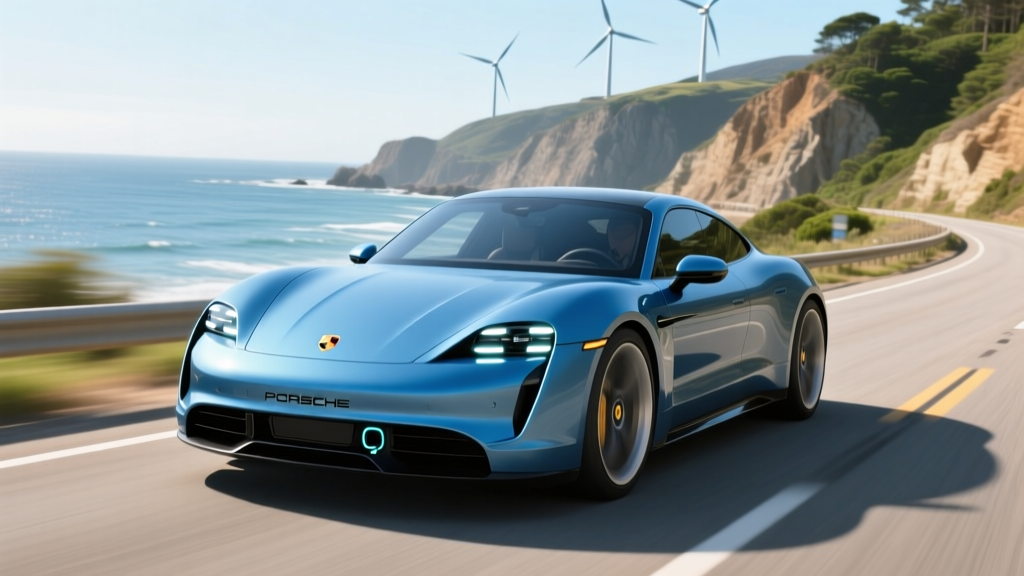
As of early 2026, Porsche has not yet released a Cayman electric. The current 718 Cayman lineup (including the GT4 RS) remains gasoline-powered. However, Porsche has confirmed that the next-generation 718 Cayman and Boxster will be fully electric, with an expected debut in late 2026 or 2027 as a 2028 model year vehicle. If you're searching for a Cayman electric today, your options are to wait for the upcoming EV, consider a Porsche Taycan (Porsche's current EV sports sedan, starting at ~$92,000), or buy a current-gen 718 Cayman gas model (starting at ~$68,350) before the transition.
What Porsche Has Confirmed About the Electric 718
Porsche originally announced that the next-generation 718 (Cayman coupe and Boxster roadster) would go fully electric. However, in late 2024 and into 2025, Porsche walked back its all-electric timeline, confirming it would also offer a combustion-engine successor alongside the EV variant — a pragmatic response to slower-than-expected EV adoption in the sports car segment.
Here's what we know and what remains preliminary:
| Specification | Status | Details |
|---|---|---|
| Platform | Confirmed | PPE (Premium Platform Electric), co-developed with Audi — same architecture as the electric Macan and Taycan |
| Release Timeline | Estimated | Late 2026 reveal, 2027-2028 model year availability |
| Battery Capacity | Estimated | ~80-100 kWh usable (NMC chemistry expected for energy density in a sports car application) |
| EPA Range | Estimated | 250-310 miles (sports car tuning typically sacrifices range for performance) |
| DC Fast Charging | Estimated | Up to 270 kW peak (PPE architecture supports 800V), 10-80% in ~20-22 minutes |
| 0-60 mph | Estimated | Under 4.0 seconds (base); under 3.0 seconds (performance variant) |
| Horsepower | Estimated | 400-600+ HP depending on variant (single/dual motor) |
| Starting MSRP | Estimated | $80,000-$95,000 (base); $110,000+ (GTS/GT variant) |
| Body Styles | Confirmed | Cayman (coupe) and Boxster (roadster) |
| Combustion Option | Confirmed | A next-gen gas 718 will be sold alongside the EV variant |
Important caveat: All performance, range, and pricing figures above are estimates based on the PPE platform's known capabilities in the electric Macan and industry reporting. Final specifications will not be confirmed until Porsche's official reveal.
Cayman Electric vs. Gas 718 Cayman: A Projected Comparison
For buyers weighing whether to buy a current gas Cayman now or wait for the electric version, here's how the two are likely to compare:
| Metric | 2025 718 Cayman (Gas) | Cayman Electric (Projected) |
|---|---|---|
| Base MSRP | $68,350 | $80,000-$95,000 (est.) |
| 0-60 mph | 4.9 sec (base) / 3.2 sec (GT4 RS) | <4.0 sec (base) / <3.0 sec (perf.) |
| Horsepower | 300 HP (base) / 493 HP (GT4 RS) | 400-600+ HP (est.) |
| Range / Tank | ~380 miles (16.9-gal tank, 22/28 MPG) | 250-310 miles EPA (est.) |
| Fuel/Energy Cost per Year | ~$2,400 (premium gas, 12K mi/yr) | ~$550-$800 (electricity, 12K mi/yr) |
| Weight | ~3,100 lbs | ~4,200-4,600 lbs (est., battery mass) |
| Maintenance (5-year) | ~$4,500-$7,000 (oil, brakes, plugs) | ~$1,500-$2,500 (tires, cabin filter, fluid checks) |
| Transmission | 6-speed manual / 7-speed PDK | 2-speed or single-speed (EV) |
| Driver Engagement | Flat-six sound, manual option, lightweight | Instant torque, low center of gravity, simulated sound |
The electric Cayman will almost certainly be heavier — battery packs add 1,000+ pounds compared to a mid-mounted flat-six. Porsche's engineering challenge is preserving the 718's hallmark agility and steering feel with that extra mass. The PPE platform's low-slung battery placement should help with center of gravity, but physics is physics on a tight canyon road.
Real Costs of Owning a Cayman Electric: What to Budget
Based on projected pricing and comparable Porsche EV ownership data (Taycan), here's a realistic 5-year cost picture:
| Category | Cayman Electric (Est. $88K) | Gas 718 Cayman ($68K) |
|---|---|---|
| Purchase Price | $88,000 | $68,350 |
| Federal Tax Credit (§30D) | $0-$7,500 (see eligibility below) | $0 |
| Home Charger Install (Level 2) | $1,200-$2,500 | $0 |
| Fuel/Energy (5 years, 60K mi) | $2,800-$4,000 | $12,000-$14,000 |
| Maintenance (5 years) | $1,500-$2,500 | $4,500-$7,000 |
| Insurance (5 years) | $14,000-$18,000 | $11,000-$14,000 |
| Estimated Depreciation | $35,000-$45,000 | $25,000-$32,000 |
| Total 5-Year Cost | $105,000-$137,000 | $96,000-$115,000 |
Key takeaways on cost:
- Energy savings are real: Charging at home at $0.14/kWh national average, a Cayman electric consuming ~30 kWh/100mi would cost roughly $550-$650/year in electricity vs. $2,400+ in premium fuel.
- Insurance is higher: EV sports cars carry 15-25% higher premiums due to repair complexity and parts cost. Get quotes before committing.
- Depreciation is the wildcard: Porsche EVs (Taycan) have seen steeper depreciation than gas 911s/718s in recent years. A first-generation Cayman electric may depreciate more than the beloved last-gen gas model.
- Maintenance is genuinely lower: No oil changes, no spark plugs, significantly less brake wear (regen braking), no timing belt. Expect tire replacements to be your biggest recurring cost.
Federal Tax Credit: Will the Cayman Electric Qualify?
Under current IRS §30D rules, the Cayman electric faces several hurdles for the full $7,500 federal tax credit:
- MSRP Cap: Sedans and sports cars must have an MSRP under $55,000 to qualify. The Cayman electric will almost certainly exceed this threshold at an estimated $80,000+. This alone likely disqualifies it from the federal credit.
- Buyer Income Limits: Modified adjusted gross income must not exceed $150,000 (single), $225,000 (head of household), or $300,000 (joint filers).
- Battery Sourcing: Critical minerals and battery components must meet escalating domestic-sourcing percentages — Porsche's supply chain decisions will determine partial vs. full credit eligibility.
- Point-of-Sale Transfer: If eligible, the credit can be applied at purchase rather than waiting for tax filing.
Realistic expectation: Given the $55,000 MSRP cap for non-SUV/non-truck/non-van classifications, the Cayman electric is very unlikely to qualify for the federal §30D credit. However, check your state for additional EV incentives — some states (California, Colorado, New York) offer rebates that are not MSRP-capped or have higher thresholds. Consult a tax professional for your specific situation, as rules may change before the Cayman electric goes on sale.
Real-World Ownership Considerations for a Cayman Electric
If you're seriously considering waiting for the Cayman electric, these practical factors will determine whether it works for your life:
Home Charging Access
A Level 2 home charger (240V, 9.6-11.5 kW) is nearly essential for sports-car EV ownership. With a ~90 kWh battery, Level 2 charging from 10-80% takes roughly 7-8 hours — perfect for overnight replenishment. Without home charging, relying on public DC fast chargers for daily top-ups becomes tedious and expensive ($0.35-$0.50/kWh vs. $0.14/kWh at home). If you can't install a Level 2 charger at home, a gas 718 Cayman is the more practical choice today.
Climate and Range Impact
Cold weather reduces EV range by 15-30% depending on severity. A Cayman electric rated at 280 miles EPA might deliver only 200-230 miles in sub-freezing winter driving. Porsche's PPE platform includes a heat pump for cabin heating efficiency, which mitigates some loss, but battery chemistry is inherently affected by temperature. If you live in Minnesota or Maine and plan winter canyon runs, plan your routes accordingly.
Driving Patterns
The Cayman electric excels as a daily-driver sports car with instant torque, a low center of gravity, and near-silent cruising. It's less ideal if your primary use case is track days — sustained high-speed lapping generates significant battery heat, and Porsche will likely implement thermal throttling to protect the pack. A gas 718 GT4 remains the track tool; the electric Cayman will be the grand-touring daily.
Weight and Handling Dynamics
Expect the Cayman electric to weigh 4,200-4,600 lbs — roughly 1,200+ lbs more than the current gas Cayman. Porsche's engineers will use torque vectoring, rear-axle steering, and sophisticated suspension tuning to mask this mass, but on tight, technical roads, the physics of a lighter mid-engine gas car will remain perceptible to engaged drivers.
Cayman Electric vs. Alternatives Available Now
If waiting until 2027-2028 isn't practical, these EVs and gas cars fill a similar niche today:
| Vehicle | Powertrain | 0-60 mph | Range (EPA) | Base MSRP |
|---|---|---|---|---|
| Porsche Taycan (2026) | BEV | 3.0 sec (4S) | 246-318 mi | $92,250 |
| Porsche 718 Cayman (2025) | Gas | 4.9 sec (base) | ~380 mi (tank) | $68,350 |
| BMW i4 M50 | BEV | 3.7 sec | 227-270 mi | $67,795 |
| Lotus Emeya | BEV | 2.8 sec (R+) | ~280 mi (est.) | $95,000+ |
| Chevrolet Corvette E-Ray | Hybrid (AWD) | 2.5 sec | ~380 mi (tank + small EV) | $104,900 |
The Taycan is the closest Porsche EV you can buy today, but it's a four-door sedan — not a two-seat sports car. The BMW i4 M50 offers strong performance at a lower price point but lacks the mid-engine sports car feel. The Corvette E-Ray is a compelling hybrid alternative with AWD and supercar acceleration without range anxiety.
Decision Framework: Should You Wait or Buy Now?
Buy a Gas 718 Cayman Now If:
- You want a manual transmission (Porsche will likely not offer a manual in the EV)
- Track days and lightweight handling are your priority
- You can't install a Level 2 home charger
- You want proven long-term value retention (gas 718s hold value well)
- You want to avoid first-generation EV teething issues
- Budget is under $75,000
Wait for the Cayman Electric If:
- You want instant torque and EV acceleration in a Porsche sports car
- You have home Level 2 charging and a mostly daily-driver use case
- You want lower running costs and less maintenance
- You're comfortable spending $85,000-$110,000+
- You value cutting-edge tech and 800V fast-charging capability
- You're okay with a 2027-2028 delivery timeline
Consider the Taycan Today If:
- You need four doors and practicality alongside Porsche EV performance
- You want a Porsche EV now and don't need a two-seat sports car
- You can find a certified pre-owned Taycan at a significant discount
Common Misconceptions About the Cayman Electric
| Myth | Fact |
|---|---|
| "The electric Cayman is available now." | It's not. The current 718 Cayman is gas-only. The EV variant is expected for 2027-2028 model year. |
| "It will qualify for the $7,500 federal tax credit." | Very unlikely. The $55,000 MSRP cap for cars (non-SUVs) almost certainly excludes it. |
| "An EV Cayman will handle just like the gas one." | Porsche will engineer it to handle superbly, but 1,200+ extra pounds fundamentally change the physics. Expect a different, not identical, driving experience. |
| "Porsche is going all-electric, so gas 718s are dead." | Porsche confirmed a next-gen combustion 718 will be sold alongside the electric variant, at least initially. |
| "EV sports cars can't be fun on track." | They offer thrilling acceleration but face thermal limitations during sustained lapping. Great for canyon carving, less ideal for 20-lap track sessions. |
Frequently Asked Questions
When will the Porsche Cayman electric be available?
Porsche has not announced an exact date. Industry expectations point to a late 2026 or 2027 reveal, with deliveries beginning as a 2027 or 2028 model year vehicle. Porsche will also sell a next-gen gas 718 alongside it.
How much will the Cayman electric cost?
No official pricing yet. Based on the PPE platform cost and Porsche's positioning, expect a base price of $80,000-$95,000, with performance variants (GTS, GT, or Turbo-badged) reaching $110,000-$130,000+. For reference, the current gas 718 Cayman starts at $68,350 and the GT4 RS tops $150,000.
Will the Cayman electric have a manual transmission?
No. EVs use single-speed or two-speed transmissions without a clutch or traditional gear lever. Porsche may offer simulated gear-shift feel (similar to Hyundai's Ioniq 5 N), but a true manual will not be available. If a manual Porsche sports car matters to you, buy a gas 718 now.
What range can I expect from the Cayman electric?
Estimated 250-310 miles EPA, depending on variant and battery size. Real-world highway driving at 75+ mph will reduce this by 10-15%, and cold weather can reduce it by 20-30%. For spirited back-road driving with aggressive acceleration, expect range to drop further. Plan for ~200-250 miles of usable range in mixed real-world conditions.
Will the Cayman electric use NACS or CCS charging?
Porsche has committed to adopting the NACS (Tesla) connector for North American vehicles. The electric 718 is expected to ship with NACS, granting access to Tesla Superchargers (with adapter or natively) alongside Electrify America and other networks. The PPE 800V architecture should support peak charging rates around 270 kW.
Is the electric Cayman better than the Taycan?
They serve different purposes. The Taycan is a four-door luxury performance sedan with more range, more space, and daily practicality. The Cayman electric will be a two-seat sports car prioritizing agility, low weight (for an EV), and driver engagement. Neither is universally "better" — they're different tools.