Quick Answer: Is the Porsche Cayenne Turbo Electric Worth Waiting For?
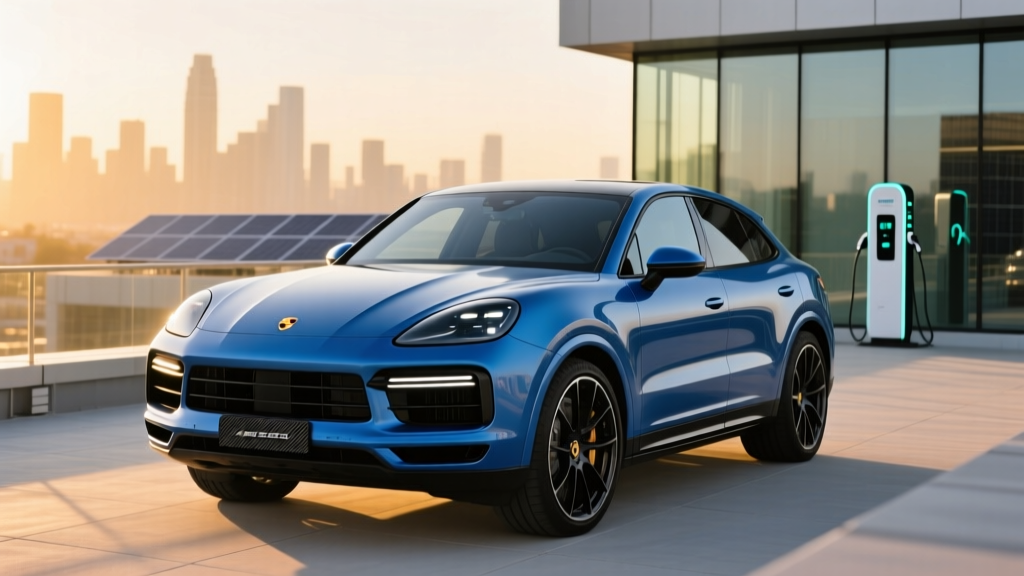
The all-electric Porsche Cayenne (including a Turbo variant) is announced for the 2026 model year on Porsche's PPE (Premium Platform Electric) architecture shared with the Audi Q6 e-tron. Based on Porsche's published previews and the Macan EV platform sibling, expect roughly 280–320 miles of EPA range, an 800-volt architecture supporting up to 270 kW DC fast charging, and a Turbo-grade powertrain producing 600+ horsepower with a sub-4-second 0–60 mph time. Pricing will likely start above $100,000 before options, placing it well over the IRS §30D federal tax credit MSRP cap for SUVs ($80,000). If you need a three-row-capable luxury electric SUV today, look at the Rivian R1S or Tesla Model X; if you want the Porsche badge and can wait, the electric Cayenne is shaping up to be the performance benchmark in its class.
What We Know About the 2026 Cayenne Turbo Electric
Porsche confirmed in early 2024 that a fully electric Cayenne will join the lineup alongside the existing internal-combustion and plug-in hybrid Cayenne models. The EV version rides on the Volkswagen Group's PPE platform, the same 800V architecture underpinning the Audi Q6 e-tron and Porsche Macan EV. Porsche has been testing camouflaged prototypes publicly since mid-2024, and the company's CEO Oliver Blume has reiterated the electric Cayenne will arrive before the end of 2026.
A "Turbo" badge in Porsche's electric lineup — as seen on the Taycan Turbo and Taycan Turbo GT — denotes the top-tier performance variant rather than a turbocharged engine. Expect the Cayenne Turbo Electric to sit at or near the top of the range, with dual-motor all-wheel drive, adaptive air suspension, rear-axle steering, and Porsche's latest PCM infotainment system.
| Attribute | Estimated Figure |
|---|---|
| Platform | VW Group PPE (800V) |
| Battery (usable) | ~95–100 kWh, NMC chemistry |
| EPA Range (est.) | 280–320 miles (Turbo trim may be at lower end due to performance tuning) |
| Drivetrain | Dual-motor AWD |
| Horsepower | 600–650 hp (with Launch Control) |
| 0–60 mph | 3.3–3.8 seconds |
| Peak DC Fast Charge | Up to 270 kW |
| 10–80% DC Charge Time | ~21 minutes (estimated, based on Macan EV) |
| Level 2 AC Charging | 11 kW (optional 22 kW onboard charger) |
| Base MSRP (est.) | $110,000–$130,000+ |
| Federal Tax Credit (§30D) | Likely ineligible — exceeds $80,000 SUV MSRP cap |
| Battery Warranty (est.) | 8 years / 100,000 miles (Porsche standard for EVs) |
All figures above are preliminary estimates based on Porsche's PPE platform data, Macan EV published specs, and industry reporting. Final EPA-certified numbers will be released closer to launch.
Real-World Range: What the EPA Sticker Won't Tell You
Porsche's Taycan taught us an important lesson: the brand's EVs often exceed their EPA range estimates in moderate-temperature, mixed-driving conditions, but they can also fall short on sustained highway runs at 80+ mph. The Taycan Turbo S, for example, carries a 306-mile EPA rating but real-world highway tests have shown 250–270 miles at 75 mph in 40°F weather.
EPA Estimated Range: ~280–320 miles (preliminary)
Real-World Expectation:
- Mild weather, mixed driving: 290–330 miles (Porsche's efficiency management is strong)
- Highway 75 mph, 70°F: 240–280 miles
- Highway 75 mph, 30°F: 200–240 miles (cold reduces battery efficiency and increases cabin heating load)
- Mountain/towing: 180–220 miles (the Cayenne's 7,700-lb towing capacity, if matched by the EV, will dramatically reduce range under load)
The PPE platform's heat pump — standard on the Macan EV — should mitigate some cold-weather losses, but physics is physics: a large, heavy luxury SUV pushing through cold air at highway speeds will consume significantly more kWh per mile than the sticker suggests. Plan charging stops accordingly on road trips.
Charging Speed and the 800V Advantage
The Cayenne EV's 800-volt architecture is its most practical differentiator from competitors still on 400V systems (like the BMW iX). Higher voltage means the vehicle can accept more power at lower current, reducing heat buildup and sustaining peak charge rates longer.
| Charging Level | Power | Miles of Range Added Per Hour | Notes |
|---|---|---|---|
| Level 1 (120V household) | ~1.4 kW | ~4–5 mi/hr | Emergency/trickle only — full charge takes 3+ days |
| Level 2 (240V home, 48A) | 11.5 kW | ~35–40 mi/hr | Overnight charge from 20–80% in ~6 hours |
| Level 2 (240V, optional 22 kW OBC) | 22 kW | ~70–80 mi/hr | Requires 100A circuit; cuts overnight time nearly in half |
| DC Fast Charge (peak) | 270 kW | ~650+ mi/hr (at peak) | 10–80% in ~21 min; rate tapers sharply above 80% |
Charge curve reality check: The 270 kW peak applies roughly between 10% and 35% state of charge. Between 35–60%, expect ~200–220 kW. Above 80%, the rate drops to under 50 kW to protect battery longevity. This is normal for NMC chemistry and identical behavior to the Taycan and Macan EV. On a road trip, plan to charge from 10–80% and then move on rather than waiting for a full top-off.
For home charging, a Level 2 home charger is effectively mandatory for a vehicle in this price class. Budget $1,200–$2,500 for a quality 48A Level 2 unit (such as the Porsche Mobile Charger Connect or a ChargePoint Home Flex) plus $800–$2,000 for professional electrician installation, depending on your panel capacity and conduit run. If your home has a 100A electrical panel, a panel upgrade to 200A may add $2,000–$4,000.
Cayenne Turbo Electric vs. Gas Cayenne Turbo: The Cost Breakdown
The most common question from Porsche buyers: does going electric actually save money on a six-figure SUV? Let's compare the estimated electric Cayenne Turbo against the current-generation gas Cayenne Turbo (which Porsche continues to sell alongside the EV).
| Category | Cayenne Turbo Electric (est.) | Gas Cayenne Turbo |
|---|---|---|
| Purchase Price (MSRP) | $120,000 | $145,000 |
| Federal Tax Credit (§30D) | $0 (exceeds $80K SUV cap) | $0 |
| Estimated Depreciation (5 yr) | $60,000 (50%) | $72,500 (50%) |
| Fuel / Electricity (5 yr, 60K mi) | $5,400 (home charging at $0.16/kWh) | $14,400 (premium at $4.50/gal, 17 MPG) |
| Maintenance (5 yr) | $3,000 (no oil, fewer brake jobs w/ regen) | $7,500 (oil, filters, spark plugs, brakes) |
| Insurance (5 yr avg) | $18,000 | $16,500 |
| Total 5-Year Cost | ~$86,400 | ~$110,900 |
Key takeaways: The electric Cayenne Turbo is projected to save roughly $24,500 over five years, driven primarily by lower fuel and maintenance costs plus a lower starting MSRP. However, EV insurance premiums run 10–15% higher on average, and luxury EV depreciation remains less predictable than established ICE models. These numbers assume predominantly home charging; relying on public DC fast charging at $0.40–$0.60/kWh would narrow the fuel-cost gap significantly.
Note: The §30D federal tax credit caps SUV eligibility at an $80,000 MSRP and imposes buyer income limits ($300K joint / $150K single). The Cayenne Turbo Electric will almost certainly exceed the MSRP cap, making it ineligible. State-level incentives vary — check your local program.
What First-Time EV Buyers Need to Know Before Ordering
If you're coming from a gas Cayenne or another luxury ICE SUV, the transition to electric involves practical adjustments that go beyond the showroom:
- Home charging is the foundation. Over 80% of EV charging happens at home. Before placing a deposit, confirm you can install a Level 2 charger — whether in your garage, driveway, or condo building. If you lack home charging access, daily reliance on public infrastructure adds time and cost.
- Road trips require planning. Porsche has partnered with Electrify America, and PPE vehicles can access the Tesla Supercharger network via adapter (or native NACS port on newer models). A 400-mile trip will require one 20–25 minute charging stop. Use apps like A Better Routeplanner to pre-plan.
- Cold weather reduces range 20–30%. If you live in the northern U.S., budget for reduced winter range. Preconditioning the battery while plugged in (a feature Porsche includes) mitigates this when you can plan ahead.
- Tires wear faster. The instant torque and higher weight of an electric SUV accelerate tire wear by 15–25% compared to an ICE equivalent. Budget for replacement rubber every 25,000–35,000 miles.
- One-pedal driving takes a week to learn. Porsche's regenerative braking is strong but not as aggressive as some competitors. You'll still use the friction brake pedal for full stops.
Common Misconceptions About the Electric Cayenne
| Myth | Fact |
|---|---|
| "It will get the full $7,500 federal tax credit." | The §30D credit caps SUVs at $80,000 MSRP. The Cayenne Turbo Electric will far exceed this. No federal purchase credit applies. |
| "Electric Porsches can't handle like gas Porsches." | The Taycan Turbo GT set a Nürburgring lap record for production EVs. Porsche's torque-vectoring AWD and rear-axle steering on the PPE platform are designed for track capability, though the Cayenne's higher ride height limits cornering vs. the Taycan. |
| "I'll need to replace the battery in 5 years." | Porsche warranties its EV batteries for 8 years/100,000 miles with a minimum 70% capacity retention threshold. Real-world Taycan data shows less than 5% degradation at 60,000 miles. NMC batteries on liquid-cooled PPE platforms should comfortably last 150,000+ miles. |
| "Charging takes hours on road trips." | At 270 kW peak, the Cayenne EV should add ~180 miles of range in 15 minutes. Total road-trip charging time on a 500-mile drive: roughly 40–50 minutes across two stops. |
| "The electric Cayenne replaces the gas Cayenne." | Porsche has confirmed the ICE and PHEV Cayenne will continue alongside the EV through at least 2028, giving buyers a choice. |
Decision Framework: Should You Buy, Wait, or Look Elsewhere?
Choose the Porsche Cayenne Turbo Electric if:
- You have home Level 2 charging (or can install it)
- You want a performance luxury SUV with 600+ hp and sub-4-second 0–60 capability
- You drive 30–60 miles daily and want to eliminate gas station visits
- You're willing to wait for a late-2026 delivery and pay above $110,000
- Brand cachet and driving dynamics matter more than maximizing tax incentives
Look at alternatives if:
- You need three rows now: The Cayenne EV is expected to be a two-row, five-passenger SUV. Consider the Rivian R1S (EPA 352+ mi, ~$80K) or Tesla Model X (EPA 326 mi, ~$80K).
- You want federal tax credit eligibility: The BMW iX xDrive50 (EPA 307 mi, starting ~$87K) also exceeds the cap, but the Cadillac Lyriq (EPA 314 mi, starting ~$58K) and Hyundai Ioniq 5 (EPA 303 mi, starting ~$42K) both qualify.
- You frequently tow heavy loads over 200 miles: EV towing range drops 40–50%. A gas or PHEV Cayenne may be more practical for long-haul towing.
- You can't wait: The Porsche Macan EV (EPA 308 mi, starting ~$78K) is available now on the same PPE platform in a slightly smaller package.
Frequently Asked Questions
When will the Porsche Cayenne Turbo Electric be available to order?
Porsche has confirmed the electric Cayenne will debut in 2026, with ordering likely opening in late 2025 or early 2026 for the 2026 model year. The Turbo variant may follow the base electric Cayenne by several months, as Porsche typically staggers performance trims.
Will the electric Cayenne have a frunk (front trunk)?
Based on the PPE platform layout seen in the Macan EV, a modest front storage compartment is expected, though Porsche prioritizes cabin and rear cargo space. Expect a frunk in the 2–3 cubic foot range — enough for charging cables and a small bag, not a full suitcase.
Can the electric Cayenne tow?
The gas Cayenne tows up to 7,700 lbs. Porsche has not published EV towing specs, but the PPE platform's dual-motor torque output should support at least 5,000–6,000 lbs. However, towing at capacity will reduce range by 40–50%, turning a 300-mile range into roughly 150–180 miles per charge.
What NACS or CCS connector will it use?
Porsche's North American PPE vehicles are expected to adopt the NACS (Tesla) connector for newer model years, following the industry shift announced in 2023–2024. Early PPE models launched with CCS1, and adapters are available. Porsche has confirmed Supercharger network access for its EVs via adapter or native port.
How does the electric Cayenne compare to the Taycan in terms of efficiency?
The Taycan sedan, being lower and lighter, achieves roughly 2.5–3.0 miles per kWh. The Cayenne EV, as a taller and heavier SUV, will likely achieve 2.2–2.6 mi/kWh. That means a 100 kWh battery yields roughly 220–260 miles at real-world highway efficiency, with the EPA combined estimate landing higher due to city regenerative braking gains.
Is Porsche's warranty competitive with Tesla or Rivian?
Porsche's EV battery warranty (8 years / 100,000 miles, 70% capacity retention) matches industry standards set by Tesla, Rivian, and BMW. Where Porsche differentiates is its dealer service network and included scheduled maintenance programs for the first few years, though exact EV-specific coverage for the Cayenne hasn't been published yet.