The Short Answer: Is the Porsche Cayenne Electric Worth It?
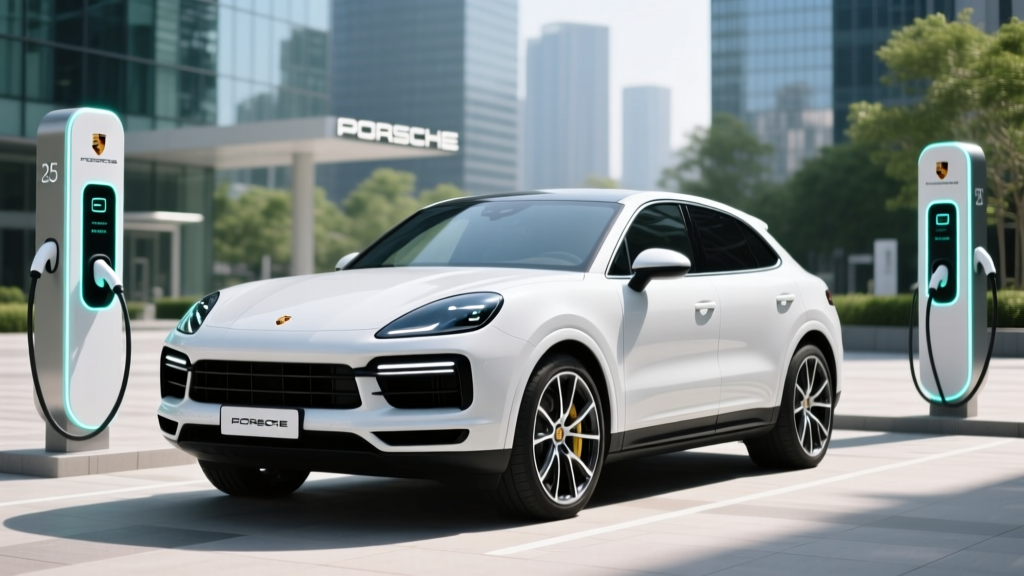
The 2026 Porsche Cayenne Electric (officially the Cayenne EV) is Porsche's first all-electric Cayenne, built on the Premium Platform Electric (PPE) architecture shared with the Macan EV and Audi Q6 e-tron. With an expected EPA range of up to 340 miles, an 800-volt architecture enabling peak DC fast charging at approximately 270 kW, and a Turbo GT variant producing up to 1,140 horsepower, it targets luxury SUV buyers who want Porsche performance without tailpipe emissions. Pricing starts around $82,000 for the base model and climbs past $150,000 for the Turbo GT. It does not qualify for the federal §30D tax credit due to its MSRP exceeding the $80,000 SUV cap and battery-sourcing requirements. This is a premium performance SUV for buyers with home charging access and a flexible budget — not a cost-saving EV play.
Range, Battery, and Real-World Efficiency
The 2026 Cayenne Electric uses a lithium-ion NMC (nickel manganese cobalt) battery pack with approximately 100 kWh of usable capacity (108 kWh gross). Porsche's 800V PPE platform prioritizes both energy density and charge speed, a trade-off that favors NMC chemistry over the heavier, less energy-dense LFP (lithium iron phosphate) cells found in some mainstream EVs.
EPA Range vs. Real-World Expectations
EPA estimated range: Up to 340 miles (base, rear-optimized aero config); ~310 miles for dual-motor AWD trims.
Real-world highway (70-80 mph): Expect 260–290 miles depending on temperature, terrain, and tire choice.
Cold weather (below 32°F): Plan for 220–260 miles without preconditioning; the standard heat pump helps mitigate losses by 10–15% compared to resistive cabin heating.
Heavy towing (up to 7,700 lbs rated): Range may drop to 160–200 miles under sustained towing loads.
The Cayenne EV's efficiency target is approximately 2.8–3.1 miles per kWh (roughly 89–105 MPGe combined, per fueleconomy.gov methodology for comparable PPE-platform vehicles). For a luxury performance SUV, that's competitive — the gas Cayenne S achieves 17/22/19 mpg city/highway/combined, while the Cayenne E-Hybrid PHEV returns approximately 46 MPGe combined on electric power before switching to gas-only operation at ~21 mpg.
| Spec | Base / S | Turbo | Turbo GT |
|---|---|---|---|
| Battery (usable/gross) | ~100 kWh / 108 kWh (NMC) | ~100 kWh / 108 kWh (NMC) | ~100 kWh / 108 kWh (NMC) |
| EPA Range (est.) | ~340 mi | ~310 mi | ~280 mi |
| Horsepower | ~442 hp | ~844 hp | ~1,140 hp (Launch Control) |
| 0-60 mph | ~4.7 sec | ~3.1 sec | ~2.5 sec |
| Peak DC Charge Rate | ~270 kW | ~270 kW | ~270 kW |
| 10-80% DC Charge Time | ~15 min | ~15 min | ~15 min |
| Level 2 AC Charge Rate | 11 kW (optional 22 kW) | 11 kW (optional 22 kW) | 11 kW (optional 22 kW) |
| Drivetrain | RWD / AWD | AWD | AWD |
| Towing Capacity | Up to 7,700 lbs | Up to 7,700 lbs | Up to 7,700 lbs |
| Base MSRP (est.) | ~$82,000 | ~$115,000 | ~$155,000+ |
| Battery/Powertrain Warranty | 8 yr / 100,000 mi | 8 yr / 100,000 mi | 8 yr / 100,000 mi |
Note: The 2026 Cayenne Electric was announced by Porsche in late 2024 with production beginning in 2025 for the 2026 model year. Final EPA certification figures and trim pricing may differ slightly from estimates above. Check Porsche's official site for confirmed specs.
Charging Speed and Infrastructure Reality
The Cayenne EV's 800-volt architecture is its charging ace. At a compatible 350 kW DC fast charger (like Electrify America or select EVgo stations), the Cayenne can peak at approximately 270 kW, adding 10–80% state of charge in roughly 15 minutes under ideal thermal conditions. That's roughly 190–220 miles of range restored in a quarter hour.
However, peak kW is not sustained kW. Like all EVs, the Cayenne's charge curve tapers significantly above 80% SoC to protect battery longevity. Charging from 80–100% can take an additional 15–20 minutes. For road trips, the practical strategy is charging to 80% and moving on — which the 15-minute 10–80% window supports well.
| Level | Power (kW) | Connector | Miles of Range per Hour | Best For |
|---|---|---|---|---|
| Level 1 (120V outlet) | ~1.4 kW | NACS / J1772 adapter | ~4–5 mi/hr | Emergency top-up only |
| Level 2 (240V, 48A) | 11 kW | NACS (native, 2025+) | ~33–37 mi/hr | Daily home charging |
| Level 2 (240V, optional) | 22 kW | NACS | ~66–74 mi/hr | Faster home/workplace |
| DC Fast Charge | Up to ~270 kW | NACS (native) | ~750–900 mi/hr (peak) | Road trips, quick top-ups |
For 2026, Porsche equips the Cayenne EV with the NACS (North American Charging Standard) connector natively, granting direct access to Tesla Supercharger V3 and V4 stations (with 250–350 kW capability depending on station). This vastly expands the available fast-charging network — over 25,000 Supercharger stalls in North America — compared to CCS-only vehicles.
Home charging setup: A Level 2 home charger (like the Porsche Mobile Charger Connect or a ChargePoint Home Flex) on a 60-amp circuit delivering 48 amps continuously will replenish the full 100 kWh usable battery in approximately 9–10 hours. Installation costs typically range from $800 to $2,500 depending on your electrical panel capacity and run length to the garage. If your home has a 200-amp panel with spare capacity, expect the lower end; a panel upgrade to 200A or 400A can add $2,000–$5,000.
EV vs. Gas Cayenne: The Ownership Cost Breakdown
Comparing the 2026 Cayenne Electric to the gas-powered Cayenne S (twin-turbo V6, ~434 hp, ~$90,000 MSRP) reveals a nuanced financial picture. The EV has a lower starting price for comparable performance but higher insurance costs and no federal tax credit.
| Cost Category | Cayenne Electric (Base AWD) | Gas Cayenne S |
|---|---|---|
| Purchase Price (MSRP) | ~$90,000 | ~$95,000 |
| Federal Tax Credit (§30D) | $0 (MSRP exceeds $80K SUV cap) | $0 |
| Fuel/Energy (5 yr, 15K mi/yr) | ~$5,400 (home L2 @ $0.14/kWh avg) | ~$18,750 (premium gas @ $4.50/gal, 19 mpg) |
| Maintenance (5 yr) | ~$2,500 (no oil, fewer brake replacements w/ regen) | ~$5,500 (oil, filters, brake pads, spark plugs) |
| Insurance (5 yr avg) | ~$21,000 (~$4,200/yr — EV premium) | ~$17,500 (~$3,500/yr) |
| Estimated Depreciation (5 yr) | ~$45,000 (50%) | ~$47,500 (50%) |
| Total 5-Year Cost | ~$163,900 | ~$184,250 |
| Cost per Mile | ~$2.19 | ~$2.46 |
Key takeaways: The Cayenne Electric saves approximately $13,350 on fuel over five years and $3,000 on maintenance, but gives back $3,500 on higher EV insurance premiums (a common reality for high-performance EVs, per industry data). Depreciation is the dominant cost in both cases — and luxury EV depreciation remains a wildcard as the market matures. Net savings over five years are approximately $20,000, or about $0.27 per mile, primarily driven by energy savings.
These savings assume predominantly home Level 2 charging at residential electricity rates. Heavy reliance on public DC fast charging (at $0.35–$0.55/kWh in many markets) would erode the fuel-cost advantage significantly. A driver charging 50% on public DCFC and 50% at home might see fuel costs closer to $8,500 over five years instead of $5,400.
Tax Credits and Incentives: What You Actually Get
The 2026 Cayenne Electric does not qualify for the $7,500 federal EV tax credit under IRS §30D. The reasons are straightforward:
- MSRP cap: The §30D credit caps SUV eligibility at $80,000 MSRP. Even the base Cayenne EV starts above this threshold.
- Buyer income cap: Even if the price qualified, modified AGI limits are $150,000 (single) / $300,000 (joint) — many Cayenne buyers exceed these.
- Battery sourcing: Critical mineral and battery component sourcing requirements (phasing in through 2026) further restrict eligibility for vehicles with non-North-American battery supply chains.
- Point-of-sale transfer: For eligible vehicles, the credit can be transferred to the dealer at purchase as an immediate discount. This does not apply here.
For the latest eligibility rules, consult IRS.gov's clean vehicle credit page or speak with a tax professional before purchasing.
Some states and utilities offer additional rebates. California's CVRP, Colorado's state EV credit, and various utility off-peak charging incentives may apply, but these vary by jurisdiction and are subject to change. Check your state's energy office and local utility for current programs.
Common Misconceptions — Myth vs. Fact
| Myth | Fact |
|---|---|
| "The Cayenne EV will get the full $7,500 tax credit." | It exceeds the $80,000 SUV MSRP cap. No federal credit applies. |
| "Electric Porsches can't tow." | The Cayenne EV is rated for up to 7,700 lbs — comparable to the gas V6 Cayenne. Range under load drops significantly, however. |
| "I'll get 340 miles on the highway easily." | EPA range is a combined cycle. Sustained 75-80 mph highway driving typically yields 75–85% of the EPA figure. Plan for ~260–290 real highway miles. |
| "Charging takes too long for road trips." | At 270 kW peak, 10–80% takes ~15 minutes. That's comparable to a gas stop plus a bathroom break. The key is route planning with NACS/Supercharger access. |
| "The battery will need replacing in 5 years." | Porsche warranties the battery for 8 years/100,000 miles with a 70% capacity retention floor. PPE-platform batteries are designed for 200,000+ mile service life with proper care. |
| "I don't need home charging — public chargers are everywhere." | Public DCFC reliability remains inconsistent (studies show 15–20% of non-Tesla sessions encounter issues). Home Level 2 is the ownership backbone. Without it, EV ownership becomes significantly less convenient and more expensive. |
Real-World Ownership: What First-Time EV Buyers Need to Know
If the Cayenne Electric is your first EV, these practical considerations matter more than spec sheets:
Home charging is non-negotiable for most buyers. At this price point, relying solely on public charging is both inconvenient and expensive. Confirm your garage or driveway can support a 240V/60A circuit before committing. A licensed electrician can assess your panel for $150–$300.
Preconditioning matters. The Cayenne EV's thermal management system can precondition the battery for optimal charging when you navigate to a DC fast charger via the onboard system. Skipping this step in cold weather can add 5–10 minutes to your 10–80% charge time. Always use the navigation-based preconditioning feature.
Tire costs are higher. EV-specific tires (optimized for low rolling resistance and noise reduction) on the Cayenne's available 20–22-inch wheels can cost $350–$550 per tire and may need replacement every 25,000–35,000 miles due to the vehicle's weight (~5,500+ lbs) and instant torque delivery.
Regenerative braking saves your brake pads. Porsche's recuperation system can decelerate the Cayenne EV at up to 0.39 g using the motors alone, meaning mechanical brakes see far less wear. Many EV owners go 80,000+ miles on original brake pads.
Insurance is higher — shop around. EV insurance premiums average 15–25% higher than equivalent gas vehicles due to repair complexity and battery replacement costs. Get quotes from multiple carriers (including EV-specialty insurers) before purchasing.
Decision Framework: Should You Buy the Cayenne Electric?
Choose the Cayenne Electric if:
- You have reliable home Level 2 charging (or can install it)
- You want Porsche performance (sub-3-second 0-60 in Turbo trims) with zero tailpipe emissions
- Your daily driving is under 200 miles and road trips are occasional
- You value the expanding NACS/Supercharger network for longer trips
- You're prepared for $82K–$155K+ pricing and higher insurance costs
- You want lower per-mile energy and maintenance costs vs. the gas Cayenne
Stick with the gas Cayenne or Cayenne E-Hybrid PHEV if:
- You lack home charging access and can't install it (apartment, street parking)
- You frequently tow heavy loads over long distances (range under tow is severely limited)
- You regularly drive in extreme cold (-10°F or below) where range loss compounds
- You want to keep total purchase cost under $80K to qualify for the federal tax credit (consider the Macan EV instead)
- You prefer the established reliability and depreciation track record of the gas Cayenne
Frequently Asked Questions
Does the Porsche Cayenne Electric qualify for any federal tax credit?
No. The 2026 Cayenne Electric exceeds the §30D MSRP cap of $80,000 for SUVs, making it ineligible for the $7,500 federal clean vehicle credit regardless of buyer income or battery sourcing. State and utility incentives may still apply — check your local programs.
What is the real-world range of the Cayenne EV on a road trip?
On a highway road trip at 70–80 mph in moderate temperatures (60–80°F), expect approximately 260–290 miles from the AWD trims before needing to charge. In winter or mountainous terrain, plan for 220–260 miles. Use the vehicle's route planner to identify NACS-compatible DC fast chargers along your route.
Can I charge the Cayenne Electric at Tesla Superchargers?
Yes. The 2026 Cayenne EV comes equipped with the NACS connector natively, providing direct access to the Tesla Supercharger network (V3 at 250 kW and V4 at up to 350 kW where available). This is one of the most significant practical advantages for non-Tesla EVs in 2026.
How much does it cost to charge the Cayenne EV at home per month?
Assuming 1,250 miles driven per month and an average efficiency of 3.0 mi/kWh, you'd consume approximately 417 kWh monthly. At the US residential average of ~$0.16/kWh, that's roughly $67/month — compared to $290–$330/month for premium gasoline in a Cayenne S at 19 mpg combined.
Is the Cayenne EV faster than the gas Cayenne Turbo?
In straight-line acceleration, yes. The Cayenne Electric Turbo GT's ~1,140 hp (with Launch Control) and instant electric torque delivery produce a 0–60 mph time of approximately 2.5 seconds, compared to the gas Cayenne Turbo GT's 3.1 seconds. However, the gas variant may sustain higher speeds on long track runs without thermal throttling.
What happens if the battery degrades significantly?
Porsche's battery warranty guarantees at least 70% capacity retention over 8 years or 100,000 miles. If degradation falls below this threshold within the warranty period, Porsche will repair or replace the battery at no cost. Out-of-warranty replacement costs for a ~108 kWh pack are estimated at $15,000–$25,000, though industry trends show battery replacement costs declining year over year.