Quick Answer: What Is the Porsche Boxster EV?
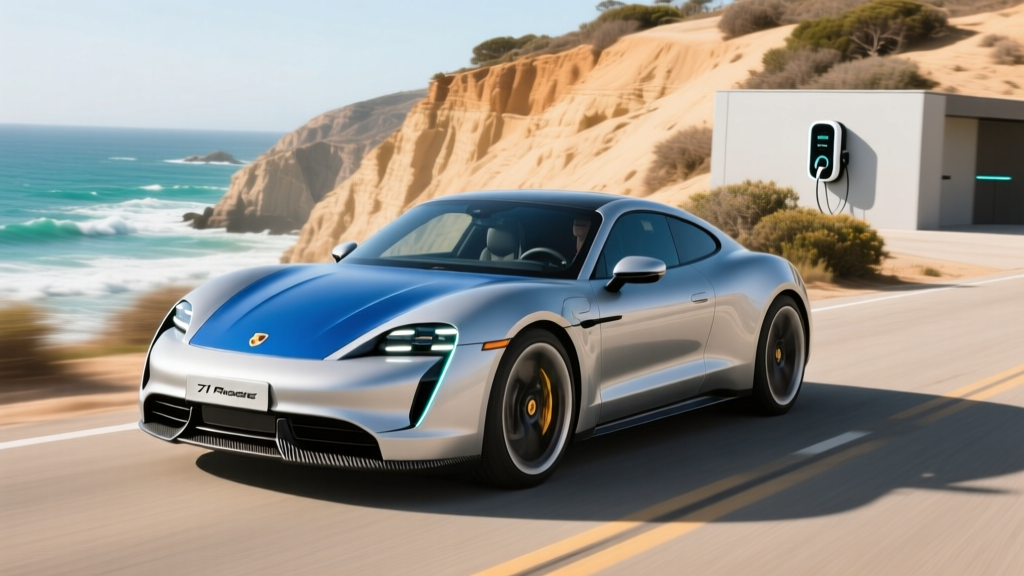
The Porsche Boxster EV is the upcoming all-electric successor to the 718 Boxster roadster, built on Porsche's PPE (Premium Platform Electric) architecture co-developed with Audi. As of early 2026, Porsche has confirmed the 718 EV lineup is in development with prototypes testing, but the production Boxster EV has not yet gone on sale. Expected specs point to a ~75–80 kWh usable battery, 250–300 miles of EPA range, 800-volt architecture enabling ~270 kW peak DC fast charging, and a starting MSRP likely between $75,000 and $85,000. The gas-powered 718 Boxster was discontinued after the 2024 model year in most markets, leaving a gap that the EV will fill.
Release Timeline: When Can You Actually Buy the Boxster EV?
Porsche CEO Oliver Blume confirmed in late 2024 that the electric 718 Boxster and Cayman are on track, with initial deliveries expected in late 2026 or early 2027 as 2027 model-year vehicles. The prototypes have been spotted testing at the Nürburgring and in Arctic cold-weather validation, wearing heavy camouflage over what appears to be a mid-engine-style silhouette adapted for a skateboard battery layout.
Porsche originally targeted a 2025 launch for the electric 718 but delayed the program alongside broader VW Group software challenges and shifting EV demand forecasts. If you're planning a purchase, expect configurators to open in the second half of 2026, with first US deliveries in early-to-mid 2027. Reservations or deposit programs have not been announced as of this writing.
Expected Specs: Battery, Range, and Performance
Because the Boxster EV has not been officially spec'd by Porsche, the following figures are based on PPE platform capabilities, prototype analysis, and industry reporting. Treat them as preliminary estimates.
| Specification | Estimated (Base) | Estimated (Performance Trim) |
|---|---|---|
| Battery (usable) | ~75 kWh (NMC) | ~80 kWh (NMC) |
| Architecture | 800V PPE | 800V PPE |
| EPA Range (est.) | 250–270 mi | 230–250 mi |
| Peak DC Charge Rate | ~270 kW | ~270 kW |
| 10–80% DC Charge Time | ~20–22 min | ~20–22 min |
| Level 2 AC Charge Rate | 11 kW (est.) | 11 kW (est.) |
| Horsepower | ~330 hp (RWD) | ~450+ hp (AWD) |
| 0–60 mph | ~4.8 sec | ~3.4 sec |
| Drivetrain | Rear-wheel drive | All-wheel drive |
| Starting MSRP (est.) | $75,000–$80,000 | $90,000–$100,000+ |
Charging: 800V Architecture and What It Means
The PPE platform's 800-volt electrical architecture is the same one underpinning the Porsche Macan EV and Audi Q6 e-tron. The practical benefit is faster DC charging without requiring extreme current (amps), which reduces heat and cable weight.
| Charging Level | Power | Miles Added per Hour | Typical Use |
|---|---|---|---|
| Level 1 (120V) | ~1.4 kW | ~4–5 mi/hr | Emergency / overnight trickle |
| Level 2 (240V) | ~11 kW | ~35–40 mi/hr | Home / workplace daily charging |
| DC Fast Charge | Up to ~270 kW peak | ~600+ mi/hr (peak) | Road trips, 10–80% in ~20 min |
Charging curve reality: Peak 270 kW is sustained only at low state-of-charge (roughly 10–35% SoC). Expect the curve to taper to ~150 kW by 50% and ~80 kW above 70%. This is typical of NMC chemistry on PPE — still fast, but the advertised peak number is not a flat rate across the session.
For connector compatibility, the Boxster EV will ship in North America with a NACS (Tesla-standard) charge port, following Porsche's commitment to transition from CCS1 to NACS starting with 2025+ model-year vehicles. This grants native access to Tesla Supercharger stations via adapter or native port, significantly expanding road-trip charging options.
Boxster EV vs. Gas 718 Boxster: What Changes?
The last gas-powered 718 Boxster (2024 model year) offered a 2.0L turbocharged flat-four making 300 hp (base) up to a 4.0L naturally aspirated flat-six producing 493 hp in the Spyder RS. Here's how the electric successor is likely to compare:
| Factor | 2024 Gas 718 Boxster (Base) | Boxster EV (Estimated Base) |
|---|---|---|
| Horsepower | 300 hp | ~330 hp |
| 0–60 mph | 4.9 sec | ~4.8 sec |
| Fuel / Energy Cost per Mile | ~$0.18/mi (premium gas) | ~$0.05/mi (home L2, $0.13/kWh) |
| Annual "Fuel" Cost (12k mi) | ~$2,160 | ~$600 |
| Annual Maintenance | ~$800–$1,200 | ~$300–$500 |
| Cargo Space (trunk + frunk) | ~5.2 cu ft (rear trunk) | ~7–9 cu ft (frunk + rear, est.) |
| Weight | ~3,000 lbs | ~4,000+ lbs (est.) |
| Emissions (tailpipe) | CO₂, NOx | Zero tailpipe |
| Driving Sound | Flat-four/flat-six exhaust note | Synthesized / wind + road noise |
The weight problem: The gas 718 Boxster was celebrated for its lightweight, mid-engine balance (~3,000 lbs). The EV version will almost certainly exceed 4,000 lbs due to the battery pack. Porsche engineers have emphasized that a low center of gravity and near 50/50 weight distribution will preserve handling dynamics, but the raw mass will be felt in tire wear, braking distances, and transient response. This is the single biggest trade-off enthusiasts should internalize.
Cost of Ownership: 5-Year Breakdown
Assuming a base MSRP of $78,000 for the Boxster EV and $68,000 for a comparable late-model gas 718 Boxster (used or remaining inventory), here's a realistic 5-year / 60,000-mile ownership comparison:
| Cost Category | Boxster EV (Est.) | Gas 718 Boxster |
|---|---|---|
| Purchase Price | $78,000 | $68,000 |
| Federal Tax Credit (§30D) | $0–$7,500* | $0 |
| Fuel / Electricity (60k mi) | $3,000 | $10,800 |
| Maintenance (60k mi) | $1,800 | $5,500 |
| Insurance (5 years) | $12,500 | $10,000 |
| Estimated Depreciation | $35,000 | $28,000 |
| Total 5-Year Cost | ~$90,300–$97,800 | ~$94,300 |
*Federal §30D tax credit eligibility depends on MSRP caps ($55,000 for sedans/coupes — roadsters may fall under a different vehicle classification), buyer income limits ($150k single / $300k joint), and battery critical-mineral sourcing requirements. Check IRS §30D guidelines and consult a tax professional before relying on credit eligibility. Porsche's luxury pricing and the roadster body style create classification ambiguity that may affect credit access.
Insurance note: EV sports cars typically carry 15–25% higher insurance premiums than gas equivalents due to higher repair costs (battery pack replacement, aluminum bodywork) and limited collision-repair networks trained on high-voltage systems. Get quotes before ordering.
Real-World Ownership: What First-Time EV Buyers Should Know
Home Charging Is Essential
With a ~75 kWh battery, Level 1 (120V) charging adds only 4–5 miles per hour — effectively useless for daily use. You need a Level 2 (240V) home charger to wake up to a full battery every morning. Budget $800–$2,500 for a quality Level 2 unit (e.g., ChargePoint Home Flex, Emporia Level 2) plus $500–$2,500 for electrician installation, depending on panel capacity and run length. If your home has a 100-amp panel, a $1,500–$3,000 panel upgrade to 200 amps may be required.
Apartment and Street-Parking Realities
If you lack access to home or workplace charging, owning a Boxster EV becomes significantly harder. Public DC fast charging at $0.35–$0.50/kWh raises per-mile costs to near gas-car levels, and repeated 100% DC fast charging accelerates battery degradation. This vehicle will work best for owners with a garage or dedicated parking spot with electrical access.
Climate Considerations
Porsche's PPE platform includes a heat pump for cabin heating, which reduces cold-weather range loss compared to resistive heaters. However, expect 20–30% range reduction at 20°F and below. A 260-mile EPA range becomes roughly 180–210 miles in a Minnesota winter. If you live in a cold climate and regularly drive more than 150 miles round-trip, plan charging stops accordingly.
Common Misconceptions About the Boxster EV
| Myth | Fact |
|---|---|
| "It'll feel just like a gas Boxster" | Instant torque delivery is faster off the line, but the ~1,000-lb weight increase changes cornering feel, tire wear, and braking. It's a different kind of sports car. |
| "270 kW charging means 20 minutes every time" | Peak rate applies only at low SoC. A 10–80% session takes ~20 min, but 10–100% takes 35–40+ min due to taper above 80%. |
| "I'll save $7,500 with the tax credit" | §30D eligibility depends on income, MSRP classification, and battery sourcing. Luxury Porsche models often fail one or more criteria. Do not budget assuming the credit. |
| "EVs need no maintenance" | No oil changes, but tires wear faster (heavy + instant torque), cabin air filters need replacement, brake fluid still requires service, and the 12V auxiliary battery still dies every 4–6 years. |
| "The battery will need replacing soon" | Porsche's PPE batteries are liquid-cooled NMC with robust thermal management. The warranty is expected to cover 8 years/100,000 miles with a minimum 70% capacity retention threshold. Real-world PPE degradation data from the Taycan suggests 5–8% loss over 100k miles. |
Decision Framework: Should You Wait for the Boxster EV?
Buy the Boxster EV if:
- You have home Level 2 charging access (garage or driveway with 240V)
- You want a convertible sports car with zero tailpipe emissions and lower running costs
- You prioritize instant torque and daily-driver comfort over lightweight track dynamics
- You're willing to pay $75,000+ and can wait for 2027 delivery
- Your typical daily driving is under 150 miles with occasional road trips covered by DC fast charging
Look elsewhere if:
- You live in an apartment without charging access and rely on street parking
- You prioritize sub-3,000-lb weight, mechanical feedback, and naturally aspirated engine sound — consider a used 2024 718 Boxster GTS 4.0 or Cayman GT4
- You need a car now and can't wait 12–18 months for delivery
- Your budget is under $60,000 — look at the MG4 XPOWER, Mazda MX-5 Miata (gas), or a used Tesla Roadster alternative
- You regularly drive 300+ miles in cold weather without charging stops
Frequently Asked Questions
Will the Boxster EV qualify for the $7,500 federal tax credit?
Uncertain. The §30D credit has an MSRP cap of $55,000 for sedans and coupes, but roadsters/convertibles may fall under a different vehicle classification with potentially different caps. Additionally, the buyer income cap ($150,000 single / $300,000 joint AGI) and battery critical-mineral sourcing requirements must be met. Given Porsche's pricing and European battery supply chains, many configurations may not qualify. Check IRS.gov closer to launch for the official classification.
Will there be a manual transmission option?
No. EVs do not require multi-speed transmissions. The Boxster EV will use a single-speed reduction gear (or possibly a two-speed rear axle like the Taycan for efficiency at high speed). The tactile engagement of the gas Boxster's 6-speed manual will not carry over.
How does the Boxster EV compare to the Tesla Roadster?
Tesla's second-generation Roadster (announced 2017, repeatedly delayed) targets extreme performance — 0–60 in under 1 second (with SpaceX thruster package), 620+ mile range. It's a different category: limited-production hypercar at $200,000+. The Boxster EV is a production luxury roadster focused on daily usability and Porsche driving dynamics at roughly half the price.
What's the expected battery warranty?
Based on the Taycan and Macan EV precedent, expect 8 years / 100,000 miles with a guaranteed minimum of 70% state of health (SoH). Porsche has been conservative with battery buffers — typically locking away 5–8 kWh of gross capacity to reduce cycle stress and extend longevity.
Can I charge at Tesla Superchargers?
Yes. Porsche has committed to NACS ports on all new North American models. The Boxster EV will natively connect to Tesla Superchargers without an adapter, accessing 20,000+ stalls nationwide. Electrify America, EVgo, and other networks remain accessible via NACS-to-CCS adapters if needed during the transition period.
Is the Boxster EV a true mid-engine sports car?
Not in the traditional sense. There's no mid-mounted engine. The battery pack sits low in a skateboard layout, with the motor(s) positioned at the rear axle (and optionally front for AWD). Porsche aims to replicate mid-engine weight distribution through battery and motor placement, but the mass is spread across the floor rather than concentrated behind the driver. The handling character will be different — lower polar moment of inertia benefits (mass is at the extremities of the pack) but higher total mass.
Sources: Porsche 718 model page, IRS §30D Clean Vehicle Credit, fueleconomy.gov — 2024 Porsche 718 Boxster.