Quick Answer: Porsche's All-Electric Options in 2026
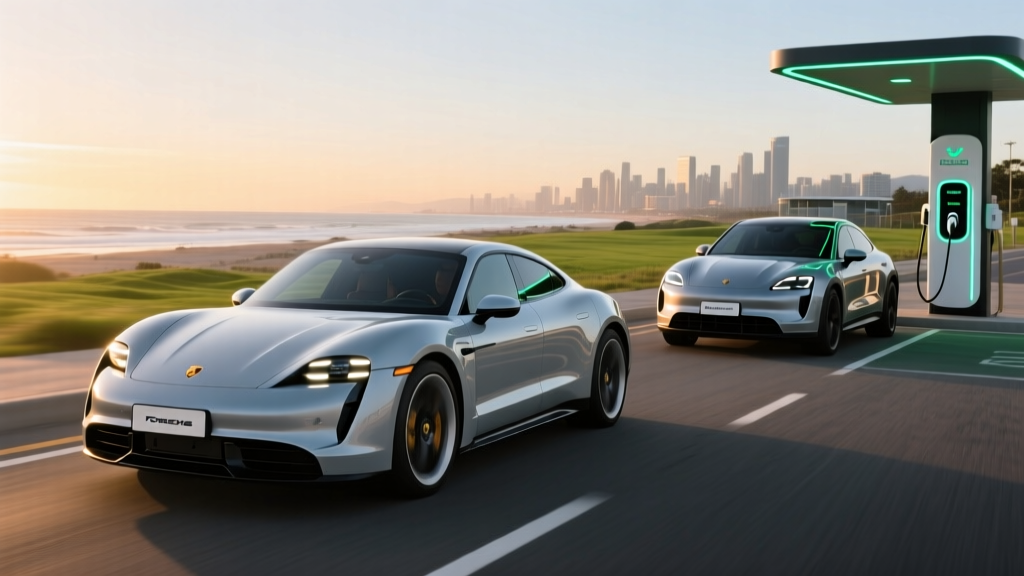
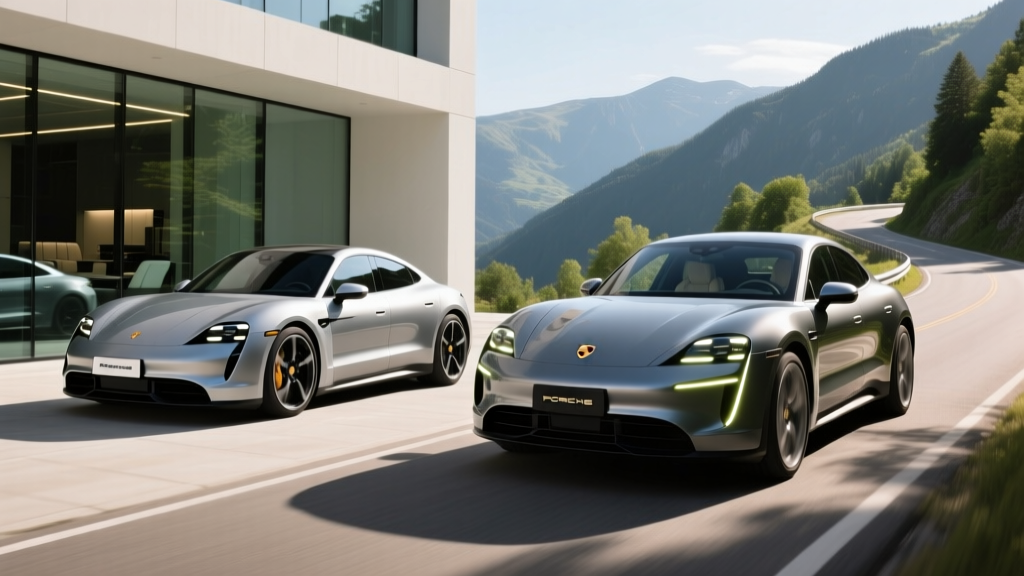
Current Porsche all-electric models: Taycan sedan/cross-tourism (2019-present) and Macan Electric (2024-present). The Cayenne EV is announced for late 2026.
Price range: $78,800 - $238,200+ MSRP before options
Range: 225-318 miles EPA depending on model and trim
Federal tax credit: Neither qualifies for the $7,500 §30D credit due to MSRP caps and battery sourcing requirements
Best for: Performance-focused buyers with home charging access who prioritize driving dynamics over maximum range or value
Porsche's Electric Portfolio: What's Available Now
Porsche has committed to electrification, but their approach differs from mass-market EV makers. As of 2026, you can buy two Porsche all-electric models in the US:
Taycan Family (2025 Refresh)
The Taycan received significant updates for 2025, boosting range and charging speed across the lineup:
- Taycan (base): $99,400 MSRP, 313 miles EPA range, 402 hp, 0-60 in 4.5 seconds
- Taycan 4S: $118,500, 301 miles, 590 hp (launch control), 0-60 in 3.5 seconds
- Taycan Turbo: $161,100, 293 miles, 872 hp, 0-60 in 2.5 seconds
- Taycan Turbo GT: $238,200, 269 miles, 1,092 hp, 0-60 in 2.1 seconds
- Cross Turismo variants: Wagon-style body, slightly lower range (282-292 miles EPA), $3,220 premium over sedan equivalents
Macan Electric (New for 2024)
Porsche's electric compact SUV shares its PPE platform with the Audi Q6 e-tron:
- Macan 4 Electric: $78,800 MSRP, 308 miles EPA, 402 hp, 0-60 in 4.9 seconds
- Macan Turbo Electric: $105,300, 288 miles, 630 hp, 0-60 in 3.3 seconds
Coming Soon: Cayenne EV
Announced for late 2026 production, the electric Cayenne will sit above the Macan. Specs remain preliminary—Porsche has confirmed PPE platform architecture and 800-volt charging but hasn't released final range or pricing.
Real-World Range and Charging Performance
EPA estimates tell part of the story, but Porsche's 800-volt architecture delivers class-leading charging speeds that matter more for road trips.
Real-World Range Expectations
| Model | EPA Range | Highway (75 mph) | Cold Weather (30°F) |
|---|---|---|---|
| Taycan (base) | 313 mi | ~260-275 mi | ~240-260 mi |
| Taycan 4S | 301 mi | ~250-265 mi | ~230-250 mi |
| Macan 4 Electric | 308 mi | ~255-270 mi | ~235-255 mi |
| Macan Turbo | 288 mi | ~240-255 mi | ~220-240 mi |
Real-world testing shows Porsche's EPA estimates are conservative—many owners report exceeding EPA range in mixed driving. Highway speeds and cold weather reduce range 15-25%.
Charging Speed: Where Porsche Excels
Both the Taycan and Macan Electric use 800-volt architecture, enabling faster charging than 400-volt competitors:
| Charging Level | Power (kW) | Charging Speed | Time |
|---|---|---|---|
| Level 1 (120V household) | 1.4 kW | ~4 miles/hour | Not practical for daily use |
| Level 2 (240V home) | 9.6-19.2 kW | ~28-56 miles/hour | 8-10 hours (full charge) |
| DC Fast Charge (Taycan) | 320 kW peak | 10-80% in ~18 min | Adds ~180 miles in 15 min |
| DC Fast Charge (Macan) | 270 kW peak | 10-80% in ~21 min | Adds ~160 miles in 15 min |
Charging curve reality: Peak rates only sustain from 10-40% state of charge. Expect 150-180 kW from 40-60%, then tapering to under 100 kW above 80%. Preconditioning the battery (via navigation to a charger) is essential for achieving peak speeds.
Cost Breakdown: Purchase, Charging, and Ownership
Porsche's electric vehicles carry premium pricing, but operating costs tell a different story compared to their gas counterparts.
Purchase Price and Tax Credit Reality
| Cost Factor | Taycan (Base) | Macan 4 Electric | Gas Equivalent (Panamera/Macan) |
|---|---|---|---|
| MSRP | $99,400 | $78,800 | $102,300 / $68,800 |
| Federal Tax Credit (§30D) | $0 | $0 | $0 |
| Typical Options | $15,000-$30,000 | $10,000-$20,000 | $15,000-$25,000 |
| Destination Fee | $1,650 | $1,650 | $1,650 |
| Total (before tax) | $116,050-$131,050 | $90,450-$100,450 | $118,950-$144,950 / $95,450-$120,450 |
Source: Porsche USA. Neither EV qualifies for the $7,500 federal credit—Taycan exceeds the $55,000 sedan MSRP cap, and both fail battery component/critical mineral sourcing requirements per IRS §30D rules.
Fuel vs Electricity: Operating Cost Comparison
| Annual Cost (15,000 miles) | Taycan / Macan EV | Panamera / Macan Gas |
|---|---|---|
| Fuel/Electricity | $675-$1,350 | $2,700-$3,150 |
| Maintenance | $400-$600 | $1,200-$1,800 |
| Insurance (avg) | $2,800-$3,400 | $2,400-$3,000 |
| Total Annual | $3,875-$5,350 | $6,300-$7,950 |
| 5-Year Total | $19,375-$26,750 | $31,500-$39,750 |
Assumptions: Electricity at $0.13/kWh (home) and $0.35/kWh (public DC fast charging), 50/50 mix. Gas at $3.50/gallon, Panamera 21 MPG combined, Macan 22 MPG combined. Source: fueleconomy.gov. Insurance estimates from industry averages—actual rates vary significantly by location and driver profile.
Home Charging Setup Costs
Level 2 home charging is essential for Porsche EV ownership. Budget for:
- Level 2 charger (hardwired 48A): $500-$800 (Porsche Mobile Charger Connect or third-party like ChargePoint Home Flex)
- Electrician installation: $800-$2,500 depending on panel capacity and run distance
- Electrical panel upgrade (if needed): $1,500-$3,500 for 200A service
- Permits: $100-$300
- Total typical installation: $1,400-$3,600 (assuming 200A panel exists)
Porsche EV vs Gas: Performance and Ownership Trade-offs
Common Misconceptions About Porsche EVs
| Myth | Fact |
|---|---|
| "EVs don't feel like real Porsches" | Taycan Turbo GT hits 0-60 in 2.1 seconds—faster than any production 911. Instant torque and low center of gravity deliver signature handling. |
| "Range anxiety makes EVs impractical" | 313-mile EPA range (Taycan base) covers 95% of daily driving. 18-minute DC fast charging enables road trips with minimal delay. |
| "EVs cost more to own long-term" | Lower fuel/maintenance costs offset higher purchase price within 5-7 years for most drivers. Battery warranty covers 8 years/100,000 miles. |
| "Porsche EVs have poor resale value" | Early Taycan depreciation was steep (30-40% year one), but 2025 refresh with improved range has stabilized values. Still trails 911 retention. |
| "You need solar panels to make EVs economical" | Grid electricity at $0.13/kWh still costs 50-70% less per mile than gas. Solar maximizes savings but isn't required. |
Performance Comparison: Taycan vs Panamera
| Metric | Taycan 4S | Panamera 4 E-Hybrid | Panamera 4S (Gas) |
|---|---|---|---|
| 0-60 mph | 3.5 sec | 4.1 sec | 4.1 sec |
| Horsepower | 590 hp | 455 hp | 440 hp |
| EPA Range / MPG | 301 mi / 81 MPGe | 480 mi total / 52 MPGe | 24 MPG combined |
| Cargo Space | 14.3 cu ft | 17.6 cu ft | 17.6 cu ft |
| MSRP | $118,500 | $113,600 | $115,500 |
Decision Framework: Should You Buy a Porsche EV?
Buy a Porsche All-Electric If:
- You have reliable home charging access (garage or dedicated parking with electrical access)
- Your daily driving is under 200 miles (covers 98% of American drivers per FHWA data)
- You prioritize performance and driving dynamics over maximum range or cargo space
- You can absorb higher upfront costs without the federal tax credit
- You live in a region with decent public DC charging infrastructure (Electrify America, Tesla Supercharger network opening to non-Tesla)
- You want lower operating costs and plan to keep the vehicle 5+ years
Consider a Gas Porsche or Different EV Brand If:
- You lack home charging and rely solely on public infrastructure
- You regularly drive 300+ miles in a day without time for charging stops
- You live in extreme cold climates (consistent sub-20°F winters) where range loss exceeds 30%
- You need maximum cargo/passenger space (Cayenne or Panamera gas/hybrid offers more room)
- The $7,500 federal tax credit is essential to your purchase economics (consider Tesla Model S, BMW i5, or Mercedes EQE instead)
- You prioritize resale value (911 and Cayenne gas models retain value better)
First-Time EV Buyer Essentials
If you're transitioning from gas to electric for the first time, understand these fundamentals:
kW vs kWh: The Critical Distinction
- kW (kilowatts) = power/flow rate. Your Taycan charges at up to 320 kW (fast) or 9.6 kW at home (slow).
- kWh (kilowatt-hours) = energy/capacity. The Taycan's 105 kWh battery holds energy like a gas tank holds fuel.
- Analogy: kW is how fast water flows from a hose; kWh is how much water fills the bucket.
Charging Etiquette and Planning
- Precondition before DC fast charging: Navigate to the charger in the car's system to warm the battery for peak charging speeds
- Charge to 80% on road trips: Charging slows significantly above 80%—it's faster to stop twice than wait for 100%
- Use PlugShare or A Better Routeplanner: Essential apps for finding chargers and planning long trips
- Expect charger downtime: Even Electrify America stations average 90% uptime—have backup charging options
Battery Longevity and Warranty
Porsche provides an 8-year/100,000-mile battery warranty covering defects and capacity loss below 70%. Real-world data from 2020-2022 Taycans shows 5-8% degradation after 60,000 miles—better than early Nissan Leafs but typical for liquid-cooled batteries.
Frequently Asked Questions
Does the Porsche Taycan qualify for any tax incentives?
No federal tax credit—the Taycan exceeds the $55,000 sedan MSRP cap and fails battery sourcing requirements. Some states offer rebates (California's CVRP ended in 2023, but utility companies like PG&E offer $1,000-$2,000 rebates). Check your state and local utility for current programs.
How long does it take to charge a Porsche EV at home?
With a 48-amp Level 2 charger (11.5 kW), expect 8-10 hours for a full charge on the Taycan's 105 kWh battery. Most owners charge overnight, waking to a full battery daily. A 240V/50A circuit is recommended.
Is the Macan Electric smaller than the gas Macan?
Slightly—the electric Macan is 2.3 inches longer overall but has a lower roofline. Cargo space is comparable (22.7 cu ft behind rear seats vs 17.6 cu ft in the gas model). The EV's flat floor creates more usable interior volume.
Can I use Tesla Superchargers with a Porsche EV?
Not yet. Tesla's Supercharger network is opening to non-Tesla vehicles via the Magic Dock adapter, but Porsche hasn't announced compatibility. Porsche uses the CCS1 connector and relies on Electrify America (3 years of complimentary charging included with new purchases).
What's the real-world range in winter?
Expect 20-30% range loss in consistent 30°F weather, more in sub-zero conditions. A Taycan rated at 313 miles EPA might deliver 220-250 miles in January in Minnesota. Preconditioning while plugged in mitigates some loss. Cold-weather heat pumps (standard on 2025+ models) help efficiency.
How does Porsche's reliability compare to Tesla or other EVs?
J.D. Power's 2025 EV Dependability Study ranks Porsche above average, with fewer reported issues than Tesla but trailing Hyundai/Kia. Build quality and fit/finish are typically superior to Tesla, though software/infotainment can lag behind.
Bottom Line: Who Should Buy Porsche All-Electric?
Porsche's electric vehicles deliver on the brand's performance promise with class-leading charging speeds and genuine sports-car dynamics. The 2025 Taycan refresh addressed early range concerns, and the Macan Electric brings Porsche EV ownership under $80,000 for the first time.
However, these remain premium-priced vehicles without federal tax credit eligibility, making them best suited for buyers who prioritize driving experience over value optimization. If you have home charging, drive under 200 miles daily, and can absorb the upfront cost, a Porsche EV offers lower operating costs and thrilling performance. If you need maximum range, cargo space, or tax incentives, competitors like the Tesla Model S, BMW i5, or Hyundai Ioniq 5 may better serve your needs.
Sources: Porsche USA specifications, EPA fueleconomy.gov, IRS §30D tax credit guidelines, J.D. Power 2025 EV Dependability Study. Pricing and specifications current as of 2026 model year; verify with your local dealer for final configuration and availability.