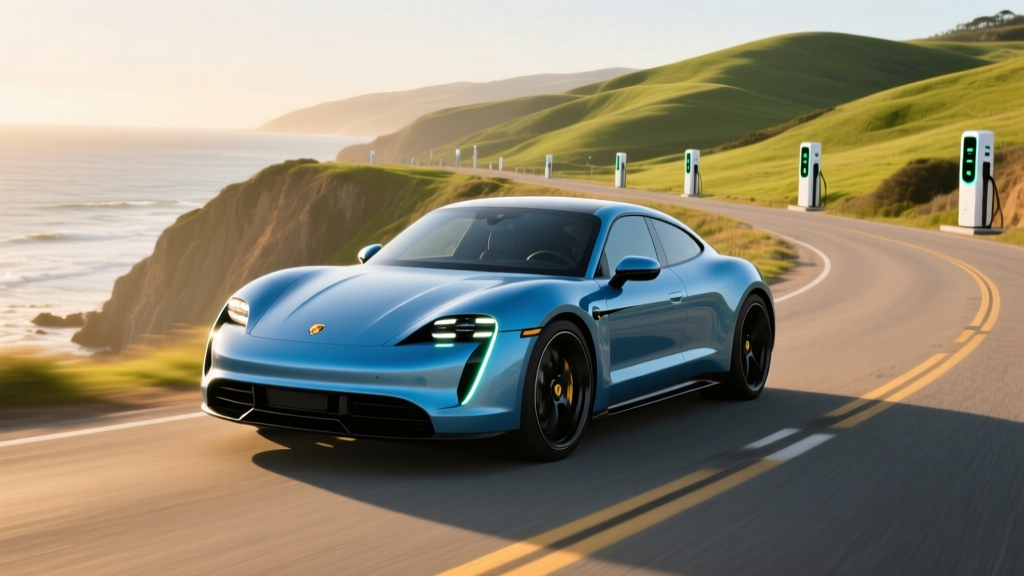
The Quick Answer: Porsche 911 Electric
As of early 2026, Porsche has not yet released a fully electric 911. The company has confirmed that an electric 911 is in development, with a projected debut around 2028–2030. Porsche CEO Oliver Blume has stated the 911 will be "the last Porsche to go electric." In the meantime, buyers seeking an electric Porsche can choose the Taycan (sedan/wagon, starting ~$92,000) or the upcoming electric 718 Boxster/Cayman (expected 2025–2026). The gas-powered 992.2-generation 911 continues through at least 2028 with mild-hybrid T-Hybrid powertrains.
Why the Porsche 911 Electric Matters
The 911 is Porsche's halo car — a nameplate with over 60 years of heritage and a fiercely loyal buyer base. Electrifying it is arguably the most consequential decision in the brand's modern history. Unlike the Taycan, which was designed from the ground up as an EV, the 911's rear-engine layout, lightweight ethos, and analog driving feel present unique engineering challenges for a battery-electric conversion.
Porsche has been deliberate about this transition. The company invested heavily in its 800-volt architecture with the Taycan and is developing next-generation battery chemistries and electric motors for future sports cars. The electric 911 will likely ride on a heavily modified version of the PPE (Premium Platform Electric) architecture or a bespoke sports-car platform.
Projected Specs: What We Can Reasonably Expect
While official specifications remain under wraps, we can extrapolate from Porsche's current EV technology and public statements from company executives:
| Attribute | Projected / Estimated | Basis |
|---|---|---|
| Platform | Modified PPE or bespoke sports-car architecture | Porsche engineering statements |
| Battery Capacity | ~80–100 kWh usable | Taycan uses 83.7 kWh usable; sports car may use high-density cells |
| Chemistry | Likely NMC (nickel manganese cobalt) | Energy density priority for packaging in a sports car |
| EPA Range (est.) | 250–320 miles | Taycan achieves 246–318 mi EPA depending on trim |
| Peak DC Fast Charge | 320–350 kW | Updated Taycan peaks at 320 kW; next-gen may exceed |
| 10–80% Charge Time | ~16–20 minutes | Current Taycan: 18 min at 320 kW |
| 0–60 mph | Sub-3.0 seconds (Turbo/GT variant) | Taycan Turbo GT: 2.1 sec; 911 Turbo S gas: 2.7 sec |
| Horsepower | 600–1,000+ HP (varies by trim) | Taycan range: 402–1,019 HP |
| Base MSRP (est.) | $130,000–$160,000+ | Gas 911 Carrera starts ~$115,000; EV premium likely |
| Weight | 4,200–4,600 lbs (est.) | Taycan: ~4,700–5,300 lbs; 911 gas: ~3,300–3,600 lbs |
Real-world range caveat: Based on Taycan ownership data, expect real-world highway range to run 10–15% below EPA estimates at sustained 75+ mph speeds. In cold weather (below 32°F), plan for an additional 15–25% reduction. A 300-mile EPA rating might deliver 230–250 miles on a winter highway trip.
Gas 911 vs. Electric Porsche: The Current Comparison
Until the electric 911 arrives, buyers cross-shopping an electrified Porsche face a choice between the gas 911 (with the new T-Hybrid system) and the fully electric Taycan. Here's how they stack up with real numbers:
| Attribute | 2026 Porsche 911 Carrera T-Hybrid | 2026 Porsche Taycan 4S |
|---|---|---|
| Powertrain | 3.6L flat-6 + electric motor (mild hybrid) | Dual-motor BEV, 800V architecture |
| Horsepower | 394 HP | 590 HP (launch control) |
| 0–60 mph | 4.1 seconds | 3.5 seconds |
| EPA Range / MPG | ~22 MPG combined | ~283 miles / 83 MPGe |
| Fuel / Energy Cost (15k mi/yr) | ~$2,400/yr (premium gas at $4.50/gal) | ~$600–$900/yr (home charging at $0.14/kWh) |
| Base MSRP | ~$115,300 | ~$107,400 |
| Federal Tax Credit (§30D) | Not eligible (not a plug-in) | Up to $7,500 if eligible (subject to MSRP/income/sourcing caps) |
| Annual Maintenance (est.) | ~$800–$1,200 | ~$300–$500 |
| Curb Weight | ~3,440 lbs | ~4,892 lbs |
Key takeaway: The Taycan delivers more horsepower and lower running costs, but the gas 911 wins decisively on weight, driving dynamics, and refueling convenience. The electric 911's central challenge will be closing that ~1,400-pound weight gap.
Real Costs of Porsche EV Ownership
Whether you're considering the Taycan now or waiting for the electric 911, Porsche EV ownership involves specific financial realities:
| Cost Category | Gas 911 Carrera (5 yr) | Taycan 4S (5 yr) | Notes |
|---|---|---|---|
| Purchase Price | $115,300 | $107,400 | Before options, which add $15–$40k typically |
| Federal Tax Credit | $0 | Up to $7,500 | Subject to IRS §30D income, MSRP, and sourcing rules |
| Fuel / Electricity (5 yr) | ~$12,000 | ~$3,500–$4,500 | Based on 15,000 mi/yr; home charging majority |
| Maintenance (5 yr) | ~$5,000 | ~$2,000 | EVs skip oil changes, fewer brake replacements (regen) |
| Insurance (5 yr avg) | ~$18,000 | ~$20,000 | EV insurance premiums tend 5–15% higher |
| Depreciation (est. 5 yr) | ~$52,000 | ~$55,000 | Taycan has depreciated faster than gas 911 historically |
| Total 5-Year Cost | ~$202,300 | ~$180,400 | Before state/local incentives |
Home charging reality: Most Porsche EV owners charge at home using a Level 2 wall connector (9.6–11.5 kW). If your home electrical panel requires a 200-amp upgrade to support a dedicated 60-amp circuit, expect $1,500–$4,000 in electrician costs on top of the $500–$800 charger hardware. Always consult a licensed electrician for your specific installation.
Tax Credit Eligibility: What Actually Applies
The federal EV tax credit under IRS §30D is not a blanket $7,500 for every buyer. For a vehicle like the Taycan (and potentially a future electric 911), eligibility depends on:
| Myth | Fact |
|---|---|
| "Every EV gets $7,500 off" | The credit is split: $3,750 for battery components + $3,750 for critical minerals. Both have sourcing requirements that tighten annually. |
| "I can transfer the credit to the dealer" | Yes — point-of-sale transfer is allowed under current rules, reducing your out-of-pocket at purchase. But the dealer must be registered with the IRS. |
| "There's no income limit" | AGI caps apply: $300,000 (joint), $225,000 (head of household), $150,000 (single). Exceed these and you get $0. |
| "MSRP doesn't matter for sports cars" | Sedans/wagons cap at $55,000 MSRP; SUVs/trucks/vans at $80,000. A future electric 911 classified as a sedan would likely exceed the $55K cap, potentially disqualifying it. |
| "Porsche EVs always qualify" | Battery sourcing rules change yearly. Verify current eligibility on fueleconomy.gov before purchasing. |
Practical advice: Consult a tax professional before banking on the credit. Rules for the 2026 tax year may differ from prior years, and proposed legislation could alter or accelerate phase-outs.
What First-Time Porsche EV Buyers Should Know
If you're considering a Taycan now or planning to wait for the electric 911, these practical realities shape the ownership experience:
Charging Infrastructure
Porsche EVs use the CCS1 connector for DC fast charging (though Porsche has indicated future models may adopt NACS). The Taycan's 800-volt architecture enables charging at up to 320 kW on compatible Electrify America stations. However, sustained charge rates matter more than peak rates — expect the charge curve to taper significantly above 80% SoC, adding 10–15 minutes to reach full from 80%.
Weight and Driving Dynamics
The Taycan weighs approximately 4,900 lbs — roughly 1,400 lbs more than a gas 911 Carrera. This affects tire wear (budget $1,200–$2,000 per set of performance tires, replaced every 15,000–25,000 miles), braking feel, and cornering agility. Porsche's rear-axle steering and active suspension management help mask the mass, but physics is physics.
Cold Weather Performance
Lithium-ion batteries lose efficiency in cold temperatures. Porsche includes a heat pump on the Taycan (standard on most trims), which mitigates cabin-heating energy draw. Still, expect 15–25% range reduction in sustained sub-freezing conditions. If you live in Minnesota or Maine and plan road trips, plan charging stops accordingly.
Depreciation Concerns
The Taycan has experienced steeper depreciation than the gas 911 in its first few model years — partly due to rapid EV tech advancement and partly due to luxury EV market saturation. A gas 911 GT3, by contrast, can hold or even appreciate in value. If resale value is a priority, this is a material consideration.
Decision Framework: Should You Wait for the Electric 911?
Choose the gas 911 T-Hybrid now if:
- You prioritize lightweight driving dynamics and sub-3,500-lb curb weight
- You frequently drive in areas with limited DC fast-charging infrastructure
- You want a vehicle with proven long-term resale value and collectibility
- You track your car and want sustained performance without thermal battery limits
- You don't have reliable home Level 2 charging access
Choose the Taycan now if:
- You want an electric Porsche today with proven 800V charging and 280+ mile range
- You daily-drive primarily under 80 miles and charge at home overnight
- You value instant torque and silent acceleration for street driving
- Lower annual running costs ($1,500–$2,000/yr savings vs. gas 911) matter to you
- You're comfortable with faster depreciation in exchange for technology access
Wait for the electric 911 if:
- The 911 specifically is your dream car and you want it fully electric
- You can wait until 2028–2030 without needing to purchase now
- You expect next-gen battery tech (higher energy density, lighter cells) to close the weight gap
- You want Porsche's most advanced EV platform, not a sedan adapted for performance
Charging Speeds: What to Expect from a Porsche EV
| Charging Level | Power (kW) | Miles Added per Hour | Typical Use Case |
|---|---|---|---|
| Level 1 (120V outlet) | 1.4 kW | ~4–5 miles | Emergency/trickle; not practical for daily use |
| Level 2 (240V, 48A) | 11.5 kW | ~35–40 miles | Home overnight charging; full charge in ~8 hours |
| DC Fast (150 kW station) | ~130 kW sustained | ~400+ mi/hr equivalent | Public charging; 10–80% in ~25 minutes |
| DC Fast (350 kW station) | ~320 kW peak | ~900+ mi/hr equivalent | 10–80% in ~18 minutes on 800V Taycan |
Charge curve reality: The "320 kW peak" figure applies only between roughly 10–50% SoC on a preconditioned battery. Above 60%, the rate tapers to ~150 kW; above 80%, it drops to ~50 kW. A realistic 10–80% session takes 18–20 minutes, not the theoretical minimum. Always precondition your battery (via the car's navigation-routed charging) before arriving at a fast charger.
Frequently Asked Questions
Will the electric 911 be a hybrid or fully electric?
Porsche has indicated the next-generation 911 beyond the current 992.2 will eventually go fully electric. The current 992.2 generation (2025–2028) uses a T-Hybrid mild-hybrid system that cannot be plugged in. Porsche's long-term roadmap targets a battery-electric 911 around 2028–2030, though synthetic fuels (e-fuels) may extend combustion variants in limited editions.
Will the electric 911 be heavier than the gas version?
Almost certainly. Even with advanced battery chemistries and lightweight construction, a battery pack large enough for 250+ miles of range adds 800–1,200 lbs. Porsche's engineering team has acknowledged this challenge publicly. Expect the electric 911 to weigh 4,200–4,600 lbs versus the gas car's ~3,400 lbs.
Can I reserve an electric 911 now?
No. Porsche has not opened reservations for an electric 911. The vehicle remains in development. Any website or dealer claiming to accept reservations for an electric 911 is not authorized. Monitor Porsche's official site for announcements.
How does the Taycan's reliability compare to the gas 911?
The Taycan has fewer moving parts (no transmission, no oil system, no exhaust), which reduces mechanical failure points. However, early-model Taycans (2020–2022) experienced software-related recalls and 12V battery issues. The gas 911's flat-six engine is well-proven but requires regular maintenance. According to NHTSA recall data, both vehicles have had comparable recall volumes for their respective model years.
What about the electric Porsche 718 (Boxster/Cayman)?
The electric 718 is expected to arrive before the electric 911, potentially for the 2026–2027 model year. It will sit below the 911 in price and positioning, likely starting around $75,000–$90,000. If you want a lighter, mid-engine electric Porsche sports car, this may be the more practical near-term option.
Is the Porsche Taycan eligible for the federal tax credit in 2026?
Eligibility depends on the specific trim, battery sourcing, your adjusted gross income, and current IRS rules. The Taycan's MSRP may exceed the §30D sedan cap of $55,000, which could disqualify it. Check the latest eligibility data at fueleconomy.gov and consult a tax professional before purchasing.
The Bottom Line
The Porsche 911 electric is one of the most anticipated EVs in the sports car world, but it remains 2–4 years from production. Buyers who need a Porsche EV today should evaluate the Taycan — it's a proven, fast-charging, daily-drivable electric sports sedan with real-world range of 240–280 miles and 10–80% charging in roughly 18 minutes on a 350 kW station. Buyers committed to the 911 nameplate should continue with the gas T-Hybrid 911 and revisit the EV question when Porsche makes its official announcement. Either path involves real trade-offs in cost, weight, and convenience — and neither is the wrong choice if your expectations match the data.