Quick Answer: Is the Porsche 718 Electric Available to Buy?
No. As of early 2026, the Porsche 718 electric prototype remains in pre-production testing and is not yet available for purchase. Porsche has confirmed that the next-generation Boxster and Cayman will go fully electric, built on the PPE (Premium Platform Electric) architecture co-developed with Audi. Based on Porsche's official timeline and spy-shot analysis, a production reveal is expected in late 2026 or early 2027, with customer deliveries likely beginning for the 2028 model year. All specifications discussed below are preliminary estimates drawn from Porsche's PPE platform data, the Macan EV (which shares the architecture), and industry analysis.
What the Porsche 718 Electric Prototype Tells Us So Far
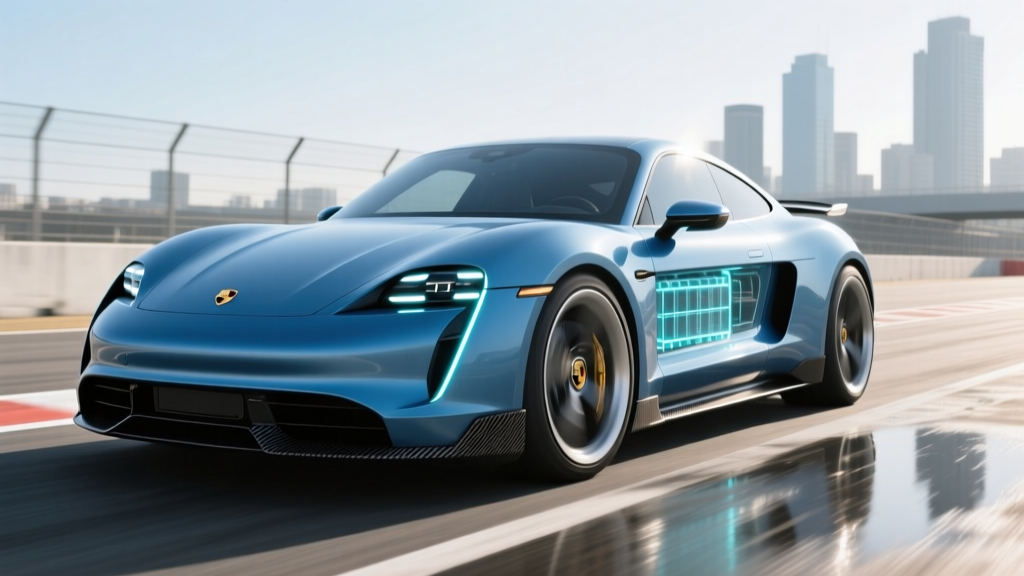
Porsche began camouflaged testing of the electric 718 in 2024, with prototypes spotted at the Nürburgring, in Scandinavia for cold-weather validation, and across European roads throughout 2025. The mule vehicles sit on a shortened version of the PPE platform — the same 800-volt architecture underpinning the Macan EV and the Audi Q6 e-tron.
Here is what we can reasonably project based on confirmed PPE platform specs and the physical constraints of a mid-engine sports car chassis:
| Spec | Estimated 718 EV (Base) | Estimated 718 EV (S/GTS) |
|---|---|---|
| Platform | PPE (Premium Platform Electric), 800V architecture | |
| Battery Chemistry | NMC (nickel manganese cobalt) — energy-density priority | |
| Usable Battery Capacity | ~75-80 kWh | ~90-100 kWh |
| EPA Range (est.) | ~240-280 miles | ~220-260 miles |
| Peak DC Fast Charge | ~270 kW (800V system) | |
| 10-80% DC Charge Time | ~21-25 minutes (est.) | |
| Level 2 AC Charge Rate | 11 kW (standard) / 22 kW (optional) | |
| Horsepower | ~350-400 hp | ~450-550 hp |
| 0-60 mph | ~4.5 sec | ~3.2-3.8 sec |
| Drivetrain | Rear-wheel drive | AWD likely |
| Estimated Base MSRP | ~$75,000-$82,000 | ~$95,000-$115,000 |
Note: All figures are estimates based on PPE platform capabilities and should not be treated as confirmed specifications. Porsche will publish final numbers closer to production launch.
Electric 718 vs. Gas 718 Cayman/Boxster: The Numbers
The current gas-powered 718 lineup (Cayman and Boxster) was discontinued after the 2024 model year in most markets, leaving a gap that the EV will fill. For buyers cross-shopping a used gas 718 or weighing the EV against alternatives, here is how the platforms compare on paper:
| Metric | 2024 718 Cayman (Base) | 2024 718 Cayman GTS 4.0 | Electric 718 (Projected Base) |
|---|---|---|---|
| Powertrain | 2.0L turbo flat-4 | 4.0L NA flat-6 | Single/dual electric motor(s) |
| Horsepower | 300 hp | 394 hp | ~350-400 hp |
| 0-60 mph | 4.7 sec | 3.7 sec | ~4.5 sec (est.) |
| EPA Range / Tank Range | ~380 mi (16.9 gal) | ~340 mi (16.9 gal) | ~240-280 mi (est.) |
| Fuel/Energy Cost per Mile | ~$0.16/mi (premium @ $4.50/gal) | ~$0.18/mi | ~$0.05/mi (home L2 @ $0.15/kWh) |
| Annual Fuel/Energy (12k mi) | ~$1,920 | ~$2,160 | ~$600 |
| Cargo (front + rear) | ~14.7 cu ft (frunk + trunk) | ~14.7 cu ft | ~10-13 cu ft (est., frunk + rear) |
| Base MSRP (when new) | $68,300 | $94,600 | ~$75,000-$82,000 (est.) |
The electric 718 is expected to deliver instantaneous torque and a lower center of gravity thanks to the floor-mounted battery pack. However, it will also carry significantly more weight — likely 4,000-4,400 lbs compared to the gas Cayman's ~3,100-3,300 lbs. Porsche's engineers have stated publicly that active rear-axle steering and torque vectoring will be critical to masking that mass on twisty roads.
Real-World Ownership: Charging, Range, and Daily Use
A sports car is often a second or third vehicle, which changes the ownership calculus compared to a daily commuter EV. Still, the practical realities of EV ownership apply:
Home Charging Is the Backbone
With an 11 kW onboard charger, the electric 718 will recover roughly 30-35 miles of range per hour on a Level 2 home charger (240V, 48A circuit). A full charge from 10-100% on an ~80 kWh battery would take approximately 7-8 hours — easily accomplished overnight. Buyers without access to home or workplace Level 2 charging should seriously reconsider any EV purchase, as relying exclusively on public DC fast charging is both more expensive ($0.30-$0.50/kWh vs. $0.12-$0.18/kWh at home) and more time-consuming.
Real-World Range Expectations
If the EPA rates the base electric 718 at ~260 miles, expect real-world results to vary:
- Mixed driving (city/suburban): ~250-270 miles — EVs are most efficient in stop-and-go thanks to regenerative braking
- Sustained highway (75+ mph): ~210-230 miles — aerodynamic drag and the sports car's lower ride height work against efficiency at speed
- Cold weather (below 32°F): ~180-210 miles — battery chemistry slows, cabin heating draws energy; a heat pump (expected on PPE) mitigates but doesn't eliminate the loss
- Track use: Range drops dramatically under sustained high-load driving — expect 80-120 miles equivalent under aggressive track conditions
DC Fast Charging on Road Trips
The 800V PPE architecture is one of the fastest-charging platforms available. At a 350 kW-capable Electrify America or Ionity station, the electric 718 should peak near 270 kW and complete a 10-80% charge in roughly 22 minutes. However, the charging curve tapers significantly above 80% — an 80-100% top-off can add another 15-20 minutes. Plan road-trip stops around 10-80% charges for optimal time efficiency.
Cost of Ownership: Purchase Price Through 5 Years
Let's model a realistic 5-year ownership cost comparison, assuming the electric 718 base model at an estimated $78,000 MSRP versus a comparably equipped used 2024 718 Cayman at ~$65,000 (depreciated market price).
| Category | Electric 718 (Projected) | 2024 Gas 718 Cayman (Used) |
|---|---|---|
| Purchase Price | $78,000 (est.) | $65,000 |
| Federal Tax Credit (§30D) | $0-$7,500 (see below) | $0 |
| Fuel/Energy (5 years) | $3,000 | $10,200 |
| Maintenance (5 years) | $1,800 (tires, cabin filter, fluid top-offs) | $4,500 (oil, brakes, plugs, tires) |
| Insurance (5 years) | $14,000 (est., EV sports car premium) | $11,500 |
| Estimated Depreciation | $31,200 (~40%) | $22,750 (~35%) |
| Total 5-Year Cost | ~$95,600 - $102,600 | ~$91,250 |
Tax credit caveat: Under current IRS §30D rules, the federal clean vehicle credit offers up to $7,500, but eligibility depends on battery component sourcing, critical mineral requirements, buyer income caps ($150k single / $300k joint AGI), and MSRP limits ($55,000 for sedans/coupes — though sports car classification may vary). Porsche's battery supply chain has historically relied on non-qualifying sourcing for some models. Do not assume the electric 718 will qualify. Consult a tax professional and verify on the IRS portal at the time of purchase. The credit can be transferred to the dealer as a point-of-sale discount if eligible.
Common Misconceptions About the Electric 718
| Myth | Fact |
|---|---|
| "It won't feel like a real Porsche without the flat-six sound." | Porsche has confirmed an evolved version of its "Electric Sport Sound" — a synthesized audio profile tied to throttle, torque, and speed inputs. Whether it satisfies enthusiasts is subjective, but the instantaneous torque delivery (no turbo lag, no rev-build) will make the car feel quicker than its 0-60 time suggests. |
| "The battery makes it too heavy to handle." | The electric 718 will likely weigh 4,000+ lbs — roughly 800-1,000 lbs more than the gas Cayman. However, the battery sits low in the chassis, giving an exceptionally low center of gravity. Porsche's PPE platform uses rear-axle steering and sophisticated damping to manage mass. The Macan EV (5,300 lbs) handles remarkably well by the same logic. |
| "I can't take it on road trips — the range is too short." | With ~260 miles of projected range and 270 kW DC fast charging adding ~180 miles in 15 minutes, road trips are entirely feasible with modest planning. The 800V architecture is among the fastest-charging systems available. |
| "EV batteries need replacing every few years." | Modern NMC packs are engineered for 200,000+ miles with less than 10-15% degradation. Porsche's EV battery warranty covers 8 years/100,000 miles with a minimum 70% capacity retention threshold — consistent with industry standards. |
| "It will qualify for the full $7,500 tax credit." | Unlikely at launch. Porsche's current battery sourcing has limited §30D eligibility across its lineup. The MSRP cap for non-SUV vehicles ($55,000) may also disqualify the electric 718 depending on how it is classified. Always verify on fueleconomy.gov at time of purchase. |
Who Should Wait for the Electric 718 — And Who Shouldn't
Decision Framework
Wait for the electric 718 if:
- You want a new-production Porsche sports car and don't need it before 2028
- You have reliable home Level 2 charging (or can install it)
- Your daily driving is under 150 miles round-trip, and road trips are occasional
- You value instant torque, low running costs, and a low center of gravity over lightweight agility and engine sound
- You're willing to pay a premium for early-adopter EV sports car status
Look elsewhere if:
- You need a car now — the electric 718 is 18-24 months from customer delivery at minimum
- Track days are your primary use case — sustained high-load driving decimates EV range and risks thermal throttling
- You lack home charging access and live in an area with sparse DC fast-charging infrastructure
- The visceral experience of a naturally aspirated flat-six at 7,800 RPM is non-negotiable — buy a used 982-generation Cayman GTS 4.0 or 992 GT3 while they still exist
- Budget is under $70,000 — consider a used gas 718, a Lotus Emira, or wait for more affordable EV sports cars
Competitive Landscape: What Else Is Out There?
The electric 718 won't exist in a vacuum. By 2028, it will face competition from several directions:
- Lotus Emira (gas) / upcoming Lotus EV sports car: Lotus has signaled an electric successor to the Emira, likely on a dedicated sports car platform. Lighter weight is Lotus's advantage.
- Tesla Roadster (2nd gen): Announced repeatedly since 2017, still not in production. If it ever ships, claimed specs (0-60 in under 2 seconds, 600+ mile range) would dwarf the 718 EV — but Tesla's production timelines are notoriously unreliable.
- Alpine A110 E-ternité / future Alpine EV: Renault's Alpine brand is developing an electric sports car, likely lighter and less powerful than the Porsche.
- Used gas sports cars: As flat-six Porsches become collector items, prices for low-mileage 982 Cayman/Boxster GTS 4.0 models are likely to appreciate, making them an alternative investment as much as a car.
Frequently Asked Questions
When will the Porsche 718 electric go on sale?
Porsche has confirmed the next-generation 718 Boxster and Cayman will be fully electric. Based on the current testing cycle and PPE platform readiness, a production reveal is expected in late 2026 or 2027, with first deliveries for the 2028 model year. No official date has been announced.
Will there be a manual transmission option?
No. Electric vehicles use single-speed or two-speed gearboxes and do not support a traditional manual transmission. Porsche's PPE platform uses a two-speed rear axle on some configurations (as in the Taycan), but this is automatic only.
Will the electric 718 be a convertible (Boxster) and a coupe (Cayman)?
Porsche has indicated both body styles will continue. Spy shots have shown prototype testing with both fixed-roof and soft-top configurations.
How much will home Level 2 charger installation cost?
Expect $800-$2,500 for a quality Level 2 charger (e.g., ChargePoint Home Flex, Emporia Level 2) plus $500-$2,000 for electrician labor and permits, depending on panel capacity and wiring distance. If your home has a 200A panel with spare capacity, costs trend toward the lower end. A panel upgrade to 200A or 400A can add $2,000-$5,000. Always get a quote from a licensed electrician before purchasing equipment.
Will the electric 718 support NACS (Tesla Supercharger) or CCS?
Porsche currently uses CCS1 in North America for the Taycan and Macan EV. However, Porsche has not yet announced a connector switch to NACS (the Tesla/J3400 standard). Given the industry-wide migration to NACS by 2025-2026, it is plausible — but not confirmed — that the electric 718 will ship with NACS or include a CCS-to-NACS adapter. Monitor Porsche's official announcements as launch approaches.
Is the electric 718 a good first EV?
As a second or weekend car, yes — if you have home charging. As a sole vehicle for a first-time EV buyer, it presents challenges: limited cargo, higher insurance, no confirmed tax credit eligibility, and a sports car's firm ride for daily commuting. First-time EV buyers often benefit from starting with a more practical crossover (Macan EV, Hyundai Ioniq 5, Tesla Model Y) before moving to a sports car.