Quick Answer: Which Popular EV Should You Buy?
The most popular EVs in the U.S. for 2026 — the Tesla Model Y, Chevrolet Equinox EV, Hyundai Ioniq 5, Ford Mustang Mach-E, and Tesla Model 3 — span a price range from roughly $33,000 to $52,000 before incentives. The best choice depends on your driving pattern: the Equinox EV wins on value (315+ miles EPA, ~$33K base), the Model Y leads in charging infrastructure access and cargo versatility, the Ioniq 5 offers the fastest DC charging (10–80% in ~18 minutes at 240 kW peak), and the Model 3 delivers the best efficiency (132 MPGe combined, up to 363 miles EPA). Expect real-world highway range to run 10–20% below EPA stickers, and cold-weather range to drop 20–30% below that.
The Most Popular EVs of 2026 at a Glance
Sales data and consumer interest consistently point to five battery-electric vehicles dominating the American market. Here is how they stack up on the numbers that matter most to buyers.
| Spec | Tesla Model Y (Long Range) | Chevy Equinox EV (RS Launch) | Hyundai Ioniq 5 (SEL AWD) | Ford Mustang Mach-E (Extended Range) | Tesla Model 3 (Long Range) |
|---|---|---|---|---|---|
| EPA Range | 320 mi | 315 mi | 290 mi | 320 mi | 363 mi |
| Battery (usable kWh) | ~75 kWh (NMC) | ~85 kWh (NMC) | 77.4 kWh (NMC) | ~91 kWh (NMC) | ~75 kWh (NMC) |
| Peak DC Charge Rate | 250 kW | 190 kW | 240 kW | 150 kW | 250 kW |
| 10–80% DC Fast Charge | ~22 min | ~28 min | ~18 min | ~36 min | ~22 min |
| Level 2 Rate (kW) | 11.5 kW | 11.5 kW | 10.9 kW | 10.5 kW | 11.5 kW |
| 0–60 mph | 4.8 sec | ~6.5 sec | 4.5 sec | 5.1 sec | 4.2 sec |
| Horsepower | 384 hp | 288 hp | 320 hp | 346 hp | 384 hp |
| Efficiency (MPGe combined) | 117 MPGe | ~100 MPGe | 110 MPGe | 101 MPGe | 132 MPGe |
| Base MSRP (2026) | $46,630 | $33,400 | $47,150 | $45,995 | $42,380 |
| Battery Warranty | 8 yr / 120K mi | 8 yr / 100K mi | 10 yr / 100K mi | 8 yr / 100K mi | 8 yr / 120K mi |
Source: fueleconomy.gov (EPA) and manufacturer 2026 spec sheets. Real-world range varies with temperature, speed, and terrain.
Real-World Range Reality Check
EPA range numbers assume a mix of city and highway driving at moderate temperatures. In practice:
- Highway-only at 75 mph: Expect 85–90% of EPA range (e.g., the 320-mile Model Y delivers ~270–290 miles).
- Cold weather (below 32°F): Expect 70–80% of EPA range, even with a heat pump. The Ioniq 5's 290 miles drops to ~205–230 miles in sub-freezing conditions.
- Mixed moderate driving: EPA numbers are generally achievable.
Always plan road trips around the worst-case scenario, not the sticker.
EV vs Gas: What Does Ownership Actually Cost?
The most common question from shoppers comparing popular EVs against gasoline alternatives is whether the higher purchase price pays off. The answer depends on your mileage, electricity rate, and how long you keep the car.
| Cost Category (5-Year / 75K Miles) | Popular EV (e.g., Model Y LR) | Gas Equivalent (e.g., Toyota RAV4 AWD) |
|---|---|---|
| Purchase Price (MSRP) | $46,630 | $33,500 |
| Federal Tax Credit (§30D) | –$7,500 (if eligible) | $0 |
| Effective Purchase Price | $39,130 | $33,500 |
| Fuel / Energy (75,000 mi) | $2,850 (home charging at $0.14/kWh avg) | $8,100 (gas at $3.60/gal, 28 MPG avg) |
| Maintenance | $1,200 (tire rotations, cabin filter, fluid top-offs) | $3,500 (oil changes, brakes, filters, spark plugs) |
| Insurance (avg) | $9,500 | $7,200 |
| 5-Year Total Cost | $52,680 | $52,300 |
The EV and gas vehicle land within a few hundred dollars of each other over five years when the buyer qualifies for the full federal credit. The EV pulls further ahead in years six through ten as fuel and maintenance savings compound while insurance premiums tend to normalize.
Key variables that shift the math:
- Home electricity rate: At $0.10/kWh, the EV's fuel cost drops to ~$2,000. At $0.25/kWh or heavy reliance on DC fast charging ($0.35–0.50/kWh), the advantage narrows or disappears.
- Annual mileage: Above 15,000 miles/year, the EV's per-mile energy savings become decisive.
- Tax credit eligibility: The §30D credit is not automatic — see the eligibility section below.
Federal Tax Credit: Who Actually Qualifies?
The IRS §30D Clean Vehicle Credit can reduce your effective purchase price by up to $7,500, and as of 2024, buyers can transfer the credit to the dealer for a point-of-sale discount. However, eligibility is not guaranteed. Current rules include:
- Buyer income caps: $150,000 single / $300,000 joint modified AGI.
- MSRP caps: $55,000 for sedans; $80,000 for SUVs, vans, and trucks.
- Battery component sourcing: Increasing percentages of battery components and critical minerals must be manufactured or sourced in North America or FTA-partner countries. These thresholds tighten annually.
- Assembly: Vehicle must undergo final assembly in North America.
- FEOC exclusion: Vehicles with battery components from a "foreign entity of concern" (primarily Chinese manufacturers) may be disqualified.
Always verify current eligibility on IRS.gov and confirm with a tax professional before relying on the credit in your budget. Credit rules have changed multiple times since 2023 and may shift again.
Charging at Home vs Public: What First-Time Buyers Must Know
The single biggest ownership satisfaction factor for EV drivers is home charging. Waking up to a full battery every morning eliminates the gas-station routine entirely — but only if your home electrical system can support it.
Level 1 vs Level 2 Home Charging
Level 1 (120V standard outlet) delivers roughly 1.4 kW, adding about 3–5 miles of range per hour. It works for drivers who travel under 40 miles daily and can park near an outlet, but fully recharging an 85 kWh battery from empty takes 60+ hours.
Level 2 (240V, like a dryer outlet) delivers 7–11.5 kW, adding 25–45 miles per hour. A full charge takes 7–10 hours overnight. This is the standard most EV owners install.
| Item | Typical Cost Range |
|---|---|
| Level 2 EVSE hardware (e.g., ChargePoint Home Flex, Wallbox Pulsar) | $350–$700 |
| Electrician labor (240V / 50A circuit, ~40 ft run) | $800–$2,500 |
| Electrical permit | $50–$200 |
| Panel upgrade (if 100A service is insufficient) | $1,500–$4,000 |
| Total (no panel upgrade) | $1,200–$3,400 |
| Total (with panel upgrade) | $2,700–$7,400 |
Before purchasing any EV, have a licensed electrician evaluate your panel capacity. Homes with 200A service typically accommodate a Level 2 charger without an upgrade. Older homes with 100A panels may need one — and that cost should be factored into your total EV budget.
Public DC Fast Charging on Road Trips
DC fast charging fills the gap for road trips and apartment dwellers. Peak charge rates (measured in kW — power, not kWh, which is energy capacity) determine how quickly you add range:
- The Ioniq 5 peaks at 240 kW on 800V architecture, reaching 10–80% in roughly 18 minutes at a compatible charger — the fastest in this group.
- The Model Y and Model 3 peak at 250 kW at Tesla Superchargers, with 10–80% in about 22 minutes. Tesla's Supercharger network remains the most reliable and geographically complete in the U.S., and now serves non-Tesla EVs via NACS adapters at select stations.
- The Equinox EV peaks at 190 kW — adequate for road trips but 8–10 minutes slower per stop.
- The Mach-E peaks at 150 kW, making it the slowest DC charger in this comparison at ~36 minutes for 10–80%.
Charge curve reality: Peak kW is sustained only in the 10–50% State of Charge (SoC) window. Above 80%, charging slows dramatically to protect the battery — often dropping to 30–50 kW. Plan to charge to 80% on road trips and move on rather than waiting for a full battery.
Common EV Misconceptions — Fact vs Fiction
| Myth | Fact |
|---|---|
| "EV batteries need replacing every few years." | Modern NMC and LFP batteries are warrantied for 8–10 years / 100,000–120,000 miles at a minimum of 70% capacity retention. Data from fueleconomy.gov and fleet studies show average degradation of 1–2% per year. Most batteries outlast the vehicle. |
| "EVs are worse in cold weather." | Range drops 20–30% in sub-freezing temps — a real limitation. However, EVs start instantly in cold (no cranking), and preconditioning the battery while plugged in recovers much of the loss. A heat pump (standard on most 2026 models) reduces cabin-heating energy draw. |
| "Public charging is always broken." | Reliability varies by network. Tesla Superchargers consistently report 95%+ uptime. Electrify America and ChargePoint have improved but still see 5–15% failure rates at some stations. Apps like PlugShare provide real-time status. |
| "EVs cost more to insure." | Generally true — 15–25% higher premiums on average due to repair costs and parts pricing. Shop quotes before buying; some insurers (like Tesla Insurance) offer usage-based rates that narrow the gap. |
| "I can't take an EV on a road trip." | A 300+ mile EPA range with a 20-minute DC fast charge stop every 2.5–3 hours works for most highway routes. Planning tools like A Better Routeplanner handle the logistics automatically. |
Decision Framework: Which Popular EV Fits Your Life?
Choose Based on Your Situation
Choose the Chevy Equinox EV if: You want the lowest entry price (~$33,400 before credit), need 315+ miles of range, primarily drive locally or regionally, and value a traditional crossover layout. It's the value leader — but its 190 kW peak charge rate means slightly longer road-trip stops.
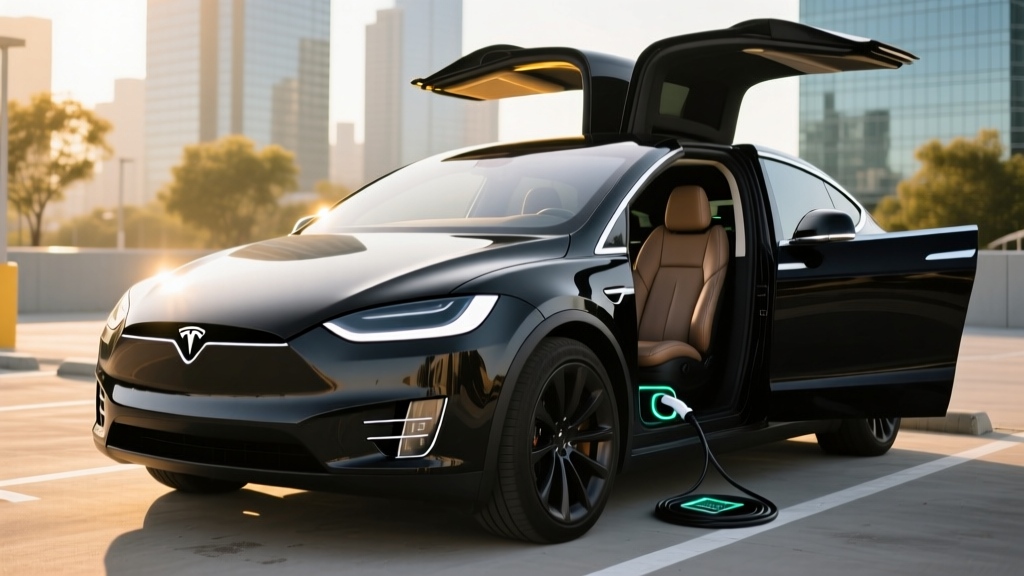
Choose the Tesla Model Y if: You want maximum Supercharger network access, need versatile cargo space (up to 76 cu ft with seats folded), and plan regular road trips. The 250 kW charging and dense Supercharger coverage make long-distance driving the least stressful in this group.
Choose the Hyundai Ioniq 5 if: Fast charging is a priority. Its 800V architecture delivers 10–80% in ~18 minutes — the fastest here. The 10-year/100,000-mile battery warranty is also the longest. Trade-off: 290 miles EPA range is the lowest of the group.
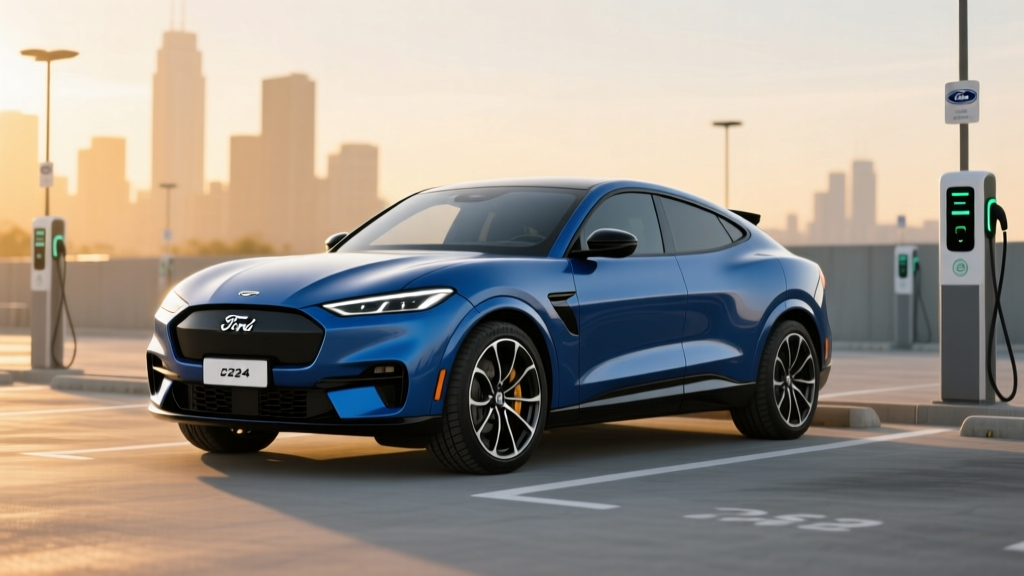
Choose the Ford Mustang Mach-E if: You prefer a sportier driving feel and don't mind a slower DC charge rate (150 kW peak). The extended-range battery delivers 320 miles EPA, and Ford's BlueCruise Level 2 driver-assist system is well-regarded for highway use — but remember, Level 2 requires your hands on the wheel and eyes on the road at all times.
Choose the Tesla Model 3 if: Efficiency is your top priority. At 132 MPGe combined and up to 363 miles EPA (Long Range), it delivers the lowest cost per mile and the longest range in this comparison. The sedan body sacrifices cargo space versus the SUVs above.
A Note on Driver-Assist Features
Tesla Autopilot, Ford BlueCruise, and Hyundai's Highway Driving Assist are all SAE Level 2 systems. They can steer, accelerate, and brake under specific conditions, but the driver must remain fully engaged and supervising at all times. They are not self-driving. Only Level 4 robotaxi services like Waymo operate without a human driver — and those are available only in limited metro areas.
Frequently Asked Questions
Do popular EVs hold their resale value?
EV depreciation has been steeper than gas cars in recent years, partly due to aggressive price cuts (especially by Tesla) and rapid tech improvements. Expect 40–55% depreciation over five years for most EVs versus 35–45% for comparable gas vehicles. Buying used (2–3 years old) lets the first owner absorb that hit — and used EVs priced under $25,000 may qualify for a separate $4,000 federal credit.
Can I charge an EV if I live in an apartment?
It's challenging but increasingly feasible. Look for workplace charging, public Level 2 stations near your routine (grocery stores, gyms), and DC fast-charging corridors. Some states now require landlords to permit charger installation. If you rely entirely on public DC fast charging at $0.35–0.50/kWh, your fuel cost advantage over gas shrinks significantly — factor this into your budget.
How long does it take to charge at home overnight?
On a Level 2 charger at 11.5 kW, most popular EVs recharge from 20% to 80% in 4–5 hours — well within an overnight window. A full 0–100% charge takes 7–10 hours. You rarely need to charge from 0%; most EV owners plug in nightly and stay between 20–80% for daily use, which also reduces long-term battery degradation.
Should I get the all-wheel-drive or rear-wheel-drive version?
AWD adds 20–40 hp, improves 0–60 times by roughly 1–2 seconds, and provides better traction in rain and snow — but it reduces EPA range by 10–20 miles and adds $3,000–$5,000 to the price. If you live in a mild climate and prioritize range and cost, RWD is the practical choice. For snow-belt states, AWD is worth the trade-off.
What happens if the battery degrades past warranty?
Out-of-warranty battery replacement currently costs $10,000–$20,000 depending on the model and pack size. However, data from high-mileage EV fleets shows that most modern NMC batteries retain 80–85% of original capacity at 150,000 miles. Catastrophic failure is rare; gradual capacity loss is the norm, and the car remains drivable — just with reduced range.