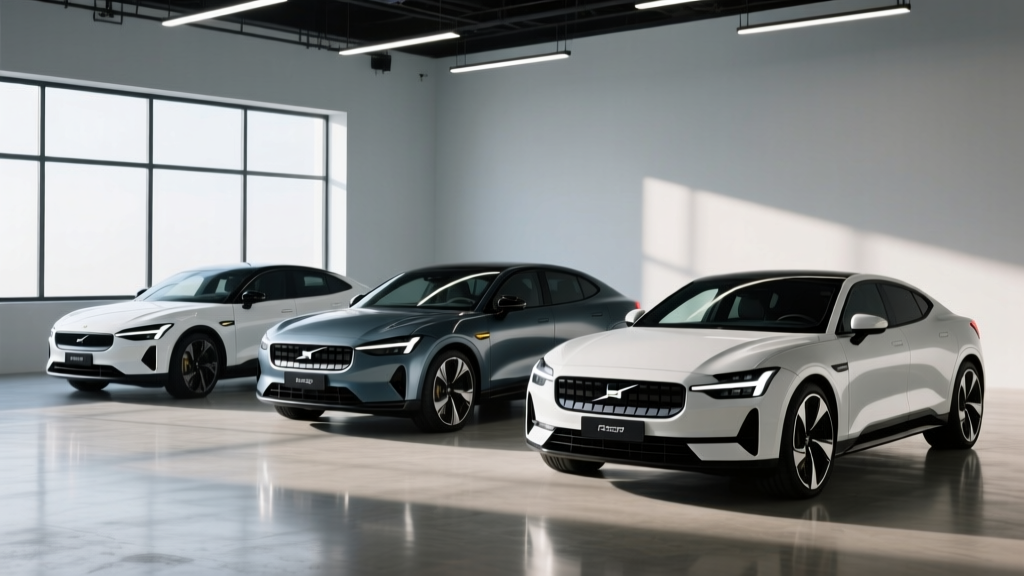
As Polestar restructures its dealer network and expands beyond the Polestar 2, the question on many buyers' minds isn't just which model to pick — it's whether the brand's shifting polestar sales strategy affects ownership, service, and resale value. In 2026, Polestar offers three distinct vehicles in the U.S. market: the compact Polestar 2 sedan/fastback, the midsize Polestar 4 SUV coupe, and the flagship Polestar 3 luxury SUV. Each targets a different buyer, and each carries a very different value proposition once you factor in real-world range, charging behavior, and the evolving federal tax credit landscape.
This buyer's guide breaks down every current Polestar model with the exact numbers you need — EPA range versus what you'll actually see on the highway, DC fast-charge curves (not just peak kW), battery chemistry, and whether any of them still qualify for the IRS §30D credit. If you're researching Polestar sales because you're considering a purchase, this is the data-driven comparison you need.
Polestar 2: The Entry Point (2026 Model Year)
The Polestar 2 remains the brand's volume seller and the model most shoppers encounter first. For 2026, it rides on an updated 82 kWh usable battery pack (up from 78 kWh in earlier model years) with NMC (nickel manganese cobalt) cell chemistry supplied primarily by LG Energy Solution and CATL depending on the production batch. The single-motor variant now comes standard with rear-wheel drive — a significant shift from the front-wheel-drive layout of the 2022-2023 models — improving both efficiency and driving dynamics.
| Spec | Single Motor (RWD) | Dual Motor (AWD) |
|---|---|---|
| EPA Range | 320 miles | 298 miles |
| Battery (usable) | 82 kWh, NMC | 82 kWh, NMC |
| Efficiency | 118 MPGe / 29 kWh/100mi | 107 MPGe / 31 kWh/100mi |
| 0-60 mph | 5.9 seconds | 4.3 seconds (4.1 w/ Performance) |
| Horsepower | 299 hp | 421 hp |
| Max DC Charge Rate | 200 kW | 200 kW |
| 10-80% DC Time | ~27 minutes | ~27 minutes |
| Level 2 Rate | 11 kW (~37 mi/hr) | 11 kW (~37 mi/hr) |
| Base MSRP | $49,900 | $54,900 |
On the road, the Polestar 2's 200 kW peak DC fast-charging rate is competitive but not class-leading. The charge curve is fairly flat between 10-50% SoC, sustaining around 175-190 kW, then tapering to roughly 80 kW by 70% and further dropping above 80%. This means the 10-80% time of approximately 27 minutes is achievable at a properly rated 200+ kW charger — but at a 150 kW Electrify America station, plan on 32-35 minutes. Polestar uses the NACS connector for 2026, giving native access to Tesla Superchargers, which is a meaningful advantage for road-trip charging reliability.
Polestar 4: The SUV Coupe That Skips the Rear Window
The Polestar 4 is the brand's most polarizing and arguably most interesting offering for 2026. It's a midsize SUV coupe that eliminates the traditional rear windshield entirely, replacing it with a high-resolution camera feed displayed on a digital rearview mirror. This design choice enables a sleek roofline and generous rear headroom but requires buyer adaptation. Cargo space is competitive at 26.4 cu ft behind the rear seats (expanding to ~55 cu ft with seats folded), and rear legroom is a generous 38.6 inches.
| Spec | Single Motor (RWD) | Dual Motor (AWD) |
|---|---|---|
| EPA Range | 300 miles | 270 miles |
| Battery (usable) | 94 kWh, NMC | 94 kWh, NMC |
| Efficiency | 109 MPGe / 31 kWh/100mi | 98 MPGe / 34 kWh/100mi |
| 0-60 mph | 6.8 seconds | 3.8 seconds |
| Horsepower | 272 hp | 544 hp |
| Max DC Charge Rate | 200 kW | 200 kW |
| 10-80% DC Time | ~30 minutes | ~30 minutes |
| Level 2 Rate | 11 kW (~32 mi/hr) | 11 kW (~32 mi/hr) |
| Base MSRP | $56,900 | $62,900 |
The 94 kWh NMC pack is sourced from CATL and is physically larger than the Polestar 2's, but the 4's heavier curb weight (~5,100 lbs for the dual motor) and less aerodynamic SUV profile eat into efficiency. Real-world highway range for the single-motor variant lands around 250-270 miles in moderate conditions, dropping to roughly 215-235 miles in winter. The dual motor, with its 544 hp output, sacrifices range for thrilling acceleration but will require more frequent charging stops on long trips.
Charging the Polestar 4's larger battery at 200 kW peak takes about 30 minutes from 10-80%. The charge curve mirrors the Polestar 2's taper pattern — strong performance in the 10-60% window, then a noticeable slowdown. For home charging, the 11 kW onboard charger replenishes roughly 32 miles of range per hour, meaning a full charge from empty takes about 9-10 hours on a properly installed Level 2 circuit.
Polestar 3: The Flagship Luxury SUV
The Polestar 3 is the brand's answer to the BMW iX, Audi Q8 e-tron, and Tesla Model X. It's a full-size luxury SUV built on the same SEA-derived platform as the Volvo EX90, and it carries a premium price to match. For 2026, U.S. deliveries are underway after initial production delays pushed availability back from the originally announced timeline.
| Spec | Long Range Dual Motor | Performance |
|---|---|---|
| EPA Range | 315 miles | 285 miles |
| Battery (usable) | 107 kWh, NMC | 107 kWh, NMC |
| Efficiency | 98 MPGe / 34 kWh/100mi | 90 MPGe / 37 kWh/100mi |
| 0-60 mph | 4.8 seconds | 4.5 seconds |
| Horsepower | 489 hp | 517 hp |
| Max DC Charge Rate | 250 kW | 250 kW |
| 10-80% DC Time | ~25 minutes | ~25 minutes |
| Level 2 Rate | 11 kW (~30 mi/hr) | 11 kW (~30 mi/hr) |
| Base MSRP | $79,900 | $85,900 |
The Polestar 3's 107 kWh battery is the largest in the lineup and supports 250 kW DC fast charging — meaning it can take advantage of the fastest chargers on the Electrify America and Tesla Supercharger V4 networks. The charge curve is well-managed, sustaining above 200 kW through the 10-40% window before tapering. Real-world highway range for the Long Range Dual Motor sits around 260-280 miles in fair weather, with cold-weather drops to roughly 225-245 miles.
Interior space is where the Polestar 3 justifies its price. Cargo volume is 30.2 cu ft behind the second row, with a small 1.8 cu ft frunk for charging cables. Rear legroom measures 39.1 inches, and the cabin materials — including available wool-blend upholstery and recycled aluminum trim — align with Polestar's sustainability positioning. The 14.5-inch center display runs Android Automotive OS with built-in Google Maps navigation that integrates real-time charger availability and battery preconditioning.
Federal Tax Credit Eligibility Across the Lineup
Federal tax credit eligibility for Polestar vehicles in 2026 is governed by IRS §30D rules, which impose three major hurdles: MSRP caps (sedans must be under $55,000; SUVs/trucks under $80,000), buyer income limits ($150,000 single / $300,000 joint AGI), and critical mineral and battery component sourcing requirements that phase in stricter thresholds each year.
| Model | Base MSRP | MSRP Cap Met? | Battery Sourcing (2026) | Est. Credit |
|---|---|---|---|---|
| Polestar 2 Single Motor | $49,900 | Yes (sedan < $55K) | Partial — CATL cells may limit eligibility | $0 – $3,750* |
| Polestar 2 Dual Motor | $54,900 | Yes (sedan < $55K) | Partial | $0 – $3,750* |
| Polestar 4 Single Motor | $56,900 | Yes (SUV < $80K) | Partial — under review | $0 – $3,750* |
| Polestar 4 Dual Motor | $62,900 | Yes (SUV < $80K) | Partial | $0 – $3,750* |
| Polestar 3 LRDM | $79,900 | Borderline (SUV < $80K) | Partial | $0 – $3,750* |
| Polestar 3 Performance | $85,900 | No (exceeds $80K) | N/A | $0 |
*The full $7,500 credit requires meeting both the critical minerals ($3,750) and battery components ($3,750) requirements. Polestar's use of CATL-sourced cells in some production batches has created uncertainty around the critical-minerals prong for 2026. Buyers should verify current eligibility on IRS.gov before purchasing, and confirm with the dealer that the specific VIN qualifies. The point-of-sale transfer option allows the credit to be applied at purchase rather than waiting for tax filing.
The Polestar 3 Performance at $85,900 exceeds the $80,000 SUV MSRP cap and is categorically ineligible. The Polestar 3 Long Range Dual Motor at $79,900 technically meets the cap but leaves no room for destination charges or dealer-installed accessories that could push the sticker above the threshold — a real risk that buyers should watch.
Charging Infrastructure and Daily Ownership
All 2026 Polestar models sold in the U.S. come equipped with the NACS (North American Charging Standard) connector, eliminating the need for adapters at Tesla Superchargers. This is a significant practical advantage — Tesla's network remains the most reliable and geographically extensive DC fast-charging infrastructure in North America, with over 25,000 stalls as of early 2026.
For home charging, every Polestar supports 11 kW Level 2 AC charging. This requires a 48-amp dedicated circuit (typically a 60-amp breaker). Installation costs for a home Level 2 setup typically range from $800 to $2,500 depending on whether your electrical panel needs an upgrade. At 11 kW, the Polestar 2 gains roughly 37 miles of range per hour of charging, while the larger Polestar 3 gains about 30 miles per hour — meaning overnight charging easily covers daily commuting needs for all three models.
Polestar includes a mobile connector with each vehicle that can plug into a standard 120V outlet (Level 1, ~1.4 kW) for emergency trickle charging at roughly 3-4 miles per hour. For any regular use, a dedicated Level 2 home charger is strongly recommended.
Warranty, Service, and the Dealer Network Question
Polestar's warranty coverage is competitive with the luxury EV segment:
- Limited vehicle warranty: 4 years / 50,000 miles
- Battery and powertrain warranty: 8 years / 100,000 miles (retains at least 70% of original capacity)
- Corrosion warranty: 12 years, unlimited miles
- Roadside assistance: 4 years / 50,000 miles
The 70% battery capacity retention threshold over 8 years is industry-standard, matching Tesla, Hyundai, and BMW. However, the practical concern for Polestar buyers is service network access. Polestar operates a hybrid model of branded "Polestar Spaces" (showrooms with limited service capability) and partnerships with Volvo dealers for heavier maintenance and warranty work. As polestar sales volumes grow, the company has been expanding its certified service points, but buyers in rural areas or smaller metro markets should verify the nearest authorized service location before purchasing. Collision repair, in particular, can require shipping parts from centralized warehouses, leading to longer turnaround times than more established brands.
Tech, Driver Assistance, and What's Missing
All 2026 Polestar models run Android Automotive OS with Google built-in — meaning Google Maps, Google Assistant, and the Play Store are native to the vehicle. The 14.5-inch portrait display (11.2-inch in the Polestar 2) is crisp and responsive, and wireless Apple CarPlay is supported for those who prefer it. Over-the-air updates are standard, and Polestar has been reasonably consistent with delivering feature improvements post-launch.
Driver assistance falls under the Pilot Pack (standard on most trims), which includes adaptive cruise control, lane-centering steering, and traffic sign recognition. This is a Level 2 SAE driver-assist system — it does not drive itself, and the driver must remain attentive with hands on the wheel. Polestar's lane-centering is competent on well-marked highways but can struggle with faded lane lines and construction zones. Unlike GM's Super Cruise or Ford's BlueCruise, Polestar does not currently offer hands-free driving on mapped highway segments, which is a notable gap in this price range.
Notable drawbacks across the lineup include the absence of a frunk on the Polestar 2 (the front trunk space is minimal and mostly occupied by electronics), limited towing capacity (the Polestar 4 can tow up to 2,000 lbs; the Polestar 2 is not rated for towing), and the camera-based rearview mirror on the Polestar 4, which some drivers find disorienting in rain or low-light conditions despite the high-resolution sensor.
Pros and Cons at a Glance
- NACS connector — native Tesla Supercharger access
- Strong build quality and minimalist Scandinavian design
- Android Automotive OS with excellent Google Maps integration
- Competitive battery warranties (8yr/100K mi, 70% retention)
- Polestar 3 offers 250 kW charging — among the fastest in its class
- Heat pump standard across the 2026 lineup
- Federal tax credit eligibility uncertain due to battery sourcing
- Service network still thinner than Tesla, BMW, or Hyundai
- No hands-free highway driving feature (Level 2 only)
- Polestar 4's camera rearview mirror is divisive
- Real-world range falls 10-15% below EPA on highway
- Polestar 2 has virtually no frunk space
Who Should Buy a Polestar — And Who Should Look Elsewhere
The Polestar 2 suits design-conscious commuters and urban professionals who want a premium compact EV with strong daily drivability and don't need maximum cargo space. If your commute is under 60 miles round-trip and you have home charging, the 320-mile EPA range means charging once or twice a week at most.
The Polestar 4 is best for buyers who want SUV practicality with coupe styling and don't mind the rear-camera mirror compromise. Families who prioritize rear-seat comfort and cargo will find it adequate, though the Hyundai Ioniq 5 and Kia EV6 offer more interior volume at lower prices.
The Polestar 3 targets luxury SUV buyers who want something less ubiquitous than a Tesla Model X and value Scandinavian design ethics. If you're cross-shopping the BMW iX or Audi Q8 e-tron, the Polestar 3's 250 kW charging and Google-native infotainment are genuine differentiators — but verify service access in your area first.
Buyers who prioritize the lowest total cost of ownership, maximum tax credit eligibility, or the widest service network may be better served by a Tesla Model Y, Hyundai Ioniq 5, or Ford Mustang Mach-E. But if design, build quality, and NACS charging access matter to you, Polestar's 2026 lineup deserves serious consideration — just go in with eyes open about the credit uncertainty and service footprint.
Frequently Asked Questions
What is the real-world range of a Polestar?
Real-world range depends on the model and conditions. The 2026 Polestar 2 Single Motor (EPA 320 mi) delivers approximately 265-285 miles on the highway in moderate weather and 225-245 miles in cold conditions. The Polestar 4 Single Motor (EPA 300 mi) yields roughly 250-270 miles highway, and the Polestar 3 LRDM (EPA 315 mi) lands around 260-280 miles. Highway speeds above 75 mph and cold temperatures are the biggest range killers.
How fast does a Polestar charge at home and on the road?
All 2026 Polestars support 11 kW Level 2 home charging, adding 30-37 miles of range per hour depending on the model. A full overnight charge takes 8-10 hours. On DC fast chargers, the Polestar 2 and 4 peak at 200 kW (10-80% in ~27-30 minutes), while the Polestar 3 supports 250 kW (10-80% in ~25 minutes). Actual times depend on charger output and battery temperature — always precondition before fast charging.
Does Polestar qualify for the $7,500 federal EV tax credit?
Eligibility is uncertain and model-dependent for 2026. The Polestar 2 meets the sedan MSRP cap ($55,000), and the Polestar 4 and 3 LRDM meet the SUV cap ($80,000), but battery component and critical mineral sourcing requirements — particularly the use of CATL cells — may disqualify some or all of the $7,500 credit. The Polestar 3 Performance ($85,900) exceeds the MSRP cap and does not qualify. Always check the fueleconomy.gov tax credit database for the specific VIN before purchasing.
Is Polestar worth buying compared to Tesla or Hyundai?
Polestar offers stronger build quality and more distinctive design than Tesla, with NACS Supercharger access now standard. However, Tesla's Supercharger network reliability, lower prices, and more advanced driver-assist features (FSD Supervised) remain advantages. Compared to Hyundai/Kia, Polestar is more expensive with a thinner service network, but offers a more premium cabin and standard heat pump. The right choice depends on your priorities: value (Hyundai), tech/ecosystem (Tesla), or design/quality (Polestar).
Is Polestar's driver-assist system self-driving?
No. Polestar's Pilot Pack is a Level 2 SAE driver-assist system. It provides adaptive cruise and lane-centering but requires the driver to remain fully engaged with hands on the steering wheel at all times. It is not comparable to Waymo's Level 4 robotaxi service. Polestar does not currently offer a hands-free highway driving mode like GM Super Cruise or Ford BlueCruise.