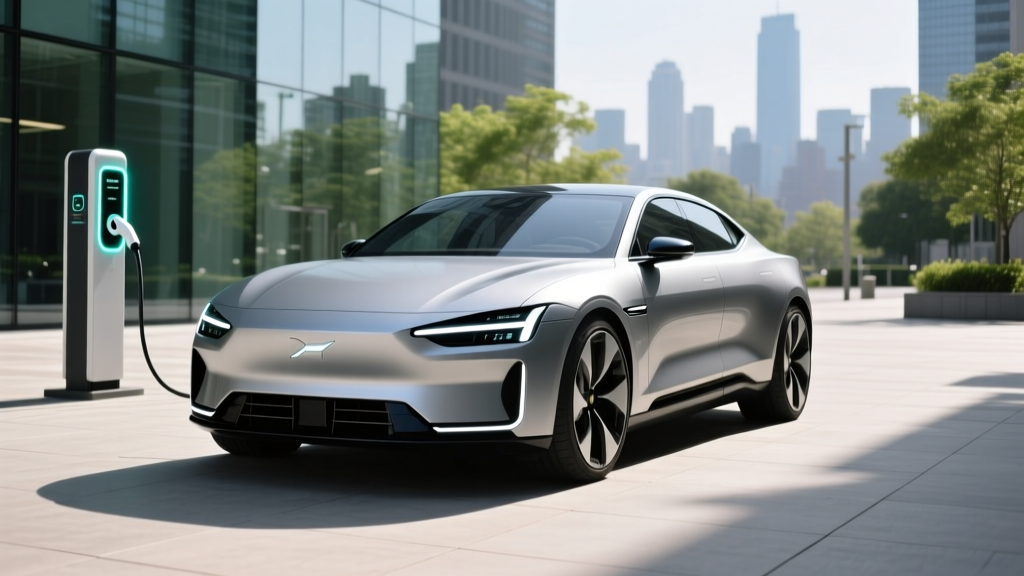
The Polestar Precept concept debuted in 2020 as a sleek, low-slung electric grand tourer that signaled where the Volvo-backed brand was headed. For years, enthusiasts have asked: when can I actually buy it? As of early 2026, the production Polestar Precept remains in a holding pattern — Polestar has prioritized the Polestar 3 (a performance SUV) and the upcoming Polestar 4 sedan-SUV crossover, with the next-generation Polestar 5 GT now confirmed as the spiritual successor to the Precept's design language. But the Precept nameplate still surfaces in searches and wishlists, and Polestar has not officially killed it.
Here's what we know — and what remains preliminary — about the Polestar Precept's specs, range, charging architecture, pricing, and tax-credit outlook for anyone tracking this EV's potential production future.
Polestar Precept: Concept to Production Status in 2026
The Precept was never sold as a production vehicle. It served as a design and technology manifesto for Polestar, introducing the brand's current design language (seen on the Polestar 3 and 4), its move toward recycled and vegan interior materials, and its commitment to an Android Automotive OS-based infotainment system. Polestar's official roadmap through 2026 lists the Polestar 2 (refreshed for 2025), Polestar 3, Polestar 4, and the forthcoming Polestar 5 and Polestar 6 roadster. The Precept, as a standalone model, has not been assigned a model year or production slot.
However, the Polestar 5 — expected to begin production around late 2025 or 2026 — inherits much of the Precept's DNA: a low-slung, four-door GT silhouette, bonded aluminum construction, and a high-performance dual-motor powertrain. For buyers who fell in love with the Precept concept, the Polestar 5 is the car to watch.
Estimated Range, Battery & Efficiency
The original Precept concept was said to target approximately 310 miles (500 km) of range, likely on the WLTP cycle (which tends to yield higher figures than the US EPA). Translating that to EPA-estimated range — assuming production used an NMC (nickel-manganese-cobalt) battery pack in the 75–85 kWh usable range — a reasonable EPA projection would be 270–300 miles.
EPA estimated (projected): ~280–300 miles
Highway driving at 70 mph: expect ~240–265 miles due to aerodynamic drag at sustained speed.
Cold weather (below 32°F / 0°C): expect a 20–30% reduction, bringing effective range to ~200–240 miles without preconditioning.
The Precept's low-slung GT shape should deliver a strong drag coefficient (likely ~0.23 Cd), helping highway efficiency — but cold-weather chemistry losses are physics, not marketing.
Polestar has not confirmed battery chemistry for a production Precept. The brand's current models use NMC lithium-ion packs supplied by CATL and LG Energy Solution. A production Precept would almost certainly use NMC chemistry for its energy-density advantage in a performance GT application, rather than the heavier LFP (lithium iron phosphate) used in some standard-range EVs.
| Spec | Estimated / Concept Value |
|---|---|
| Battery Capacity (usable) | ~78–85 kWh (NMC) |
| WLTP Range (concept target) | ~310 mi / 500 km |
| EPA Range (projected) | ~270–300 mi |
| Efficiency (projected) | ~28–32 kWh/100mi (~105–120 MPGe) |
| Chemistry | NMC (expected) |
Charging Speed: DC Fast Charge & Home Level 2
The Precept concept was built on a platform expected to support 800-volt architecture — the same high-voltage system Polestar has confirmed for the Polestar 5 and 6. An 800V system enables dramatically faster DC fast charging compared to the 400V systems in most current EVs (including the Polestar 2).
| Charging Level | Power (kW) | Speed / Time |
|---|---|---|
| Level 1 (120V household) | ~1.4 kW | ~3–4 miles per hour |
| Level 2 (240V home/public) | ~11 kW | ~30–35 miles per hour; full charge in ~8–9 hours |
| DC Fast Charge (peak) | ~250 kW (800V) | 10–80% in ~18–22 minutes (projected) |
A critical nuance for any 800V EV: peak kW is not sustained kW. The 250 kW figure represents the maximum rate the battery can accept at a low state of charge (typically 10–30%). As the battery fills, the charge rate tapers — above 80% SoC, expect speeds to drop to 50 kW or lower. This is why we quote 10–80% times rather than "full charge" times. Preconditioning the battery (warming it to optimal temperature before arriving at a DC fast charger) is essential for achieving peak speeds, especially in cold weather.
On a home Level 2 charger at 11 kW (48 amps on a 240V/60A circuit), overnight charging from 20% to 80% would take roughly 5–6 hours — easily done while you sleep. This is the charging method most Polestar owners will use daily.
Performance: Powertrain, 0-60 & Drivetrain
The Precept concept featured a dual-motor all-wheel-drive layout — one motor on each axle — consistent with Polestar's performance-oriented brand identity. While exact horsepower figures were never confirmed for a production version, the concept hinted at a powertrain in the 400–500 hp range, with a 0-60 mph time under 4.5 seconds.
For context, the current Polestar 2 Long Range Dual Motor produces 421 hp (476 hp with the Performance Pack) and hits 60 mph in 4.1 seconds. A production Precept, sitting on a newer, lighter platform with 800V architecture, would likely match or exceed these figures while delivering better range.
| Spec | Estimated |
|---|---|
| Drivetrain | Dual-motor AWD |
| Horsepower | ~400–500 hp |
| 0–60 mph | ~4.0–4.5 seconds |
| Top Speed | ~130 mph (electronically limited, per Polestar convention) |
Interior, Cargo & Practicality
The Precept concept was a four-door grand tourer, not a crossover — meaning cargo and passenger space are secondary to design and driving dynamics. Based on the concept's dimensions (approximately 190 inches long with a ~118-inch wheelbase), interior space would be comparable to a Porsche Taycan or Audi e-tron GT: adequate for four adults, but tight for a fifth middle-rear passenger.
Projected cargo volume: ~12–15 cu ft in the rear trunk, plus a modest ~2–3 cu ft frunk (front trunk). This is a car for weekend bags and groceries, not Costco hauls or family road-trip gear. If you need more, the Polestar 3 SUV or the Polestar 4 will offer substantially more cargo utility.
The Precept concept's interior showcased Polestar's commitment to sustainable materials: Natex (bio-based) composites, recycled PET bottle textiles, and flax-based natural fiber panels replacing traditional leather and wood. The infotainment system was confirmed as Android Automotive OS with native Google Maps, Google Assistant, and the Google Play Store — the same system now in the Polestar 2, 3, and 4, and one of the best EV interfaces available.
Pricing, Tax Credits & Ownership Cost
Because the Precept is not in production, there is no MSRP. However, based on Polestar's positioning and the expected pricing of the Polestar 5 GT (likely starting around $70,000–$80,000), a production Precept would have landed in a similar premium bracket.
If a production Precept were priced above $55,000 (the IRS sedan MSRP cap under §30D), it would not qualify for the federal EV tax credit regardless of battery sourcing. The $55,000 cap applies to sedans; SUVs and trucks have a higher $80,000 cap. Additionally, the buyer's adjusted gross income must not exceed $150,000 (single) / $300,000 (joint), and the vehicle's battery must meet critical-mineral and battery-component sourcing requirements that tighten annually. Always verify current rules at IRS.gov.
For buyers interested in a Polestar today, the Polestar 2 (starting ~$49,900 for the 2026 model year) may qualify for partial or full §30D credit depending on trim, sourcing, and buyer income. The Polestar 3 and 4, priced above $55,000 but classified as SUVs, have a higher MSRP cap to work with.
Warranty & Long-Term Ownership
Polestar's current warranty structure provides a useful benchmark for what a production Precept would carry:
- Battery warranty: 8 years / 100,000 miles (whichever comes first), covering defects and capacity loss below 70% of original capacity
- Vehicle limited warranty: 4 years / 50,000 miles
- Roadside assistance: 4 years / unlimited miles
For NMC battery packs, typical degradation is 10–15% over 8 years / 100,000 miles under normal use patterns (avoiding frequent 100% charges, minimizing DC fast charging to above 80%, and using preconditioning). Real-world data from Polestar 2 owners suggests approximately 5–8% loss in the first 30,000 miles, followed by a slower degradation curve — consistent with industry NMC averages. A full battery replacement out of warranty would likely cost $12,000–$18,000 based on current NMC pack pricing, though costs continue to decline.
How the Precept Compares: Alternatives to Consider Now
Since the Precept isn't buyable, here's how its projected specs stack up against EVs you can actually order in 2026:
| Spec | Precept (Est.) | Porsche Taycan | BMW i5 M60 | Polestar 2 LRDM |
|---|---|---|---|---|
| EPA Range | ~280–300 mi | 246–318 mi | 256–295 mi | 276 mi |
| Battery (kWh) | ~80 kWh | 82.3 kWh (net) | 84.3 kWh (net) | 75 kWh (net) |
| DC Fast Charge | ~250 kW | 270 kW | 205 kW | 200 kW |
| 0–60 mph | ~4.2 sec | 2.4–4.5 sec | 3.7 sec | 4.1 sec |
| Base MSRP | ~$70,000+ | $99,400 | $84,100 | $49,900 |
| Architecture | 800V (proj.) | 800V | 400V | 400V |
The Precept's closest spiritual successor is the Polestar 5, which Polestar has confirmed will use 800V architecture, bonded aluminum construction, and a dual-motor powertrain producing over 884 hp in top trim. Pricing for the Polestar 5 is expected to start above $100,000, positioning it firmly against the Porsche Taycan Turbo and Audi RS e-tron GT.
Who Should Wait — and Who Should Buy Now
- You want a low-slung, four-door GT with Scandinavian design and 800V fast charging
- You're not in a rush — production timelines for the Polestar 5 are 2026–2027
- Budget is flexible: expect $100,000+ for the Polestar 5
- You need an EV today: the Polestar 2 ($49,900) offers 276 mi EPA range, 200 kW DC charging, and Android Automotive — and may qualify for the §30D credit
- You want a performance GT now: the Porsche Taycan (800V, 270 kW charging, 2.4s 0-60 in Turbo GT trim) is the segment benchmark
- You need SUV practicality: the Polestar 3 or Polestar 4 offer more cargo space and higher seating
Frequently Asked Questions
Is the Polestar Precept available to buy in 2026?
No. The Polestar Precept remains a concept car and has not entered production. Polestar's 2026 lineup consists of the Polestar 2, Polestar 3, and Polestar 4. The Polestar 5 GT, which inherits the Precept's design language, is expected to begin production in 2026–2027.
What will the Polestar Precept cost if it goes into production?
The Precept itself is unlikely to reach production as named. Its spiritual successor, the Polestar 5, is expected to start above $100,000, placing it in the premium GT segment alongside the Porsche Taycan and Audi RS e-tron GT.
Would the Precept qualify for the federal EV tax credit?
Almost certainly not. The §30D credit caps sedan MSRPs at $55,000. A Precept-priced vehicle (~$70,000+) would exceed this cap regardless of battery sourcing or buyer income. The credit also requires meeting critical-mineral and battery-component sourcing thresholds that tighten each year. Verify current rules at IRS.gov.
What is the closest EV I can buy today to the Polestar Precept?
The Porsche Taycan is the closest match in form factor (low-slung four-door GT, 800V architecture, 270 kW DC fast charging). Within the Polestar brand, the Polestar 2 Long Range Dual Motor offers similar Scandinavian design and Android Automotive OS at a much lower price point ($49,900).
How fast would the Precept charge at home?
Projected Level 2 home charging at 11 kW (48A/240V) would add approximately 30–35 miles of range per hour, with a full 20–80% charge taking about 5–6 hours. This is standard for modern EVs with large battery packs and sufficient for overnight charging.
What battery chemistry would the Precept use?
NMC (nickel-manganese-cobalt) is the most likely chemistry for a performance GT application, given its higher energy density compared to LFP. Polestar's current models all use NMC packs from CATL and LG Energy Solution.