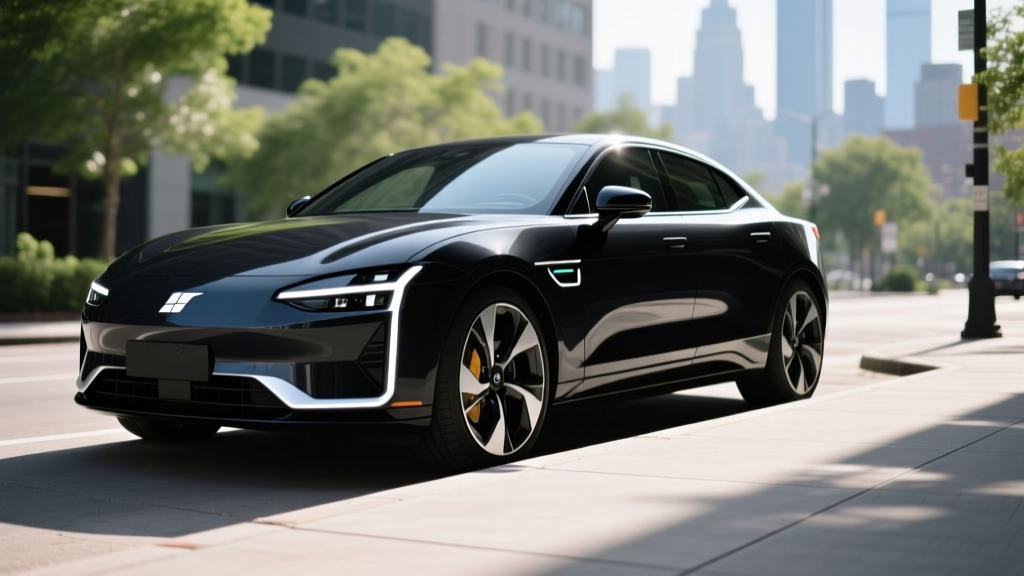
Polestar has carved a distinct niche in the premium EV space with Scandinavian minimalism and credible engineering. The Polestar P2 — the brand's compact electric sedan — slots below the larger P3 and P4 in the lineup, targeting urban professionals who want a stylish daily driver with legitimate range and fast-charging capability. After spending time with the 2026 model, here's the data-driven breakdown of what you're actually getting.
Quick Verdict: Who the Polestar P2 Is For
The Polestar P2 is a compelling choice for single professionals or couples who prioritize design, build quality, and a refined driving experience over maximum cargo volume. It's not a family hauler — rear-seat space and trunk capacity lag behind crossover rivals — but as a commuter and weekend cruiser, it delivers real-world efficiency, brisk acceleration, and one of the better public-charging experiences in its segment thanks to NACS native compatibility. If you need a compact luxury EV sedan and can live with ~275 miles of real-world highway range, the P2 deserves a test drive.
Range, Efficiency & Real-World Expectations
The 2026 Polestar P2 Long Range Dual Motor carries an EPA-estimated range of 310 miles on its 78 kWh (usable) battery pack. The single-motor RWD variant pushes that to an EPA-estimated 335 miles thanks to lower drivetrain losses and reduced weight.
EPA Estimate: 310 mi (AWD) / 335 mi (RWD)
Highway (70-80 mph): Expect ~255-275 mi (AWD) in moderate temps; the sedan's aerodynamic profile helps, but sustained high-speed driving cuts range 12-18%.
Cold Weather (below 32°F): Plan for ~220-240 mi (AWD). The P2's heat pump mitigates cabin-heating energy draw, but battery chemistry still loses efficiency in deep cold.
City/Stop-and-Go: Near or slightly above EPA — regenerative braking recovers energy effectively in traffic.
Efficiency on the combined cycle lands at 112 MPGe (AWD) and 121 MPGe (RWD), translating to roughly 30 kWh/100 mi and 28 kWh/100 mi respectively, per fueleconomy.gov. These figures are competitive with the BMW i4 eDrive40 and slightly behind the Tesla Model 3 Long Range.
Battery Chemistry & Charging Speed
Polestar equips the P2 Long Range with a 78 kWh usable NMC (nickel manganese cobalt) lithium-ion pack, supplied by CATL. NMC chemistry offers higher energy density than LFP, which matters in a compact sedan where packaging space is at a premium. The trade-off is that NMC batteries benefit more from staying between 20-80% State of Charge for long-term health, rather than regularly charging to 100%.
The P2 uses a native NACS (Tesla-style) charge port on 2026 models, giving it direct access to the Tesla Supercharger network — currently the most reliable DC fast-charging infrastructure in the US.
| Charge Level | Power / Rate | Speed | Notes |
|---|---|---|---|
| Level 1 (120V) | ~1.4 kW | ~4 mi/hr | Emergency/trickle only |
| Level 2 (240V, 48A) | 11 kW onboard | ~35 mi/hr | Full charge in ~7.5 hr |
| DC Fast Charge | Peak 200 kW | 10-80% in ~25 min | Sustains ~175 kW to 50%, tapers above 80% |
The 200 kW peak DC charge rate is solid but not class-leading — the Hyundai Ioniq 6 peaks at 240 kW on its 800V architecture. In practice, the P2's charge curve holds strong through the mid-range: you'll see 10-80% in approximately 25 minutes at a functioning 250+ kW Supercharger or Electrify America station. Above 80% SoC, the rate tapers significantly to protect the battery, adding the final 20% in roughly another 20-25 minutes. Preconditioning activates automatically when you navigate to a charger in the infotainment system, warming the pack for optimal charge acceptance — always use this feature for the fastest sessions.
Performance & Drivetrain
The P2 is offered in two drivetrain configurations:
| Spec | Single Motor (RWD) | Dual Motor (AWD) |
|---|---|---|
| Horsepower | 299 hp | 421 hp |
| Torque | 361 lb-ft | 546 lb-ft |
| 0-60 mph | 6.2 sec | 4.3 sec |
| Top Speed | 100 mph (limited) | 127 mph (limited) |
| Drivetrain | Rear-Wheel Drive | All-Wheel Drive |
| EPA Range | 335 mi | 310 mi |
| MPGe (combined) | 121 MPGe | 112 MPGe |
The dual-motor AWD variant delivers genuinely quick acceleration — 4.3 seconds to 60 mph is brisk enough to surprise passengers and merge onto highways with authority. The single-motor version's 6.2-second sprint is adequate for daily driving but won't thrill enthusiasts. Both versions feature Polestar's tuned suspension with a firm-but-compliant ride quality that favors composed handling over pillowy comfort. Steering is precise and well-weighted, and the low center of gravity keeps body roll minimal through corners.
Pricing, Trims & Federal Tax Credit Eligibility
The 2026 Polestar P2 is offered in three trims:
| Trim | Base MSRP | Est. After §30D Credit | Credit Eligibility |
|---|---|---|---|
| Single Motor Standard | $42,500 | ~$35,000* | Eligible (up to $7,500) |
| Long Range Single Motor | $47,900 | ~$40,400* | Eligible (up to $7,500) |
| Long Range Dual Motor | $52,900 | ~$45,400* | Eligible (up to $7,500) |
*Estimated after federal tax credit. Actual credit depends on individual eligibility. The §30D credit can now be transferred to the dealer at point of sale as an instant discount, per current IRS rules.
- MSRP Cap: Sedan MSRP must not exceed $55,000 (the Dual Motor at $52,900 qualifies; loaded with options may exceed cap)
- Buyer Income Cap: AGI must not exceed $150,000 (single) / $225,000 (head of household) / $300,000 (joint)
- Battery Sourcing: Critical minerals and battery components must meet phased-in domestic/F TA content thresholds — Polestar's CATL supply chain currently meets partial requirements; verify exact credit amount ($3,750 or $7,500) at purchase
- Point-of-Sale Transfer: Credit can be applied as an instant rebate at the dealer, reducing your out-of-pocket cost
- Final Assembly: Must be in North America — verify VIN origin with dealer
The base Single Motor trim at $42,500 is the value play, undercutting the Tesla Model 3 Long Range and BMW i4 while still offering strong standard equipment. The Dual Motor at $52,900 pushes close to the $55,000 sedan MSRP cap — adding the Performance Pack or premium paint could push it over, disqualifying it from the credit. Configure carefully and confirm with your dealer before ordering.
Interior, Tech & Cargo Space
Polestar's interior philosophy is distinctly Scandinavian: clean lines, sustainable materials, and minimal physical buttons. The centerpiece is an 11.2-inch portrait touchscreen running a Google-based infotainment system with built-in Google Maps, Google Assistant, and access to the Play Store for apps. The digital driver display is a compact 10.2-inch unit focused on speed, range, and navigation — intentionally stripped of distractions.
Standard tech highlights include:
- Wireless Apple CarPlay and Android Auto
- Over-the-air (OTA) software updates
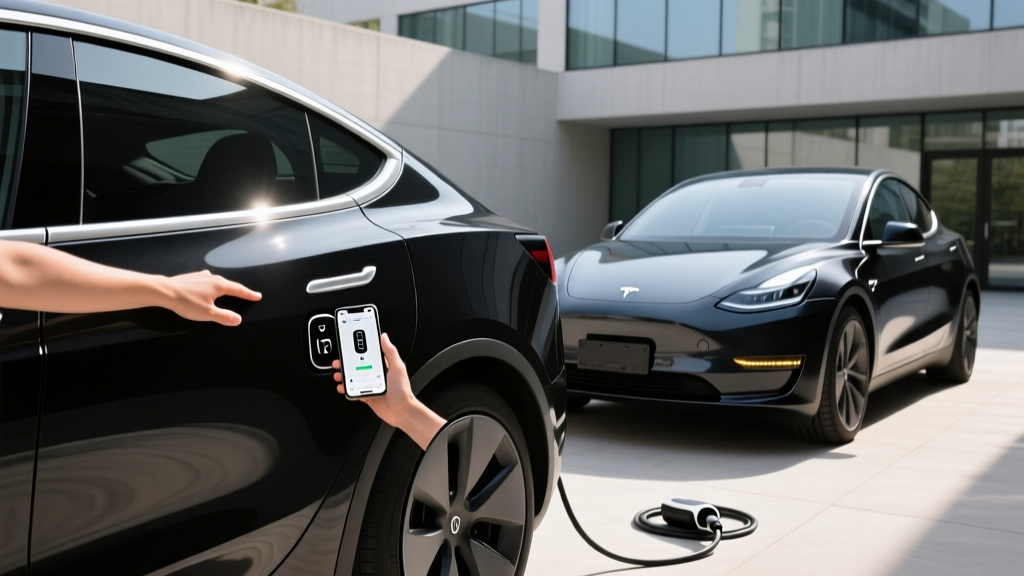
- Digital key via smartphone
- 360-degree surround-view camera (Pilot Pack)
- Harman Kardon premium audio (optional)
Cargo and passenger space is where the compact sedan format shows its limits:
- Trunk: 14.4 cu ft (competitive with BMW i4, smaller than Tesla Model 3's 23 cu ft)
- Rear legroom: 35.2 inches (tight for adults over 6 feet on long trips)
- Front headroom: 40.1 inches
- No frunk: The front trunk space is minimal — essentially a small storage cubby for the charging cable
If you regularly carry rear-seat passengers or need cargo flexibility for road trips, a compact SUV like the Polestar P3 or Tesla Model Y will serve you better. The P2 is a two-person car at heart.
Driver Assistance & Safety
The P2 comes standard with Polestar's Pilot Assist suite, which includes adaptive cruise control, lane-centering steering, blind-spot monitoring, rear cross-traffic alert, and automatic emergency braking with pedestrian and cyclist detection.
Polestar Pilot Assist is an SAE Level 2 driver-assistance system. It provides combined steering and acceleration/braking support on highways, but the driver must remain fully attentive with hands on the wheel and eyes on the road at all times. This is not a self-driving system. Polestar does not currently offer a hands-free driving feature comparable to GM's Super Cruise or Ford's BlueCruise.
Safety ratings from IIHS and NHTSA are expected to carry over strong scores from the Polestar platform's prior testing, but 2026-specific crash-test results should be confirmed before purchase. Standard equipment includes eight airbags, tire-pressure monitoring, and a driver-attention alert system.
Warranty & Long-Term Ownership
| Coverage | Term |
|---|---|
| Basic Vehicle | 4 years / 50,000 miles |
| Battery & Powertrain | 8 years / 100,000 miles |
| Battery Capacity Retention | 70% minimum at 8 yr / 100,000 mi |
| Corrosion Perforation | 12 years / unlimited miles |
| Roadside Assistance | 4 years / 50,000 miles |
The 8-year/100,000-mile battery warranty with a 70% capacity retention floor is industry-standard, matching Tesla, BMW, and Hyundai. Real-world degradation data on Polestar's CATL NMC packs suggests most owners will see 8-12% capacity loss over 100,000 miles — meaning you'll likely still have ~88-92% of original capacity at that milestone. Regular DC fast charging and extreme temperatures accelerate degradation slightly, but the thermal management system is robust.
Polestar P2 vs. Key Competitors
| Spec | Polestar P2 LR AWD | Tesla Model 3 LR AWD | BMW i4 xDrive40 | Hyundai Ioniq 6 Limited |
|---|---|---|---|---|
| EPA Range | 310 mi | 341 mi | 282 mi | 305 mi |
| Battery (usable) | 78 kWh NMC | 75 kWh NMC | 81 kWh NMC | 77.4 kWh NMC |
| Peak DC Charge | 200 kW | 250 kW | 205 kW | 240 kW (800V) |
| 10-80% DC Time | ~25 min | ~20 min | ~28 min | ~18 min |
| 0-60 mph | 4.3 sec | 4.2 sec | 4.6 sec | 5.1 sec |
| Horsepower | 421 hp | 382 hp | 396 hp | 320 hp |
| Base MSRP | $52,900 | $47,740 | $57,975 | $46,700 |
| Cargo (trunk) | 14.4 cu ft | 23 cu ft | 16.6 cu ft | 12.3 cu ft |
The P2 sits in a tricky competitive position. The Tesla Model 3 Long Range offers more range, faster charging, and more cargo space for $5,000 less — but the Polestar's interior materials, build quality, and driving refinement are noticeably superior. The BMW i4 is a closer match in terms of luxury feel but costs more and delivers less range. The Hyundai Ioniq 6 charges the fastest thanks to its 800V architecture but can't match the P2's premium ambiance.
- Premium Scandinavian interior with sustainable materials
- Native NACS port — direct Supercharger access
- Strong handling and composed ride quality
- Google-based infotainment is responsive and intuitive
- Competitive starting price for the luxury compact segment
- Trunk space (14.4 cu ft) trails Tesla Model 3 significantly
- DC charge speed (200 kW peak) lags 800V rivals
- Rear-seat legroom is tight for taller adults
- No hands-free driving feature (Level 2 only, no Super Cruise equivalent)
- Dual Motor trim close to §30D MSRP cap — option carefully
Frequently Asked Questions
What is the real-world range of the Polestar P2?
The EPA estimates 310 miles for the AWD and 335 miles for the RWD variant. In real-world highway driving at 70-80 mph, expect approximately 255-275 miles (AWD). In cold weather below freezing, plan for 220-240 miles. City driving with regenerative braking can match or slightly exceed EPA estimates.
How fast does the Polestar P2 charge?
On a DC fast charger, the P2 peaks at 200 kW and charges from 10-80% in approximately 25 minutes. At home on a 48-amp Level 2 charger (240V), it adds roughly 35 miles of range per hour, fully recharging in about 7.5 hours. Level 1 (120V) trickle charging adds about 4 miles per hour.
How much does the Polestar P2 cost after tax credits?
The base Single Motor starts at $42,500 and could drop to approximately $35,000 with the full $7,500 federal §30D tax credit applied at point of sale. The Long Range Dual Motor at $52,900 could come in around $45,400. Eligibility depends on buyer income (AGI caps), battery sourcing requirements, and final assembly location. Verify with your dealer and tax professional.
Does the Polestar P2 qualify for the federal EV tax credit?
As of 2026, the P2 appears eligible for up to $7,500 under IRS §30D, but the exact amount ($3,750 or $7,500) depends on battery critical-mineral and component sourcing thresholds that shift annually. The sedan MSRP must stay under $55,000 and buyer AGI must be within caps ($150K single / $300K joint). Always confirm current eligibility on irs.gov before purchasing.
Is the Polestar P2 worth buying over the Tesla Model 3?
If you prioritize interior quality, design, and a quieter, more refined driving experience, the P2 justifies its premium. If you value maximum range, charging speed, cargo space, and the lowest price, the Model 3 Long Range is the more practical choice. The P2 is the emotional pick; the Model 3 is the rational one.
What is the biggest drawback of the Polestar P2?
Cargo capacity. At 14.4 cubic feet, the trunk is small for the segment, and there's no meaningful frunk. If you regularly haul gear, luggage for road trips, or child equipment, you'll feel the limitation quickly. The tight rear seat is the second major compromise.