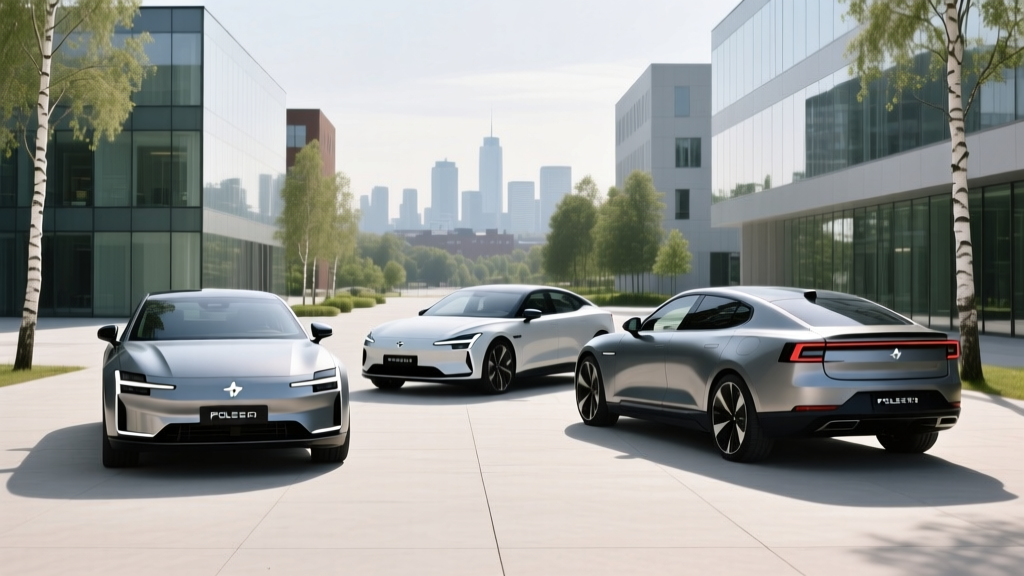
If you've been researching electric vehicles long enough, you've likely encountered the name Polestar and wondered: what exactly does it mean? Beyond the astronomy definition — a celestial navigation star — Polestar has become one of the most design-forward brands in the premium EV space. Born from Volvo's performance division and now a standalone electric marque backed by Geely, Polestar occupies a distinct lane between Scandinavian minimalism and serious EV engineering.
This guide unpacks the Polestar meaning from a buyer's perspective: what the brand represents, which 2026 models are actually available, and whether any of them deserve a spot on your shortlist. We'll cover real-world range, DC fast-charging curves, federal tax credit eligibility under current IRS §30D rules, and how Polestar stacks up against Tesla, BMW, and Hyundai in the premium electric segment.
The Polestar Meaning: From Volvo Tuners to EV Specialists
The word "polestar" literally means a guiding star — historically Polaris, the North Star used for navigation. Volvo adopted the name in the 1990s for its motorsport partner, Polestar Racing, which tuned Volvo production cars for track performance. By 2017, Volvo Cars and parent company Geely spun Polestar off as a standalone premium electric vehicle brand, headquartered in Gothenburg, Sweden, with manufacturing primarily in China and, increasingly, South Korea and the United States.
For EV buyers in 2026, the Polestar meaning translates to: Scandinavian design principles, Google-built infotainment, competitive fast-charging architecture, and a smaller dealer footprint than legacy automakers. The trade-off is a limited model range and fewer service centers than Tesla or BMW. Let's examine what's actually on sale.
2026 Polestar Lineup: Specs, Range & Charging at a Glance
| Spec | Polestar 2 (Long Range DM) | Polestar 3 (LRDM) | Polestar 4 (LRDM) |
|---|---|---|---|
| EPA Range | 320 mi | 315 mi | 300 mi |
| Battery (usable) | 79 kWh, NMC | 111 kWh, NMC | 100 kWh, NMC |
| Drivetrain | Dual-Motor AWD | Dual-Motor AWD | Dual-Motor AWD |
| Horsepower | 421 hp | 489 hp | 544 hp |
| 0–60 mph | 4.3 sec | 4.7 sec | 3.7 sec |
| Max DC Charge | 200 kW | 250 kW | 200 kW |
| 10–80% DCFC | ~27 min | ~30 min | ~28 min |
| Level 2 Rate | 11 kW (~37 mi/hr) | 11 kW (~35 mi/hr) | 11 kW (~33 mi/hr) |
| MPGe (combined) | 100 MPGe | 89 MPGe | 94 MPGe |
| Cargo (rear seats up) | 14.4 cu ft + 1.4 cu ft frunk | 17.1 cu ft + 1.1 cu ft frunk | 18.3 cu ft (no frunk) |
| Base MSRP | $51,300 | $68,900 | $62,900 |
| Battery Warranty | 8 yr / 100,000 mi | 8 yr / 100,000 mi | 8 yr / 100,000 mi |
Sources: EPA fueleconomy.gov, Polestar US specifications. Figures reflect Long Range Dual Motor trims; single-motor and Performance variants differ.
Real-World Range: What the EPA Sticker Doesn't Tell You
Polestar uses liquid thermal management across its lineup, which helps preserve battery health and enables preconditioning for DC fast charging. When you navigate to a charger using the built-in Google Maps EV routing, the car warms the battery pack to optimize charge acceptance — a feature that meaningfully reduces 10–80% times in cold weather. If you arrive at a DC fast charger without preconditioning in winter, expect peak rates closer to 100–120 kW instead of the rated 200–250 kW.
Efficiency varies significantly by model. The Polestar 2 achieves roughly 32 kWh/100 mi in mixed driving, while the heavier Polestar 3 consumes closer to 40 kWh/100 mi. For cost estimation at the US average residential electricity rate of ~$0.16/kWh, the Polestar 2 costs approximately $5.12 per 100 miles to charge at home — roughly one-third the fuel cost of a comparable 25 MPG gas sedan at $3.20/gallon.
Charging Speed: DC Fast, Level 2, and the Curve Reality
| Charging Level | Power | Miles Added per Hour | Notes |
|---|---|---|---|
| Level 1 (120V) | ~1.4 kW | ~3–4 mi/hr | Emergency/trickle only |
| Level 2 (240V, 48A) | 11 kW | ~33–37 mi/hr | Full charge overnight (~8–10 hrs) |
| DC Fast (peak) | 200–250 kW | ~600–800 mi/hr (at peak) | 10–80% in 27–30 min; tapers above 80% |
All 2026 Polestar models sold in North America use the CCS1 connector for DC fast charging. Polestar has confirmed NACS (Tesla Supercharger) adapter compatibility, enabling access to the Supercharger network — a significant advantage for road-trippers, as Tesla's network remains the most reliable in the US. Expect to carry a CCS-to-NACS adapter or use a Supercharger stall with the Magic Dock CCS integration where available.
The charge curve matters more than peak kW. The Polestar 2 sustains roughly 175–200 kW from 10–40% State of Charge (SoC), then gradually tapers to ~120 kW by 60%, and drops sharply above 80%. This is typical NMC lithium-ion behavior. For road trips, plan charging stops around 10–80% to minimize time at the station; charging from 80–100% can take as long as the 10–80% session due to the taper.
Pricing, Trims & Federal Tax Credit Eligibility
| Model / Trim | Base MSRP | As-Tested (typical) | §30D Credit Eligibility |
|---|---|---|---|
| Polestar 2 LRSM (Single Motor) | $48,300 | $50,500 | Likely eligible (under $55K cap) |
| Polestar 2 LRDM (Dual Motor) | $51,300 | $55,000+ | Likely eligible (under $55K cap) |
| Polestar 4 LRDM | $62,900 | $68,000 | Not eligible (SUV cap $80K, but sourcing rules apply) |
| Polestar 3 LRDM | $68,900 | $75,000 | Not eligible (battery sourcing non-compliant) |
Federal EV tax credit eligibility under IRS §30D is complex and model-specific. For 2026, the key rules are:
- MSRP caps: Sedans/wagons must be under $55,000; SUVs and trucks under $80,000.
- Income caps: Buyer AGI must not exceed $150,000 (single), $225,000 (head of household), or $300,000 (joint).
- Battery sourcing: A percentage of critical minerals and battery components must be sourced from the US or FTA partners. Vehicles with battery components from "foreign entities of concern" (primarily Chinese suppliers) may be disqualified.
- Point-of-sale transfer: Buyers can transfer the credit to the dealer at purchase, reducing the purchase price directly rather than waiting for a tax refund.
Because Polestar manufactures primarily in China (Polestar 2 in Luqiao; Polestar 3 in Chengdu; Polestar 4 in Hangzhou), battery sourcing compliance is the primary disqualifier for the larger models. The Polestar 2, with its lower MSRP and evolving supply chain, has the strongest chance of partial or full credit eligibility. Always verify current eligibility on the IRS clean vehicle credit page before purchasing — rules shift with supply chain updates.
Tech, Interior & Driver Assistance
Polestar's infotainment runs on Android Automotive OS with Google Maps, Google Assistant, and the Play Store built natively into the car. This is a genuine differentiator: navigation includes real-time charger availability, route-based battery preconditioning, and accurate range prediction based on terrain and weather. Over-the-air updates continue to refine the interface throughout ownership.
Driver assistance comes via Polestar's Pilot Pack, which includes adaptive cruise control, lane-centering, and Pilot Assist — a SAE Level 2 system requiring continuous driver supervision. This is not autonomous driving; your hands must remain on the wheel and eyes on the road. Polestar has been cautious about overpromising here, which is refreshing compared to some competitors marketing "full self-driving" capabilities that remain Level 2.
Interior materials lean heavily on vegan textiles and recycled aluminum, consistent with Polestar's sustainability branding. The Polestar 2 offers 14.4 cu ft of rear cargo (hatchback style) plus a 1.4 cu ft frunk. The Polestar 3 and 4 provide more SUV-oriented space, with the Polestar 4 notably eliminating the rear window in favor of a camera-based digital rearview mirror — a polarizing design choice that takes adjustment.
Pros, Cons & Who Should Buy a Polestar
Pros
- Distinctive Scandinavian design — stands out vs. ubiquitous Teslas
- Native Google Maps with excellent EV route planning
- Competitive DC fast-charging (200–250 kW peak)
- NACS adapter access to Tesla Supercharger network
- Strong build quality and material sustainability
- Honest marketing — no "self-driving" overpromises
Cons
- Limited service center network vs. BMW, Tesla
- Manufacturing in China affects tax credit eligibility
- Polestar 2 cargo space trails rivals (Ioniq 5: 27.2 cu ft)
- Polestar 4 no rear window — camera-only rearview
- Higher insurance premiums than comparable non-premium EVs
- Brand longevity uncertain compared to legacy automakers
- Choose Polestar 2 if: You want a premium compact EV sedan with standout design, Google-native tech, and potential tax credit eligibility — and you don't need maximum cargo space.
- Choose Polestar 3 if: You want a luxury electric SUV with 300+ mile range and don't mind the premium price and likely tax credit ineligibility.
- Choose Polestar 4 if: You prioritize performance (3.7-sec 0–60) and coupe-SUV styling, and you accept the camera-based rearview trade-off.
- Look elsewhere if: You need a proven dealer/service network, maximum federal incentives, or class-leading cargo volume. Consider the Hyundai Ioniq 5, BMW i4, or Tesla Model Y.
How Polestar Compares to Key Rivals
In the $50,000–$70,000 premium EV segment, Polestar faces formidable competition:
- Tesla Model Y: More cargo space (30.2 cu ft), broader Supercharger access, lower price — but ubiquitous styling and inconsistent build quality.
- BMW i4 eDrive40: Superior service network, 307-mile EPA range, eligible for partial tax credit — but less distinctive interior.
- Hyundai Ioniq 5: 800V architecture enables 10–80% in ~18 minutes, 303-mile range, more cargo space — but less premium branding.
- Volvo EX40 (formerly XC40 Recharge): Shares Polestar's CMA platform, similar range, better dealer network — but less sporty character.
Polestar's edge is design differentiation and Google-native integration. Its weakness is service infrastructure and tax credit eligibility. If you live near a Polestar service center and prioritize aesthetics over incentives, the brand delivers. If service proximity or maximum financial incentives are paramount, the BMW i4 or Hyundai Ioniq 5 may serve you better.
Frequently Asked Questions
What does the Polestar name mean?
The name "Polestar" refers to a guiding star — specifically Polaris, the North Star. Volvo adopted it for its motorsport division in the 1990s, and the name was carried forward when the brand became a standalone EV manufacturer in 2017.
What is the real-world range of the Polestar 2?
The EPA rates the 2026 Polestar 2 Long Range Dual Motor at 320 miles. In real-world highway driving at 70 mph, expect 265–285 miles. In freezing temperatures, range drops to approximately 220–245 miles.
How fast does the Polestar 2 charge?
The Polestar 2 peaks at 200 kW on DC fast chargers, achieving 10–80% in approximately 27 minutes with battery preconditioning. On a Level 2 home charger (11 kW), it adds roughly 37 miles of range per hour.
Does the Polestar 2 qualify for the federal EV tax credit?
The Polestar 2 (MSRP under $55,000) may qualify for partial or full §30D credit depending on battery sourcing compliance and buyer income. The Polestar 3 and 4 face sourcing disqualifications. Always verify on IRS.gov before purchasing.
Is Polestar owned by Volvo?
Polestar is majority-owned by Volvo Cars and Geely Holding (Volvo's Chinese parent company). It operates as a separate brand with its own design studio, engineering team, and direct-to-consumer sales model.
Where are Polestar vehicles manufactured?
As of 2026, the Polestar 2 is built in Luqiao, China; the Polestar 3 in Chengdu, China; and the Polestar 4 in Hangzhou, China. Polestar has announced plans for US production (Polestar 3 at Volvo's Ridgeville, SC plant) but timelines remain subject to change.
What is Polestar's battery warranty?
All 2026 Polestar models carry an 8-year / 100,000-mile battery warranty, covering defects and capacity retention below 70% of original capacity. This is competitive with industry standards (Tesla: 8 yr / 100K–120K mi; Hyundai: 10 yr / 100K mi).