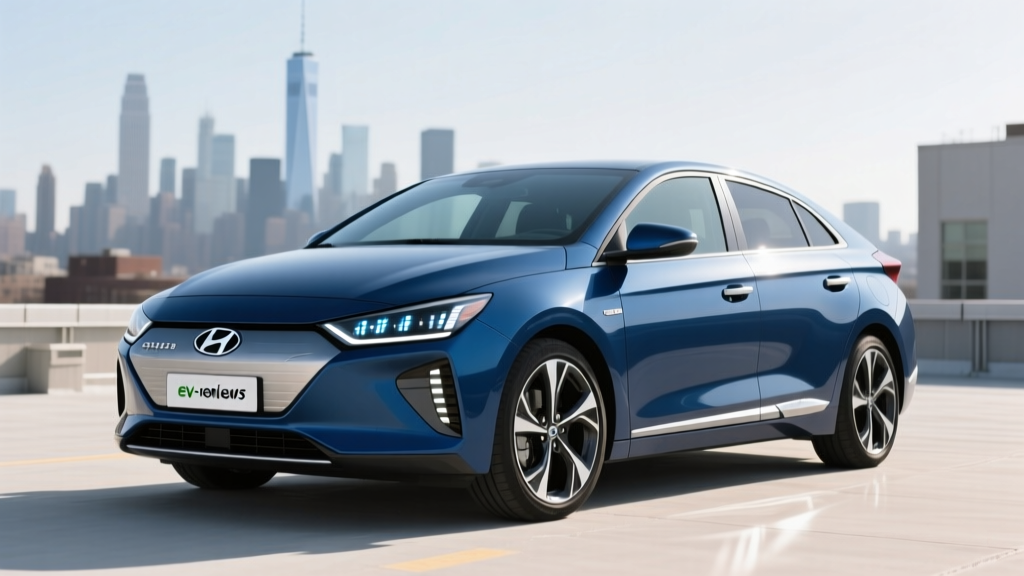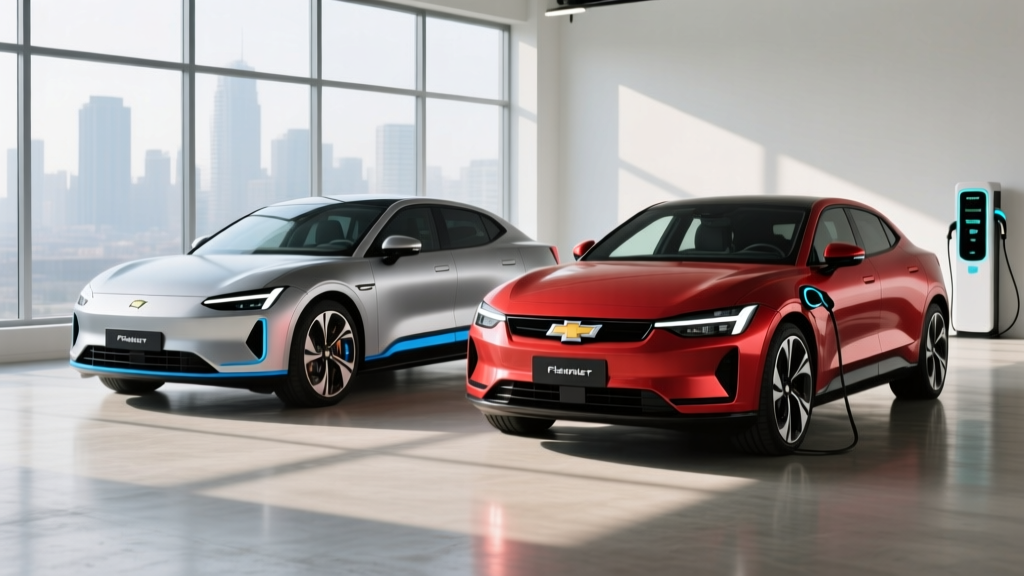
The phrase polestar chevy ev deal has been circulating through EV forums and comment sections since General Motors and Volvo's performance offshoot began collaborating on shared architectures and supply-chain agreements. For buyers cross-shopping a Polestar 2 or 4 against the Chevrolet Blazer EV or Equinox EV, the partnership raises practical questions: Does this deal change sticker prices? Does it unlock new federal tax credit eligibility? And most importantly, what does owning either brand actually cost over five years?
This guide cuts through the noise with hard numbers. We'll run a full total-cost-of-ownership (TCO) analysis, map the current IRS §30D federal tax credit rules for 2026, compare per-mile fueling costs with concrete assumptions, and address the insurance and depreciation realities that most EV cheerleaders gloss over. Whether you're leaning toward Scandinavian minimalism or Detroit practicality, the math below will tell you which electrified path makes financial sense.
What the Polestar-Chevy EV Partnership Actually Covers
Before crunching ownership numbers, it helps to understand what the "Polestar Chevy EV deal" does and doesn't mean for buyers in 2026. The collaboration centers on shared supply-chain logistics, battery-cell sourcing agreements, and in some markets, co-utilization of manufacturing capacity. Both brands source cells from suppliers like LG Energy Solution and have aligned on critical-mineral procurement strategies that directly affect IRS §30D tax credit eligibility.
What it does not mean is shared vehicle platforms. The Polestar 4 rides on the SEA (Sustainable Experience Architecture) platform developed by Geely, while the Chevy Blazer EV and Equinox EV use GM's Ultium architecture. You're still choosing between two fundamentally different engineering philosophies — one optimized for performance and premium materials, the other for mass-market affordability and range efficiency.
The real buyer impact is in the tax credit arena. Because both brands have worked to comply with the Inflation Reduction Act's critical-mineral and battery-component sourcing requirements, certain trims from each manufacturer qualify for varying portions of the $7,500 federal credit. The specific eligibility depends on the model, trim, build date, and your personal tax situation — details we'll unpack below.
5-Year Total Cost of Ownership: Polestar 4 vs Chevy Blazer EV
To make this comparison concrete, we're pitting the 2026 Polestar 4 Long Range Dual Motor (MSRP ~$61,900) against the 2026 Chevrolet Blazer EV RS AWD (MSRP ~$56,595). Both are dual-motor AWD crossovers in the premium-to-near-luxury segment, and both are popular cross-shop targets.
| Cost Category | Polestar 4 LR DM | Chevy Blazer EV RS AWD | Notes |
|---|---|---|---|
| Base MSRP | $61,900 | $56,595 | Before incentives, destination fees |
| Federal Tax Credit (§30D) | Up to $3,750–$7,500* | Up to $7,500* | *Depends on sourcing & buyer income |
| Effective Purchase Price | ~$54,400–$58,150 | ~$49,095–$52,845 | After estimated credit |
| Charging (5 yrs / 60,000 mi) | $4,200–$5,100 | $3,900–$4,800 | Home L2 at $0.14/kWh + DCFC mix |
| Insurance (5 yrs) | $14,500–$17,000 | $11,500–$14,000 | Premium segment surcharge for Polestar |
| Maintenance (5 yrs) | $1,800–$2,400 | $1,600–$2,200 | Cabin filters, tires, wiper fluid, brakes |
| Depreciation (5 yrs) | ~$28,000–$33,000 | ~$22,000–$27,000 | EVs losing ~45–55% over 5 years |
| Estimated 5-Year TCO | $98,900–$115,650 | $84,195–$100,845 | Wide range reflects credit & insurance variability |
Several patterns jump out. The Polestar 4 costs roughly $10,000–$15,000 more over five years, driven primarily by a higher starting price, steeper insurance premiums, and greater projected depreciation on the luxury end. The Blazer EV's advantage in purchase price and insurance keeps it meaningfully cheaper to own — even before factoring in any state or utility rebates that may apply in your area.
That said, the Polestar delivers 544 hp and a 0–60 mph time around 3.8 seconds in dual-motor form, while the Blazer EV RS AWD produces 288 hp and hits 60 mph in approximately 6.2 seconds. You're paying a premium for genuine sports-sedan performance wrapped in an SUV body.
Federal Tax Credit Eligibility: §30D Rules for 2026
The federal EV tax credit under IRS §30D is the single largest purchase-price lever available to American EV buyers — but qualifying is not automatic. The rules have tightened considerably since the Inflation Reduction Act reshaped eligibility in 2023, and they continue to evolve. Below is the current eligibility framework for 2026 model-year vehicles.
- Maximum credit: $7,500 (split into $3,750 for critical-mineral sourcing compliance + $3,750 for battery-component manufacturing requirements)
- Buyer income caps: $150,000 single filer / $225,000 head of household / $300,000 married filing jointly (modified AGI)
- MSRP caps: $55,000 for sedans/wagons; $80,000 for SUVs, pickups, and vans (the Polestar 4 qualifies under the SUV cap; the Blazer EV qualifies under the SUV cap)
- Critical-mineral sourcing: Increasing percentage thresholds of battery minerals must be sourced from the U.S. or FTA-partner countries — this percentage rises each year
- Battery-component manufacturing: Battery components must be manufactured or assembled in North America, with thresholds increasing annually
- FEOC restriction: Vehicles with battery components or critical minerals from a "foreign entity of concern" (primarily targeting Chinese supply chains) are disqualified
- Point-of-sale transfer: Buyers can elect to transfer the credit to the dealer at purchase, reducing the out-of-pocket price immediately rather than waiting for a tax refund
For the Chevy Blazer EV, GM's Ultium battery production in Ohio and Tennessee, combined with North American critical-mineral sourcing efforts, positions most trims to qualify for the full $7,500 — though you should verify the specific VIN's eligibility on fueleconomy.gov before signing paperwork, as sourcing compliance can shift between model years and build batches.
For the Polestar 4, the picture is more complex. The SEA platform's battery supply chain involves cell production in China (CATL and other suppliers), which has created partial eligibility in some model years. As of early 2026, Polestar has been working to shift sourcing to meet the FEOC restrictions, but buyers should confirm the exact credit amount — it may be $3,750 (critical minerals only) or the full $7,500 depending on the production batch. Always check the IRS's official vehicle eligibility list and consult a tax professional for your specific situation.
State and utility incentives vary significantly by region. States like Colorado, California, and Massachusetts offer additional rebates ranging from $1,000 to $5,000+ on top of the federal credit. Many utilities (PG&E, Xcel Energy, ConEdison) offer $500–$1,500 rebates for home Level 2 charger installation. These incentives are jurisdiction-specific and change frequently — check your state energy office and local utility for current programs.
Charging vs Gas: Real Per-Mile Cost Math
The most common EV ownership claim is that "electricity is cheaper than gas." That's true — but the magnitude of savings depends entirely on your charging habits, local electricity rates, and the vehicle's efficiency. Let's run the numbers with concrete assumptions.
| Fueling Scenario | Cost per Mile | Annual Cost (12,000 mi) | Assumptions |
|---|---|---|---|
| Polestar 4 — Home L2 Charging | $0.047 | $564 | 3.0 mi/kWh × $0.14/kWh avg residential |
| Polestar 4 — DC Fast Charging (50%) | $0.072 | $864 | 50% home / 50% public DCFC at $0.35/kWh |
| Blazer EV — Home L2 Charging | $0.044 | $528 | 3.2 mi/kWh × $0.14/kWh avg residential |
| Blazer EV — DC Fast Charging (50%) | $0.068 | $816 | 50% home / 50% public DCFC at $0.35/kWh |
| Gas equivalent (25 MPG SUV) | $0.136 | $1,632 | $3.40/gal × 25 MPG combined |
With predominantly home charging, both EVs cost roughly $530–$570 per year to "fuel" — a savings of about $1,060 annually versus a 25 MPG gas SUV at $3.40/gallon. Even with a 50/50 split between home and public DC fast charging, you're still saving $750–$1,100 per year.
However, the Blazer EV holds a slight efficiency edge. Its EPA-estimated efficiency of approximately 3.2 miles per kWh (roughly 105 MPGe combined) outpaces the Polestar 4's 3.0 mi/kWh (~99 MPGe combined), thanks to GM's focus on aero optimization and a slightly lower curb weight. Over 60,000 miles, that translates to roughly $300–$400 in incremental charging savings for the Chevy.
One important caveat: public DC fast charging prices vary enormously. Networks like Electrify America and EVgo charge $0.30–$0.48/kWh depending on location and time of day. If you live in an apartment without home charging access and rely entirely on public DCFC, your per-mile cost could approach $0.10–$0.12 — still cheaper than gas, but the savings gap narrows considerably.
Maintenance Savings: Where EVs Genuinely Win
Maintenance is where EV ownership delivers unambiguous savings. Battery-electric vehicles eliminate oil changes, spark plugs, timing belts, exhaust systems, and the complex multi-speed transmissions found in ICE vehicles. Here's what you'll actually spend:
| Maintenance Item | EV (5-Year Cost) | Gas SUV (5-Year Cost) | Savings |
|---|---|---|---|
| Oil changes | $0 | $500–$750 | $500–$750 |
| Brake pads/rotors | $200–$400 | $800–$1,400 | $400–$1,200 |
| Cabin air filter | $200–$350 | $200–$350 | $0 |
| Tire rotation/replacement | $2,000–$2,800 | $1,600–$2,200 | –$400 to –$600 |
| Coolant/fluid service | $100–$200 | $300–$500 | $100–$400 |
| Transmission service | $0 | $200–$400 | $200–$400 |
| Total (5 yrs) | $2,500–$3,750 | $3,600–$5,600 | $700–$2,450 net savings |
The biggest EV maintenance advantage is brake longevity. Regenerative braking handles the majority of deceleration, meaning brake pads and rotors often last 80,000–120,000+ miles. Many EV owners report original brake pads at 60,000 miles with 50%+ life remaining.
The one area where EVs cost more is tires. The instant torque and heavier curb weight (the Polestar 4 weighs approximately 5,100 lbs; the Blazer EV around 5,600 lbs) accelerate tire wear. Budget for a set of premium all-season or EV-specific tires every 30,000–40,000 miles at $800–$1,200 per set.
Insurance: The EV Cost That Catches Buyers Off Guard
Insurance is consistently the line item that erodes EV ownership savings, and it deserves honest discussion. On average, EVs cost 15–25% more to insure than comparable gas vehicles. The reasons are structural:
- Higher repair costs: EV-specific components (battery packs, power electronics, heat pump systems) are expensive to replace after collision damage. A minor rear-end collision that would cost $2,000 to repair on a gas SUV can total an EV if the battery enclosure is compromised.
- Specialized labor: Fewer body shops have high-voltage-certified technicians, raising labor rates for EV repairs.
- Higher vehicle values: Comprehensive and collision premiums scale with vehicle price, and EVs still carry a purchase-price premium.
- Claim severity data: Insurers are still building actuarial models for EVs, and early data shows higher average claim costs, which gets priced into premiums.
For the Polestar 4, expect annual premiums of $2,800–$3,400 depending on your driving record, location, and coverage levels. The Blazer EV, positioned at a lower MSRP and benefiting from GM's broader parts network, typically runs $2,300–$2,800 annually. Over five years, that's a $2,500–$3,000 insurance premium for the Polestar over the Chevy.
Pro tip: Shop quotes from at least three insurers before purchase. Some carriers (Geico, Progressive, USAA) have begun offering EV-specific discounts of 5–10%, and bundling with homeowners insurance can reduce costs further. Tesla's insurance product (where available) has also pressured the broader market toward more competitive EV rates.
Depreciation and Resale Value: The Uncomfortable EV Reality
Depreciation remains the largest single cost of vehicle ownership, and EVs have faced headwinds in this department. Several factors are at play:
- Price wars: Tesla's aggressive price cuts in 2023–2024 cascaded through the used EV market, depressing resale values across all brands. A 2022 Polestar 2 that stickered at $49,900 was trading for $22,000–$26,000 by mid-2024.
- Battery degradation concerns: While modern LFP and NMC batteries are proving far more durable than early-adopter fears suggested (most showing 5–8% capacity loss over 100,000 miles), used-car buyers remain cautious.
- Rapid tech obsolescence: A 2026 EV with 350 miles of range and 250 kW charging makes a 2022 model with 230 miles and 125 kW charging feel dated — accelerating trade-in depreciation.
- Incentive distortion: When a new EV buyer gets $7,500 off at point of sale, the effective new price drops, which immediately compresses used values.
Current 5-year depreciation projections for our comparison vehicles:
- Polestar 4: Expected to retain 45–52% of MSRP after 5 years / 60,000 miles. Resale value: ~$29,000–$34,000.
- Chevy Blazer EV: Expected to retain 50–55% of MSRP after 5 years / 60,000 miles. Resale value: ~$28,000–$31,000.
The Blazer EV's depreciation advantage comes from its lower starting price (less absolute dollars lost), GM's extensive dealer network providing buyer confidence in service availability, and the broader appeal of a mainstream brand in the used market. Luxury EVs from smaller brands historically depreciate faster than mainstream counterparts — a pattern the Polestar 4 is unlikely to break entirely, despite its strong build quality and Volvo-adjacent service infrastructure.
Key Specs at a Glance: Polestar 4 vs Chevy Blazer EV
| Specification | 2026 Polestar 4 LR Dual Motor | 2026 Chevy Blazer EV RS AWD |
|---|---|---|
| EPA Range | ~300 mi (est. ~260–280 mi real-world hwy) | ~279 mi (est. ~240–260 mi real-world hwy) |
| Battery Capacity | 100 kWh (usable), NMC | 102 kWh (usable), NMC (Ultium) |
| Peak DC Fast Charge | 200 kW (10–80% ~28 min) | 190 kW (10–80% ~30 min) |
| Level 2 Charge Rate | 11 kW (~30 mi/hr) | 11.5 kW (~32 mi/hr) |
| Horsepower | 544 hp | 288 hp |
| 0–60 mph | 3.8 sec | 6.2 sec |
| Connector | NACS (native, 2025+) | NACS (native, 2025+) |
| Battery Warranty | 8 yr / 100,000 mi | 8 yr / 100,000 mi |
| Base MSRP | $61,900 | $56,595 |
Both vehicles now use the NACS connector natively, granting access to Tesla's Supercharger network — the most reliable DC fast-charging infrastructure in North America. This convergence on NACS is one of the most buyer-friendly developments in the industry, and both the Polestar-Chevy supply chain alignment and the broader industry shift have accelerated this transition.
Frequently Asked Questions
How much does it really cost to own an EV over 5 years?
For the vehicles in this comparison, expect a 5-year total cost of ownership between $84,000 and $116,000 depending on the model, your tax credit eligibility, insurance rates, and charging habits. The bulk of that cost is depreciation ($22,000–$33,000) and insurance ($11,500–$17,000). Fueling and maintenance combined represent only $6,000–$7,500 over five years — a fraction of what a gas SUV costs in those categories.
Do I qualify for the federal EV tax credit?
Eligibility for the up-to-$7,500 §30D credit depends on three factors: your modified adjusted gross income (must be under $150K single / $300K joint), the vehicle's MSRP (must be under $80K for SUVs), and the vehicle's battery sourcing compliance (critical minerals and components from approved sources). Both the Polestar 4 and Blazer EV fall under the $80K SUV cap, but credit amounts vary by build batch and sourcing. Check the official eligibility list at irs.gov and verify with your dealer at purchase. The credit can be transferred at point of sale, reducing your purchase price immediately.
How much do I save on fuel and maintenance?
Versus a 25 MPG gas SUV at $3.40/gallon, expect to save $1,000–$1,100 per year on fuel with mostly home charging, or $750–$900 per year with a mix of home and public DCFC. Maintenance savings add another $140–$490 per year. Combined, that's roughly $1,140–$1,590 in annual operating savings. Over five years: $5,700–$7,950. These savings are real but modest relative to the purchase-price premium of many EVs — they narrow the TCO gap but rarely eliminate it entirely.
Are EVs more expensive to insure?
Yes, typically 15–25% more than a comparable gas vehicle. For the Polestar 4, budget $2,800–$3,400/year; for the Blazer EV, $2,300–$2,800/year. Higher repair costs, specialized labor requirements, and elevated vehicle values drive the premium. Shop multiple insurers and ask about EV-specific discounts — the gap is narrowing as the EV fleet matures and insurers gain more claims data.
How well do EVs hold their value?
Current projections suggest mainstream EVs retain 50–55% of MSRP after 5 years, while luxury EVs retain 45–52%. This is below the historical average for gas vehicles (typically 55–60%), driven by rapid technology advancement, price competition, and buyer caution about battery longevity. Leasing can be a smart strategy if you're concerned about depreciation — it locks in a residual value and lets you upgrade to newer battery and charging technology every 3–4 years.
Does the Polestar-Chevy EV deal affect my charging experience?
Indirectly, yes. Both brands now ship with native NACS connectors, granting full access to Tesla's Supercharger network (17,000+ stalls in North America). The supply-chain collaboration has also helped both manufacturers secure battery-cell supply and meet critical-mineral sourcing requirements that affect tax credit eligibility. But the actual driving and charging experience is determined by each brand's vehicle engineering — Polestar's 200 kW peak charge rate vs Chevy's 190 kW, different thermal management systems, and distinct infotainment and route-planning software.
The "Polestar Chevy EV deal" is ultimately a supply-chain story, not a consumer-facing product merger. For buyers, the real decision comes down to priorities: the Polestar 4 offers genuine sports-car performance, Scandinavian design, and a premium ownership experience at a $10,000–$15,000 five-year cost premium. The Blazer EV delivers competitive range, strong tax credit eligibility, and mainstream practicality at a meaningfully lower TCO. Run the numbers against your specific income, electricity rates, and insurance quotes — the spreadsheet will tell you which one fits.