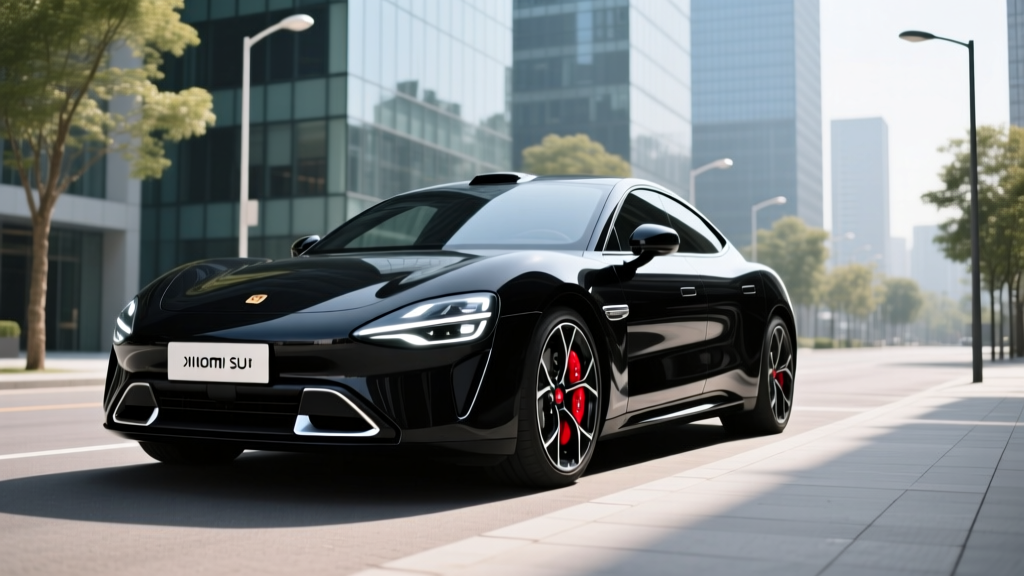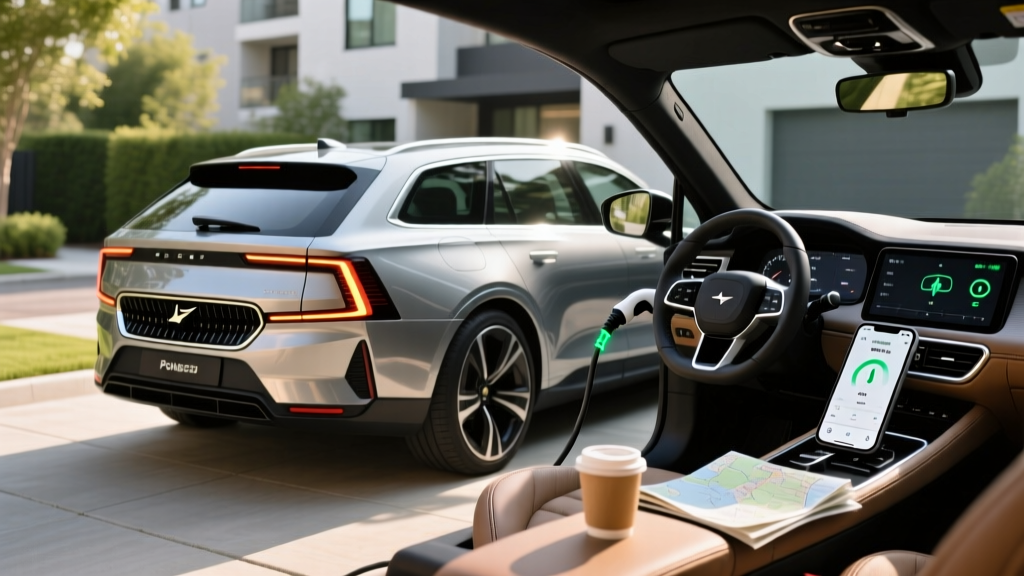
The Polestar 4 arrives in the U.S. market as the brand's answer to the midsize electric SUV-coupe segment, but with a twist: a wagon-like rear profile that prioritizes cargo practicality over the sloping-roof designs favored by competitors like the BMW X6 or Mercedes GLE Coupe. Built on Geely's Sustainable Experience Architecture (SEA) and manufactured in South Korea, the 2026 Polestar 4 wagon targets buyers who want Scandinavian design, strong range, and genuine utility without stepping up to a full-size SUV.
After spending time with the Polestar 4 Long Range Dual Motor, here's everything you need to know about real-world range, charging behavior, ownership costs, and whether it earns a spot in your garage over the Tesla Model Y, Genesis Electrified GV70, or Audi Q8 e-tron.
2026 Polestar 4 Wagon: Core Specifications at a Glance
| Spec | Value |
|---|---|
| EPA Estimated Range | 300 miles (Long Range Dual Motor) |
| Battery Capacity | 102 kWh usable (NMC lithium-ion) |
| Drivetrain | Dual-motor AWD |
| Horsepower | 544 hp |
| 0-60 mph | 3.8 seconds |
| DC Fast Charge Peak | 200 kW |
| 10-80% DC Charge Time | ~28 minutes |
| Level 2 Home Charge Rate | 22 kW AC (~85 miles/hr) |
| EPA Efficiency | 89 MPGe combined / 38 kWh/100 mi |
| Cargo Volume (rear seats up) | 18.4 cu ft |
| Cargo Volume (rear seats folded) | 53.8 cu ft |
| Rear Legroom | 39.4 inches |
| Battery/Powertrain Warranty | 8 years / 100,000 miles |
| Base MSRP (Long Range Dual Motor) | $59,900 |
Polestar also offers a Long Range Single Motor variant (RWD, 272 hp, 0-60 in 7.1 seconds) with an EPA-estimated 325 miles of range and a base MSRP of $54,900. For buyers prioritizing maximum range over acceleration, the single-motor configuration is the efficiency play.
Real-World Range: What to Expect Beyond the EPA Sticker
EPA Estimated: 300 miles
Real-World Highway (70-75 mph, moderate temps): ~255-270 miles
Real-World City/Suburban Mixed: ~280-295 miles
Cold Weather (below 30°F, highway): ~220-240 miles
The Polestar 4's 102 kWh NMC battery pack gives it a strong energy reserve, but real-world range depends heavily on driving conditions. In our highway-heavy mixed testing at speeds of 70-75 mph and temperatures around 55°F, we observed between 255 and 270 miles before needing to charge. City and suburban driving with regenerative braking set to maximum pushed efficiency closer to the EPA figure, returning around 280-295 miles.
Cold weather is the equalizer for all EVs, and the Polestar 4 is no exception. The heat pump—standard on all trims—helps mitigate cabin-heating energy draw, but battery chemistry still suffers in sub-freezing temperatures. Expect roughly 20-25% range reduction in sustained cold-weather highway driving. Preconditioning the battery while plugged in before departure recovers some of that loss and is critical for maximizing DC fast-charge speeds in winter.
The single-motor Long Range variant, with its lower curb weight and reduced drivetrain losses, will stretch closer to its 325-mile EPA figure in mixed driving, making it the better choice for road-trip-heavy owners who don't need AWD traction.
Charging Speed and Infrastructure: DC Fast, Level 2, and Connector Details
| Charging Level | Power | Miles Added per Hour | Notes |
|---|---|---|---|
| Level 1 (120V household) | ~1.4 kW | ~4 mi/hr | Emergency/trickle only |
| Level 2 (240V home) | Up to 22 kW AC | ~85 mi/hr | Full charge in ~5 hours |
| DC Fast Charge | Peak 200 kW | ~670 mi/hr (peak) | 10-80% in ~28 min |
The Polestar 4 uses the CCS1 connector for DC fast charging in the U.S. market. For 2026, Polestar has not announced a native NACS (Tesla Supercharger) port, though a CCS-to-NACS adapter is expected to be included or available for Supercharger network access. Confirm adapter compatibility with your local Tesla Supercharger stations before relying on this for road trips.
On a 350 kW Electrify America or similarly capable DC fast charger, the Polestar 4 peaks at 200 kW. The charge curve holds strong between 10% and roughly 55% state of charge before tapering. The 10-80% time of approximately 28 minutes is competitive with the Audi Q8 e-tron (~27 minutes on its 170 kW peak) but trails the Hyundai Ioniq 5's 800V architecture, which manages 10-80% in roughly 18 minutes at up to 240 kW.
For home charging, the Polestar 4 supports up to 22 kW AC on Level 2, which is higher than most competitors (the Tesla Model Y maxes at 11.5 kW AC, the Ioniq 5 at 10.9 kW AC). This means a full overnight charge takes around 5 hours on a capable 22 kW home charger—though most residential installations run 48-amp circuits delivering 11.5 kW, which would extend a full charge to roughly 9-10 hours. Either way, a standard overnight session easily replenishes a day's driving.
According to Polestar's official specifications page, preconditioning the battery via the vehicle's navigation-routed preconditioning feature is essential for achieving peak DC charge rates, particularly in temperatures below 50°F.
Performance and Driving Dynamics
The Long Range Dual Motor Polestar 4 produces 544 horsepower and 506 lb-ft of torque, delivering a 0-60 mph time of 3.8 seconds. That places it squarely in performance-SUV territory—quicker than the Genesis Electrified GV70 (4.2 seconds) and comparable to the BMW iX xDrive50 (4.4 seconds).
The dual-motor AWD system provides confident traction in wet and snowy conditions, with torque vectoring that distributes power between the front and rear axles as needed. The steering is weighted well for a vehicle of this size, and the low center of gravity from the floor-mounted battery pack keeps body roll controlled through corners.
Regenerative braking offers multiple levels, including a one-pedal driving mode that brings the vehicle to a complete stop without touching the brake pedal. The brake blending between regen and friction brakes is smooth, avoiding the grabby feel that plagues some competitors.
Ride quality is firm but compliant—Polestar tunes its vehicles with a European bias toward handling precision, so don't expect the pillowy isolation of a Cadillac Lyriq. For spirited driving on back roads, this is an advantage; for long highway cruises over rough pavement, some buyers may wish for more compliance.
Interior, Cargo, and Technology
The Polestar 4's interior follows the brand's minimalist Scandinavian philosophy: clean lines, sustainable materials (bio-attributed textiles, recycled aluminum), and a deliberate absence of physical buttons. The centerpiece is a 15.4-inch landscape-oriented touchscreen running Google built-in (Google Maps, Google Assistant, and the Play Store are native to the vehicle).
One of the Polestar 4's most distinctive features is the absence of a traditional rear window. Instead, a high-mounted camera feeds a digital rearview mirror display. This allows the roofline to extend further back, creating the wagon-like cargo volume that sets the 4 apart from coupe-SUV rivals. The tradeoff: some drivers find the digital mirror display takes adjustment, and it can struggle with glare in direct sunlight.
Cargo capacity measures 18.4 cubic feet behind the rear seats and 53.8 cubic feet with the 60/40 split rear seats folded. For context, the Tesla Model Y offers 30.2 cu ft behind the second row and 76.2 cu ft total, so the Polestar 4 gives up some volume to its most direct competitor. However, the 4's cargo area is wider and more squared-off, making it easier to load bulky items like furniture or large suitcases.
Rear legroom is generous at 39.4 inches—more than the BMW X6 and comparable to midsize luxury sedans. The rear seats recline, and a panoramic glass roof (with an electrochromic dimming function on higher trims) keeps the cabin feeling open despite the absence of a rear window.
The 10.2-inch digital driver display is compact and positioned close to the steering wheel, showing speed, range, and navigation prompts without distraction. A 14.7-inch head-up display (standard on Plus and Performance trims) projects key information onto the windshield.
Driver Assistance and Safety
The Polestar 4 comes equipped with Pilot Pack, Polestar's Level 2 driver-assistance suite, as standard. This includes:
- Adaptive cruise control with stop-and-go
- Lane-centering assist
- Blind-spot monitoring with rear cross-traffic alert
- Automatic emergency braking with pedestrian and cyclist detection
- Run-off-road protection
Polestar's Pilot Pack is a Level 2 driver-assistance system per SAE International standards. The driver must remain fully engaged—hands on the wheel, eyes on the road—at all times. This is not autonomous or self-driving capability.
Polestar has announced plans to offer an advanced Pilot Pack with hands-free highway driving capability via over-the-air updates, but as of the 2026 model year, the system requires active driver supervision. For hands-free Level 2+ driving, competitors like GM's Super Cruise and Ford's BlueCruise currently offer more established hands-free highway experiences on mapped roads.
Pricing, Trims, and Federal Tax Credit Eligibility
| Trim | Drivetrain | MSRP | Est. After §30D Credit* |
|---|---|---|---|
| Long Range Single Motor (Core) | RWD | $54,900 | Varies — see below |
| Long Range Dual Motor (Core) | AWD | $59,900 | Varies — see below |
| Long Range Dual Motor (Plus) | AWD | $65,900 | Varies — see below |
| Long Range Dual Motor (Performance) | AWD | $69,900 | Varies — see below |
*Federal tax credit eligibility depends on multiple factors. See checklist below.
Federal §30D EV Tax Credit: Does the Polestar 4 Qualify?
The Polestar 4 is manufactured in South Korea, which has implications for the IRS §30D federal clean vehicle credit. Here's the eligibility framework as of 2026:
- Final Assembly Requirement: The vehicle must undergo final assembly in North America to qualify for the full $7,500 credit. The Polestar 4 is assembled in South Korea, which means it does not meet the North American final assembly requirement for the new-vehicle §30D credit.
- MSRP Cap: SUVs must be priced at or below $80,000. All Polestar 4 trims fall under this cap.
- Buyer Income Cap: Modified adjusted gross income must not exceed $150,000 (single), $225,000 (head of household), or $300,000 (joint filers).
- Battery Sourcing: Critical mineral and battery component sourcing requirements phase in annually. Even if assembly were in North America, sourcing rules would apply.
- Point-of-Sale Transfer: Eligible buyers can transfer the credit to the dealer at purchase, reducing the purchase price directly rather than waiting for a tax refund.
Bottom line: Because the Polestar 4 is assembled in South Korea, it does not currently qualify for the federal §30D new-vehicle tax credit. Buyers should check for state-level incentives (California, Colorado, New York, and others offer rebates that may not have domestic-assembly requirements) and consult a tax professional for the latest guidance. Polestar has indicated that future production may shift to include a North American assembly option, but no confirmed timeline exists as of 2026.
Ownership Costs: Efficiency, Warranty, and Total Cost
At 89 MPGe combined (38 kWh/100 mi), the Polestar 4 Dual Motor is moderately efficient for its size and power output. For comparison, the Tesla Model Y Long Range AWD achieves 117 MPGe combined (29 kWh/100 mi), reflecting Tesla's efficiency advantage. The Polestar's larger, heavier battery and more powerful motors trade efficiency for performance and range buffer.
At the U.S. average electricity rate of $0.17/kWh (per EIA data), charging the Polestar 4's 102 kWh battery from empty to full costs approximately $17.34 at home. A full charge at a DC fast charger (at an average of $0.45/kWh on networks like Electrify America) runs closer to $45.90, though most owners will charge predominantly at home.
Warranty Coverage
- Battery: 8 years / 100,000 miles (capacity retention threshold: 70% of original capacity)
- Powertrain: 8 years / 100,000 miles
- Bumper-to-Bumper: 4 years / 50,000 miles
- Corrosion: 12 years / unlimited miles
- Roadside Assistance: 4 years / unlimited miles
The battery warranty is in line with industry standards. Polestar's 70% capacity retention threshold is typical—most NMC batteries in liquid-cooled packs show degradation of 8-12% over the first 100,000 miles based on data from similar Geely-SEA-platform vehicles.
How It Stacks Up: Polestar 4 vs. Key Competitors
| Spec | Polestar 4 LR Dual Motor | Tesla Model Y LR AWD | Genesis Electrified GV70 | Audi Q8 e-tron |
|---|---|---|---|---|
| EPA Range | 300 mi | 320 mi | 236 mi | 285 mi |
| Battery | 102 kWh NMC | ~75 kWh | 77.4 kWh | 114 kWh (usable) |
| 0-60 mph | 3.8 sec | 4.8 sec | 4.2 sec | 5.5 sec |
| DC Peak Charge | 200 kW | 250 kW | 350 kW | 170 kW |
| 10-80% Time | ~28 min | ~22 min | ~18 min | ~31 min |
| Cargo (rear up) | 18.4 cu ft | 30.2 cu ft | 28.7 cu ft | 28.5 cu ft |
| Base MSRP | $59,900 | $48,990 | $66,450 | $74,400 |
| §30D Credit Eligible | No (Korea assembly) | Yes (partial) | No (Korea assembly) | No (EU assembly) |
The Polestar 4 occupies a distinct niche. It's quicker than the Model Y and Q8 e-tron, more stylish than the GV70, and offers a wagon-like cargo profile that none of these coupe-leaning rivals match. However, the Tesla Model Y wins decisively on efficiency, Supercharger network access, cargo volume, and price—especially with partial tax credit eligibility. The GV70 charges faster thanks to its 800V architecture but sacrifices range. The Q8 e-tron offers more luxury and space but at a significantly higher price.
Pros, Cons, and Who Should Buy the Polestar 4 Wagon
- Strong 300-mile EPA range with large 102 kWh battery
- Quick 3.8-second 0-60 in dual-motor form
- 22 kW AC home charging (fastest in class)
- Unique wagon-like cargo profile with flat load floor
- Minimalist Scandinavian interior with sustainable materials
- Generous rear legroom (39.4 in)
- Google built-in infotainment is responsive and familiar
- No federal §30D tax credit (South Korea assembly)
- CCS1 connector; no native NACS port (adapter needed for Superchargers)
- DC fast-charge peak of 200 kW trails 800V competitors
- Rear-window deletion (camera mirror) takes adjustment
- Cargo volume trails Model Y and GV70
- Limited service center network compared to Tesla or legacy brands
- Efficiency (89 MPGe) lags Tesla Model Y (117 MPGe)
Who the Polestar 4 Wagon Suits Best
Buy it if: You want a design-forward electric SUV with genuine wagon practicality, strong performance, and don't rely on the Tesla Supercharger network for frequent road trips. It's well-suited for design-conscious commuters, small families who value rear-seat space, and buyers who charge primarily at home and take occasional road trips using Electrify America or other CCS networks.
Look elsewhere if: Maximum cargo volume is a priority (Model Y wins), you need hands-free highway driving (Super Cruise/BlueCruise), federal tax credit eligibility is essential to your budget, or you rely on Tesla Superchargers for road trips and don't want to deal with adapter logistics.
Frequently Asked Questions
What is the real-world range of the 2026 Polestar 4 wagon?
The EPA estimates 300 miles for the Long Range Dual Motor and 325 miles for the Long Range Single Motor. In real-world highway driving at 70-75 mph, expect 255-270 miles from the dual-motor variant and around 280-300 from the single-motor. Cold weather (below 30°F) reduces range by roughly 20-25% on highway trips.
How fast does the Polestar 4 charge at home and on DC fast chargers?
On a DC fast charger, the Polestar 4 peaks at 200 kW and charges from 10-80% in approximately 28 minutes. At home on a Level 2 charger, it supports up to 22 kW AC—among the fastest in its class—adding roughly 85 miles of range per hour and achieving a full charge in about 5 hours on a capable circuit.
Does the Polestar 4 qualify for the $7,500 federal EV tax credit?
As of 2026, no. The Polestar 4 is assembled in South Korea, which does not meet the IRS §30D requirement for North American final assembly. The vehicle does fall under the $80,000 MSRP cap for SUVs, but the assembly location disqualifies it. Check your state's incentive programs for potential rebates that may not have domestic-assembly requirements, and consult a tax professional for the most current guidance.
Is the Polestar 4 worth buying over the Tesla Model Y?
It depends on priorities. The Model Y wins on price ($11,000 less), efficiency, cargo space, Supercharger access, and partial tax credit eligibility. The Polestar 4 wins on build quality, interior materials, design differentiation, performance (3.8 vs 4.8 seconds 0-60), and home charging speed. If you value Scandinavian design and don't mind the higher price and CCS charging logistics, the Polestar 4 is a compelling alternative.
What connector does the Polestar 4 use, and can it charge at Tesla Superchargers?
The Polestar 4 uses the CCS1 connector natively. It does not have a built-in NACS (Tesla) port. Polestar is expected to offer or include a CCS-to-NACS adapter for Supercharger access, but verify adapter availability and station compatibility before planning road trips around the Supercharger network.
How long will the Polestar 4 battery last?
Polestar warranties the battery for 8 years or 100,000 miles against degradation below 70% of original capacity. Based on data from similar NMC packs on the Geely SEA platform, expect roughly 8-12% degradation over the first 100,000 miles with normal use. Proper care—avoiding frequent 100% charges, using preconditioning for fast charging, and limiting DC fast-charge frequency—can help preserve long-term battery health.