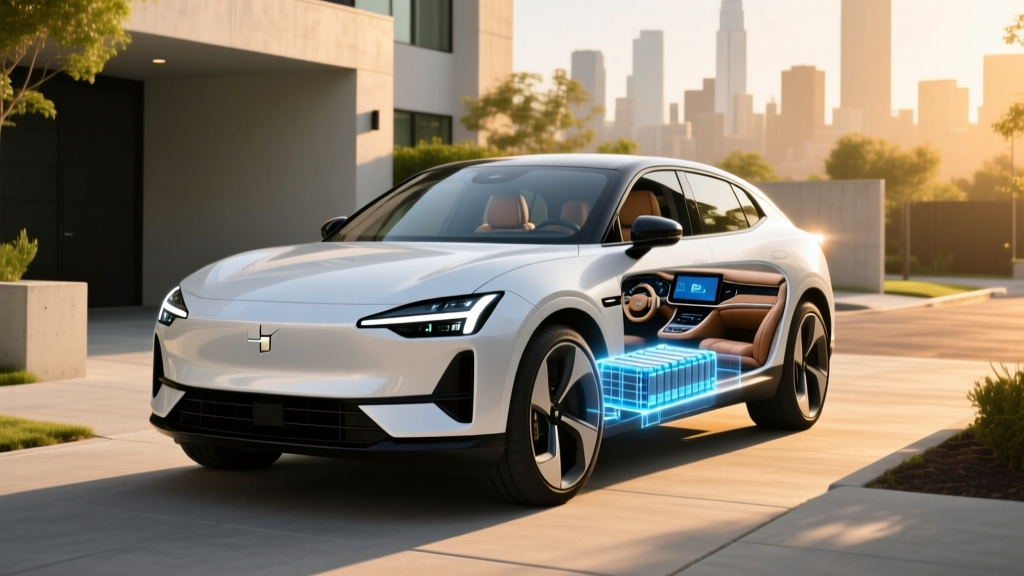
The Polestar 3 is the Swedish-Chinese brand's entry into the midsize luxury electric SUV segment, competing directly with the BMW iX, Audi Q8 e-tron, and Tesla Model X. Built on Volvo's SPA2 platform and manufactured in both Chengdu, China, and Ridgeville, South Carolina, the Polestar 3 brings Scandinavian minimalism, strong DC fast-charging capability, and Google-based infotainment to a segment where buyers demand both prestige and practicality.
But specs on paper don't always match reality on the road. Below, we break down every number that matters — from the 111 kWh battery and real-world range expectations to the charging curve taper that affects road-trip planning — so you can decide whether the Polestar 3 earns a spot in your garage.
Full Polestar 3 Specs at a Glance
| Specification | Long Range Dual Motor | Long Range Dual Motor w/ Performance Pack |
|---|---|---|
| EPA Range | 315 miles | 279 miles |
| Battery (Usable) | 107 kWh usable / 111 kWh gross (NMC) | 107 kWh usable / 111 kWh gross (NMC) |
| Horsepower | 489 hp / 620 lb-ft | 517 hp / 671 lb-ft |
| 0-60 mph | 4.7 seconds | 4.5 seconds |
| Drivetrain | Dual-motor AWD | Dual-motor AWD |
| Max DC Fast Charge | 250 kW | 250 kW |
| 10-80% DC Charge Time | ~30 minutes | ~30 minutes |
| Level 2 (Home) Charge Rate | 11 kW (~37 mi/hr) | 11 kW (~37 mi/hr) |
| Efficiency (Combined) | 78 MPGe / 43 kWh/100 mi | 71 MPGe / 47 kWh/100 mi |
| Top Speed | 130 mph | 130 mph |
| Towing Capacity | 4,409 lbs | 4,409 lbs |
| Cargo Volume (rear seats up) | 17.1 cu ft | 17.1 cu ft |
| Cargo Volume (rear seats folded) | 54.0 cu ft | 54.0 cu ft |
| Front Trunk (Frunk) | 1.1 cu ft | 1.1 cu ft |
| Base MSRP | $67,900 | $73,900 |
| Battery/Powertrain Warranty | 8 years / 100,000 miles | 8 years / 100,000 miles |
Source: EPA fueleconomy.gov, Polestar USA
Range Reality: What the EPA Number Doesn't Tell You
Real-World Expectation: 260–285 miles on sustained highway driving at 70-75 mph; 220–250 miles in freezing temperatures with cabin heat active.
The 315-mile EPA figure for the standard Long Range Dual Motor is competitive with the BMW iX xDrive50 (324 miles) and significantly ahead of the Audi Q8 e-tron (285 miles). However, the Polestar 3 is a heavy, aerodynamically challenged SUV at roughly 5,700 lbs, and real-world highway efficiency drops noticeably.
In mixed driving with moderate climate control use, expect roughly 280–295 miles from the 107 kWh usable battery. Sustained 75+ mph highway runs will pull that down to 260–280 miles. Cold weather (below 32°F) compounds the loss — NMC chemistry is more sensitive to low temperatures than LFP, and you can realistically plan for 220–250 miles of range on a winter road trip. The heat pump, which comes standard, helps mitigate cabin energy draw but doesn't eliminate the physics of cold-soaked battery cells.
The Performance Pack's 279-mile EPA rating reflects the stickier P Zero tires, 22-inch wheels, and recalibrated powertrain — all of which increase rolling resistance and energy consumption. If range is your priority, skip the Performance Pack.
Charging Speed: DC Fast Charge and Home Level 2
| Charging Level | Power / Voltage | Rate | Notes |
|---|---|---|---|
| Level 1 (120V) | ~1.4 kW | ~4 mi/hr | Emergency/trickle only; full charge in 70+ hours |
| Level 2 (240V, 48A) | 11 kW | ~37 mi/hr | Full charge in ~10-11 hours; ideal overnight |
| DC Fast Charge (CCS/NACS) | Up to 250 kW | 10-80% in ~30 min | Peak rate held to ~35% SoC; tapers significantly above 80% |
The Polestar 3's 250 kW peak DC fast-charge capability is solid but not class-leading — the Hyundai Ioniq 5 and Kia EV6 hit 800V architectures capable of 350 kW peaks, and the Lucid Gravity pushes past 300 kW. On a 350 kW Electrify America or Tesla Supercharger stall (via the NACS adapter), the Polestar 3 will accept its maximum 250 kW, but only briefly.
The charge curve peaks around 20-35% State of Charge (SoC) and begins tapering progressively. By 60% SoC, expect roughly 150-170 kW; by 80%, you're down to under 80 kW. This is why the 10-80% time of approximately 30 minutes is realistic — but charging from 80-100% adds another 25-30 minutes, making it impractical for road-trip stops. Plan your highway stops around the 10-80% window for optimal time efficiency.
For home Level 2 charging, the onboard 11 kW charger means a full 0-100% charge takes roughly 10-11 hours on a 48-amp, 240V circuit (like a ChargePoint Home Flex or Wallbox Pulsar Plus). This requires a NEMA 14-50 outlet or hardwired installation on a 60-amp breaker. Most owners who plug in nightly will never need a full 0-100% charge; a typical 60-mile daily commute replenishes in under two hours at Level 2.
The Polestar 3 ships with a CCS1 port on Chinese-built units and is transitioning to the NACS (Tesla-style) connector for US-market vehicles from the South Carolina plant. Verify your specific vehicle's port, as adapter availability and Supercharger network access may vary by build date and origin.
Performance and Driving Dynamics
Both Polestar 3 variants use a dual-motor all-wheel-drive setup with a permanent-magnet synchronous motor on each axle. The standard Long Range Dual Motor produces 489 hp and 620 lb-ft of torque, achieving a 4.7-second 0-60 mph time — quick for a 5,700-lb SUV but not startling next to a Tesla Model X Plaid (2.5 seconds).
The Performance Pack bumps output to 517 hp and 671 lb-ft via a rear-motor software unlock, shaving 0-60 to 4.5 seconds. More meaningfully, it adds Öhlins dual-valve dampers with manual adjustment, 22-inch forged wheels, and gold seatbelts and valve caps (Polestar's signature Performance accent). The Öhlins setup noticeably improves body control on winding roads, though the ride firms up enough that some buyers may find it harsh on broken pavement.
Regenerative braking offers two modes: a one-pedal driving setting with aggressive regen, and a low-regen coasting mode. There's no adjustable regen slider, which is a missed opportunity compared to the Hyundai/Kia setup. The brake pedal feel is firm and predictable — a common complaint in heavy EVs with blended regen/friction braking is absent here.
Interior, Cargo, and Tech
The cabin follows Polestar's Scandinavian-minimalist design language: clean horizontal lines, sustainable material options (bio-attributed MicroTech vinyl, wool-blend upholstery, and reclaimed wood trim), and a portrait-oriented 14.5-inch center touchscreen running Google built-in. That means Google Maps, Google Assistant, and the Play Store are native — no phone mirroring required, though wireless Apple CarPlay is supported. Android Auto is integrated via the Google platform.
A 9-inch driver display sits behind the steering wheel, and an available 25-speaker Bowers & Wilkins Dolby Atmos audio system is one of the best in any vehicle at this price point. The panoramic glass roof is fixed (no shade), which can make the cabin warm in direct summer sun — polestar includes a tinted electrochromic option on higher trims.
Cargo space measures 17.1 cubic feet behind the rear seats — adequate for weekly groceries and a couple of suitcases but smaller than the BMW iX (35.5 cu ft) and the Tesla Model X (40.5 cu ft). Fold the 40/20/40 split rear seats and you get 54.0 cu ft, which handles larger hauls. The 1.1 cu ft frunk is essentially a cable-storage compartment and won't fit a carry-on.
Passenger space is generous for four adults, though the transmission tunnel hump (a carryover from the SPA2 platform's ICE compatibility) slightly compromises the middle rear seat. Front legroom is 41.1 inches; rear legroom is 38.2 inches — competitive with the segment.
Driver Assistance (SAE Level 2)
The Polestar 3's Pilot Pack with LiDAR (sourced from Luminar) provides enhanced highway driving assist with lane centering, adaptive cruise, and automated lane changes. However, this is an SAE Level 2 system: the driver must remain fully engaged, hands on or near the wheel, and eyes on the road at all times. This is not self-driving.
The available Luminar LiDAR unit, mounted in the roofline, provides redundant sensing for future over-the-air feature unlocks. Polestar has indicated that enhanced hands-off highway driving features may follow via OTA updates, but as of the 2026 model year, active driver supervision is mandatory. The base Pilot Assist system (standard) handles adaptive cruise and lane-keeping competently without LiDAR.
Pricing, Trims, and Federal Tax Credit Eligibility
| Trim | Base MSRP | As-Tested (w/ Options) | Est. After §30D Credit* |
|---|---|---|---|
| Long Range Dual Motor | $67,900 | $73,000–$78,000 | $60,400–$70,500 |
| LR Dual Motor + Performance Pack | $73,900 | $79,000–$85,000 | $66,400–$77,500 |
*Estimated prices assume full $7,500 §30D credit eligibility. Actual credit varies by buyer.
- MSRP Cap: SUVs must be at or below $80,000 MSRP. Both Polestar 3 trims qualify at base, but heavily optioned units may exceed the cap.
- Buyer Income Cap: Modified AGI must not exceed $150,000 (single), $225,000 (head of household), or $300,000 (married filing jointly).
- Battery Sourcing: Critical minerals and battery components must meet escalating domestic/free-trade-agreement percentages. Chinese-manufactured battery components may reduce or eliminate eligibility under the foreign entity of concern (FEOC) rules.
- Point-of-Sale Transfer: Eligible buyers can transfer the credit to the dealer at purchase, reducing the purchase price directly rather than waiting for a tax refund.
- Manufacturing Origin: US-built Polestar 3s (South Carolina) have a stronger likelihood of meeting sourcing requirements than China-built units. Confirm your VIN's origin with the dealer.
Always verify current eligibility on IRS.gov and consult a tax professional before purchasing.
Destination charges add approximately $1,400 to the MSRP. Key option packages include the Plus Pack ($4,000–$5,000, adding ventilated seats, head-up display, and 360-degree cameras), the Pilot Pack with LiDAR ($4,000–$5,500), and the Nappa leather upgrade ($4,000). A fully loaded Performance Pack model can approach or exceed the $80,000 SUV MSRP cap, so configure carefully if tax-credit eligibility is a priority.
Who Should Buy the Polestar 3?
Choose the Polestar 3 if:
- You want a luxury EV SUV with understated Scandinavian design rather than German or Tesla aesthetics
- You value build quality, premium materials, and Bowers & Wilkins audio
- You need 4,400+ lbs of towing capacity for a small trailer or boat
- You want Google-native infotainment without relying on phone projection
- You prioritize a comfortable, composed ride over raw acceleration
Look elsewhere if:
- Maximum cargo space is essential (BMW iX and Model X offer significantly more)
- You want the fastest possible DC charging (Hyundai/Kia 800V platforms are quicker)
- Budget is a primary concern — the Ioniq 5, EV6, or even the Cadillac Lyriq deliver strong value at $15,000–$25,000 less
- You need three rows of seating (Kia EV9 or Rivian R1S)
The Polestar 3 is best suited for design-conscious professionals and small families who commute in comfort, take occasional road trips of 200-300 miles, and want something less ubiquitous than a Tesla. Its 4,409-lb tow rating makes it viable for light recreational towing — a notable advantage over many electric SUVs that aren't tow-rated at all.
Pros, Cons, and the Competition
- 315-mile EPA range is competitive in the luxury SUV class
- 250 kW DC fast charging with CCS/NACS flexibility
- Exceptional build quality and sustainable interior materials
- Standard heat pump and strong AWD traction
- Luminar LiDAR available for future-proofed driver assist
- 4,409-lb towing capacity
- Google built-in infotainment is responsive and well-integrated
- Cargo space (17.1 cu ft) trails BMW iX and Tesla Model X significantly
- Heavy at 5,700 lbs — highway efficiency suffers
- Performance Pack reduces range to 279 miles for modest power gains
- No adjustable regen braking — only two presets
- Fixed glass roof without a standard shade can overheat the cabin
- Fully optioned models risk exceeding the $80,000 §30D MSRP cap
- Tax credit eligibility uncertain on China-built units due to FEOC sourcing rules
Against the BMW iX xDrive50 ($87,250, 324 miles), the Polestar 3 is less expensive but offers less cargo room and a less engaging drive. The Audi Q8 e-tron ($74,400, 285 miles) has a plusher interior but shorter range and slower charging. The Tesla Model X ($79,990, 320 miles) offers more space and Supercharger access but lacks the Polestar's material quality. The Cadillac Lyriq ($58,590, 314 miles) is a strong value alternative if you don't need AWD performance.
Battery Warranty and Long-Term Ownership
Polestar covers the battery and electric powertrain for 8 years or 100,000 miles, whichever comes first, with a capacity retention threshold of 70% — meaning if the battery degrades below 70% of its original 111 kWh capacity within that period, Polestar will repair or replace it. This is industry-standard and matches Volvo, BMW, and Tesla's coverage.
The NMC (nickel manganese cobalt) chemistry in the Polestar 3 offers higher energy density than LFP but is more susceptible to calendar degradation if routinely held at 100% SoC. Polestar recommends daily charging to 80-90% and reserving 100% charges for road trips. The battery management system includes a buffer (roughly 4 kWh above and below the usable window) to protect against deep discharge and overcharge degradation.
Long-term replacement cost for an out-of-warranty 111 kWh NMC pack is estimated at $18,000–$25,000 based on current industry pricing, though costs are expected to decline as battery manufacturing scales. The vehicle's basic warranty covers 4 years / 50,000 miles, and Polestar includes 4 years of complimentary scheduled maintenance and roadside assistance.
Frequently Asked Questions
What is the real-world range of the Polestar 3?
The EPA rates the Long Range Dual Motor at 315 miles, but expect 260-285 miles on sustained highway trips and 220-250 miles in freezing weather. The Performance Pack drops to 279 miles EPA, with real-world highway figures around 235-255 miles.
How fast does the Polestar 3 charge?
On DC fast charging, it peaks at 250 kW and charges from 10-80% in approximately 30 minutes. At home on a Level 2 (240V, 48A) charger, it accepts up to 11 kW, adding roughly 37 miles of range per hour and achieving a full charge in about 10-11 hours.
Does the Polestar 3 qualify for the $7,500 federal EV tax credit?
It may, depending on your income, the vehicle's MSRP (must be ≤$80,000 for SUVs), and battery-sourcing compliance. US-built (South Carolina) units are more likely to meet FEOC requirements than China-built units. Verify your specific VIN's eligibility at IRS.gov and consult a tax professional.
Is the Polestar 3 worth buying over the BMW iX or Tesla Model X?
If you prioritize Scandinavian design, build quality, and a lower starting price, yes. If maximum cargo space, 800V ultra-fast charging, or third-row seating matter more, the BMW iX, Hyundai Ioniq 5, or Kia EV9 may be better fits. The Polestar 3 occupies a niche for design-forward buyers who don't need maximum utility.
What connector does the Polestar 3 use?
Early US-market Polestar 3s use the CCS1 connector. Vehicles from the South Carolina production line are transitioning to NACS (Tesla-style). Confirm your specific vehicle's port configuration with the dealer, as Supercharger network compatibility depends on the connector type or adapter availability.
Does the Polestar 3 have a frunk?
Yes, but it's tiny — just 1.1 cubic feet, essentially enough for charging cables and a small bag. Don't count on it for meaningful storage.
Can the Polestar 3 tow?
Yes. It's rated for 4,409 lbs (braked), which handles a small camper, jet skis, or a utility trailer. This is competitive with the BMW iX and superior to many EVs that lack tow ratings entirely.