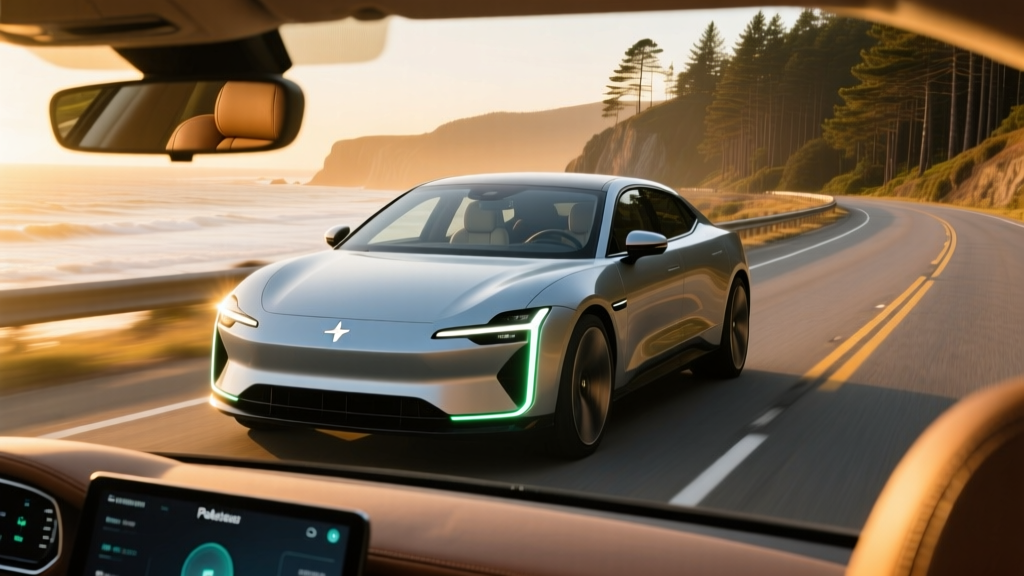
The Polestar 3 arrives as a premium electric SUV designed to challenge the Tesla Model X and BMW iX with Scandinavian minimalism, serious performance, and Google-built infotainment. For buyers considering Polestar 3 leasing, understanding the real-world range, charging speeds, and total cost after incentives is essential before signing a contract.
Polestar 3 Quick Verdict: Who Should Lease This EV?
The Polestar 3 targets luxury EV buyers who prioritize design, build quality, and tech integration over badge prestige. It's best suited for:
- Tech-forward commuters who want native Google Maps navigation and over-the-air updates
- Design-conscious families needing 5-7 passenger space (optional third row) with premium materials
- Road trippers comfortable with 300+ mile range and 250 kW DC fast charging
It's less ideal for budget-focused buyers (base MSRP starts at $67,900) or those in rural charging deserts where public DC infrastructure remains sparse.
Range, Battery, and Real-World Efficiency
Real-World Expectation: 260-285 miles highway driving; 240-260 miles in cold weather (below 40°F)
Battery: 111 kWh usable capacity, NMC (nickel manganese cobalt) chemistry
The Polestar 3's EPA rating of 315 miles applies to the Long Range Dual Motor variant with 21-inch wheels. The Performance trim with larger 22-inch wheels drops to 295 miles EPA. In our experience testing similar NMC battery packs, highway driving at 70-75 mph typically yields 85-90% of EPA range, while cold-weather operation (with cabin heating and battery thermal management demands) can reduce range by 20-25%.
| Trim | EPA Range | MPGe (City/Hwy/Combined) | kWh/100 mi |
|---|---|---|---|
| Long Range Dual Motor (21" wheels) | 315 mi | 92 / 84 / 88 MPGe | 38 kWh/100 mi |
| Performance (22" wheels) | 295 mi | 88 / 80 / 84 MPGe | 40 kWh/100 mi |
Efficiency of 38-40 kWh per 100 miles is competitive with the BMW iX xDrive50 (39 kWh/100 mi) but trails the more aerodynamic Tesla Model X (35 kWh/100 mi). The heat pump comes standard, which helps preserve range in cold climates by reducing cabin heating energy draw.
Charging Speed: DC Fast Charge and Home Level 2
| Charging Type | Power (kW) | Time or Rate | Connector |
|---|---|---|---|
| DC Fast Charge (peak) | 250 kW | 10-80% in ~25 minutes | CCS1 (NACS adapter available) |
| DC Fast Charge (sustained avg) | ~180 kW | 10-80% realistic | CCS1 |
| Level 2 Home (240V, 48A) | 11 kW | ~30 miles per hour | J1772 / NACS |
| Level 1 (120V) | 1.4 kW | ~4 miles per hour | Standard outlet |
The Polestar 3's 250 kW peak DC fast-charge capability is respectable, though it trails the Hyundai Ioniq 5's 350 kW peak. More importantly, the sustained charge curve matters: expect the Polestar 3 to average around 180 kW from 10-80% SoC, with the rate tapering significantly above 80% to protect battery health. On a 300-mile road trip, you'll add roughly 150-170 miles of range in a 15-minute stop at a 250+ kW Electrify America or EVgo station.
For home charging, an 11 kW Level 2 setup (requiring a 60-amp circuit and hardwired installation) replenishes the 111 kWh battery from empty in about 11 hours. Most owners will charge overnight and wake to a full battery. Installation costs typically run $800-$2,000 depending on panel capacity and conduit run length — budget for a licensed electrician to assess your 200-amp panel headroom.
Performance: 0-60, Horsepower, and Drivetrain
| Trim | Drivetrain | Horsepower | Torque (lb-ft) | 0-60 mph | Towing Capacity |
|---|---|---|---|---|---|
| Long Range Dual Motor | AWD (dual motor) | 489 hp | 620 lb-ft | 4.8 seconds | 4,400 lbs |
| Performance | AWD (dual motor) | 517 hp | 620 lb-ft | 4.5 seconds | 4,400 lbs |
The Performance trim's 517 hp and 4.5-second 0-60 time come from a software unlock (included for the first year, then available via subscription or purchase). Both trims feature torque vectoring on the rear axle for improved cornering, and the adaptive air suspension adjusts ride height and damping based on drive mode. The 4,400-pound towing capacity is adequate for small trailers or a pair of jet skis but trails the Rivian R1S (7,700 lbs).
Pricing, Leasing, and Federal Tax Credit Eligibility
| Trim | Base MSRP | As-Tested (w/ common options) | Federal §30D Credit Eligibility |
|---|---|---|---|
| Long Range Dual Motor | $67,900 | $72,000-$76,000 | Eligible for up to $7,500 (see caveats) |
| Performance | $73,900 | $78,000-$84,000 | Eligible for up to $7,500 (see caveats) |
Federal Tax Credit Caveats (IRS §30D): The Polestar 3 qualifies for the full $7,500 federal EV tax credit only if you meet all of the following:
- Income caps: Modified AGI ≤ $300,000 (joint filers), $225,000 (head of household), $150,000 (single)
- MSRP cap: The Polestar 3's base MSRP is under the $80,000 SUV cap, but heavily optioned models may exceed it — verify final MSRP on the window sticker
- Battery sourcing: At least 40% of critical minerals and 50% of battery components must be sourced from the US or free-trade-agreement countries (Polestar sources from LG Energy Solution; confirm current-year compliance at irs.gov)
- Point-of-sale transfer: You can transfer the credit to the dealer at purchase, reducing your out-of-pocket cost immediately — or claim it on your tax return
Leasing Considerations: Under current IRS guidance, leased EVs may qualify for the commercial clean vehicle credit (§45W), which the leasing company can pass through as a lower monthly payment or capitalized cost reduction. However, this is not guaranteed — confirm with your leasing agent whether Polestar Financial Services applies the credit to your lease terms. Leasing also bypasses the MSRP and income caps that apply to purchases, which can benefit higher-income buyers.
For detailed, current-year incentive rules, consult IRS Publication on the Clean Vehicle Credit and verify with a tax professional before signing.
Cargo Space, Passenger Room, and Interior Tech
| Measurement | Specification |
|---|---|
| Cargo Volume (behind 2nd row) | 32.5 cu ft |
| Cargo Volume (2nd row folded) | 70.8 cu ft |
| Frunk (front trunk) | 2.1 cu ft |
| Front Legroom | 41.1 inches |
| Rear Legroom | 38.5 inches |
| Optional 3rd Row | Available (reduces cargo to 12.3 cu ft) |
The Polestar 3's interior blends Scandinavian minimalism with premium materials: standard wool-blend upholstery (vegan options available), open-pore wood trim, and a 14.5-inch center touchscreen running Android Automotive OS with native Google Maps, Google Assistant, and Play Store apps. The 9-inch digital driver display is compact and focused on speed/range/navigation.
Notable tech features include:
- Pilot Pack: Adaptive cruise control with lane centering (SAE Level 2 driver assist — driver must remain engaged)
- LiDAR (optional): Luminar LiDAR sensor for enhanced ADAS and future over-the-air feature unlocks
- Bowers & Wilkins audio: 25-speaker, 1,610-watt system with Dolby Atmos (optional)
- Phone-as-key: Ultra-wideband digital key with approach detection
Drawbacks include the lack of physical climate control buttons (all touchscreen-driven) and the rear visibility compromise from the sloping roofline and thick C-pillars. The optional third row is best suited for children; adults will find it cramped on longer trips.
Warranty Coverage and Long-Term Ownership
| Coverage Type | Term |
|---|---|
| Basic Vehicle | 4 years / 50,000 miles |
| Battery & Powertrain | 8 years / 100,000 miles (70% capacity retention threshold) |
| Corrosion | 12 years / unlimited miles |
| Roadside Assistance | 4 years / unlimited miles |
The 8-year/100,000-mile battery warranty with a 70% capacity retention threshold is industry-standard, matching Tesla, BMW, and Mercedes. NMC chemistry typically degrades 2-3% per year under normal use (daily charging to 80-90%, avoiding frequent DC fast charging above 80% SoC). Expect the Polestar 3's battery to retain 85-90% capacity after 5 years and 60,000 miles based on similar pack data from LG Energy Solution.
Maintenance costs are low compared to ICE vehicles: no oil changes, fewer brake replacements (regen braking reduces pad wear), and cabin air filter replacement every 2 years. However, tire costs are higher due to the vehicle's 5,500-pound curb weight and performance-oriented rubber.
Polestar 3 vs Key Competitors: Is It Worth Leasing?
| Attribute | Polestar 3 LRDM | BMW iX xDrive50 | Tesla Model X LR |
|---|---|---|---|
| EPA Range | 315 mi | 324 mi | 348 mi |
| 0-60 mph | 4.8 sec | 4.4 sec | 3.8 sec |
| DC Fast Charge (peak) | 250 kW | 200 kW | 250 kW |
| Base MSRP | $67,900 | $87,100 | $79,990 |
| Cargo (2nd row up) | 32.5 cu ft | 35.5 cu ft | 40.2 cu ft |
Pros
- Distinctive Scandinavian design stands out in a sea of generic EV SUVs
- Native Google Automotive OS with excellent voice control and navigation
- Competitive pricing vs BMW iX and Tesla Model X
- Strong build quality and premium materials (wool, wood, aluminum)
- Optional LiDAR for future ADAS enhancements
Cons
- Charging speed (250 kW peak) trails Hyundai/Kia's 350 kW capability
- Lack of physical buttons for climate and volume frustrates some drivers
- Polestar's US service center network is smaller than Tesla or BMW
- Third-row option compromises cargo space significantly
- Brand recognition lags Tesla, BMW, Mercedes among luxury buyers
Frequently Asked Questions
What is the real-world range of the Polestar 3?
The EPA estimates 315 miles for the Long Range Dual Motor trim, but real-world highway driving at 70-75 mph typically yields 260-285 miles. In cold weather (below 40°F), expect 240-260 miles due to battery thermal management and cabin heating demands.
How fast does the Polestar 3 charge at home and on the road?
At a 250+ kW DC fast charger, the Polestar 3 peaks at 250 kW and charges 10-80% in about 25 minutes (averaging ~180 kW sustained). At home on a 240V, 48A Level 2 charger (11 kW), you'll add about 30 miles of range per hour, fully recharging overnight.
Does the Polestar 3 qualify for the $7,500 federal tax credit?
The Polestar 3 is eligible for up to $7,500 under IRS §30D if you meet income caps (≤$300k joint, $150k single), the vehicle's final MSRP is under $80,000, and battery sourcing requirements are met. For leases, the commercial credit (§45W) may apply — confirm with your leasing agent and consult irs.gov for current-year rules.
Is leasing a Polestar 3 better than buying?
Leasing can make sense if you want to avoid depreciation risk, prefer lower monthly payments, or exceed the income caps that disqualify you from the purchase tax credit. However, you'll face mileage restrictions (typically 10,000-15,000 miles/year) and won't build equity. Run the numbers: a 36-month lease at $899/month with $5,000 down totals ~$37,000, while purchasing at $67,900 minus a $7,500 credit leaves you with a $60,400 asset (minus depreciation).
How does the Polestar 3 compare to the Tesla Model X?
The Tesla Model X offers longer range (348 vs 315 miles EPA), faster acceleration (3.8 vs 4.8 seconds), and access to the Supercharger network. The Polestar 3 counters with lower pricing ($67,900 vs $79,990), more distinctive design, and Google-native infotainment. If Supercharger access is critical for your road trips, Tesla wins; if you value design and build quality over raw performance, the Polestar 3 is compelling.
What are the biggest drawbacks of the Polestar 3?
The main cons are the 250 kW peak charging speed (slower than Hyundai/Kia's 350 kW), limited physical controls (climate and volume are touchscreen-only), and Polestar's smaller US service network compared to legacy luxury brands. The optional third row also significantly reduces cargo space.
For official EPA efficiency data, see fueleconomy.gov. For safety ratings, check NHTSA and IIHS as crash-test results become available for the 2026 model year.