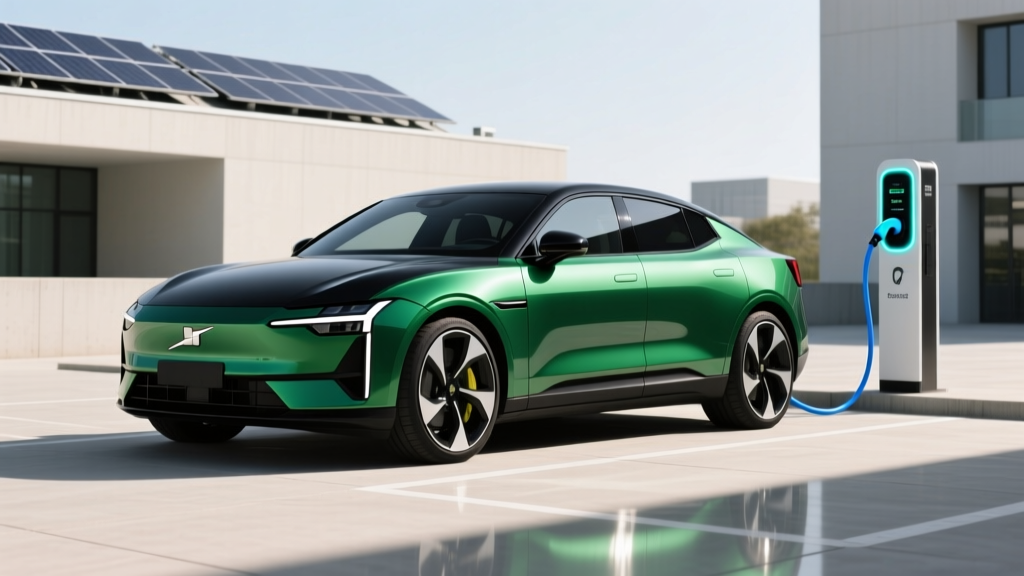
The Polestar 3 is Volvo's Swedish-Chinese luxury EV SUV reimagined for the electric era — a dual-motor, 111 kWh performance machine targeting BMW iX and Tesla Model X buyers. With US deliveries ramping through 2025 and now into the 2026 model year, the lease market is where many buyers are finding the most attractive entry point. Here's a data-driven look at what Polestar 3 lease offers actually cost, the real-world range and charging specs behind the numbers, and whether this luxury EV earns a spot in your garage.
2026 Polestar 3 Lease Pricing and Incentives
Polestar has positioned the 3 aggressively on the lease side to compete with German luxury rivals and Tesla's aging Model X. As of early 2026, advertised lease offers on the Long Range Dual Motor trim start around $849/month for 36 months with approximately $5,500 due at signing (including first month's payment, acquisition fee, and down payment). The Performance variant with the optional Performance Pack typically adds $80–$120/month depending on dealer markup and regional incentives.
| Trim | Base MSRP | Est. Lease (36 mo) | Due at Signing | §30D Credit via Lease |
|---|---|---|---|---|
| Long Range Dual Motor | $67,900 | ~$849/mo | ~$5,500 | Passed through as cap reduction* |
| Long Range Dual Motor w/ Performance Pack | $73,900 | ~$949/mo | ~$5,500 | Passed through as cap reduction* |
*Under IRS §30D rules, leased EVs are technically purchased by the leasing company (lessor), which claims the commercial clean vehicle credit (§45W). Most automakers pass this $7,500 savings to the lessee as a capitalized-cost reduction, effectively lowering monthly payments. This "lease loophole" bypasses the buyer income caps, MSRP caps, and battery-sourcing requirements that apply to purchases — but confirm with your dealer that the credit is being applied to your deal. Always verify current rules at IRS.gov.
Because the Polestar 3's MSRP exceeds $80,000 for some configurations (after destination and popular options), buyers who purchase outright may not qualify for the $7,500 federal tax credit due to the §30D MSRP cap of $80,000 for SUVs. Leasing sidesteps this entirely, which is precisely why Polestar 3 lease offers are drawing attention from luxury EV shoppers.
Range, Battery, and Real-World Efficiency
The Polestar 3 Long Range Dual Motor carries a 111 kWh gross battery pack (approximately 107 kWh usable) using NMC (nickel manganese cobalt) chemistry — the standard for premium, energy-dense EVs prioritizing range and performance over the cycle-life advantages of LFP.
EPA Estimated Range: 315 miles (Long Range Dual Motor)
Real-World Expectation: Plan for approximately 260–285 miles in mixed highway driving at 70+ mph, and potentially 220–250 miles in cold-weather conditions (below 32°F) without consistent preconditioning. The EPA figure is achievable in moderate-temperature city and suburban driving with regenerative braking engaged.
Efficiency lands at roughly 81 MPGe combined (approximately 41 kWh/100 miles) per fueleconomy.gov data. That's competitive with the BMW iX xDrive50 (86 MPGe) but slightly behind the Tesla Model X Long Range (102 MPGe), which benefits from Tesla's lighter platform and more aggressive aero. For a 5,000+ pound luxury SUV with a dual-motor setup, the Polestar 3's efficiency is respectable — but buyers prioritizing maximum miles per kWh should cross-shop the Model X or the forthcoming Lucid Gravity.
| Spec | Polestar 3 LR Dual Motor |
|---|---|
| Battery (gross / usable) | 111 kWh / ~107 kWh |
| Chemistry | NMC |
| EPA Range | 315 miles |
| MPGe (combined) | 81 MPGe |
| Efficiency | ~41 kWh/100 mi |
| Drivetrain | Dual Motor AWD |
| Horsepower | 489 hp (517 hp w/ Perf. Pack) |
| 0–60 mph | 4.7 sec (4.5 sec w/ Perf. Pack) |
Charging Speed: DC Fast and Home Level 2
Charging performance is where the Polestar 3's 800-volt architecture pays dividends. The SUV supports a peak DC fast-charge rate of 250 kW on compatible CCS/NACS stations. In practice, the charge curve holds strong through the mid-SoC range:
| Charging Level | Power (kW) | Rate / Time | Notes |
|---|---|---|---|
| Level 1 (120V) | ~1.4 kW | ~4 mi/hr | Emergency/trickle only |
| Level 2 (240V, 48A) | 11 kW | ~30 mi/hr; full charge ~10 hr | Home / workplace standard |
| DC Fast Charge (peak) | 250 kW | 10–80% in ~30 min | Sustains ~170+ kW to 50% SoC, tapers above 80% |
The 10–80% time of roughly 30 minutes is competitive but not class-leading — the Hyundai Ioniq 5 and Kia EV9 hit 10–80% in approximately 18–20 minutes on 350 kW chargers thanks to more aggressive charge curves. The Polestar 3's taper above 80% SoC is pronounced, as is typical with NMC packs managed conservatively for longevity. If you frequently road-trip and charge to 90%+, budget an extra 15–20 minutes per stop.
On the home front, the 11 kW onboard charger means a full Level 2 session replenishes about 30 miles per hour of charging. Most owners charging overnight on a 48-amp home station (such as a ChargePoint Home Flex or Tesla Wall Connector with J1772 adapter) will wake to a full battery in roughly 10 hours — adequate for daily use.
Performance, Handling, and Drivetrain
With 489 horsepower standard (517 hp with the Performance Pack's software unlock), the Polestar 3 delivers the effortless thrust expected of a luxury EV SUV. The 4.7-second 0–60 mph time (4.5 seconds with the Performance Pack) is brisk but not absurd — Polestar has tuned this SUV for composure over drag-strip theatrics.
The dual-motor AWD system uses a rear-biased torque split for a more engaging, RWD-like feel under normal driving, with the front motor engaging for traction and hard acceleration. Air suspension is standard, offering adjustable ride height and adaptive damping. In our assessment, the ride quality strikes a good balance between the firmness needed for a 5,300-pound vehicle and the compliance expected at this price point.
Towing capacity is rated at 3,500 pounds — adequate for a small boat or light trailer but well behind the Tesla Model X (5,000 lbs) and Rivian R1S (7,700 lbs). If towing is a priority, the Polestar 3 is not the segment leader.
Interior Space, Cargo, and Technology
The Polestar 3 seats five adults comfortably, though it is not a three-row vehicle. Interior dimensions provide ample front-seat space with approximately 41 inches of front legroom and 38 inches in the rear. The cabin materials are premium — recycled textiles, available Nappa leather, and a minimalist Scandinavian design language that will feel familiar to Volvo owners.
Cargo volume comes in at approximately 17.1 cubic feet behind the rear seats and 48.4 cubic feet with the rear seats folded. There is also a small front trunk (frunk) offering about 1.1 cubic feet — enough for charging cables and a small bag but not a significant differentiator. Compared to the BMW iX (35.5 / 77.9 cu ft), the Polestar 3 gives up meaningful cargo room, and the Tesla Model X dwarfs both with its available third-row configuration.
On the tech front, the Polestar 3 runs a 14.5-inch center touchscreen on Android Automotive OS with Google built-in (Maps, Assistant, Play Store). A 9-inch driver display sits behind the steering wheel, and an available 25-speaker Bowers & Wilkins audio system is a standout. Wireless Apple CarPlay is supported. The infotainment system is responsive, though some users find the reliance on touchscreen controls for climate and mirrors (no physical mirror-adjustment buttons) frustrating during daily use.
Driver assistance includes Polestar's Pilot Pack with adaptive cruise control, lane-centering, and automated lane-change assist. An available Pilot Pack with LiDAR (sourced from Luminar) adds hardware for future over-the-air feature expansions. However, this is an SAE Level 2 system — the driver must remain engaged and hands-on (or eyes-on, depending on the mode) at all times. This is not autonomous driving.
Warranty and Ownership Considerations
Polestar provides a competitive warranty package for the luxury EV segment:
- Basic vehicle warranty: 4 years / 50,000 miles
- Battery and drive unit warranty: 8 years / 100,000 miles (with a minimum 70% capacity retention threshold)
- Roadside assistance: 4 years / unlimited miles
The 8-year/100,000-mile battery warranty is standard for the segment and aligns with federal requirements. The 70% retention threshold means Polestar will repair or replace the battery if it degrades below 70% of original capacity within the warranty window. Based on current NMC degradation data from similar platforms, most owners should expect to retain 85–90% capacity at the 8-year mark under normal use — well above the warranty floor.
Insurance costs for the Polestar 3 run higher than average for the segment. Expect quotes in the $2,800–$3,600/year range depending on your profile, driven by the vehicle's MSRP, repair costs for aluminum-intensive construction, and limited collision-repair networks compared to Tesla. Always pull an insurance quote before signing a lease.
Pros and Cons
Pros
- 315-mile EPA range is solid for the luxury SUV class
- 250 kW DC fast charging with 800V architecture
- Premium Scandinavian interior with sustainable materials
- Lease loophole allows access to $7,500 credit regardless of income/MSRP caps
- Standard air suspension and dual-motor AWD
- Available Luminar LiDAR for future ADAS expansion
- Quiet, composed ride quality at highway speeds
Cons
- Cargo space trails BMW iX and Tesla Model X significantly
- 30-minute 10–80% charge time lags Ioniq 5/EV9 benchmarks
- MSRP above $80,000 eliminates §30D credit for outright buyers
- No third-row option (Model X, Rivian R1S offer it)
- 3,500-lb tow rating is modest for the class
- Limited Polestar service center network vs. legacy luxury brands
- Insurance premiums run high for the segment
Is the Polestar 3 Worth Leasing vs. Competitors?
The Polestar 3 occupies a specific niche: buyers who want a distinctive, design-forward luxury EV SUV that isn't a Tesla and doesn't look like every German competitor on the road. It's best suited for urban and suburban professionals who value interior quality, a refined ride, and a strong but not extreme performance profile. It's a strong daily driver and weekend road-trip companion for couples and small families.
It is not ideal for large families needing three rows, frequent heavy-towing users, or buyers who prioritize maximum cargo volume and charging speed above all else.
Key cross-shops include:
- BMW iX xDrive50 — more cargo room, slightly better efficiency, similar luxury positioning, comparable lease pricing
- Tesla Model X Long Range — more range (348 mi EPA), available third row, Supercharger access, but aging interior
- Rivian R1S — three rows, far superior towing (7,700 lbs), more adventurous styling, but less luxury refinement
- Mercedes EQE SUV — comparable luxury, slightly less range, higher starting price
Frequently Asked Questions
What is the real-world range of the Polestar 3?
The EPA rates the Polestar 3 Long Range Dual Motor at 315 miles. In real-world mixed highway driving at 70+ mph, expect approximately 260–285 miles. In cold weather (below 32°F) without preconditioning, range can drop to 220–250 miles. Use the vehicle's battery preconditioning feature before DC fast charging and in cold weather to minimize losses.
How fast does the Polestar 3 charge at home and on the road?
On a DC fast charger, the Polestar 3 peaks at 250 kW and charges from 10–80% in approximately 30 minutes, with tapering above 80% SoC. At home on a 48-amp Level 2 station (11 kW), it adds about 30 miles per hour of charging, with a full charge taking roughly 10 hours.
How much does the Polestar 3 cost after tax credits?
When purchased outright, the Polestar 3 may not qualify for the §30D federal tax credit because some configurations exceed the $80,000 MSRP cap for SUVs. However, leasing typically allows the lessor to claim the commercial clean vehicle credit and pass through a $7,500 cap reduction, effectively lowering the lease cost. Confirm credit pass-through with your dealer and consult a tax professional for purchase scenarios.
Does the Polestar 3 qualify for the federal EV tax credit?
For outright purchases, eligibility depends on the exact MSRP (must be ≤$80,000 for SUVs), buyer income (≤$150K single / $300K joint), and battery sourcing requirements. The Polestar 3's base MSRP of $67,900 may qualify, but adding options can push it over the cap. For leases, the commercial credit (§45W) applies regardless of income or MSRP caps. Verify current eligibility at IRS.gov.
Is the Polestar 3 self-driving?
No. The Polestar 3's Pilot Pack is an SAE Level 2 driver-assistance system, meaning the driver must remain fully engaged and responsible for vehicle operation at all times. The available Luminar LiDAR adds sensing hardware for future features, but no Level 3 or Level 4 autonomy is currently available on the Polestar 3.
Who is the Polestar 3 best for?
The Polestar 3 is ideal for luxury-minded buyers who want a distinctive Scandinavian-designed EV SUV for commuting, daily driving, and weekend road trips. It suits couples and small families who don't need three rows or heavy towing capacity. It's less suited for large families, frequent trailers, or buyers who prioritize maximum cargo volume and the fastest possible DC charging.