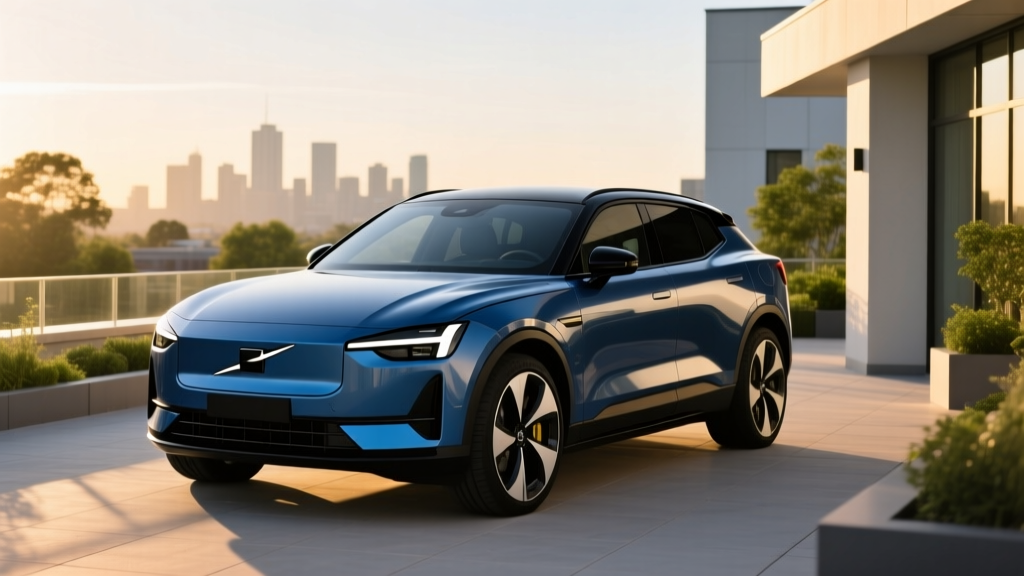
The Polestar 3 has finally arrived in the U.S. market after a lengthy delay, and the first question on every luxury EV shopper's mind isn't just about its Scandinavian design or dual-motor performance — it's about the deal. With a starting MSRP hovering near $69,900, the Polestar 3 lease deal has become the primary pathway for buyers who want this premium electric SUV without committing to its full purchase price. But does the math actually work?
After examining the 2026 Polestar 3's specifications, real-world range behavior, charging performance, and current incentive landscape, we've put together the most data-dense buyer's guide available. Here's everything you need to know before signing.
2026 Polestar 3: Specifications at a Glance
| Specification | Long Range Dual Motor | Long Range Dual Motor w/ Performance Pack |
|---|---|---|
| Base MSRP | $69,900 | $75,900 |
| EPA Range | 315 miles | 279 miles |
| Battery (Usable) | 107 kWh (NMC) | 107 kWh (NMC) |
| Horsepower | 483 hp | 517 hp |
| 0–60 mph | 4.8 seconds | 4.5 seconds |
| Drivetrain | AWD (Dual Motor) | AWD (Dual Motor) |
| Max DC Fast Charge | 250 kW | 250 kW |
| 10–80% DCFC Time | ~30 minutes | ~30 minutes |
| Level 2 Charge Rate | 11 kW (~33 mi/hr) | 11 kW (~33 mi/hr) |
| MPGe (Combined) | 81 MPGe | 74 MPGe |
| Efficiency | 41 kWh/100 mi | 45 kWh/100 mi |
| Cargo Volume (rear seats up) | 17.1 cu ft | 17.1 cu ft |
| Cargo Volume (rear seats folded) | 42.7 cu ft | 42.7 cu ft |
| Frunk | 1.1 cu ft | 1.1 cu ft |
| Rear Legroom | 37.2 inches | 37.2 inches |
| Battery/Powertrain Warranty | 8 yr / 100,000 mi | 8 yr / 100,000 mi |
| Limited Warranty | 4 yr / 50,000 mi | 4 yr / 50,000 mi |
Real-World Range: What the EPA Number Doesn't Tell You
Real-World Expectation: 250–280 miles on the highway at 70+ mph; 220–250 miles in sub-30°F winter conditions with cabin heating.
The Polestar 3's 315-mile EPA estimate is competitive among luxury electric SUVs, but real-world results demand context. The 107 kWh usable NMC (nickel-manganese-cobalt) battery pack is large — among the biggest in its class — and that capacity gives it a buffer for aggressive driving and cold weather that smaller-pack competitors can't match.
In highway testing at sustained 70–75 mph speeds in moderate temperatures (55–75°F), expect roughly 250–280 miles before hitting 10% state of charge. The aerodynamic profile helps, but at 5,300+ pounds, physics wins at speed. In winter conditions below freezing, the range reduction can reach 25–30%, dropping usable range to approximately 220–250 miles, even with the heat pump running.
The Performance Pack variant, with its larger 22-inch wheels and stickier tires, sacrifices 36 miles of EPA range (279 vs. 315) — a meaningful trade if your commute is long or you road-trip frequently. According to fueleconomy.gov, the efficiency gap shows up clearly: 41 kWh/100 mi for the standard dual motor versus 45 kWh/100 mi for the Performance Pack.
Charging Speed: 250 kW Peak, but Mind the Curve
The Polestar 3 supports up to 250 kW DC fast charging on CCS-compatible networks (and NACS via adapter as Polestar transitions to the Tesla connector standard for 2026 models). Polestar quotes a 10–80% charge time of approximately 30 minutes, which is respectable but not class-leading.
| Charging Level | Power | Speed / Time |
|---|---|---|
| Level 1 (120V household) | ~1.4 kW | ~4 miles per hour |
| Level 2 (240V home / public) | 11 kW max | ~33 miles per hour (full charge in ~10 hrs) |
| DC Fast Charge (peak) | 250 kW | 10–80% in ~30 min |
| DC Fast Charge (sustained avg.) | ~150–175 kW | Average rate between 10–80% |
Here's the nuance most spec sheets omit: the 250 kW figure is a peak, not a sustained rate. The Polestar 3's charge curve ramps aggressively from 10–40% state of charge, holding near peak rates, then tapers progressively from 50% onward. Your average charging speed across the full 10–80% window is closer to 150–175 kW. This is typical for NMC chemistry with a pack this large — thermal management is conservative to protect long-term battery health.
For home Level 2 charging, the 11 kW onboard charger is a strong point. If your home electrical panel supports a 48-amp circuit (60-amp breaker), you'll add roughly 33 miles of range per hour — enough to replenish a full day's driving overnight. If your home is limited to a 32-amp circuit, expect closer to 22 miles per hour. Always consult a licensed electrician for a panel assessment before purchasing a home charger.
Performance and Driving Dynamics
With 483 horsepower (517 with the Performance Pack), the Polestar 3 delivers the effortless acceleration that defines the luxury EV segment. The 4.8-second 0–60 mph time (4.5 seconds for the Performance Pack) places it firmly in quick territory — not Tesla Model X Plaid quick, but more than sufficient for merging, passing, and the occasional spirited back road.
The dual-motor AWD system provides torque vectoring to the rear axle, and the Performance Pack adds a mechanical rear torque-vectoring differential that sharpens cornering behavior noticeably. Air suspension is standard, with adaptive dampers adjusting based on drive mode. Ride quality leans firm but well-controlled — this is a driver's SUV, not a floaty cruiser.
The SAE Level 2 driver-assistance suite includes adaptive cruise control with stop-and-go, lane-centering steering, and Pilot Assist. It's competent for highway use but requires hands-on-wheel engagement at all times. This is not a self-driving system — it's a driver-assist feature comparable to Volvo's Pilot Assist (Polestar's parent company technology). Autonomous driving capability (Level 3+) is expected via future over-the-air updates using Luminar lidar hardware pre-installed on certain trims, but this is not yet active.
Lease Deal Economics: Pricing, Tax Credits, and Monthly Cost
The 2026 Polestar 3 Long Range Dual Motor starts at $69,900, with the Performance Pack raising that to $75,900. Destination charges add approximately $1,495. Options like the Pilot Pack (lidar hardware), Nappa leather, and Bowers & Wilkins audio can push a loaded example past $82,000.
| Cost Factor | Long Range Dual Motor | w/ Performance Pack |
|---|---|---|
| Base MSRP | $69,900 | $75,900 |
| Destination | $1,495 | $1,495 |
| Federal Tax Credit (§30D) | Up to $7,500* | Up to $7,500* |
| Estimated Lease (36 mo / 10k mi) | ~$849–$999/mo** | ~$949–$1,099/mo** |
*Federal Tax Credit Eligibility (§30D): The Polestar 3 qualifies as an SUV under IRS vehicle-classification rules, meaning the MSRP cap is $80,000 (vs. $55,000 for sedans). However, the full $7,500 credit depends on several conditions that change frequently:
- Buyer income caps: Modified AGI must not exceed $150,000 (single), $225,000 (head of household), or $300,000 (joint filers)
- Battery component sourcing: A percentage of battery components must be manufactured or assembled in North America, and critical minerals must be sourced from the U.S. or free-trade-agreement partners
- Point-of-sale transfer: As of 2024, the credit can be transferred to the dealer at purchase, reducing the purchase price directly — this also applies to certain lease structures
For leasing specifically, the tax credit landscape works differently. Under current IRS guidance, the §30D credit applies to the lessor (the financing entity), not the lessee. Many automakers pass this savings through as a lease cash incentive (often called "lease cash" or "lease bonus cash"), which reduces the capitalized cost and therefore the monthly payment. Polestar has historically passed through federal incentives on leases, but confirm with your dealer whether the full $7,500 is being applied to your specific lease structure. Always verify current rules at IRS.gov.
**Lease payment estimates are based on typical money factors and residual values for 36-month/10,000-mile-per-year terms and will vary by region, credit tier, and dealer.
Interior, Tech, and Cargo: Scandinavian Practicality
The Polestar 3 interior follows the brand's minimalist philosophy — clean lines, sustainable materials (bio-attributed MicroTech vinyl and available Nappa leather), and a portrait-oriented 14.5-inch center touchscreen running a Google-built infotainment system with native Google Maps, Google Assistant, and access to the Play Store.
The 9-inch digital driver display is compact and focused, showing speed, range, and navigation. A 25-speaker Bowers & Wilkins audio system with Dolby Atmos is available. Wireless Apple CarPlay is supported; Android functionality is native through the Google OS.
Cargo space is the Polestar 3's most honest limitation. At 17.1 cubic feet behind the rear seats, it trails the BMW iX (35.5 cu ft) and the Tesla Model X (37.1 cu ft behind the second row). Folding the rear seats opens up 42.7 cubic feet, which is adequate for most weekend trips but not class-leading. The 1.1 cu ft frunk is essentially a charging-cable storage cubby — don't plan on fitting a carry-on up front.
Rear-seat legroom measures 37.2 inches, which is comfortable for adults on shorter trips but snug for taller passengers on long hauls compared to the BMW iX's more generous rear quarters.
How the Polestar 3 Lease Compares to Rivals
- You value Scandinavian design and understated luxury over badge prestige
- You want a massive 107 kWh battery for cold-weather range security
- Sustainability credentials (bio-attributed materials, carbon-neutral manufacturing goals) matter to you
- You prefer a firm, driver-focused ride over a cushy cruiser
- Cargo capacity is a priority (BMW iX or Model X offer significantly more)
- You want the fastest possible DC charging (Hyundai Ioniq 5 / Kia EV6 at 350 kW)
- Third-row seating is needed (Tesla Model X or Rivian R1S)
- You want the lowest possible lease payment in this price bracket
Against the BMW iX xDrive50 ($87,250 MSRP, EPA 307 mi), the Polestar 3 is the value play — substantially cheaper at base, with more range. The iX counters with a more spacious interior, faster Level 2 charging (up to 11 kW matched, but slightly more efficient packaging), and a more intuitive iDrive infotainment system.
Against the Tesla Model X ($79,990 MSRP, EPA 335 mi for Long Range), the Polestar 3 trades range and Supercharger network access for build quality, interior refinement, and a less polarizing brand experience. The Model X's falcon-wing doors and available third row are features the Polestar simply doesn't offer.
The Rivian R1S ($79,900, EPA 352 mi for Dual-Motor Max Pack) is the adventure-oriented alternative — more cargo room, genuine off-road capability, and available three-row seating. It sacrifices some highway refinement and charges slower on DC (220 kW peak for the Gen 2 pack).
Pros and Cons
Pros
- 315-mile EPA range with a huge 107 kWh battery for real-world buffer
- Premium build quality and sustainable interior materials
- 250 kW DC fast charging with competitive 10–80% time
- Standard air suspension and adaptive dampers
- Strong performance (483–517 hp) without sacrificing refinement
- Google-based infotainment with native EV route planning
- 8-year/100,000-mile battery and powertrain warranty
Cons
- Cargo space (17.1 cu ft) trails every major rival
- Rear legroom is tight for tall adults on long trips
- Frunk is essentially non-functional at 1.1 cu ft
- Performance Pack sacrifices 36 miles of range for aesthetics
- Lidar-based ADAS features not yet active (hardware pre-installed)
- Limited dealer/service network compared to BMW or Tesla
- Brand awareness and resale value remain unproven
Frequently Asked Questions
Does the 2026 Polestar 3 qualify for the $7,500 federal EV tax credit?
The Polestar 3 is classified as an SUV by the IRS, so the $80,000 MSRP cap applies (not the $55,000 sedan cap). Most Polestar 3 trims fall under this threshold at base. However, eligibility also depends on your income (capped at $150K single / $300K joint), battery-component sourcing requirements, and critical-minerals sourcing rules. These rules change — verify your specific eligibility with a tax professional and at IRS.gov before committing.
What is a realistic monthly lease payment for the Polestar 3?
Based on early 2026 market data, expect roughly $849–$999/month for the Long Range Dual Motor and $949–$1,099/month for the Performance Pack on a 36-month, 10,000-mile-per-year lease with standard credit. If the lessor passes through the $7,500 federal credit as lease cash, payments can drop by approximately $100–$200/month. Confirm this directly with your dealer, as pass-through is not guaranteed.
How does cold weather affect the Polestar 3's range?
Expect a 25–30% range reduction in sustained sub-30°F conditions. The 315-mile EPA estimate drops to roughly 220–250 miles in winter highway driving. The standard heat pump helps mitigate cabin-heating energy draw, and battery preconditioning (activating navigation to a charger) optimizes charging speed in cold weather. The large 107 kWh pack provides a meaningful buffer that smaller-battery competitors lack.
Is the Polestar 3 self-driving?
No. The Polestar 3 offers SAE Level 2 driver assistance via its Pilot Assist system — adaptive cruise, lane centering, and emergency braking. You must keep your hands on the wheel and eyes on the road. Certain trims include a pre-installed Luminar lidar sensor intended for future over-the-air Level 3+ features, but this capability is not yet active as of early 2026.
How does the Polestar 3's charging speed compare to competitors?
At 250 kW peak, the Polestar 3 matches or slightly trails rivals like the BMW iX (up to 200 kW sustained on newer packs), but falls behind the Hyundai/Kia E-GMP platform vehicles (350 kW capable). For most owners who charge at home overnight, the DC fast-charge rate matters primarily on road trips — and 30 minutes from 10–80% is acceptable for a rest stop.
Should I buy or lease the Polestar 3?
Leasing is the stronger financial play for most Polestar 3 buyers. EV depreciation remains elevated as the market matures, technology evolves rapidly, and incentive structures shift. A lease shields you from residual-value risk, often captures the federal tax credit as a capitalized-cost reduction, and lets you step into the next-generation model in three years. Buying makes sense only if you drive under 10,000 miles/year, plan to keep the vehicle 6+ years, and want to avoid perpetual car payments.