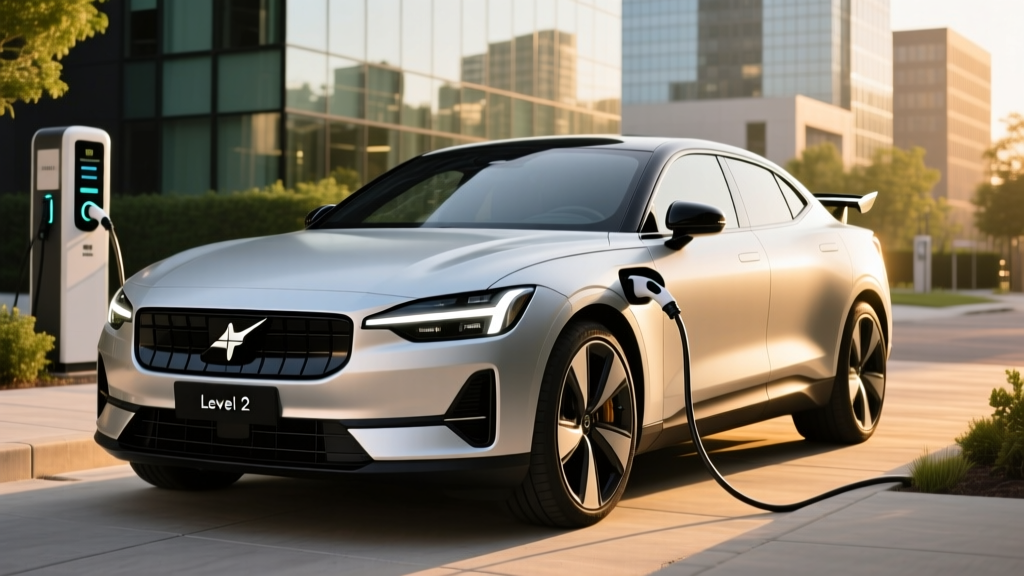
Quick Verdict: Polestar's Flagship SUV Arrives With Substance
The 2026 Polestar 3 is the brand's first true SUV and its most ambitious vehicle yet — a 111 kWh, dual-motor electric luxury cruiser targeting BMW iX and Audi Q8 e-tron buyers who want Scandinavian minimalism over German maximalism. Built on the Volvo EX90's SPA2 platform at Polestar's Chengdu facility, the 3 delivers genuine long-range capability, class-leading build quality, and a design that turns heads without shouting. But at a starting MSRP near $67,900, buyers need to know exactly what they're getting before signing.
After spending time with the specifications, cross-referencing EPA testing data, and evaluating the competitive landscape, the Polestar 3 emerges as a compelling — if imperfect — luxury EV SUV. Its strengths are range, charging speed, interior refinement, and safety tech. Its weaknesses are cargo space relative to its footprint, a learning-curve infotainment system, and tax-credit uncertainty tied to battery sourcing rules. Here's everything you need to decide.
Range, Battery & Efficiency: The Numbers That Matter
| Spec | Long Range Dual Motor | Long Range Dual Motor w/ Performance Pack |
|---|---|---|
| Battery (usable) | 111 kWh (NMC) | 111 kWh (NMC) |
| EPA Est. Range | ~315 miles | ~279 miles (21" wheels) |
| Drivetrain | AWD (dual motor) | AWD (dual motor) |
| Horsepower | 489 hp | 517 hp |
| Torque | 620 lb-ft | 671 lb-ft |
| 0–60 mph | 4.7 sec | 4.4 sec |
| Efficiency | ~87 MPGe / 39 kWh/100mi | ~79 MPGe / 43 kWh/100mi |
| Top Speed | 130 mph (electronically limited) | 130 mph |
The 111 kWh battery pack is among the largest in the luxury SUV segment, rivaled only by the BMW iX xDrive50's ~105 kWh usable and the Mercedes EQS SUV's ~108 kWh. Polestar uses a 400-volt architecture rather than the 800V systems found in the Hyundai Ioniq 5 or Porsche Macan EV, which means peak charging power tops out lower — but sustained charge rates remain competitive thanks to excellent thermal management. Efficiency of roughly 39 kWh per 100 miles is respectable for a 5,500+ lb vehicle, though the lighter BMW iX edges it at ~36 kWh/100mi.
Charging Speed: DC Fast, Level 2 & Home Setup
| Charging Level | Max Power | Speed / Time | Notes |
|---|---|---|---|
| Level 1 (120V) | ~1.4 kW | ~3–4 mi/hr | Emergency/top-up only |
| Level 2 (240V, home) | 11 kW (onboard charger) | ~25–28 mi/hr; 0–100% in ~11 hrs | Requires 48A circuit (60A breaker) |
| DC Fast Charge | 250 kW peak | 10–80% in ~30 min | CCS1 connector; tapers above 80% |
The 250 kW peak DC fast-charge rate is the headline figure, but the charge curve tells the real story. On a 350 kW Electrify America or EVgo station, the Polestar 3 sustains approximately 200–240 kW from 10% to about 55% State of Charge, then gradually tapers to ~150 kW through 70%, and drops further above 80%. The 10–80% sprint takes roughly 30 minutes under ideal conditions (battery preconditioned, ambient temperature 60–80°F). This is competitive with the BMW iX (~31 min to 80%) but slower than 800V-architecture rivals like the Kia EV9 (~20 min to 80% at 350 kW chargers).
At home, the 11 kW onboard AC charger is a bright spot. On a properly installed 240V/48A Level 2 circuit, you'll add roughly 25–28 miles of range per hour of charging, meaning an overnight session (8–10 hours) easily replenishes a full day's driving. Most owners will need a dedicated 60-amp breaker and 6-gauge wiring — budget $800–$2,000 for professional installation depending on your panel's proximity to the garage. The Polestar 3 uses the CCS1 connector standard; with the industry's ongoing shift to NACS (Tesla's connector), Polestar has confirmed a NACS adapter will be available, granting access to Tesla Supercharger stalls.
Preconditioning the battery is critical for achieving peak charge rates. Use the Polestar app or navigation-routed charging to begin warming the pack 15–20 minutes before arriving at a DC fast charger — especially in temperatures below 50°F. Skipping this step can cut peak charge power by 30–50%.
Interior, Tech & Cargo: Scandinavian Luxury With Trade-Offs
The Polestar 3's cabin is where the Volvo DNA shines most clearly. Materials include available wool-blend upholstery, recycled aluminum décor, and a microfiber headliner — all executed with the quiet confidence that defines Scandinavian design. The 14.5-inch center touchscreen runs a Snapdragon-powered Android Automotive OS with Google Maps navigation, Google Assistant, and native Spotify/YouTube apps. Wireless Apple CarPlay is supported.
The digital instrument cluster is a 9-inch display behind the steering wheel, supplemented by an available 31-inch Bowers & Wilkins head-up display projected onto the windshield. A 25-speaker Bowers & Wilkins Dolby Atmos audio system is optional and among the best in any vehicle at any price.
Driver assistance comes via Polestar's Pilot Pack, which includes adaptive cruise control with stop-and-go, lane-centering assist, blind-spot intervention, and a 360-degree camera system. The available Pilot Pack with LiDAR (sourced from Luminar) adds hardware for future over-the-air feature upgrades, though current functionality remains SAE Level 2 — meaning the driver must remain fully engaged with hands on the wheel and eyes on the road at all times. This is not autonomous driving.
Passenger space is generous for four adults. Front legroom measures approximately 41.3 inches, with rear legroom around 38.5 inches — sufficient for six-foot passengers in both rows. The panoramic glass roof (standard) creates an airy feel, though it does reduce headroom slightly compared to a conventional steel roof. Rear seat comfort is good but not class-leading; the seat cushion is somewhat flat for long trips.
Pricing, Tax Credits & Total Cost of Ownership
| Trim | Base MSRP | As-Tested (typical options) | Est. Federal Credit |
|---|---|---|---|
| Long Range Dual Motor | $67,900 | $72,000–$75,000 | Up to $7,500* |
| LR Dual Motor + Performance Pack | $73,900 | $78,000–$82,000 | Up to $7,500* |
*Federal tax credit eligibility under IRS §30D depends on multiple factors that change frequently. The Polestar 3 qualifies under the SUV MSRP cap of $80,000, but buyers must also meet income thresholds ($150,000 single / $300,000 joint MAGI) and the vehicle must satisfy critical-mineral and battery-component sourcing requirements. As of 2026, Polestar's Chengdu-built vehicles face scrutiny on battery-component sourcing from Foreign Entities of Concern (FEOC). Credit eligibility may be partial or unavailable depending on the specific build month and supply-chain compliance. Always verify with a tax professional before assuming the full $7,500. The credit can be transferred to the dealer at point of sale for an instant price reduction if eligible.
Destination charges add approximately $1,400. The Plus Pack ($4,000–$5,000) adds a heat pump, 360-degree camera, and premium audio. The Pilot Pack with LiDAR runs approximately $5,000. A fully loaded Performance Pack model can approach $82,000 before any incentives.
On the ownership-cost side, the Polestar 3 benefits from lower fueling costs versus gas rivals. At the national average electricity rate of ~$0.17/kWh and the vehicle's ~39 kWh/100mi efficiency, you'll spend approximately $6.63 per 100 miles on home charging — compared to roughly $13–$15 per 100 miles for a comparable gas SUV getting 22 MPG at $3.30/gallon. Insurance premiums run higher than average for the segment; expect $2,400–$3,200 annually depending on your profile and location.
Warranty & Long-Term Battery Confidence
Polestar provides a competitive warranty package:
- Basic vehicle warranty: 4 years / 50,000 miles
- Battery & drive unit warranty: 8 years / 100,000 miles (whichever comes first)
- Battery capacity retention: Guaranteed to retain at least 70% of original capacity over the 8-year/100,000-mile warranty period
- Corrosion warranty: 12 years (unlimited miles)
- Roadside assistance: 4 years / unlimited miles
The 70% capacity retention threshold is standard for the industry (BMW, Audi, and Mercedes match it). For an NMC chemistry pack of this size, real-world degradation data from similar Volvo/Polestar platforms suggests you'll likely retain 88–92% capacity after 5 years / 75,000 miles under normal use patterns. Avoiding habitual DC fast charging above 90% State of Charge and frequent deep discharges below 10% will extend long-term health. The heat pump (included in the Plus Pack) is strongly recommended — it reduces cabin-heating energy draw in cold weather, preserving range and reducing thermal cycling stress on the battery.
How the Polestar 3 Stacks Up Against Key Competitors
| Spec | Polestar 3 LR DM | BMW iX xDrive50 | Audi Q8 e-tron | Genesis Electrified GV70 |
|---|---|---|---|---|
| EPA Range | ~315 mi | ~324 mi | ~285 mi | ~236 mi |
| Battery (usable) | 111 kWh | ~105 kWh | ~106 kWh | ~74 kWh |
| Peak DC Charge | 250 kW | 150 kW | 170 kW | ~200 kW |
| 0–60 mph | 4.7 sec | 4.4 sec | 5.5 sec | 4.5 sec |
| Cargo (behind 2nd row) | ~17.1 cu ft | ~35.5 cu ft | ~28.5 cu ft | ~28.0 cu ft |
| Base MSRP | $67,900 | $87,250 | $74,400 | $66,450 |
| Tax Credit Eligible | Partial/Variable* | No (MSRP > $80K cap for sedan classification) | Variable* | Yes (likely) |
The Polestar 3 occupies a unique position: more affordable than the BMW iX, longer-ranged than the Audi Q8 e-tron, and more premium-feeling than the Genesis Electrified GV70. Its critical weakness is cargo volume — every competitor offers significantly more utility behind the second row. If you regularly haul gear, pets, or large groceries, the Polestar 3's 17.1 cubic feet will feel tight. If your use case is primarily commuting, road-tripping as a couple, and occasional light cargo, the trade-off for design and efficiency is justifiable.
Choose the Polestar 3 if: You want a design-forward luxury EV SUV with 300+ mile range, appreciate Scandinavian interior aesthetics, primarily drive solo or as a couple, and value safety tech with future LiDAR capability.
Look elsewhere if: You need maximum cargo space (BMW iX), you want the absolute lowest price in the segment (Genesis GV70), you require hands-free highway driving (GM Super Cruise vehicles), or you need guaranteed full $7,500 tax-credit eligibility — consult a tax professional on Polestar's current sourcing compliance.
Pros, Cons & Final Assessment
Pros
- 315-mile EPA range is genuinely road-trip capable
- 250 kW DC fast charging with good sustained rates
- Exceptional interior materials and build quality
- Standard AWD with strong 489–517 hp output
- LiDAR hardware available for future OTA upgrades
- Competitive pricing vs BMW iX and Audi Q8 e-tron
- Heat pump available for cold-climate efficiency
Cons
- Cargo space (17.1 cu ft) is below every key competitor
- Federal tax credit eligibility uncertain due to FEOC sourcing rules
- Android Automotive OS has a steeper learning curve than some rivals
- Rear seat comfort is good but not exceptional for long trips
- 400V architecture limits peak charging vs 800V rivals
- Frunk is small (1.1 cu ft) — mostly useful for cables
- Insurance premiums run above segment average
The 2026 Polestar 3 is a well-executed luxury electric SUV that nails the fundamentals — range, charging, build quality, and design — while making deliberate trade-offs in cargo practicality and infotainment accessibility. It's not the most practical choice in the segment, but it may be the most rewarding to live with daily if your priorities align with its strengths.
Frequently Asked Questions
What is the real-world range of the 2026 Polestar 3?
The EPA estimates approximately 315 miles for the Long Range Dual Motor on standard wheels. In real-world highway driving at 70–75 mph, expect 260–280 miles. In freezing temperatures without preconditioning, range can drop to 220–240 miles. The Performance Pack with 21-inch wheels reduces all figures by roughly 35 miles.
How fast does the Polestar 3 charge at home and on the road?
On a 240V Level 2 home charger, the 11 kW onboard charger adds about 25–28 miles of range per hour, with a full 0–100% charge taking roughly 11 hours. On a DC fast charger, the Polestar 3 peaks at 250 kW and charges from 10–80% in approximately 30 minutes when the battery is preconditioned.
Does the 2026 Polestar 3 qualify for the federal EV tax credit?
It may qualify for up to $7,500 under IRS §30D, but eligibility depends on the buyer's income (MAGI caps of $150K single / $300K joint), the vehicle's MSRP (under the $80,000 SUV cap — the Polestar 3 qualifies), and battery-component/critical-mineral sourcing requirements. Because the Polestar 3 is built in China, FEOC (Foreign Entity of Concern) rules on battery components may reduce or eliminate the credit depending on the build date and supply chain. Verify with a qualified tax professional before purchasing.
Is the Polestar 3 worth buying over the BMW iX or Audi Q8 e-tron?
If cargo space is a priority, the BMW iX is the clear winner with 35.5 cubic feet. If you want the lowest entry price and strong tax-credit odds, the Genesis Electrified GV70 is compelling. The Polestar 3 wins on design differentiation, charging speed (250 kW vs the iX's 150 kW), and value relative to German rivals — but only if its cargo limitations work for your lifestyle.
What connector does the Polestar 3 use, and can it charge at Tesla Superchargers?
The Polestar 3 uses the CCS1 connector for DC fast charging and J1772 for Level 2 AC. Polestar has confirmed a NACS adapter will be available, enabling access to Tesla's Supercharger network. Check Polestar's official channels for adapter availability timelines.
Is the Polestar 3 self-driving?
No. The Polestar 3's Pilot Pack, even with available LiDAR hardware, is classified as SAE Level 2 driver assistance. The driver must remain fully attentive, keep hands on the steering wheel, and be prepared to take over at any moment. The LiDAR hardware is intended for future over-the-air feature enhancements, but no Level 3 or Level 4 autonomous capability is currently available or guaranteed.