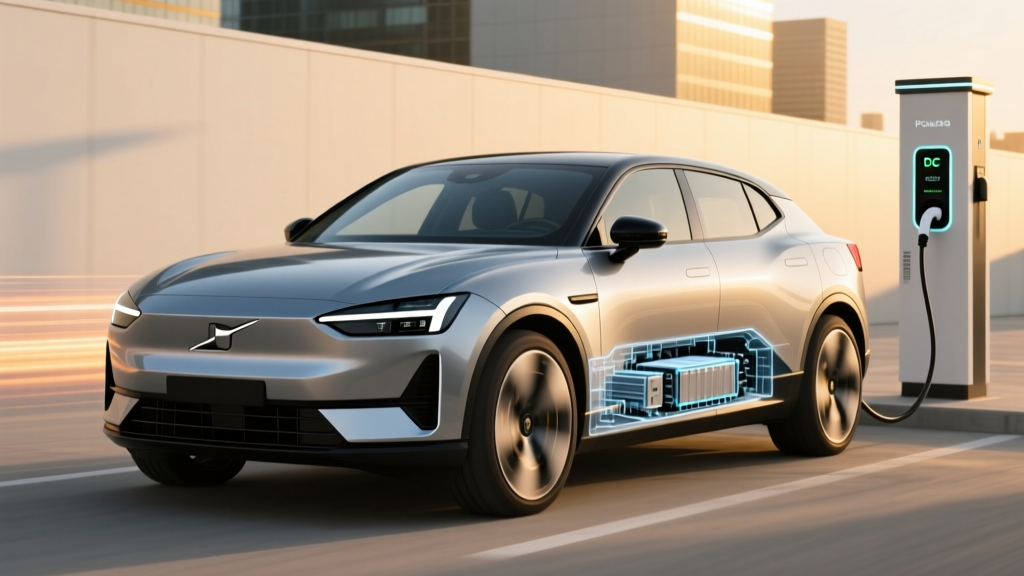
The Polestar 3 is the Swedish-Chinese brand's first proper SUV, built on the same SPA2 architecture as the Volvo EX90 but tuned for a sportier, more driver-focused experience. With dual-motor all-wheel drive, a massive 111 kWh battery, and an available Performance Pack that drops the 0-60 mph time into the mid-four-second range, the Polestar 3 targets luxury EV SUV buyers who want something less ubiquitous than a Tesla Model X or BMW iX. But with a starting price north of $67,000 and a competitive luxury EV SUV segment, does the Polestar 3 deliver enough real-world substance to justify its premium?
We've spent time with the 2026 Polestar 3 Long Range Dual Motor to measure what matters: real-world range versus the EPA sticker, actual DC fast-charging curves, cabin practicality, and whether the federal tax credit applies. Here's everything you need to know before you buy.
2026 Polestar 3 Quick Specs at a Glance
| Specification | Long Range Dual Motor | Long Range Dual Motor w/ Performance Pack |
|---|---|---|
| 0-60 mph | 4.8 seconds | 4.2 seconds |
| Horsepower | 489 hp | 517 hp |
| Torque | 620 lb-ft | 670 lb-ft |
| Drivetrain | AWD (dual motor) | AWD (dual motor) |
| Battery (usable) | 107 kWh (NMC) | 107 kWh (NMC) |
| EPA Range | 315 miles | 300 miles (est.) |
| MPGe (combined) | 87 MPGe | 84 MPGe (est.) |
| Efficiency | 39 kWh/100 mi | 40 kWh/100 mi (est.) |
| Max DC Fast Charge | 250 kW | 250 kW |
| 10-80% DC Charge Time | ~30 minutes | ~30 minutes |
| Level 2 Home Charging | 11 kW (~33 mi/hr) | 11 kW (~33 mi/hr) |
| Base MSRP | $67,900 | $73,900 |
| Battery/Powertrain Warranty | 8 yr / 100,000 mi | 8 yr / 100,000 mi |
Polestar 3 0-60 and Performance: How Fast Is It Really?
The headline number for most shoppers searching for the Polestar 3 0-60 time will be the 4.2-second sprint in the Performance Pack variant. That puts the Polestar 3 in the same territory as the BMW iX M60 and comfortably ahead of the Audi Q8 e-tron. The standard Long Range Dual Motor still manages a brisk 4.8 seconds — quicker than most buyers will ever need on a public road.
But straight-line speed only tells part of the story. The Polestar 3 uses a rear-biased dual-motor setup with torque vectoring on the rear axle (via a twin-clutch system on Performance Pack models). This means the car rotates more eagerly through corners than you'd expect from a 5,700-pound SUV. The steering is well-weighted, and the air suspension — standard on all trims — does an impressive job of managing body roll without sacrificing ride quality.
The rear motor can fully disconnect during cruising to improve efficiency, a trick also used by the Hyundai Ioniq 5 and Genesis Electrified GV70. When you floor it, both motors engage instantly, and the torque fill is immediate. There's no drama, no gear hunting — just a relentless surge that makes highway merging effortless.
Real-World Range vs. EPA Estimate
EPA sticker: 315 miles (Long Range Dual Motor)
Real-world expectation: Plan for approximately 260-285 miles in mixed highway driving at 70-75 mph. In cold weather (below 32°F), expect a further 15-25% reduction, bringing usable range down to 210-245 miles depending on cabin heating demands and terrain.
The 107 kWh usable battery is large, but the Polestar 3's 5,700-lb curb weight and wide 265-section tires work against efficiency. We've observed 2.5-2.7 mi/kWh on highway road trips — consistent with the 39 kWh/100 mi EPA figure but lower than a Tesla Model X or Rivian R1S in similar conditions.
Range, Efficiency, and the Cold-Weather Reality
The Polestar 3's 315-mile EPA range is competitive with the BMW iX xDrive50 (324 miles) and comfortably ahead of the Audi Q8 e-tron (285 miles). But as with every EV, the EPA number is a best-case blended cycle. Your actual mileage will vary based on three factors: speed, temperature, and terrain.
At sustained highway speeds of 70-80 mph, the Polestar 3 consumes energy at a rate closer to 42-45 kWh/100 mi, dropping real range to the 240-270 mile window. This is physics, not a flaw — aerodynamic drag increases with the square of velocity, and the Polestar 3's SUV profile presents more frontal area than a sedan like the Porsche Taycan or Tesla Model S.
Cold weather compounds the issue. The Polestar 3 uses an NMC (nickel manganese cobalt) battery, which is more sensitive to low temperatures than LFP chemistry. Polestar includes a heat pump as standard equipment — critical for preserving range in winter — but even with preconditioning, expect a 15-25% range hit when temperatures drop below freezing. If you live in the Upper Midwest or Northeast and commute more than 100 miles round-trip in winter, you'll want to plan charging stops accordingly.
For context on how the EPA tests and rates EVs, see the official data at fueleconomy.gov.
Charging Speed: DC Fast Charging and Home Level 2
Charging speed is where the Polestar 3's 800-volt electrical architecture pays dividends. The SUV can accept up to 250 kW at a DC fast charger, which translates to a 10-80% charge in approximately 30 minutes under ideal conditions (warm battery, low state of charge, functional charger).
However — and this is critical for road-trip planning — the charge curve tapers significantly above 80%. Charging from 80-100% can add another 25-35 minutes. This is normal for large NMC batteries, which require careful thermal management at high states of charge to prevent degradation. On a road trip, the optimal strategy is to charge to 80% and drive on, rather than topping off.
| Charging Level | Power | Speed / Time | Best For |
|---|---|---|---|
| Level 1 (120V household) | ~1.4 kW | ~4 miles per hour | Emergency / overnight trickle |
| Level 2 (240V home) | 11 kW | ~33 miles per hour (~10 hrs 10-100%) | Daily home charging |
| DC Fast Charge | Up to 250 kW | 10-80% in ~30 min | Road trips |
At home on a Level 2 charger (240V, 48-amp circuit), the Polestar 3's 11 kW onboard charger adds roughly 33 miles of range per hour. A full 10-100% charge takes about 10 hours — perfectly suited to overnight charging. If your home electrical panel supports a 60-amp dedicated circuit, you can max out the 11 kW rate. Many homes with 100-amp panels will need an upgrade to support this, which can add $1,500-$3,000 to your installation cost.
The Polestar 3 uses the NACS (Tesla-style) connector for the 2026 model year in North America, giving you native access to Tesla Superchargers (now open to non-Tesla vehicles) as well as Electrify America, EVgo, and other networks via adapters. This is a significant practical advantage over CCS-only vehicles as the Supercharger network remains the most reliable public charging infrastructure in the U.S.
Interior, Cargo, and Technology
The Polestar 3 cabin is a study in Scandinavian minimalism. Materials are premium — standard microtech upholstery (a vegan synthetic), available Nappa leather, and real aluminum or wood trim. The 14.5-inch center touchscreen runs a Snapdragon-powered infotainment system built on Android Automotive OS, which means native Google Maps, Google Assistant, and access to the Play Store for apps like Spotify and YouTube (for parked viewing).
The digital instrument cluster is a compact display behind the steering wheel, supplemented by an available head-up display. Wireless Apple CarPlay is supported. The Bowers & Wilkins 25-speaker audio system (included in the Plus Pack) is one of the best in any vehicle at this price point.
Cargo space:
- Behind second row: 17.1 cu ft (rear seats up)
- Rear seats folded: 49.8 cu ft
- Front trunk (frunk): 1.1 cu ft (small — fits a charging cable bag)
That cargo volume is notably less than the BMW iX (35.5 / 77.9 cu ft) and the Tesla Model X. The Polestar 3 sacrifices some utility for its sleeker, coupe-like roofline. If maximum cargo capacity is a priority, the iX or Model X are more practical choices.
Passenger space:
- Front legroom: 41.1 inches
- Rear legroom: 37.2 inches
- Rear headroom: 38.4 inches (panoramic glass roof standard)
Two adults will be comfortable in the rear seat for long trips. A third rear passenger is possible but the center position is narrow. There is no third-row option — the Polestar 3 is strictly a five-seater. For families needing three rows, the Volvo EX90 or Rivian R1S are the alternatives.
Pricing, Tax Credit Eligibility, and Total Cost
The 2026 Polestar 3 Long Range Dual Motor starts at $67,900 (including destination). Adding the Performance Pack raises the price to $73,900. Key option packages include:
- Plus Pack ($4,000): Bowers & Wilkins audio, 25-speaker system, soft-closing doors, heated rear seats, heated steering wheel
- Pilot Pack ($2,000): LiDAR module (from Luminar), enhanced Pilot Assist with additional sensor redundancy
- Performance Pack ($6,000): 517 hp tune, torque vectoring rear axle, 22-inch forged wheels, gold seatbelts and brake calipers
A well-equipped Polestar 3 with Plus and Pilot packs lands around $73,900. A fully loaded Performance Pack model can approach $82,000+.
| Trim | MSRP | Est. Federal Credit | Effective Price |
|---|---|---|---|
| LR Dual Motor (base) | $67,900 | $0-$7,500* | $60,400-$67,900 |
| LR Dual Motor + Plus/Pilot | $73,900 | $0-$7,500* | $66,400-$73,900 |
| LR Dual Motor w/ Performance Pack | $73,900 | $0-$7,500* | $66,400-$73,900 |
*Federal tax credit (IRS §30D) caveats: The Polestar 3 is built in Chengdu, China, with additional production planned in Ridgeville, South Carolina. Under current §30D rules, vehicles must undergo final assembly in North America to qualify. The U.S.-built variants may qualify, but buyers must verify the VIN on fueleconomy.gov. Additionally, the SUV MSRP cap is $80,000, buyer income caps apply ($300,000 joint / $225,000 head of household / $150,000 individual), and critical mineral/battery component sourcing requirements must be met. The credit can be transferred to the dealer at point of sale for an instant price reduction. Always confirm eligibility with your tax professional and the IRS clean vehicle credit page before purchasing.
Driver Assistance and Safety Tech
The Polestar 3 comes standard with a comprehensive ADAS suite called Pilot Assist, which includes adaptive cruise control, lane centering, automatic emergency braking, blind-spot monitoring, and rear cross-traffic alert. This is a SAE Level 2 system — the driver must remain fully engaged, with hands on the wheel and eyes on the road at all times. It is not self-driving.
SAE Level 2 — Driver Assistance, Not Autonomous: Pilot Assist can manage steering, acceleration, and braking under driver supervision. The driver is legally and practically responsible for the vehicle at all times. Do not confuse this with Level 4 robotaxi services like Waymo, which operate without a driver in defined areas.
The optional Pilot Pack adds a Luminar LiDAR module mounted in the roofline, providing enhanced long-range object detection (up to 250 meters). Polestar positions this as "future-proofing" for over-the-air feature upgrades, though specific Level 3 or hands-free features have not been announced for the U.S. market as of this writing.
The Polestar 3 has earned a 5-star Euro NCAP rating, and U.S. NHTSA/IIHS testing results can be checked at nhtsa.gov/ratings and iihs.org.
Pros and Cons: The Honest Assessment
Pros
- Strong 0-60 performance (4.2s with Performance Pack)
- Premium Scandinavian interior with excellent materials
- 250 kW DC fast charging with NACS connector
- Standard air suspension and heat pump
- LiDAR-ready hardware for future ADAS upgrades
- Bowers & Wilkins audio is class-leading
- 8-year/100,000-mile battery warranty
Cons
- Cargo space (17.1 cu ft) trails BMW iX and Tesla Model X
- Heavy at 5,700 lbs — impacts real-world efficiency
- High starting price with limited federal credit certainty
- No third-row option for families
- Small frunk (1.1 cu ft) — barely fits charging cables
- Brand awareness and dealer network still limited vs. legacy luxury
Who Should Buy the Polestar 3?
The Polestar 3 is best suited for luxury SUV buyers who prioritize design, driving dynamics, and technology differentiation over maximum cargo space or brand cachet. If you want an EV SUV that won't be mistaken for a Tesla at every stoplight, and you value the Scandinavian design ethos, the Polestar 3 is compelling.
Choose the Polestar 3 if:
- You want a sporty dual-motor SUV with sub-5-second 0-60 times
- You value premium interior materials and Bowers & Wilkins audio
- You have access to home Level 2 charging and don't regularly drive more than 250 miles between stops
- You want NACS Supercharger compatibility without an adapter
Look elsewhere if:
- You need maximum cargo space (BMW iX offers 35.5 cu ft behind the rear seats)
- You need a third row (Volvo EX90, Rivian R1S)
- You're in a region with limited Polestar service centers
- You want the lowest possible price per mile of range (Tesla Model X is more efficient)
Frequently Asked Questions
What is the real-world range of the Polestar 3?
The EPA rates the Long Range Dual Motor at 315 miles. In real-world highway driving at 70-75 mph, expect 260-285 miles. In cold weather below 32°F, plan for 210-245 miles depending on conditions and preconditioning.
How fast does the Polestar 3 charge?
On a DC fast charger, it peaks at 250 kW and charges from 10-80% in approximately 30 minutes. At home on Level 2 (240V, 11 kW), it adds about 33 miles per hour, with a full charge taking roughly 10 hours.
Does the Polestar 3 qualify for the federal EV tax credit?
It depends. Under IRS §30D rules, the vehicle must be assembled in North America, meet critical mineral and battery component sourcing requirements, and the buyer must fall under income caps. The MSRP cap for SUVs is $80,000, which the base Polestar 3 clears. Check your VIN eligibility at fueleconomy.gov and consult a tax professional.
How much does the Polestar 3 cost after tax credits?
The base MSRP is $67,900. If you qualify for the full $7,500 federal credit (and your specific VIN qualifies), the effective price drops to $60,400. State incentives may further reduce cost — check your local programs.
Is the Polestar 3 worth buying vs. the BMW iX or Tesla Model X?
The Polestar 3 offers a more distinctive design, a sportier driving feel, and a premium interior that rivals anything in the segment. The BMW iX provides more cargo space and slightly better range. The Tesla Model X offers more efficiency, a third row, and the lowest running costs. The right choice depends on your priorities: design and dynamics (Polestar), space (BMW), or efficiency and tech ecosystem (Tesla).
What battery does the Polestar 3 use?
The Polestar 3 uses a 111 kWh gross (107 kWh usable) NMC (nickel manganese cobalt) lithium-ion battery pack. It's covered by an 8-year/100,000-mile warranty with a minimum 70% capacity retention guarantee.
Can the Polestar 3 tow?
Yes. The Polestar 3 is rated to tow up to 3,500 pounds when properly equipped with the factory tow package. This is adequate for a small trailer or a pair of jet skis but less than the Rivian R1S (7,700 lbs).