Polestar 2 at a Glance: The DC Commuter's EV
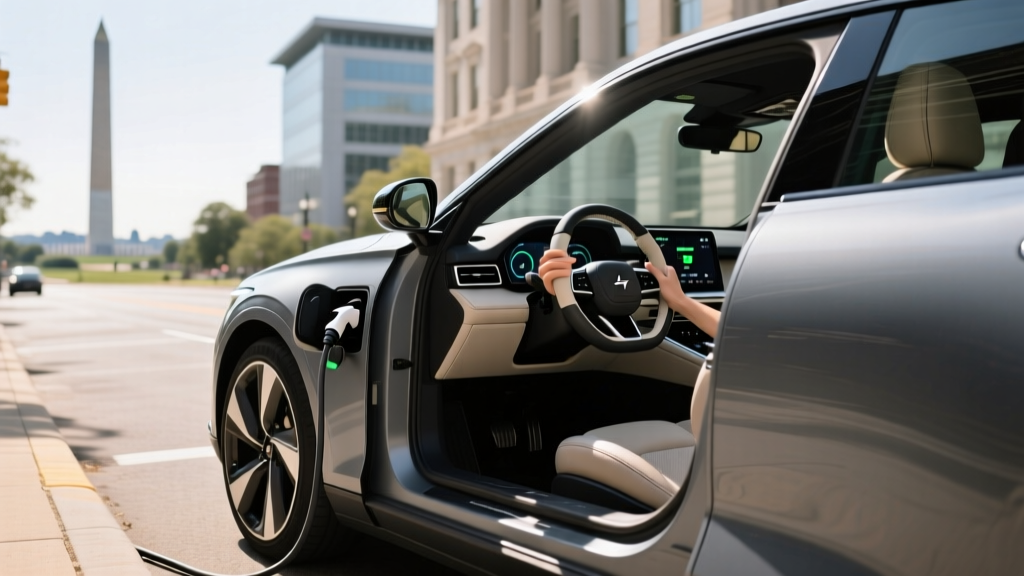
For Washington DC drivers navigating the Capital Beltway, idling in I-66 traffic, or making weekend runs to Annapolis, the Polestar 2 occupies a specific niche: a premium compact electric fastback that prioritizes Scandinavian design and engaging dynamics over maximum cargo volume or class-leading range. With Volvo-Geely engineering underneath and Google built into the dash, it's a compelling alternative to the Tesla Model 3 and BMW i4 for buyers who want something less ubiquitous on Connecticut Avenue.
This review evaluates the 2026 Polestar 2 lineup through the lens of real-world DC-area ownership — from charging on Electrify America stations along I-95 to cold-weather range loss during Mid-Atlantic winters, and whether the federal EV tax credit actually applies to your purchase.
| Spec | Standard Range Single Motor | Long Range Single Motor | Long Range Dual Motor |
|---|---|---|---|
| EPA Range | 276 mi | 320 mi | 298 mi |
| Battery (usable) | 69 kWh (LFP) | 79 kWh (NMC) | 79 kWh (NMC) |
| Horsepower | 295 hp | 295 hp | 408 hp (Pilot Pack: 476 hp) |
| 0–60 mph | 5.9 sec | 5.9 sec | 4.3 sec (Pilot: 3.8 sec) |
| Drivetrain | RWD | RWD | AWD (Dual Motor) |
| Max DC Charge Rate | 135 kW | 205 kW | 205 kW |
| 10–80% DC Time | ~30 min | ~26 min | ~26 min |
| Level 2 Rate | 11 kW | 11 kW | 11 kW |
| MPGe (combined) | 114 MPGe | 107 MPGe | 98 MPGe |
| Base MSRP | $49,900 | $52,900 | $55,400 |
Real-World Range: What DC Drivers Actually Get
Real-World Expectation: ~260–285 mi on highway loops (I-95/I-495 at 70+ mph); ~290–310 mi in mixed DC city driving with regen; ~220–250 mi in winter (30°F and below with cabin heat)
The Polestar 2 Long Range Single Motor carries a 79 kWh NMC lithium-ion battery and earns an EPA-estimated 320 miles of range. That's competitive with the BMW i4 eDrive40 (307 mi) but trails the Tesla Model 3 Long Range (363 mi) and Hyundai Ioniq 6 (361 mi).
In practice, the Polestar 2's efficiency hovers around 2.8–3.0 kWh/mile in warm-weather city driving, benefiting from strong regenerative braking in stop-and-go traffic on K Street or the GW Parkway. Highway driving at 70–75 mph pushes consumption to 3.3–3.5 kWh/mile, cutting range accordingly.
Cold-weather reality: Mid-Atlantic winters routinely drop into the 25–35°F range from December through February. The Polestar 2 uses a resistive PTC heater on Standard Range trims, which draws significantly more energy than a heat pump. The Long Range trims offer an optional heat pump (included in the Pilot Pack), which reduces cold-weather energy penalty by roughly 10–15%. Without it, expect 20–30% range loss in sustained sub-freezing temperatures. A Long Range model that stickers at 320 miles may deliver as little as 220–240 miles on a cold January commute from Bethesda to Capitol Hill.
Practical DC-area range: For most owners with home charging, the real constraint isn't total range but charging speed on road trips. A round trip from DC to Richmond (~200 miles total) is easily doable without a charge stop in any season. DC to New York City (~225 miles one-way) will require a fast-charge stop in each direction during winter, but is manageable in a single stretch during summer.
Charging Speed: DC Fast Charging and Home Setup
| Charging Level | Power | Miles Added per Hour | Notes |
|---|---|---|---|
| Level 1 (120V outlet) | ~1.4 kW | ~4–5 mi/hr | Emergency/trickle only |
| Level 2 (240V, home) | 11 kW (48A) | ~33–37 mi/hr | Full charge in ~8–9 hours |
| DC Fast Charge | Peak 205 kW (LR) | Up to ~160 mi in 15 min | 10–80% in ~26 min |
kW vs kWh refresher: kW (kilowatts) measures charging speed — how fast energy flows into the battery. kWh (kilowatt-hours) measures battery capacity — how much energy the battery stores. The Polestar 2 Long Range stores 79 kWh and can accept up to 205 kW of charging power.
DC fast charging in the DC metro area: The Polestar 2 uses the CCS1 connector natively. With the broader adoption of NACS (Tesla's connector) across the industry, Polestar has confirmed NACS adapter compatibility and plans for native NACS ports on future model years. For now, CCS chargers remain widely available through Electrify America, EVgo, and ChargePoint stations throughout the DC area — including multiple stations along the I-95 corridor, at Tysons Corner, and in Silver Spring.
The Long Range models' 205 kW peak charge rate is respectable but not class-leading. The Hyundai Ioniq 6 peaks at 240+ kW, and the Tesla Model 3 at 250 kW. More importantly, the Polestar 2's charge curve tapers noticeably above 80% state of charge (SoC). That 10–80% time of roughly 26 minutes is achievable under ideal conditions (battery preconditioned, ambient temperature above 60°F). In cold weather without preconditioning, expect 35–40 minutes for the same session.
Home Level 2 charging: The Polestar 2's onboard charger maxes out at 11 kW (48 amps). On a 48-amp home circuit (requiring a 60-amp breaker), you'll add roughly 35 miles of range per hour. A full charge from 10% to 100% takes approximately 8–9 hours — easily an overnight session. For DC-area homeowners, a Level 2 installation typically costs $800–$2,500 depending on whether your electrical panel needs upgrading (many older DC rowhomes have 100-amp panels that may require a $1,500–$3,000 upgrade to support a dedicated 60-amp circuit).
Preconditioning matters: The Polestar 2's navigation system will precondition the battery when a DC fast charger is set as your destination. This warms the battery to optimal charging temperature and is essential for hitting peak charge rates — especially from November through March in the Mid-Atlantic.
Performance and Driving Dynamics
The 2026 Polestar 2 lineup offers three distinct personalities:
- Standard Range Single Motor (RWD, 295 hp): Adequate for daily driving with a 5.9-second 0–60 time. The RWD layout delivers a more balanced, engaging feel through corners than the previous FWD-only Polestar 2 models.
- Long Range Single Motor (RWD, 295 hp): Same powertrain but with the larger 79 kWh battery. Best choice for range-focused commuters who want a premium feel without dual-motor pricing.
- Long Range Dual Motor (AWD, 408 hp / 476 hp with Performance Pack): The enthusiast's pick. The Performance Pack (software upgrade, Öhlins dampers, Brembo brakes, 20-inch forged wheels) drops the 0–60 time to 3.8 seconds and sharpens handling considerably.
Ride quality is firm — noticeably stiffer than a Tesla Model 3 or Hyundai Ioniq 6. The Polestar 2 trades some compliance for composure, and it feels planted on the rough concrete sections of I-395. The optional Öhlins dampers (Performance Pack) are manually adjustable and genuinely improve both comfort and body control when dialed to the softer settings for daily driving.
Steering is precise and well-weighted, though it lacks the feedback of a BMW i4. The low seating position and coupe-like roofline contribute to a sporty driving feel but compromise rear visibility — the standard 360-degree camera helps with parking in tight DC garage spots.
Interior, Tech, and Cargo Practicality
Infotainment: The Polestar 2 runs Google built-in — meaning Google Maps, Google Assistant, and the Play Store are native to the car. For DC-area drivers, this means excellent real-time traffic navigation without needing to connect a phone. The 11.2-inch portrait touchscreen is responsive, and the physical climate controls (a row of toggle switches below the screen) are a welcome departure from touchscreen-only HVAC menus.
Driver assistance: Polestar's Pilot Pack adds Adaptive Cruise Control with lane centering, Pilot Assist (a SAE Level 2 driver-assist system), and a 360-degree camera. This is not self-driving — the driver must remain attentive and keep hands on the wheel. It performs competently on Beltway commutes but doesn't match the smoothness of GM's Super Cruise or Tesla's Autopilot in highway lane-keeping.
Cargo and passenger space:
| Dimension | Polestar 2 | Tesla Model 3 | BMW i4 |
|---|---|---|---|
| Rear Cargo (behind seats) | 14.4 cu ft | 23.0 cu ft | 16.6 cu ft |
| Cargo (seats folded) | 38.7 cu ft | 64.0 cu ft | 47.0 cu ft |
| Front Legroom | 42.2 in | 42.7 in | 42.4 in |
| Rear Legroom | 33.0 in | 35.2 in | 33.9 in |
| Frunk | 1.4 cu ft (small) | 3.1 cu ft | None |
The Polestar 2's hatchback design provides more practical loading than a traditional sedan trunk, but total cargo volume is modest. The rear seat is best suited for children or shorter adults on longer trips — legroom is tight at 33.0 inches. If you regularly carry rear-seat passengers, the Tesla Model 3 or Hyundai Ioniq 5 offer significantly more space.
Material quality is a genuine strength. The standard textile upholstery (a wool-blend called WeaveTech) feels premium and sustainable. The optional Nappa leather with ventilated seats is a worthwhile upgrade for DC's humid summers. The panoramic glass roof (fixed, no shade) floods the cabin with light but can increase cabin heat in July — Polestar includes a tinted electrochromic option that darkens on demand.
Pricing, Trims, and Federal Tax Credit Eligibility
| Trim | Base MSRP | As-Tested (typical options) | Est. After §30D Credit |
|---|---|---|---|
| Standard Range Single Motor | $49,900 | $52,000–$54,000 | Check IRS eligibility* |
| Long Range Single Motor | $52,900 | $56,000–$60,000 | Check IRS eligibility* |
| Long Range Dual Motor | $55,400 | $62,000–$68,000 | Check IRS eligibility* |
*Federal tax credit eligibility is complex and changes based on battery sourcing, MSRP caps, and buyer income limits.
Does the Polestar 2 qualify for the §30D federal EV tax credit? This is the most important question for DC-area buyers, and the answer requires careful attention to current IRS rules:
- MSRP cap: Sedans/fastbacks must be priced at or below $55,000 to qualify. This means the Standard Range Single Motor ($49,900) and Long Range Single Motor ($52,900) may qualify at base price, but adding options that push MSRP above $55,000 disqualifies the vehicle. The Dual Motor ($55,400 base) exceeds the cap and does not qualify.
- Buyer income limits: Modified adjusted gross income (MAGI) must not exceed $150,000 (single), $225,000 (head of household), or $300,000 (joint filers).
- Battery sourcing requirements: The vehicle must meet critical minerals and battery component sourcing thresholds that increase annually. Polestar's battery supply chain has historically relied on non-qualifying sources, which has affected credit eligibility in recent years. Verify current-year status with your dealer and a tax professional before relying on the credit.
- Point-of-sale transfer: If eligible, the credit can be transferred to the dealer at purchase, reducing your out-of-pocket cost immediately rather than waiting for a tax refund.
DC-specific incentives: The District of Columbia offers an excise tax exemption for qualifying electric vehicles, which can save buyers roughly 6–8% of the vehicle's value at registration. DC also provides free parking at metered spaces for registered EVs (with a valid EV sticker) and access to HOV lanes on certain corridors. Check the DC Department of Energy & Environment for current program details, as local incentives change frequently.
Ownership Costs and Warranty
| Category | Coverage |
|---|---|
| Basic Warranty | 4 years / 50,000 miles |
| Powertrain Warranty | 4 years / 50,000 miles |
| Battery Warranty | 8 years / 100,000 miles (70% capacity retention) |
| Complimentary Maintenance | 2 years / 30,000 miles |
| Roadside Assistance | 4 years / unlimited miles |
Charging cost vs. gas: At the DC-area average electricity rate of ~$0.15/kWh (residential) and the Polestar 2 Long Range's efficiency of ~3.0 kWh/mile, home charging costs approximately $0.045 per mile. Public DC fast charging at $0.40–$0.50/kWh runs $0.12–$0.15 per mile. Compare this to a gas equivalent getting 28 MPG at $3.50/gallon ($0.125/mile) — home-charged Polestar 2 ownership saves roughly $1,000–$1,500 annually on fuel for a 15,000-mile driver.
Insurance: Expect premiums 15–25% higher than a comparable gas sedan. DC-area Polestar 2 insurance averages $2,400–$3,200 annually depending on age, driving record, and coverage level. Get quotes before purchasing — this is a frequently overlooked ownership cost.
Depreciation: The Polestar 2 has experienced steeper depreciation than the Tesla Model 3, with 3-year-old examples retaining approximately 45–55% of original MSRP. This is improving as the brand gains recognition, but it's a consideration for buyers planning to sell within 5 years.
Pros and Cons
- Premium Scandinavian design with high-quality sustainable materials
- Google built-in infotainment with excellent navigation and voice control
- Engaging RWD dynamics; optional Öhlins/Brembo Performance Pack is genuinely excellent
- Hatchback practicality in a compact footprint (easy DC parking)
- Strong regenerative braking suits stop-and-go city driving
- DC excise tax exemption provides meaningful savings at registration
- Rear seat legroom is tight (33.0 in) — not ideal for families with tall teens
- Cargo volume (14.4 cu ft) trails Model 3 and Ioniq 6
- Range (320 mi max) falls short of Tesla Model 3 LR (363 mi) and Ioniq 6 (361 mi)
- DC fast charging at 205 kW is slower than Hyundai/Kia's 800V architecture
- No heat pump on Standard Range; cold-weather range loss is significant without it
- Federal tax credit eligibility is uncertain due to battery sourcing rules
- Higher depreciation than Tesla Model 3
Who Should Buy the Polestar 2 in Washington DC?
- You want a premium, design-forward EV that stands out from the Tesla ubiquity on DC streets
- Your daily commute is under 60 miles round-trip and you have reliable home Level 2 charging
- You value build quality and interior materials over maximum range or cargo space
- You're a solo driver or couple — not regularly carrying rear-seat passengers
- You appreciate engaging driving dynamics and are considering the Performance Pack
- You need maximum range for frequent DC-to-NYC or DC-to-Outer Banks road trips (consider Tesla Model 3 LR or Hyundai Ioniq 6)
- You regularly carry adults in the rear seat (consider the Hyundai Ioniq 5 or Kia EV6)
- Federal tax credit eligibility is a deal-breaker and sourcing rules exclude the Polestar 2 in the current tax year
- You want the fastest possible DC charging for regular long-distance travel (Hyundai/Kia's 800V platform charges in ~18 min)
Frequently Asked Questions
What is the real-world range of the Polestar 2?
The Long Range Single Motor has an EPA-estimated 320 miles. In real-world DC-area driving, expect 260–285 miles on the highway, 290–310 miles in mixed city commuting, and as low as 220–250 miles in sustained winter cold (below 35°F). The Standard Range model delivers roughly 230–250 real-world miles in mixed conditions.
How fast does the Polestar 2 charge?
Long Range models peak at 205 kW on DC fast chargers, achieving 10–80% in approximately 26 minutes under ideal conditions (preconditioned battery, moderate temperatures). Standard Range peaks at 135 kW (~30 minutes). At home on a Level 2 charger (11 kW), a full charge takes about 8–9 hours.
Does the Polestar 2 qualify for the $7,500 federal EV tax credit?
Eligibility is uncertain and depends on current-year IRS battery sourcing rules, your income, and the vehicle's MSRP. The base Standard Range ($49,900) and Long Range Single Motor ($52,900) fall under the $55,000 sedan MSRP cap, but battery component and critical mineral sourcing requirements may disqualify the vehicle. The Dual Motor ($55,400+) exceeds the MSRP cap. Always verify with the IRS and a tax professional before relying on the credit.
Is the Polestar 2 worth buying vs. the Tesla Model 3?
The Tesla Model 3 Long Range offers more range (363 mi vs. 320 mi), faster DC charging (250 kW), more cargo space, a larger rear seat, and access to the Supercharger network. The Polestar 2 counters with superior interior materials, Google-native infotainment, more distinctive styling, and engaging optional performance upgrades. If range and charging speed are your top priorities, the Model 3 wins. If design, build quality, and driving feel matter more, the Polestar 2 is a compelling alternative.
How does DC cold weather affect the Polestar 2's range?
Mid-Atlantic winters (25–40°F) typically reduce range by 20–30%, primarily due to cabin heating and battery chemistry limitations. The optional heat pump (included with the Pilot Pack on Long Range trims) reduces this penalty by roughly 10–15%. Plan for 220–250 real-world miles on the Long Range model during the coldest weeks of January and February.
Can I use Tesla Superchargers with a Polestar 2?
Not directly. The Polestar 2 uses a CCS1 connector. Tesla's Supercharger network has begun opening select stations to non-Tesla EVs via the Magic Dock adapter or through the Tesla app, but availability remains limited compared to dedicated CCS networks like Electrify America and EVgo. A NACS adapter solution is expected as the industry transitions, but confirm current compatibility before relying on it.
What does home Level 2 charger installation cost in the DC area?
Expect $800–$2,500 for a standard Level 2 installation (equipment + electrician + permit) if your electrical panel can support a 60-amp circuit. Many older DC rowhomes and townhouses have 100-amp panels that may require a $1,500–$3,000 upgrade. Always get a quote from a licensed electrician before purchasing.