Polestar 2 vs Polestar 3: Positioning, Performance & Which EV Is Right for You
Polestar has rapidly established itself as one of the most compelling brands in the electric vehicle space, blending Scandinavian minimalism with genuine performance credentials. But as the lineup grows, shoppers face an increasingly important question: how do the Polestar 2 and Polestar 3 differ in positioning, and which one deserves a spot in your garage?
This in-depth comparison breaks down everything from real-world range and charging speed to interior technology and ownership costs. Whether you are cross-shopping these two models or simply trying to understand where each fits within the broader EV landscape, this guide will help you make a confident decision. For more head-to-head matchups, check out our best electric SUVs roundup and our full EV comparison hub.
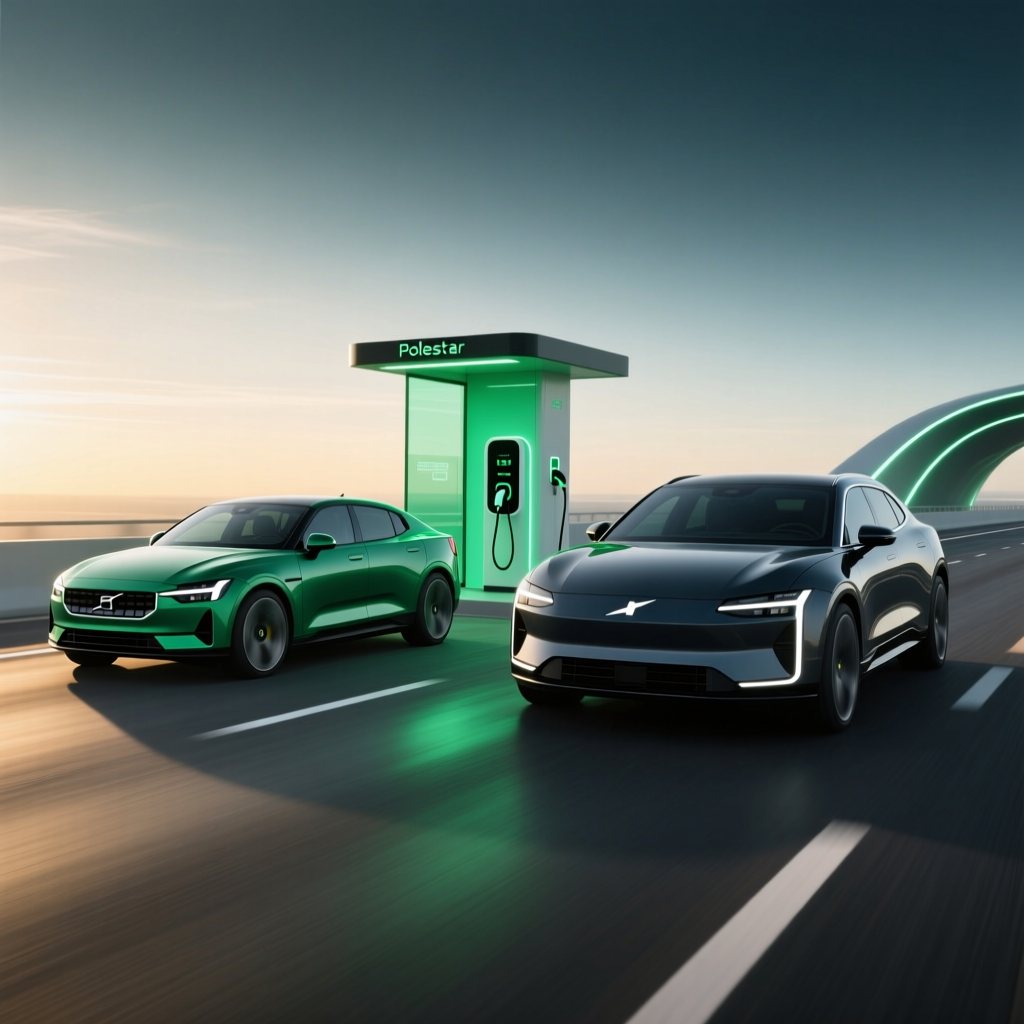
Vehicle Overview: Two Polestars, Two Very Different Missions
The Polestar 2 launched as the brand's volume model — a sleek fastback-style sedan built on the Volvo CMA (Compact Modular Architecture) platform. It targets drivers who want a premium electric car that is more understated than a Tesla Model 3 yet more dynamically engaging than traditional luxury compacts. Available in both single-motor and dual-motor configurations, the Polestar 2 occupies the compact executive EV segment, competing directly with the BMW i4, Hyundai Ioniq 6, and Tesla Model 3.
The Polestar 3, by contrast, represents a significant step up in size, price, and ambition. Built on the SPA2 (Scalable Product Architecture 2) platform — the same architecture underpinning the Volvo EX90 — the Polestar 3 is a mid-size luxury electric SUV designed to rival the BMW iX, Audi Q8 e-tron, and Porsche Cayenne Electric. It offers more interior space, a higher ride height, and a more powerful dual-motor powertrain as standard.
In terms of market positioning, the Polestar 2 is the accessible entry point into the brand, while the Polestar 3 serves as the flagship lifestyle vehicle for buyers who need SUV practicality without sacrificing the design-forward ethos Polestar is known for. Understanding this distinction is crucial before diving into the spec-by-spec comparison below.
Real-World Range & Efficiency
Range remains one of the most critical factors for EV buyers, and the two Polestars take meaningfully different approaches.
Polestar 2 Range
The Polestar 2 Long Range Single Motor variant delivers an EPA-estimated range of up to 340 miles on a full charge, making it the most efficient model in the lineup. The Long Range Dual Motor version sacrifices some efficiency for all-wheel-drive traction, returning approximately 320 miles EPA-estimated. The Standard Range Single Motor model, equipped with a smaller battery pack, achieves around 276 miles EPA-estimated.
In independent real-world highway testing conducted by outlets such as Edmunds and Car and Driver, the Polestar 2 Long Range Single Motor has consistently delivered between 290 and 310 miles at sustained highway speeds of 70 mph — a respectable result that aligns with typical real-world EV efficiency drops of roughly 10–15% from EPA figures.
Polestar 3 Range
The Polestar 3 Long Range Dual Motor is equipped with a substantially larger 111 kWh battery pack (usable capacity approximately 107 kWh). Polestar targets an EPA-estimated range of around 300–315 miles for the standard Dual Motor variant and up to approximately 330 miles for the Long Range Dual Motor with the optional range-extending configuration. These figures are impressive given the vehicle's larger footprint, heavier curb weight, and less aerodynamic SUV profile.
Real-world testing is still accumulating as the Polestar 3 reaches more customers, but early independent assessments suggest highway range in the neighborhood of 270–295 miles under mixed driving conditions. For a vehicle of this size and performance capability, those numbers are competitive with rivals like the BMW iX xDrive50.
Efficiency Verdict
The Polestar 2 wins on pure efficiency, consuming fewer kWh per mile thanks to its lighter weight and sleeker fastback shape. However, the Polestar 3's ability to deliver over 300 miles of EPA-estimated range in a large, powerful luxury SUV is a noteworthy engineering achievement. If maximizing miles per charge is your top priority, the Polestar 2 Long Range Single Motor is the clear pick. For buyers who need SUV space and can accept slightly higher energy consumption, the Polestar 3 does not disappoint. Explore our best long-range EVs list for more range-focused options.
Charging Speed & Infrastructure
Charging performance can make or break the ownership experience, especially for road-trip enthusiasts.
Polestar 2 Charging
The Polestar 2 supports DC fast charging at up to 200 kW on Long Range variants (Standard Range models peak at approximately 135 kW). On a 200 kW charger, the Long Range battery can replenish from 10% to 80% in roughly 26–28 minutes, according to Polestar's manufacturer specifications. AC Level 2 charging is handled by an 11 kW onboard charger, meaning a full home charge from empty takes approximately 8 hours.
One advantage of the Polestar 2's CMA platform is its compatibility with a wide array of public charging networks, including Electrify America, EVgo, and the expanding Tesla Supercharger network (via adapter or native NACS port on newer production runs).
Polestar 3 Charging
The Polestar 3's larger battery is paired with a more robust charging architecture. It supports DC fast charging at up to 250 kW, enabling a 10–80% charge in approximately 25 minutes under optimal conditions. The 11 kW AC onboard charger is standard, with some markets offering a 22 kW option for faster destination charging.
The Polestar 3 also benefits from the SPA2 platform's advanced battery preconditioning system, which warms or cools the battery to the ideal temperature before you arrive at a charger — a feature that can significantly improve real-world charging speeds, especially in extreme weather.
Charging Verdict
Both vehicles are competitive in their respective segments. The Polestar 3's 250 kW peak rate is meaningfully faster than the Polestar 2's 200 kW, and when you factor in the larger battery, the Polestar 3 adds more miles of range per minute of charging at peak speed. However, the Polestar 2's smaller battery means it reaches 80% in a comparable timeframe despite the lower peak rate. For a deeper look at charging technology, see our guide to the fastest-charging EVs.
Interior, Technology & Comfort
Step inside either Polestar and you will immediately notice the brand's commitment to Scandinavian design principles: clean lines, sustainable materials, and an intentional absence of clutter.
Polestar 2 Interior
The Polestar 2's cabin is built around an 11.2-inch portrait-oriented touchscreen running Google built-in (Android Automotive OS). This means Google Maps, Google Assistant, and the Google Play Store are natively integrated — no phone required. The digital instrument cluster is an 11-inch display behind the steering wheel, and a head-up display is available on higher trims.
Material choices include vegan textile upholstery as standard, with optional Nappa leather and the striking vegan MicroTech material. The center console features a unique layered design with ambient lighting that gives the cabin a premium, architectural feel. Cargo space measures approximately 14.4 cubic feet behind the rear seats, with an additional 1.4-cubic-foot front trunk (frunk).
Rear-seat space is adequate for adults on shorter trips, but the sloping roofline compromises headroom for taller passengers. This is one area where the Polestar 2's fastback design prioritizes style over outright practicality.
Polestar 3 Interior
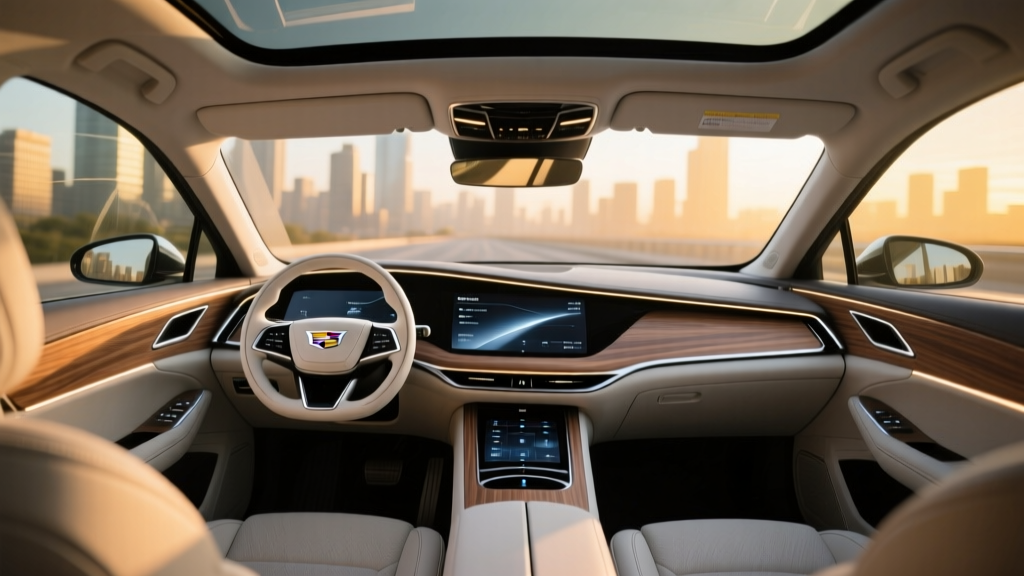
The Polestar 3 takes the interior experience to a distinctly higher level. The centerpiece is a 14.5-inch center touchscreen — significantly larger than the Polestar 2's unit — also running Android Automotive OS with Google built-in. A 9-inch driver display sits behind the steering wheel, and an available head-up display projects navigation and speed information onto the windshield.
Where the Polestar 3 truly differentiates itself is in material richness and spatial generosity. The cabin uses bio-attributed cork, recycled aluminum, and available Nappa leather or Bio-attributed MicroTech vinyl. The panoramic glass roof floods the interior with natural light, and the flat floor architecture creates an airy, lounge-like atmosphere.
Cargo capacity is substantially greater, with approximately 17.1 cubic feet behind the rear seats (expandable by folding the 40/20/40 split rear bench) and a 1.1-cubic-foot frunk. Rear-seat passengers enjoy significantly more legroom and headroom than in the Polestar 2, making the Polestar 3 a far more family-friendly option.
Technology & Audio
Both vehicles offer over-the-air (OTA) software updates, advanced driver assistance systems (including adaptive cruise control, lane-keeping assist, and blind-spot monitoring), and available premium audio. The Polestar 2 offers an optional 13-speaker Harman Kardon system, while the Polestar 3 ups the ante with an available 25-speaker Bowers & Wilkins Dolby Atmos surround sound system — one of the most impressive in-car audio experiences available at any price point.
For more tech-focused comparisons, visit our best EV tech features breakdown.
Driving Dynamics & Performance
Polestar has motorsport DNA running through its brand identity, and both vehicles reflect a genuine commitment to driving engagement.
Polestar 2 Performance
The Polestar 2 is available in several powertrain configurations:
- Standard Range Single Motor: 272 horsepower, 361 lb-ft of torque, 0–60 mph in approximately 6.2 seconds
- Long Range Single Motor: 299 horsepower, 361 lb-ft of torque, 0–60 mph in approximately 5.9 seconds
- Long Range Dual Motor: 421 horsepower, 546 lb-ft of torque, 0–60 mph in approximately 4.3 seconds
- Long Range Dual Motor with Performance Pack: 476 horsepower, 502 lb-ft of torque, 0–60 mph in approximately 4.1 seconds
The Performance Pack adds Öhlins dual-flow dampers, Brembo front brakes, and forged alloy wheels — transforming the Polestar 2 into a genuinely engaging sports sedan. Independent test results from Car and Driver and Motor Trend have praised the Polestar 2's balanced chassis, precise steering, and well-judged ride quality. The single-motor variants prioritize comfort and efficiency, while the dual-motor models deliver the kind of instant torque delivery that makes EVs so addictive.
Polestar 3 Performance
The Polestar 3 is offered exclusively in dual-motor configurations:
- Long Range Dual Motor: 489 horsepower, 620 lb-ft of torque, 0–60 mph in approximately 4.7 seconds
- Long Range Dual Motor with Performance Pack: 524 horsepower, 671 lb-ft of torque, 0–60 mph in approximately 4.4 seconds
Despite its larger size and greater weight, the Polestar 3 delivers surprisingly agile handling. The SPA2 platform features a double-wishbone front suspension and integral-link rear suspension, combined with available adaptive air suspension that can adjust ride height and damping in real time. The result is an SUV that corners with composure, rides with luxury-car suppleness, and accelerates with authority.
The Polestar 3 also features torque vectoring on the rear axle, which can actively distribute power between the left and right rear wheels to improve cornering agility. This is a technology borrowed from high-performance SUVs and it makes a tangible difference on winding roads.
Dynamics Verdict
The Polestar 2 is the driver's choice if you value a lower center of gravity, lighter weight, and sports-sedan reflexes. The Polestar 3 is the more accomplished all-rounder — it offers similar straight-line performance, superior ride comfort, and remarkable poise for its size. If you regularly carry passengers or cargo, the Polestar 3's air suspension and adaptive damping provide a noticeably more refined experience. See how these stack up against sporty rivals in our best performance EVs guide.
Ownership Costs & Value Proposition
Beyond the sticker price, total cost of ownership encompasses depreciation, insurance, maintenance, charging costs, and available incentives.
Pricing
The Polestar 2 starts at a significantly lower price point than the Polestar 3, making it accessible to a broader range of buyers. Entry-level Standard Range Single Motor models begin in the mid-$40,000s, while fully optioned Long Range Dual Motor models with the Performance Pack can approach the mid-$60,000s. This pricing positions the Polestar 2 competitively against the Tesla Model 3, BMW i4, and Hyundai Ioniq 6.
The Polestar 3 commands a premium, with Long Range Dual Motor models starting in the low-$70,000s and Performance Pack variants reaching into the low-$80,000s. This places the Polestar 3 squarely in competition with the BMW iX, Mercedes-Benz EQE SUV, and Audi Q8 e-tron.
Charging & Maintenance Costs
Electric vehicles generally cost significantly less to maintain than internal combustion vehicles — no oil changes, fewer brake replacements (thanks to regenerative braking), and fewer moving parts overall. Both the Polestar 2 and Polestar 3 benefit from this inherent EV advantage.
Home charging costs vary by electricity rate, but the average U.S. residential rate of approximately $0.16 per kWh means fully charging the Polestar 2's 82 kWh battery costs roughly $13, while charging the Polestar 3's 111 kWh battery costs about $18. Public DC fast charging is more expensive, typically ranging from $0.30 to $0.50 per kWh depending on the network and location.
Depreciation & Resale Value
EV depreciation has been a concern industry-wide, with some models losing value faster than their gasoline counterparts. However, premium EVs from established brands with strong build quality — like Polestar's parent company Volvo — tend to hold value better than budget-oriented alternatives. The Polestar 3, as a newer and more exclusive model, may benefit from lower initial depreciation compared to the more widely available Polestar 2.
Incentives
Federal, state, and local incentives can significantly reduce the effective purchase price of either vehicle. The IRS clean vehicle credit may apply depending on your tax situation, the vehicle's battery component sourcing, and your income level. Always verify current eligibility before purchasing, as incentive programs evolve frequently.
For more value-focused recommendations, browse our best value EVs list.
Pros & Cons at a Glance
Polestar 2
Pros:
- Lower starting price makes it more accessible
- Excellent efficiency, especially in Single Motor form
- Engaging driving dynamics with available Performance Pack
- Google built-in infotainment is intuitive and powerful
- Sleek, distinctive fastback design
- Strong real-world range of up to 340 miles (EPA-estimated)
Cons:
- Rear-seat headroom is limited by the roofline
- Cargo space is modest for the segment
- Base model acceleration is merely adequate
- Ride quality can be firm without adaptive suspension
Polestar 3
Pros:
- Spacious, luxurious interior with premium materials
- Standard dual-motor AWD with up to 524 horsepower
- Available air suspension delivers exceptional ride comfort
- Impressive range for a large luxury SUV
- Class-leading Bowers & Wilkins Dolby Atmos audio system
- Generous cargo capacity and family-friendly rear seats
Cons:
- Significantly higher starting price
- Heavier weight impacts efficiency compared to the Polestar 2
- Less engaging to drive on twisty roads than the lower, lighter Polestar 2
- Still building brand recognition in the luxury SUV segment
Specification Comparison Table
| Specification | Polestar 2 Long Range Dual Motor | Polestar 3 Long Range Dual Motor |
|---|---|---|
| Platform | CMA (Compact Modular Architecture) | SPA2 (Scalable Product Architecture 2) |
| Battery Capacity (usable) | ~79 kWh | ~107 kWh |
| EPA-Estimated Range | ~320 miles | ~300–315 miles |
| Horsepower | 421 hp (476 hp w/ Performance Pack) | 489 hp (524 hp w/ Performance Pack) |
| Torque | 546 lb-ft | 620 lb-ft (671 lb-ft w/ Performance Pack) |
| 0–60 mph | ~4.3 seconds | ~4.7 seconds |
| DC Fast Charge Peak | 200 kW | 250 kW |
| 10–80% DC Charge Time | ~27 minutes | ~25 minutes |
| AC Onboard Charger | 11 kW | 11 kW (22 kW optional) |
| Drivetrain | AWD (Dual Motor) | AWD (Dual Motor) |
| Suspension | Conventional (Öhlins w/ Perf. Pack) | Adaptive Air Suspension available |
| Center Display | 11.2 inches | 14.5 inches |
| Cargo Volume (rear seats up) | ~14.4 cu ft | ~17.1 cu ft |
| Starting Price (approx.) | Mid-$50,000s | Low-$70,000s |
| Body Style | Fastback Sedan | Mid-Size SUV |
Frequently Asked Questions
Is the Polestar 3 worth the extra cost over the Polestar 2?
The answer depends entirely on your needs. If you prioritize interior space, ride comfort, and the commanding driving position of an SUV, the Polestar 3 justifies its premium. The larger battery, more powerful standard powertrain, available air suspension, and significantly more spacious cabin make it a more versatile daily driver for families. However, if you primarily commute solo or with one passenger, value driving engagement, and want to minimize your purchase price, the Polestar 2 delivers exceptional value and is arguably the more fun-to-drive car.
Which Polestar has better real-world range?
The Polestar 2 Long Range Single Motor achieves the highest EPA-estimated range in the lineup at approximately 340 miles. Among dual-motor AWD configurations, the Polestar 2 Long Range Dual Motor and the Polestar 3 Long Range Dual Motor deliver broadly similar EPA-estimated figures (around 315–320 miles), though the Polestar 2 tends to be slightly more efficient in real-world highway driving due to its lighter weight and more aerodynamic profile. The Polestar 3 compensates with a larger battery that provides more buffer for long trips.
Can I use Tesla Superchargers with either Polestar?
Polestar has been transitioning to the North American Charging Standard (NACS) port for newer production vehicles, which enables native access to Tesla's Supercharger network. Older Polestar 2 models equipped with CCS ports can access select Supercharger stations using an approved adapter. The Polestar 3, as a newer model, is expected to feature NACS compatibility. Always confirm the specific charging port configuration of the vehicle you are purchasing, as production changes occur throughout model runs. For more on charging infrastructure, read our complete EV charging guide.
How do the Polestar 2 and 3 compare to Tesla models?
The Polestar 2 competes most directly with the Tesla Model 3. While the Model 3 offers a slightly longer range and access to the Supercharger network, the Polestar 2 counters with superior build quality, more distinctive design, a more intuitive infotainment system (Google built-in), and a more refined driving experience. The Polestar 3 targets the same buyers as the Tesla Model X and BMW iX, offering a more design-forward alternative with higher-quality interior materials and a more traditional (and arguably more intuitive) control layout than Tesla's minimalist approach.
Which Polestar is better for families?
The Polestar 3 is the clear choice for families. Its larger cabin provides significantly more rear-seat legroom and headroom, the cargo area is more spacious and practical, and the available air suspension delivers a smoother ride for passengers. The higher ride height also makes it easier to load children into car seats. The Polestar 2 can accommodate a small family, but its tighter rear quarters and limited cargo space make it better suited for singles, couples, or empty nesters who prioritize style and driving dynamics over practicality.
Final Verdict
The Polestar 2 and Polestar 3 are not rivals — they are complementary vehicles serving different buyer profiles within the Polestar ecosystem. The Polestar 2 is the sporty, efficient, and more affordable choice for drivers who want a premium electric fastback with genuine driving engagement. The Polestar 3 is the luxurious, spacious, and more capable SUV for those who refuse to compromise on comfort or practicality.
Both vehicles share Polestar's core strengths: stunning Scandinavian design, Google-powered infotainment, strong build quality inherited from Volvo's engineering expertise, and a commitment to sustainability that goes beyond zero tailpipe emissions. Whichever you choose, you are getting one of the most thoughtfully designed electric vehicles on the market.
Still undecided? Explore our best electric vehicles roundup for more options, or dive into our complete Polestar buying guide for trim-level recommendations and negotiation tips.