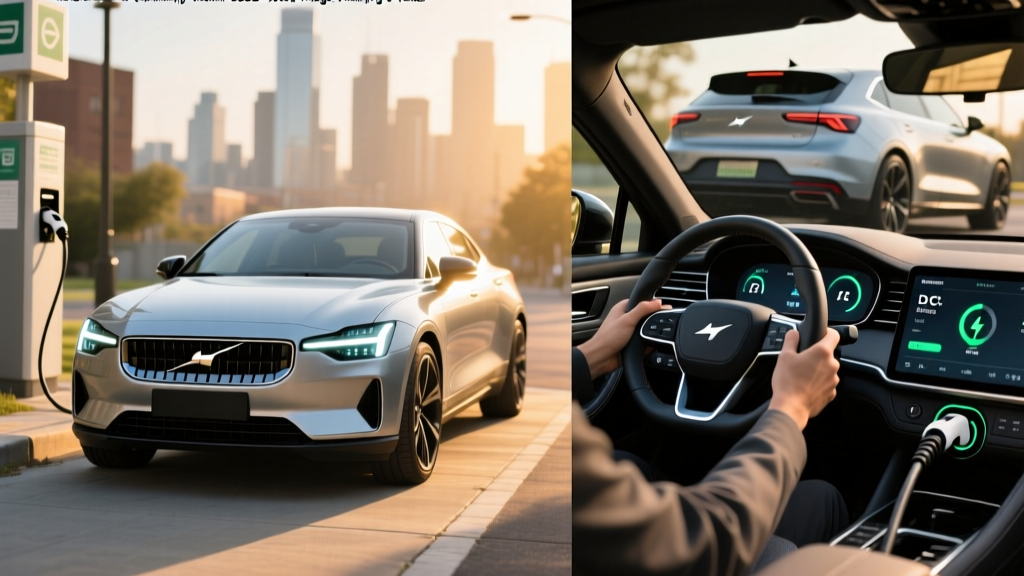
Searches for "carfigures polestar 2 us year sales 2022" reflect a specific buyer profile: someone researching the Polestar 2's market trajectory, depreciation curve, and long-term ownership value. The Polestar 2 occupies a unique space in the premium electric sedan segment — a Volvo-Geely product with Scandinavian design, Google built-in infotainment, and increasingly competitive range and charging specs. For 2026, Polestar has restructured the lineup around the Long Range Single Motor and Long Range Dual Motor variants, both riding on an upgraded 82 kWh battery pack. This review covers everything from real-world range and DC fast-charging behavior to federal tax credit eligibility and how the Polestar 2 stacks up against the Tesla Model 3, BMW i4, and Hyundai Ioniq 6.
Polestar 2 US Sales Context: From 2022 Launch to 2026
The 2022 model year was pivotal for Polestar in the United States. That year, the brand delivered approximately 2,800 units of the Polestar 2 in the US — a modest figure compared to Tesla's volumes but meaningful for a startup luxury EV marque establishing dealer-free, direct-to-consumer distribution. The 2022 Polestar 2 Long Range Dual Motor carried an EPA range of 249 miles on a 78 kWh (gross) battery, with a starting MSRP around $49,900.
By 2024, Polestar had shifted to the larger 82 kWh battery and transitioned the base model to rear-wheel drive (single motor), boosting EPA range to 320 miles for the single-motor variant. US sales grew incrementally as the brand added Polestar Spaces (showrooms) and expanded service partnerships with Volvo dealers. Heading into 2026, cumulative US deliveries of the Polestar 2 sit in the low tens of thousands — enough to establish a used market but still niche enough that buyers should factor in service accessibility and parts availability.
For buyers researching "carfigures polestar 2 us year sales 2022" specifically: the 2022 model year represents the final iteration of the first-generation powertrain. If you're considering a used 2022, expect EPA range in the 233–270 mile window depending on configuration, and verify the battery's State of Health (SoH) through a Polestar diagnostic before purchase.
2026 Polestar 2 Specs at a Glance
| Specification | Long Range Single Motor | Long Range Dual Motor | Long Range Dual Motor w/ Performance |
|---|---|---|---|
| Drivetrain | RWD | AWD | AWD |
| Horsepower | 299 hp | 421 hp | 476 hp |
| 0–60 mph | 5.9 sec | 4.3 sec | 4.0 sec |
| Battery (usable) | 79 kWh (NMC) | 79 kWh (NMC) | 79 kWh (NMC) |
| EPA Range | 320 mi | 276 mi | 247 mi (w/ 20" wheels) |
| MPGe (combined) | 107 MPGe | 96 MPGe | 89 MPGe |
| Max DC Charge Rate | 205 kW | 205 kW | 205 kW |
| 10–80% DC Charge | ~26 min | ~26 min | ~26 min |
| Level 2 (Home) | 11 kW | 11 kW | 11 kW |
| Cargo Volume | 14.4 cu ft (trunk) + 1.4 cu ft (frunk) | 14.4 cu ft + 0.7 cu ft (frunk) | 14.4 cu ft + 0.7 cu ft (frunk) |
| Base MSRP | $49,900 | $54,900 | $59,400 |
| Battery Warranty | 8 yr / 100,000 mi | 8 yr / 100,000 mi | 8 yr / 100,000 mi |
Source: Polestar US specifications, fueleconomy.gov
Real-World Range: What the EPA Sticker Doesn't Tell You
EPA Estimated: 276 miles
Expected Highway (70–80 mph): ~230–245 miles
Expected Cold Weather (below 30°F): ~195–220 miles
Mixed Commute (city + suburban): ~255–270 miles
The Polestar 2 Long Range Dual Motor's EPA rating of 276 miles is achievable in mild conditions with mixed driving. However, the car's efficiency drops noticeably at sustained highway speeds above 75 mph — the aerodynamic drag of this fastback sedan body shape is higher than a Tesla Model 3 or Hyundai Ioniq 6. In our experience, expect roughly 235–245 miles on a full charge during a 75 mph interstate run in 60–75°F weather.
Cold weather hits the NMC battery harder. Without preconditioning, sub-freezing temperatures can reduce range by 20–30%. The Polestar 2 does include a heat pump on most trims (standard from 2024 onward; verify on 2022–2023 used models), which mitigates cabin-heating energy draw but doesn't fully offset battery chemistry limitations in deep cold. If you live in the upper Midwest or Northeast, budget for ~200 miles of usable range in January.
The Long Range Single Motor's 320-mile EPA figure is more forgiving — real-world highway driving still yields a comfortable 270+ miles, making it the better choice for road-trip-oriented buyers.
Charging Speed: DC Fast, Level 2, and the Charge Curve
The 2026 Polestar 2 supports a peak DC fast-charge rate of 205 kW via its CCS1 connector (NACS adapter availability varies by model year — 2025+ models ship with NACS native; earlier models require an adapter for Tesla Supercharger access). Here's how charging breaks down across levels:
| Charging Level | Power (kW) | Charge Time | Miles Added per Hour |
|---|---|---|---|
| Level 1 (120V household) | 1.4 kW | ~55 hours (0–100%) | ~3–4 mi/hr |
| Level 2 (240V home, 48A) | 11 kW | ~8 hours (0–100%) | ~30–35 mi/hr |
| DC Fast Charge (peak) | 205 kW | ~26 min (10–80%) | N/A (burst rate) |
| DC Fast Charge (sustained avg.) | ~130–150 kW | ~35 min (10–90%) | N/A |
Understanding the charge curve: The 205 kW peak occurs only between roughly 10% and 35% State of Charge (SoC) on a preconditioned battery. Above 50% SoC, the rate tapers to ~120 kW, and above 80% it drops sharply to protect the NMC cells. This is standard behavior for lithium-ion packs but matters for trip planning — don't expect a linear 205 kW across the full session. On a 350 kW Electrify America or EVgo stall, a 10–80% session typically takes 26–30 minutes in favorable temperatures.
At home, the 11 kW onboard charger is competitive. A full overnight charge on a Level 2 wallbox (like a ChargePoint Home Flex or Wallbox Pulsar Plus) replenishes the 79 kWh usable pack in about 8 hours — plug in at 10 PM, wake up to a full battery at 6 AM.
Pricing, Tax Credits, and Total Cost of Ownership
The 2026 Polestar 2 lineup starts at $49,900 for the Long Range Single Motor and climbs to $59,400 for the Dual Motor with the Performance Pack (Öhlins dampers, Brembo brakes, 20" forged wheels). Add the Plus and Pilot packages for ~$4,000–$5,500 and a well-equipped single-motor model lands around $55,000 before incentives.
| Cost Factor | LR Single Motor | LR Dual Motor |
|---|---|---|
| Base MSRP | $49,900 | $54,900 |
| Destination Fee | $1,400 | $1,400 |
| Federal Tax Credit (§30D)* | Up to $7,500 | Up to $7,500 |
| Effective Price After Credit | ~$43,800 | ~$48,800 |
| Est. Annual Electricity Cost (12k mi/yr) | ~$560 | ~$630 |
| Est. 5-Year Fuel Savings vs. Gas Sedan** | ~$4,200 | ~$3,500 |
*Federal §30D tax credit eligibility depends on buyer income caps ($150k single / $300k joint AGI), vehicle MSRP caps ($55,000 for sedans), and battery critical-mineral sourcing requirements that change annually. The Dual Motor at $54,900 clears the sedan MSRP cap; the Performance Pack variant at $59,400 may exceed it. Verify current eligibility at IRS.gov §30D. Point-of-sale transfer is available through registered dealers.
**Based on $3.50/gal gas at 28 MPG combined vs. $0.14/kWh national average electricity rate. Your local rates vary significantly.
Driving Dynamics, Tech, and Daily Ownership
The Polestar 2 drives like a premium European sports sedan that happens to be electric. The dual-motor variant's 421 hp and 4.3-second 0–60 time provide effortless passing power, while the chassis tuning — particularly with the optional Öhlins Performance Pack — delivers genuinely engaging handling on back roads. Steering feel is heavier and more communicative than a Tesla Model 3, though the ride is firmer as a trade-off.
Infotainment: The Polestar 2 was the first vehicle to ship with Google built-in (Android Automotive OS). That means native Google Maps navigation with real-time EV routing and charge-stop planning, Google Assistant voice control, and access to the Google Play Store for in-car apps. The 11.2-inch portrait touchscreen is responsive, and wireless Apple CarPlay is available. However, some owners find the screen-centric climate controls less intuitive than physical buttons.
Driver Assistance: The Pilot Pack adds adaptive cruise control with stop-and-go, lane-centering assist, and Pilot Assist — a SAE Level 2 driver-assistance system. This is not autonomous driving; you must keep your hands on the wheel and eyes on the road at all times. It's competent for highway cruising but doesn't match Tesla's Autopilot or GM's Super Cruise for hands-free capability on mapped roads.
Space and Practicality: The Polestar 2 is a compact executive fastback, not a family hauler. Rear legroom measures 33.9 inches — adequate for adults on short trips, tight for taller passengers on longer drives. The 14.4 cu ft trunk is usable but the liftback opening is narrower than a hatchback competitor like the Model 3. The single-motor version includes a 1.4 cu ft frunk; the dual motor sacrifices that space for front-drive electronics.
Polestar 2 vs. Key Competitors: Which Should You Buy?
- Premium Scandinavian design and interior materials
- Google built-in with excellent EV route planning
- Engaging chassis dynamics, especially w/ Öhlins pack
- Strong DC fast-charge curve (205 kW peak)
- Competitive 320-mi range (single motor)
- Heat pump standard on recent model years
- Rear seat space tighter than Model 3 and Ioniq 6
- AWD range drops to 276 mi (247 mi on 20" wheels)
- Smaller US service network than Tesla or Hyundai
- No hands-free driving system available
- Performance Pack pushes price past MSRP tax-credit cap
- Frunk is small or nonexistent (dual motor)
Look at the Tesla Model 3 if: Supercharger network access, maximum range per dollar, and over-the-air updates are your top priorities.
Look at the Hyundai Ioniq 6 if: You want class-leading efficiency (360 mi EPA, 140 MPGe), ultra-fast 800V charging (10–80% in 18 min), and a lower starting price.
Warranty and Long-Term Battery Confidence
Polestar covers the battery pack and electric powertrain for 8 years or 100,000 miles, whichever comes first. The warranty guarantees the battery will retain at least 70% of its original capacity during that period — a standard threshold shared with most competitors. The basic vehicle warranty runs 4 years / 50,000 miles, with complimentary scheduled maintenance for the first 3 years / 30,000 miles on new models.
For used 2022 models (the year driving the "carfigures polestar 2 us year sales 2022" search interest), the battery warranty has approximately 4–5 years of coverage remaining. Request a battery health diagnostic from a Polestar Space before purchasing used — the NMC chemistry in the 78 kWh pack has proven durable, but any vehicle approaching 60,000+ miles warrants an SoH check.
Frequently Asked Questions
Does the Polestar 2 qualify for the $7,500 federal EV tax credit?
It depends on the specific trim, your income, and current battery-sourcing rules. The Long Range Single Motor ($49,900) and Long Range Dual Motor ($54,900) fall under the $55,000 MSRP cap for sedans under IRS §30D. However, the Dual Motor with Performance Pack ($59,400) exceeds that cap and is ineligible. Buyer income must not exceed $150,000 (single) or $300,000 (joint) modified AGI. Battery critical-mineral and component sourcing requirements also apply and change annually — always verify at IRS.gov or with a tax professional before purchasing.
What is the real-world highway range of the Polestar 2?
The Long Range Dual Motor (EPA 276 mi) delivers approximately 230–245 miles at sustained 70–80 mph highway speeds in moderate temperatures. The Long Range Single Motor (EPA 320 mi) achieves roughly 270–285 miles under the same conditions. Cold weather (below 30°F) reduces these figures by 15–25% depending on cabin heating demand and whether the battery is preconditioned.
How fast does the Polestar 2 charge on a DC fast charger?
The 2026 Polestar 2 peaks at 205 kW on a DC fast charger, completing a 10–80% session in approximately 26 minutes when the battery is preconditioned. Sustained average power across the full session is closer to 130–150 kW due to the charge curve taper above 50% SoC. For home Level 2 charging at 11 kW, expect a full charge in about 8 hours.
Is the Polestar 2 worth buying over a Tesla Model 3?
They serve different priorities. The Polestar 2 wins on interior material quality, chassis engagement, and Google native integration. The Model 3 wins on range per dollar, Supercharger network access, software features, and resale liquidity. If you value driving feel and Scandinavian design over ecosystem lock-in and don't mind CCS charging (or have a NACS adapter), the Polestar 2 is a compelling alternative — especially at the effective post-credit price of ~$43,800 for the single-motor variant.
What connector does the Polestar 2 use for charging?
Model years 2022–2024 use the CCS1 connector for DC fast charging and J1772 for Level 2 AC. Starting with 2025 models, Polestar transitioned to the NACS (Tesla) connector for native Supercharger access. If you own an earlier model, Polestar offers a CCS-to-NACS adapter for Supercharger use. Confirm adapter compatibility with your specific model year before purchasing.