2026 Polestar 2: Quick Verdict
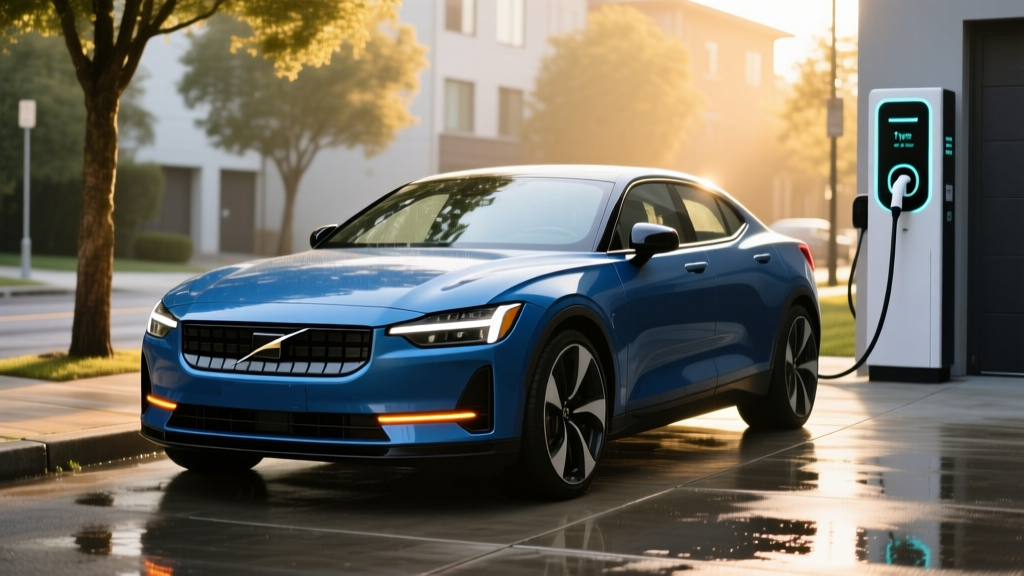
The Polestar 2 occupies a deliberate niche in the premium electric sedan market: Scandinavian minimalism, Google-native infotainment, and increasingly competitive charging hardware. For the 2026 model year, Polestar has standardized the larger 82 kWh battery across the lineup and bumped DC fast-charging capability to 205 kW on Long Range trims, addressing one of the previous generation's most common criticisms. It's not the longest-range option in its class, nor the quickest to 60 mph, but it delivers a cohesive ownership experience that rewards buyers who value design integrity, build quality, and a cabin that feels genuinely premium rather than screen-dominated.
| Spec | Standard Range Single Motor | Long Range Single Motor | Long Range Dual Motor |
|---|---|---|---|
| EPA Range | 276 mi | 320 mi | 298 mi |
| Battery (usable) | 82 kWh (LFP) | 82 kWh (NMC) | 82 kWh (NMC) |
| Horsepower | 299 hp | 299 hp | 421 hp |
| Drivetrain | RWD | RWD | AWD |
| 0–60 mph | 5.9 sec | 5.9 sec | 4.2 sec |
| Max DC Charge Rate | 135 kW | 205 kW | 205 kW |
| 10–80% DC Time | ~34 min | ~26 min | ~26 min |
| Level 2 (11 kW AC) | ~8 hrs | ~8 hrs | ~8 hrs |
| Combined MPGe | 107 MPGe | 110 MPGe | 98 MPGe |
| Efficiency | 31 kWh/100mi | 30 kWh/100mi | 34 kWh/100mi |
| Base MSRP | $49,900 | $53,400 | $58,900 |
| Battery Warranty | 8 yr / 100,000 mi (70% capacity retention) | ||
Real-World Range vs. EPA Estimates
EPA Sticker: 320 miles (Long Range Single Motor)
Real-World Expectation: 265–285 mi sustained highway at 70 mph; ~240 mi in freezing weather with cabin heat; 300+ mi in mixed city/suburban driving with regen.
The Polestar 2 Long Range Single Motor carries an EPA-estimated 320 miles of range, which is competitive with the Tesla Model 3 Long Range and BMW i4 eDrive40. However, EPA testing cycles include substantial low-speed and city driving where regenerative braking recaptures energy. On a 75 mph highway loop, expect roughly 265–285 miles before the battery buffer engages. In cold weather (below 32°F), range loss of 20–25% is typical without preconditioning, dropping usable range to approximately 240 miles. The heat pump (standard on Long Range trims) mitigates this somewhat compared to resistive heating, but physics still governs: cold batteries deliver less energy and accept charge more slowly.
The Standard Range model's LFP chemistry actually handles cold somewhat better at low state-of-charge, and LFP cells tolerate regular 100% charging without the degradation concerns of NMC. If your commute is under 100 miles round-trip and you charge nightly, the Standard Range is a pragmatic, lower-cost choice.
Charging Speed and Infrastructure
The 2026 Polestar 2 Long Range models accept up to 205 kW at DC fast chargers, a meaningful upgrade from the prior 150 kW ceiling. At a 350 kW Electrify America or Tesla Supercharger (with NACS adapter), the Long Range can add approximately 170 miles of range in 15 minutes under ideal conditions (battery preconditioned, warm ambient temperature, low state-of-charge).
| Charging Level | Power | Miles Added per Hour | Time (10–80%) |
|---|---|---|---|
| Level 1 (120V) | 1.4 kW | ~4 mi/hr | N/A (trickle only) |
| Level 2 (240V, 48A) | 11 kW | ~35 mi/hr | ~8 hours (full) |
| DC Fast (Standard Range) | 135 kW peak | ~140 mi in 15 min | ~34 min |
| DC Fast (Long Range) | 205 kW peak | ~170 mi in 15 min | ~26 min |
Charging curve reality: The 205 kW peak is not sustained across the entire session. Like most EVs, the Polestar 2 tapers significantly above 80% SoC to protect battery health. Expect 205 kW from roughly 10–40% SoC, stepping down to ~150 kW through 60%, and further tapering to ~60 kW by 80%. Charging from 80–100% at DC fast rates is slow and generally unnecessary unless you're maximizing range for a long drive. For daily use, set your charge limit to 80% (or 100% for the LFP Standard Range) and rely on Level 2 overnight.
The Polestar 2 uses the CCS1 connector natively. Polestar provides a NACS adapter for access to Tesla's Supercharger network (over 25,000 stalls in North America as of 2026), which is essential for road-trip charging reliability. Home Level 2 charging requires a 240V, 48-amp circuit with a 60-amp breaker — budget $500–$2,000 for professional installation depending on panel proximity and local permitting.
Performance and Driving Dynamics
The shift to rear-wheel-drive for single-motor trims (introduced for 2024 and carried forward) transformed the Polestar 2 from a competent but uninspiring driver into something genuinely engaging. The 299 hp single-motor RWD model hits 60 mph in 5.9 seconds — not supercar territory, but more than adequate for highway merging and passing. The dual-motor AWD variant, with 421 hp, drops that to 4.2 seconds and provides the all-weather traction buyers in snow-belt states expect.
Steering is precise and weighted appropriately in the custom drive modes, and the Öhlins dampers (available on the Performance Pack) offer adjustable compression that lets you dial between compliant touring and firm sport settings. The 2,200-pound curb weight (give or take 100 lbs depending on trim) is noticeable in transitions, but the low center of gravity keeps body roll well-controlled. Regenerative braking offers one-pedal driving with a strong, predictable catch, though Polestar also provides a blended brake mode for those who prefer coasting.
Interior, Cargo, and Technology
The Polestar 2 cabin is a study in Scandinavian restraint: vegan textile or available Nappa leather upholstery, real wood or aluminum inlays, and an 11.2-inch portrait touchscreen running Google built-in (Google Maps, Google Assistant, Google Play Store). Wireless Apple CarPlay is also standard. The 12.3-inch digital driver display is clear and configurable, though some competitors offer larger, more immersive clusters.
Cargo and passenger dimensions:
- Rear cargo (behind second row): 14.4 cu ft (liftback design aids accessibility)
- Cargo with rear seats folded: 38.7 cu ft
- Front trunk (frunk): 1.4 cu ft (charging cable storage)
- Rear legroom: 35.7 inches
- Front headroom: 40.5 inches
The liftback hatch is a practical advantage over traditional sedan trunks, but 14.4 cu ft trails the Tesla Model 3's 23 cu ft and Hyundai Ioniq 6's 12.3 cu ft (though the Ioniq 6 is also a traditional trunk). If cargo volume is a priority, the Polestar 4 fastback SUV offers substantially more space. Rear-seat comfort is adequate for adults under 6 feet, but the transmission tunnel hump (a vestige of the platform's shared CMA architecture) intrudes on the center passenger's footroom.
Driver assistance: Polestar equips the 2 with a Level 2 (SAE) driver-assistance suite including adaptive cruise control with stop-and-go, lane-centering steering, blind-spot monitoring, and rear cross-traffic alert. The Pilot Pack adds Pilot Assist with improved lane-centering on highways, but this is not autonomous driving — the driver must maintain hands-on-wheel supervision at all times. There is no hands-free system comparable to GM's Super Cruise or Ford's BlueCruise.
Pricing, Trims, and Federal Tax Credit
The 2026 Polestar 2 lineup starts at $49,900 for the Standard Range Single Motor and tops out near $65,000 with the dual-motor Performance Pack and all options. Destination adds $1,400.
| Trim | Base MSRP | As-Tested (Typical) | §30D Credit Eligibility |
|---|---|---|---|
| Standard Range SM | $49,900 | $51,300 | Eligible for up to $7,500* |
| Long Range SM | $53,400 | $56,800 | Eligible for up to $7,500* |
| Long Range DM | $58,900 | $63,200 | Eligible for up to $7,500* |
*Per IRS §30D rules: Buyer AGI must not exceed $150,000 (single) / $300,000 (joint). MSRP cap for sedans: $55,000. Battery sourcing and critical mineral requirements apply. Point-of-sale transfer available at participating dealers. Verify eligibility at purchase — rules subject to change.
Critical caveat: The Long Range Dual Motor's $58,900 MSRP exceeds the $55,000 sedan cap for §30D, making it ineligible for the federal credit unless optioned as an SUV classification (Polestar has not pursued this). The Standard Range and Long Range Single Motor trims fall under the cap and qualify — assuming the buyer meets income requirements and the battery satisfies critical-mineral and component-sourcing thresholds. Always confirm with your dealer and tax professional at the time of purchase, as IRS guidance evolves.
Pros and Cons
Pros
- Premium Scandinavian design, inside and out — stands apart from Tesla's ubiquity
- Google built-in infotainment is fast, intuitive, and receives OTA updates
- 205 kW DC fast charging (Long Range) is competitive with class leaders
- RWD single-motor delivers engaging driving dynamics
- Standard heat pump improves cold-weather efficiency
- LFP battery (Standard Range) allows daily 100% charging without degradation concerns
- Liftback cargo access is more practical than traditional sedan trunks
Cons
- Rear-seat space and cargo volume trail Tesla Model 3 and Hyundai Ioniq 6
- No hands-free Level 2+ driver-assist (e.g., Super Cruise, BlueCruise)
- Dual Motor trim exceeds $55K MSRP cap, losing federal tax credit eligibility
- Ride can be firm on 20-inch wheels without Öhlins dampers
- Charging network relies on CCS + NACS adapter (Tesla native access not yet built-in)
- Higher insurance premiums than Model 3 in most states (specialty brand, repair costs)
Who Should Buy the 2026 Polestar 2?
Buy it if: You want a premium electric sedan that isn't a Tesla, value design and cabin materials, commute 60–120 miles daily with home Level 2 charging, and take road trips 3–5 times per year where 205 kW charging keeps stops under 30 minutes.
Pass if: You regularly carry rear-seat adults or cargo (consider Polestar 4, Tesla Model Y, or Hyundai Ioniq 5), you want hands-free highway driving (GM Super Cruise or Ford BlueCruise), or you need maximum range per dollar (Tesla Model 3 Long Range at 341 EPA miles for ~$47,990).
Best alternative cross-shops: Tesla Model 3 Long Range, BMW i4 eDrive40, Hyundai Ioniq 6 SEL, Volvo EX30 (smaller, less expensive).
Frequently Asked Questions
What is the real-world range of the 2026 Polestar 2?
The Long Range Single Motor is EPA-rated at 320 miles, but expect 265–285 miles on sustained highway driving at 70 mph, and approximately 240 miles in freezing temperatures with cabin heating active. City and mixed driving with regenerative braking can approach or exceed the EPA figure.
How fast does the Polestar 2 charge at home and on the road?
At a DC fast charger, the Long Range models peak at 205 kW, reaching 10–80% in roughly 26 minutes under ideal conditions. At home on a 240V Level 2 charger (11 kW), a full charge takes about 8 hours — easily accomplished overnight. Standard Range models peak at 135 kW DC, with 10–80% taking approximately 34 minutes.
Does the Polestar 2 qualify for the $7,500 federal tax credit?
The Standard Range ($49,900) and Long Range Single Motor ($53,400) are under the $55,000 MSRP cap for sedans and can qualify for up to $7,500 under IRS §30D, provided the buyer meets income limits ($150K single / $300K joint AGI) and battery sourcing requirements are satisfied. The Long Range Dual Motor ($58,900) exceeds the cap and is ineligible. Confirm with your dealer and review current IRS guidance before purchase.
Is the Polestar 2 worth buying over a Tesla Model 3?
The Polestar 2 offers superior interior materials, a more distinctive design, and Google-native infotainment. The Tesla Model 3 Long Range delivers more EPA range (341 mi), faster Supercharger access without an adapter, a larger cargo area, and a lower starting price. If range-per-dollar and charging convenience are paramount, the Model 3 wins. If cabin quality and standing apart from the Tesla crowd matter more, the Polestar 2 is a strong choice.
What is the battery warranty on the Polestar 2?
Polestar covers the high-voltage battery for 8 years or 100,000 miles, whichever comes first, guaranteeing at least 70% capacity retention. This matches industry norms from Tesla, BMW, and Hyundai. The limited vehicle warranty is 4 years / 50,000 miles.
Can I charge the Polestar 2 at Tesla Superchargers?
Yes, using the NACS adapter provided by Polestar. The Polestar 2 has a native CCS1 port, and the adapter enables access to Tesla's Supercharger network. Native NACS ports are expected on future Polestar models, but for 2026, the adapter is the solution.