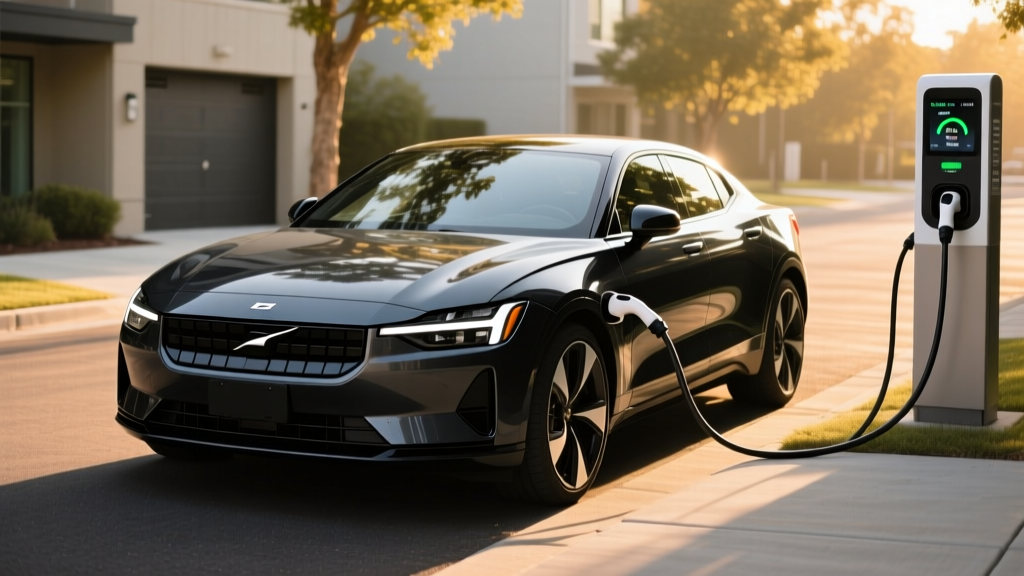
The Polestar 2 Single Motor occupies a specific niche in the EV market: a premium, design-forward electric sedan that prioritizes build quality and driving dynamics over maximum range-per-dollar. With the 2025 refresh bringing a larger battery and rear-wheel-drive architecture, the Single Motor variant is the efficiency-focused choice in the lineup. But does the real-world experience match the spec sheet? After analyzing EPA data, charging curves, and ownership economics, here's what buyers actually need to know.
Polestar 2 Single Motor: At-a-Glance Specs
| Specification | Single Motor Standard Range | Single Motor Long Range |
|---|---|---|
| EPA Range | 276 miles | 320 miles |
| Battery (Usable) | 69 kWh (LFP) | 82 kWh (NMC) |
| Drivetrain | Rear-Wheel Drive | Rear-Wheel Drive |
| Horsepower | 272 hp | 299 hp |
| 0-60 mph | 5.9 sec | 5.9 sec |
| Max DC Charge Rate | 135 kW | 200 kW |
| 10-80% DC Charge | ~34 min | ~26 min |
| Level 2 Home Charge | 11 kW (~37 mi/hr) | 11 kW (~37 mi/hr) |
| EPA Efficiency | 114 MPGe (29 kWh/100mi) | 111 MPGe (30 kWh/100mi) |
| Base MSRP | $49,900 | $54,900 |
| Warranty (Battery) | 8 yr / 100,000 mi | 8 yr / 100,000 mi |
Source: EPA Fueleconomy.gov, Polestar USA spec sheets. Pricing reflects 2025 model year MSRP before destination.
Real-World Range: What the EPA Sticker Doesn't Tell You
Real-World Expectation: 260-290 miles highway; 240-260 miles in cold weather (below 32°F); 280-310 miles mixed city/highway in mild conditions.
The Long Range Single Motor's 320-mile EPA figure is competitive against rivals like the Tesla Model 3 Long Range (341 mi) and BMW i4 eDrive40 (307 mi). However, the Polestar 2's sedan shape, while aerodynamic at a 0.278 Cd, still yields to real-world highway physics. At sustained 75 mph speeds, expect roughly 260-290 miles before needing a charge stop, based on observed efficiency of 3.3-3.6 miles/kWh.
Cold weather is the equalizer. Without a standard heat pump on base trims (available as part of the $3,500 Plus Pack), cabin heating draws heavily from the 82 kWh pack. In sub-freezing temperatures, range drops 15-25%, putting realistic winter range at 240-260 miles. For buyers in northern climates, the heat pump option is a worthwhile investment that recovers roughly 30-40 miles of winter range.
The Standard Range model, with its 69 kWh LFP battery, delivers a more modest 276 EPA miles. Real-world highway driving yields approximately 220-245 miles. The trade-off is cost: the Standard Range starts $5,000 lower and uses LFP chemistry, which tolerates daily 100% charging better than NMC, effectively narrowing the usable-range gap for commuters who charge at home nightly.
Charging Speed and Infrastructure
DC fast charging is where the Long Range Single Motor justifies its price premium. The 82 kWh NMC pack accepts up to 200 kW peak, allowing a 10-80% charge in approximately 26 minutes at a capable station. However, like all EVs, the Polestar 2 follows a charging curve that tapers significantly above 80% to protect battery health. Expect the 80-100% top-off to add another 20-25 minutes—plan your road-trip stops accordingly.
The Standard Range model's LFP battery tops out at 135 kW peak, extending the 10-80% window to roughly 34 minutes. For road-trippers covering 300+ miles in a day, the Long Range's faster charging saves meaningful time across multiple stops.
Home Level 2 Charging
Both trims accept up to 11 kW on Level 2 AC power (48 amps on a 60-amp circuit). A full overnight charge from 10% to 100% takes approximately 8.5 hours for the Long Range and 7 hours for the Standard Range. At 11 kW, you'll recover roughly 37 miles of range per hour of charging—ample for daily commuters who plug in at home.
Installation of a 48-amp Level 2 charger (such as a ChargePoint Home Flex or Wallbox Pulsar Plus) typically costs $500-$1,200 for equipment and electrician labor, assuming a 200-amp panel with available capacity. Homes with 100-amp service may require a panel upgrade ($1,500-$3,000) before adding a dedicated EV circuit.
| Charging Level | Power (kW) | Miles Added Per Hour | Full Charge Time (10-100%) |
|---|---|---|---|
| Level 1 (120V outlet) | 1.4 kW | ~4-5 mi/hr | ~60+ hours |
| Level 2 (240V, 48A) | 11 kW | ~37 mi/hr | 7-8.5 hours |
| DC Fast (Long Range peak) | 200 kW | ~650 mi/hr (peak) | 10-80% in ~26 min |
| DC Fast (Standard Range peak) | 135 kW | ~440 mi/hr (peak) | 10-80% in ~34 min |
Pricing, Tax Credits, and Ownership Economics
The 2025 Polestar 2 Single Motor starts at $49,900 for the Standard Range and $54,900 for the Long Range, before a $1,400 destination charge. These prices position it against the Tesla Model 3 Long Range ($47,740), BMW i4 eDrive40 ($57,900), and Hyundai Ioniq 6 SEL ($46,700).
Federal Tax Credit Eligibility (§30D)
The Polestar 2's federal tax credit status requires careful navigation. Under current IRS §30D rules, eligibility depends on three factors: battery component manufacturing origin, critical mineral sourcing, and buyer income/MSRP caps.
As of the 2025 model year, the Polestar 2 (manufactured in China) does not qualify for the full $7,500 federal tax credit due to battery sourcing requirements that exclude vehicles with battery components from foreign entities of concern. However, buyers should verify current-year eligibility on IRS.gov, as Polestar has indicated plans to shift production and sourcing for future model years.
The MSRP cap for sedans under §30D is $55,000. The Single Motor Long Range at $54,900 base falls just under this threshold, but adding options (Plus Pack, Pilot Pack, larger wheels) can push the MSRP above the cap, disqualifying the vehicle regardless of sourcing. Buyer income caps also apply: $150,000 single filer / $300,000 joint filer modified adjusted gross income.
| Trim | Base MSRP | Federal Credit | Effective Price (if eligible) |
|---|---|---|---|
| Standard Range | $49,900 | $0 (sourcing) | $49,900 |
| Long Range | $54,900 | $0 (sourcing) | $54,900 |
| Long Range + Plus Pack | $58,400 | $0 (MSRP cap exceeded) | $58,400 |
Note: State and local incentives may apply separately. Check AFDC state incentive database for your jurisdiction.
Interior, Cargo, and Daily Livability
The Polestar 2's interior reflects its Volvo-adjacent DNA: minimalist Scandinavian design, high-quality vegan upholstery (standard), and a portrait-oriented 11.2-inch infotainment screen running Google Automotive OS. The native integration of Google Maps, Google Assistant, and the Play Store means navigation with real-time charging routing works seamlessly—no phone projection required, though wireless Apple CarPlay is available.
Cargo space is the Polestar 2's practical compromise. The liftback design provides 14.4 cubic feet behind the rear seats and 37.5 cubic feet with seats folded. That trails the Tesla Model 3's 23 cu ft trunk (but no hatch) and the Hyundai Ioniq 6's 12.3 cu ft. Rear legroom measures 34.0 inches—adequate for adults on shorter trips but tighter than a Model 3 (35.3 in) or BMW i4 (36.1 in) for long-haul comfort.
The front trunk (frunk) adds 1.4 cubic feet—enough for charging cables and a small bag, but not a meaningful cargo zone. For buyers prioritizing cargo versatility, a hatchback or SUV-format EV may serve better.
Driver Assistance and Safety Tech
The Polestar 2 comes standard with Pilot Assist, a Level 2 driver-assistance system combining adaptive cruise control and lane-centering. It performs competently on highways but requires continuous driver supervision—this is not a hands-off or "self-driving" system. The optional Pilot Pack ($2,000) adds Pilot Assist with Navi (navigation-adaptive speed), blind-spot steering assist, and a 360-degree camera.
For buyers comparing against Tesla Autopilot or Ford BlueCruise, Polestar's system is conservative: it doesn't offer automated lane changes or hands-free operation on mapped highways. It's a capable SAE Level 2 system for reducing highway fatigue, not a substitute for an attentive driver.
Safety ratings are strong: the Polestar 2 earned a 5-star overall rating from NHTSA and a Top Safety Pick+ designation from IIHS (when equipped with acceptable headlights).
Who Should Buy the Polestar 2 Single Motor?
- You prioritize build quality, design, and a premium interior over maximum range-per-dollar
- Your daily commute is under 100 miles round-trip with home charging access
- You want a distinctive EV that isn't a Tesla and values Scandinavian minimalism
- You drive primarily in mild-to-moderate climates (or opt for the heat pump)
- You need maximum cargo space or regularly carry rear-seat adults on long trips
- Federal tax credit eligibility is a deal-breaker for your budget
- You want hands-free highway driving assist (consider Ford BlueCruise or GM Super Cruise)
- You frequently road-trip in extreme cold without access to the Plus Pack heat pump
Pros and Cons
- Premium build quality and distinctive design
- Google Automotive OS with native EV routing
- 200 kW DC fast charging (Long Range)
- Strong safety ratings (NHTSA 5-star, IIHS TSP+)
- Competitive 0-60 performance (5.9 sec)
- No federal tax credit due to battery sourcing
- Tight rear legroom vs. rivals
- Modest cargo space (14.4 cu ft)
- Heat pump not standard (costs extra)
- Conservative Level 2 assist (no hands-free mode)
Frequently Asked Questions
What is the real-world range of the Polestar 2 Single Motor?
The Long Range delivers an EPA-estimated 320 miles, but expect 260-290 miles in real-world highway driving and 240-260 miles in cold weather below freezing. The Standard Range (276 EPA) yields approximately 220-245 highway miles.
How fast does the Polestar 2 charge?
The Long Range accepts up to 200 kW DC fast charging, reaching 10-80% in roughly 26 minutes. The Standard Range peaks at 135 kW (10-80% in ~34 min). At home on Level 2 (11 kW), a full charge takes 7-8.5 hours.
Does the Polestar 2 qualify for the federal EV tax credit?
As of the 2025 model year, the Polestar 2 does not qualify for the $7,500 federal tax credit due to battery sourcing restrictions under IRS §30D. The vehicle is manufactured in China, and battery components do not meet the domestic-content and critical-mineral requirements. Always verify current-year rules on IRS.gov before purchasing.
Is the Polestar 2 worth buying vs. the Tesla Model 3 or BMW i4?
The Polestar 2 suits buyers who value premium build, distinctive design, and Google-native infotainment over maximum range or tax-credit eligibility. The Tesla Model 3 Long Range offers more range (341 mi), Supercharger access, and a lower price ($47,740). The BMW i4 eDrive40 provides superior rear-seat space and qualifies for the federal credit, but costs more ($57,900 base). Choose the Polestar 2 if design and interior quality outweigh spec-sheet advantages.
What's the biggest drawback of the Polestar 2?
The combination of no federal tax credit, tight rear legroom, and modest cargo space makes the Polestar 2 less practical than rivals for families or budget-conscious buyers. The missing standard heat pump also penalizes cold-climate range unless you add the $3,500 Plus Pack.
What is the battery warranty on the Polestar 2?
Polestar covers the high-voltage battery for 8 years or 100,000 miles, whichever comes first. The warranty guarantees the battery will retain at least 70% of its original capacity. The basic vehicle warranty is 4 years / 50,000 miles.
For the latest Polestar 2 specifications and pricing, visit Polestar USA. Tax credit rules are subject to change; consult a tax professional and IRS.gov for eligibility confirmation.