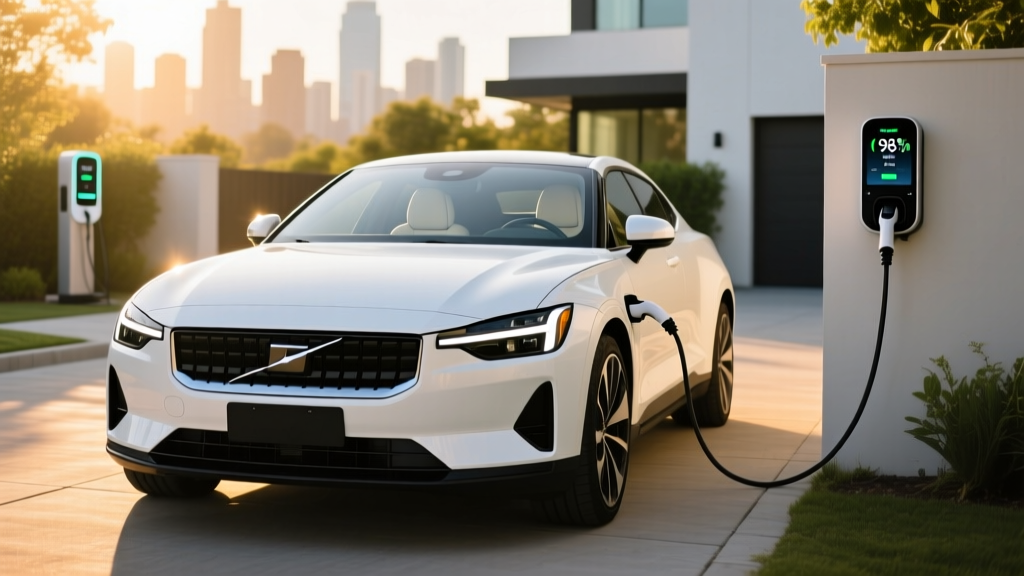
The Polestar 2 occupies a specific niche in the premium electric sedan market: Scandinavian design, Google-powered tech, and a driving experience that leans sporty. But for buyers spending $50,000+ on an EV, the question that ultimately matters isn't how fast it launches — it's whether the car will hold up over five, eight, or ten years of ownership. Polestar 2 reliability has been a moving target since the car's 2021 U.S. debut, evolving through software updates, hardware revisions, and a significant 2024 model-year refresh that swapped the powertrain layout entirely.
This review examines the Polestar 2 through the lens of long-term dependability, real-world range, charging practicality, and total ownership cost — the metrics that matter once the honeymoon phase ends.
2026 Polestar 2: Quick Spec Reference
| Spec | Standard Range (RWD) | Long Range (RWD) | Long Range Dual Motor (AWD) |
|---|---|---|---|
| EPA Range | 276 mi | 320 mi | 289 mi |
| Battery (usable) | 69 kWh (LFP) | 82 kWh (NMC) | 82 kWh (NMC) |
| Horsepower | 299 hp | 299 hp | 421 hp |
| 0–60 mph | 5.9 sec | 5.9 sec | 4.3 sec |
| Drivetrain | RWD | RWD | AWD |
| Max DC Charge Rate | 135 kW | 205 kW | 205 kW |
| 10–80% DCFC Time | ~28 min | ~26 min | ~26 min |
| Level 2 Home Charge | 11 kW (~37 mi/hr) | 11 kW (~37 mi/hr) | 11 kW (~37 mi/hr) |
| EPA Efficiency | 115 MPGe | 120 MPGe | 105 MPGe |
| Base MSRP | $49,900 | $53,400 | $58,900 |
Reliability Track Record: What the Data Shows
Polestar as a brand doesn't yet have a decade of ownership data to draw from — the company launched the Polestar 2 in the U.S. for the 2021 model year. However, several data points paint a clearer picture than the brand's short history might suggest.
Platform maturity: The Polestar 2 rides on Volvo's CMA (Compact Modular Architecture) platform, shared with the Volvo XC40 Recharge and C40 Recharge. This isn't a ground-up startup skateboard — it's a proven architecture with millions of miles logged across the Volvo/Polestar ecosystem.
Early-model issues (2021–2022): The first U.S.-spec Polestar 2 models were dual-motor AWD only, using front and rear permanent-magnet synchronous motors. Early owners reported several recurring problems:
- Software glitches: The Android Automotive OS infotainment system experienced freezing, rebooting, and app crashes — particularly in the first year before OTA updates stabilized the platform.
- 12V battery drain: Like many EVs, the Polestar 2's 12V auxiliary battery was prone to unexpected depletion, sometimes leaving the car unable to start even with a full high-voltage pack.
- Heat pump failures: Some 2021–2022 models experienced heat pump malfunctions that reduced cabin heating efficiency and, in cold climates, cut range by up to 15–20% beyond normal winter losses.
- Inverter replacements: A small but notable number of early dual-motor cars required inverter replacements under warranty — a costly repair outside coverage.
Post-2024 improvements: The 2024 refresh was more than cosmetic. Polestar switched the single-motor variant from front-wheel-drive to rear-wheel-drive, adopted a new generation of electric motors, and introduced the CATL-supplied 82 kWh NMC pack for Long Range trims plus a 69 kWh LFP option for Standard Range. These changes simplified the powertrain (fewer components in the RWD models) and leveraged newer, more field-tested battery cells.
JD Power and Consumer Reports: In J.D. Power's 2025 Vehicle Dependability Study, Polestar as a brand scored near the industry average — a meaningful improvement from its below-average debut. Consumer Reports has rated the Polestar 2 with average predicted reliability for the 2024–2025 model years, up from below-average marks for 2021–2022 builds.
Battery Longevity and Chemistry: LFP vs. NMC
The battery is the single most expensive component in any EV, and its degradation trajectory defines long-term reliability more than any other factor. The 2026 Polestar 2 offers two distinct chemistries depending on trim:
| Factor | LFP (Standard Range) | NMC (Long Range / Dual Motor) |
|---|---|---|
| Usable Capacity | 69 kWh | 82 kWh |
| Energy Density | Lower (heavier pack) | Higher (lighter for capacity) |
| Cycle Life | 3,000+ cycles | 1,000–2,000 cycles |
| Degradation Profile | Slower, more linear | Faster initial, then plateaus |
| Recommended SoC | Can charge to 100% daily | Best kept at 80% daily; 100% for trips |
| Cold-Weather Performance | Moderate range loss | Slightly better cold-weather retention |
The LFP (lithium iron phosphate) pack in the Standard Range trim is the reliability play. LFP cells tolerate full-charge cycles with minimal degradation, meaning owners who plug in nightly to 100% won't accelerate wear the way they would with NMC chemistry. Real-world data from fleet LFP vehicles suggests 8–10% total degradation over 150,000 miles is typical.
The 82 kWh NMC pack in Long Range and Dual Motor trims offers more range and better cold-weather performance, but NMC chemistry prefers partial state-of-charge cycling. Daily charging to 80% with occasional 100% fills for road trips will yield the best longevity. Expect roughly 10–12% degradation over 150,000 miles with responsible charging habits.
Battery Warranty Coverage
Polestar covers the high-voltage battery for 8 years or 100,000 miles, whichever comes first, with a capacity retention threshold of 70%. If the battery drops below 70% of its original usable capacity within that window, Polestar will repair or replace it. This is industry-standard — matching Tesla, BMW, and Hyundai — though some competitors like Kia offer 10-year/100,000-mile coverage.
EPA estimate: 320 miles
Expected real-world highway (70 mph, moderate climate): ~265–285 miles
Cold-weather highway (below 32°F): ~220–250 miles
City/mixed commuting with regen: ~295–315 miles
The 320-mile EPA figure is achievable in mild conditions at city speeds. Highway driving at 75+ mph and cold temperatures significantly reduce range. Plan road-trip charging stops at ~200-mile intervals in winter for comfort.
Charging Speed and Infrastructure
Charging speed is where the Polestar 2's competitive position gets complicated. The Long Range and Dual Motor trims peak at 205 kW on DC fast chargers — respectable, but behind the Hyundai Ioniq 5's 240 kW and the Tesla Model 3's 250 kW capability.
| Charging Level | Power | Speed (Long Range RWD) |
|---|---|---|
| Level 1 (120V household) | ~1.4 kW | ~4 miles/hour |
| Level 2 (240V home, 48A) | 11 kW | ~37 miles/hour |
| DC Fast Charge (peak) | 205 kW | 10–80% in ~26 min |
| DC Fast Charge (sustained avg) | ~130 kW | Average over 10–80% session |
Charge curve reality: The 205 kW peak only holds between roughly 10% and 35% state of charge. The rate then tapers progressively — dropping to ~150 kW by 50% SoC, ~100 kW by 65%, and slowing sharply above 80%. This is normal for NMC packs with active thermal management, but it means the full 10–80% session averages closer to 130 kW sustained. On a road trip, you'll add about 150–170 miles in a 20-minute stop.
Connector: The Polestar 2 uses the CCS1 connector for DC fast charging and J1772 for Level 2. With the industry's shift to NACS (Tesla's connector), Polestar has confirmed that 2025+ models will adopt NACS natively, and current CCS-equipped cars will gain Supercharger access via adapter. Check with your dealer for adapter availability and compatibility with your model year.
Home charging: The onboard 11 kW charger is generous — it can refill the 82 kWh pack from empty to full in roughly 7.5 hours on a 48-amp Level 2 circuit. Most owners will need a 60-amp dedicated circuit installed by a licensed electrician. Expect $800–$2,000 for a professional Level 2 home installation depending on panel capacity and run length.
Performance, Efficiency, and Practicality
The 2024 powertrain reshuffle transformed the Polestar 2's character. The switch to rear-wheel-drive for single-motor trims improved both driving dynamics and efficiency — the car feels more balanced through corners, and the RWD Long Range now achieves 120 MPGe combined (28 kWh/100mi), a meaningful improvement over the old FWD setup.
The Dual Motor AWD with the Performance Pack (Öhlins dampers, Brembo brakes, forged wheels) remains the enthusiast's pick: 421 hp, 4.3-second 0–60, and a chassis that communicates through the steering wheel in a way most EVs don't. But the Performance Pack adds $5,500 and drops range to 289 miles.
Cargo and Interior Space
Practicality is where the Polestar 2 shows its sedan limitations compared to crossover rivals:
- Rear cargo (hatchback): 14.4 cu ft (seats up) / 37.1 cu ft (seats folded)
- Frunk: 1.4 cu ft (enough for a charging cable kit and small bag)
- Rear legroom: 35.7 inches — adequate for adults, but tighter than the Tesla Model 3 (35.3 in) and noticeably less than the Hyundai Ioniq 6 (38.4 in)
- Front headroom: 40.3 inches — generous, even with the panoramic glass roof
The hatchback liftgate is a practical advantage over traditional sedans, making it easier to load bulky items. But the Polestar 2 is not a family hauler — couples and solo commuters are the ideal demographic.
Pricing, Tax Credits, and Ownership Cost
The 2026 Polestar 2 starts at $49,900 for the Standard Range RWD and climbs to $58,900 for the Long Range Dual Motor before options. The mid-tier Long Range RWD at $53,400 is the value sweet spot — 320 miles of EPA range and the stronger NMC pack for $3,500 more than the Standard Range.
As of 2026, the Polestar 2's eligibility for the $7,500 federal EV tax credit depends on several factors that change annually:
- MSRP cap: The Polestar 2 (classified as a sedan) must be below $55,000 MSRP. The Standard Range ($49,900) and Long Range RWD ($53,400) qualify; the Dual Motor ($58,900) exceeds the cap.
- Buyer income cap: AGI must not exceed $150,000 (single) / $300,000 (joint).
- Battery sourcing: Critical mineral and battery component requirements tighten each year. Check the latest fueleconomy.gov listing for current Polestar 2 eligibility status.
- Point-of-sale transfer: Eligible buyers can transfer the credit to the dealer at purchase, reducing the out-of-pocket price immediately.
Always verify current eligibility with your tax professional and the IRS clean vehicle credits page before purchasing.
5-Year Ownership Cost Estimate (Long Range RWD)
| Category | Estimated 5-Year Cost |
|---|---|
| Purchase price (after $7,500 credit) | ~$45,900 |
| Electricity (15,000 mi/yr, $0.16/kWh avg) | ~$4,200 |
| Insurance (national avg for premium EV) | ~$12,500 |
| Maintenance (tires, cabin filter, fluid top-offs) | ~$2,800 |
| Depreciation (estimated 45% over 5 years) | ~$20,650 |
| Total 5-Year Cost | ~$86,050 |
Insurance is the Polestar 2's hidden cost. Premium EV sedans from smaller brands tend to carry higher premiums than equivalent Teslas or mainstream models — budget $200–$280/month depending on your state and driving record.
Tech, Driver Assists, and Standout Features
The Polestar 2 was one of the first vehicles to ship with Google Android Automotive OS natively — not Android Auto phone projection, but the car's actual operating system. Google Maps, Google Assistant, and the Play Store are built in. The integration is excellent: Google Maps uses the battery's state of charge, terrain, and traffic to predict range at your destination and pre-condition the battery for DC fast charging.
Pilot Pack ($3,200): Adds Pilot Assist, which provides SAE Level 2 lane centering and adaptive cruise control. It's competent for highway commuting but requires hands-on-wheel supervision at all times. This is not a hands-free system like GM's Super Cruise or Ford's BlueCruise — and it's nowhere near autonomous. The lane centering can wander on faded lane markings, and the system disengages abruptly in construction zones.
Plus Pack ($4,000): Adds the heat pump (standard on some trims), Harman Kardon audio, 360° camera, heated rear seats, and wireless phone charging. The heat pump is worth the investment alone if you live in a climate with sustained below-40°F winters — it reduces cabin heating energy draw by roughly 30%.
Notable drawbacks:
- No Apple CarPlay on early Android Automotive builds (now added via OTA, but the integration is less seamless than native CarPlay)
- Rear visibility is compromised by the thick C-pillars and small rear window — the 360° camera is nearly essential
- Ride quality on the standard 19-inch wheels is firm; the 20-inch Performance wheels make it harsh on rough pavement
- Service center network is sparse compared to Tesla or legacy luxury brands — check your nearest Polestar service point before buying
- Engaging RWD chassis dynamics
- Google Automotive OS is fast and intuitive
- Hatchback practicality in a sedan footprint
- LFP battery option offers superior cycle life
- Strong build quality and materials
- DCFC speed trails Hyundai/Kia/Tesla rivals
- Tight rear seat for a car in this price bracket
- Limited service center network
- Pilot Assist is behind GM/Ford hands-free systems
- High insurance premiums
Who Should Buy the Polestar 2?
Choose the Polestar 2 if: You want a premium EV sedan with genuine driving engagement, prefer Android/Google integration, value Scandinavian design, and your daily commute is under 80 miles round-trip with access to home Level 2 charging. The Long Range RWD at $53,400 (potentially $45,900 after tax credit) is the smartest buy.
Look elsewhere if: You need maximum DC fast-charging speed for frequent road trips (Hyundai Ioniq 5/6), require a roomy back seat for children or car seats (Tesla Model Y, Ioniq 5), want hands-free highway driving (GM Super Cruise vehicles), or don't have a Polestar service center within a reasonable drive.
Frequently Asked Questions
What is the real-world range of the Polestar 2?
The Long Range RWD's 320-mile EPA estimate translates to roughly 265–285 miles on the highway at 70 mph in moderate temperatures. In cold weather (below 32°F), expect 220–250 miles on the highway. City commuting with regenerative braking can approach the EPA figure.
How fast does the Polestar 2 charge at home and on the road?
On a Level 2 home charger (11 kW / 48A), the Long Range adds about 37 miles per hour — a full charge from empty takes ~7.5 hours. On DC fast chargers, it peaks at 205 kW and charges from 10–80% in approximately 26 minutes, though sustained average power is closer to 130 kW.
Does the 2026 Polestar 2 qualify for the $7,500 federal EV tax credit?
The Standard Range ($49,900) and Long Range RWD ($53,400) fall under the $55,000 sedan MSRP cap and may qualify, depending on battery sourcing requirements and your income. The Dual Motor ($58,900) exceeds the MSRP cap and does not qualify. Verify current eligibility on fueleconomy.gov and consult a tax professional.
Is the Polestar 2 more reliable than a Tesla Model 3?
Tesla's Model 3 benefits from a much larger production volume and longer field-history dataset. However, Tesla's panel fit, service wait times, and suspension component wear are known weak points. The Polestar 2's Volvo-derived platform has stronger build quality, but Polestar's smaller service network means longer waits if something does go wrong. Both brands rate as average in predicted reliability for recent model years.
What happens if the battery needs replacing out of warranty?
Out-of-warranty high-voltage battery replacement for the Polestar 2 is estimated at $12,000–$18,000 depending on the pack size. However, modern EV batteries rarely fail catastrophically — gradual degradation to 75–80% capacity over 150,000–200,000 miles is the norm, and the car remains fully drivable with reduced range.
How does the Polestar 2 handle in snow and ice?
The Dual Motor AWD with winter tires is genuinely capable in snow. The RWD trims rely on traction control and winter tires for grip — manageable with proper rubber, but AWD is the better choice if you regularly face unplowed roads or steep snowy grades.