Quick Verdict: The Polestar 2 in 2026
The Polestar 2 occupies a rare space in the premium EV market: it's a Scandinavian-designed, Google-powered electric fastback that undercuts German rivals on price while delivering competitive range and genuinely engaging driving dynamics. Born from the Volvo-Geely ecosystem, the Polestar 2 has matured into a refined, practical EV that rewards drivers who value build quality, minimalist tech, and real-world usability over headline-grabbing performance numbers.
For the 2026 model year, the Polestar 2 continues with the upgraded 82 kWh battery pack introduced for MY2024, offering up to an EPA-estimated 320 miles of range in the Long Range Single Motor configuration. The switch to a rear-wheel-drive base layout transformed the car's character — it's now more efficient, more engaging, and better balanced than the original front-wheel-drive version.
But how does it stack up against the Tesla Model 3, BMW i4, and Hyundai Ioniq 6 in real-world driving, charging speed, and total cost of ownership? This review covers every number that matters.
Range, Battery, and Real-World Efficiency
The 2026 Polestar 2 is available with a single 82 kWh usable battery pack (NMC chemistry — nickel manganese cobalt) across all trims. Polestar moved away from the earlier 78 kWh pack for the 2024 refresh, gaining meaningful range without increasing physical pack dimensions.
| Trim | Drivetrain | EPA Range | MPGe (Combined) | kWh/100 mi |
|---|---|---|---|---|
| Long Range Single Motor | RWD | 320 mi | 115 MPGe | 29 |
| Long Range Dual Motor | AWD | 276 mi | 100 MPGe | 34 |
| Long Range Dual Motor w/ Performance Pack | AWD | 276 mi | 98 MPGe | 34 |
Efficiency of 29 kWh/100 miles in the Single Motor is competitive with the BMW i4 eDrive40 (30 kWh/100 mi) but trails the Tesla Model 3 Long Range (25 kWh/100 mi) and Hyundai Ioniq 6 SE (24 kWh/100 mi). The Polestar 2's heavier curb weight (~4,680 lbs for the Single Motor) and less aerodynamic fastback silhouette explain the gap. You'll notice it most on long highway trips, where the efficiency penalty compounds over distance.
For authoritative efficiency data, the EPA's fueleconomy.gov side-by-side comparison confirms these figures.
Charging Speed: DC Fast Charging and Home Level 2
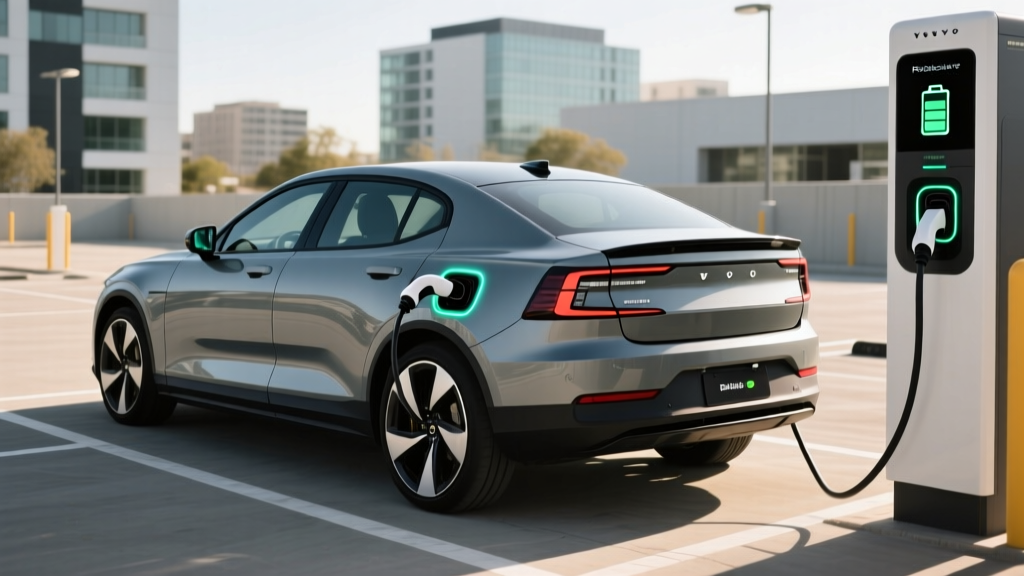
Charging speed is where the Polestar 2 delivers a meaningful upgrade over its pre-2024 predecessors. The current generation supports up to 205 kW peak DC fast charging — a substantial improvement from the original 150 kW ceiling.
| Charging Level | Power / Rate | Time / Speed | Connector |
|---|---|---|---|
| Level 1 (120V household) | ~1.4 kW | ~3–4 mi/hr | J1772 / NACS adapter |
| Level 2 (240V home/public) | 11 kW (onboard charger) | ~32 mi/hr; 0–100% in ~8 hrs | J1772 / NACS adapter |
| DC Fast Charge (peak) | 205 kW | 10–80% in ~26 min | CCS1 (NACS adapter available) |
The charging curve matters more than peak kW. The Polestar 2 hits its 205 kW peak only at low states of charge (roughly 10–25% SoC) and tapers progressively. From 50–80%, expect sustained rates closer to 80–110 kW. This means the 10–80% time of approximately 26 minutes is realistic at a 350 kW-capable Electrify America or EVgo station, but you'll see slower times on older 150 kW hardware. The taper above 80% is steep — charging from 80–100% can add another 30+ minutes, so plan your road trips around 80% stops.
At home, the 11 kW onboard AC charger is among the best in class. On a 48-amp Level 2 circuit (the most common home installation), you'll recover roughly 32 miles of range per hour of charging, or a full 0–100% charge in about 8 hours. This is faster than the BMW i4's 11 kW rate and competitive with the Tesla Model 3's 11.5 kW. An overnight charge easily replenishes a full day's driving for virtually any commute.
Important connector note: The Polestar 2 ships with a CCS1 port in North America. Polestar provides a NACS adapter for Tesla Supercharger access, and newer production runs may include a native NACS port. Always confirm connector type at purchase, as the transition is ongoing across the industry.
Performance and Driving Dynamics
The MY2024 powertrain overhaul gave the Polestar 2 a fundamentally better driving experience, and the 2026 model carries it forward. The base Single Motor now drives the rear wheels — a welcome shift from the original FWD layout — and the Dual Motor adds serious performance capability.
| Spec | Single Motor | Dual Motor | Dual Motor + Performance Pack |
|---|---|---|---|
| Horsepower | 299 hp | 421 hp | 455 hp |
| Torque | 361 lb-ft | 546 lb-ft | 546 lb-ft |
| 0–60 mph | 5.9 sec | 4.3 sec | 4.1 sec |
| Drivetrain | RWD | AWD | AWD |
| Top Speed | 100 mph (limited) | 100 mph (limited) | 127 mph |
The Single Motor's 299 hp and 5.9-second 0–60 time are more than adequate for daily driving and highway merging. The rear-drive layout gives the car a more natural, balanced feel through corners — you can feel the weight distribution advantage over the old FWD model. Steering is precise if slightly light, and the chassis tuning walks a good line between sporty and compliant.
The Dual Motor with Performance Pack (Öhlins dampers, Brembo brakes, 20-inch forged wheels) transforms the car into a legitimate sports sedan competitor. The 4.1-second 0–60 time puts it within striking distance of a BMW M340i, and the Öhlins dual-flow valves give the ride a sophistication that most EVs in this price range simply can't match. The trade-off is a firmer ride on rough pavement — those 20-inch wheels and performance tires don't absorb potholes gracefully.
Interior, Tech, and Cargo Practicality
The Polestar 2's interior is one of its strongest selling points. Materials quality is exceptional — the standard textile upholstery (a wool-blend WeaveTech) feels premium and is more sustainable than traditional leather. The optional Nappa leather package adds ventilated seats and a more traditional luxury feel. Fit and finish are Volvo-grade, which means panel gaps are tight, switchgear is solid, and nothing creaks or rattles.
Infotainment: The Polestar 2 was the first vehicle to ship with Android Automotive OS built in, and the system has matured significantly. The 11.15-inch center touchscreen runs Google Maps natively (with real-time EV routing and charger availability), Google Assistant for voice commands, and the Google Play Store for apps. Wireless Apple CarPlay is available for iPhone users who prefer their native ecosystem. The 12.3-inch digital driver display is clean and configurable, though it lacks the augmented-reality navigation found in some German rivals.
Driver Assistance: The Polestar 2 comes standard with Pilot Assist, a Level 2 SAE driver-assistance system that combines adaptive cruise control with lane-centering. It works well on divided highways but requires continuous driver supervision — this is not a hands-free system like GM's Super Cruise or Ford's BlueCruise. The system is competent but unremarkable compared to Tesla's Autopilot or the latest BMW Highway Assistant. A 360-degree camera and Park Assist Pilot are available in the Plus Pack.
Cargo and Passenger Space:
- Rear cargo (seats up): 14.4 cu ft (liftback design makes loading easier than a traditional sedan trunk)
- Rear cargo (seats folded): 37.3 cu ft
- Front trunk (frunk): 1.4 cu ft (small — fits a charging cable bag, not much else)
- Rear legroom: 34.0 inches (tight for tall adults on long trips)
- Front headroom: 40.2 inches
- Rear headroom: 37.0 inches (the sloping roofline cuts into space for passengers over 6 feet)
The liftback design is a practicality win — the large hatch opening swallows bulky items that wouldn't fit through a conventional sedan trunk. However, rear seat space is the Polestar 2's clear weakness versus competitors. The Tesla Model 3 offers 35.3 inches of rear legroom, and the Hyundai Ioniq 6 provides 35.4 inches. If you regularly carry adults in back, test-fit your passengers before committing.
Pricing, Trims, and Federal Tax Credit Eligibility
The 2026 Polestar 2 lineup is structured around three configurations, with optional packages that add meaningful content without forcing you into a higher trim.
| Trim | Base MSRP | As-Tested (w/ Popular Packs) | Est. Federal Credit (§30D) | Effective Price |
|---|---|---|---|---|
| Long Range Single Motor | $49,900 | $54,400 (Plus + Pilot) | Up to $7,500* | From ~$42,400* |
| Long Range Dual Motor | $53,900 | $58,400 (Plus + Pilot) | Up to $7,500* | From ~$46,400* |
| Dual Motor + Performance Pack | $59,400 | $63,900 (fully loaded) | Up to $7,500* | From ~$51,900* |
*Destination charge ($1,350) not included in MSRP above. Federal tax credit eligibility depends on multiple factors — see checklist below.
Key Packages:
- Plus Pack ($3,200): Panoramic glass roof, Harman Kardon audio, 360-degree camera, heated rear seats, wireless phone charging
- Pilot Pack ($2,000): Pilot Assist with enhanced features, LED pixel headlights, 12-inch driver display upgrade
- Performance Pack ($5,500, Dual Motor only): Öhlins dampers, Brembo 4-piston front brakes, 20-inch forged alloy wheels, performance software tuning, gold seatbelts and brake calipers
- Nappa Leather Pack ($4,000): ventilated Nappa leather seats, suede headliner
Federal EV Tax Credit: §30D Eligibility Checklist
The Polestar 2 may qualify for up to $7,500 under the IRS §30D Clean Vehicle Credit, but eligibility is not guaranteed. The following requirements must all be met:
- MSRP Cap: The vehicle must have an MSRP at or below $55,000 (sedan/fastback cap). The Single Motor base and Dual Motor base qualify; a fully loaded Dual Motor with Performance Pack may exceed this cap.
- Buyer Income Cap: Modified adjusted gross income must not exceed $150,000 (single), $225,000 (head of household), or $300,000 (joint filers).
- Battery Sourcing: At least 50% of battery components must be manufactured or assembled in North America, and at least 40% of critical minerals must be sourced from the U.S. or a free-trade-agreement country (percentages increase annually). Polestar has worked to meet these thresholds, but verify current-year compliance.
- Final Assembly: The vehicle must undergo final assembly in North America. The Polestar 2 is manufactured in Luqiao, China — this is a significant concern for §30D eligibility.
- Point-of-Sale Transfer: Eligible buyers can transfer the credit to the dealer at purchase, reducing the purchase price directly rather than waiting for a tax refund.
Critical caveat: Because the Polestar 2 is built in China, it faces the final-assembly requirement hurdle. As of early 2026, Polestar has been working to shift North American-market production, but buyers must verify current eligibility through the fueleconomy.gov tax credit lookup tool and confirm with their dealer. Do not assume you will receive the full $7,500 — consult a tax professional and review the latest IRS §30D guidance before purchasing.
Ownership Costs, Warranty, and Long-Term Value
Polestar backs the 2026 Polestar 2 with a warranty package that's competitive with European rivals:
- Basic Vehicle Warranty: 4 years / 50,000 miles
- Battery & Powertrain Warranty: 8 years / 100,000 miles (covers battery capacity retention below 70% of original)
- Corrosion Warranty: 12 years, unlimited miles
- Roadside Assistance: 4 years / unlimited miles
The 70% capacity retention threshold over 8 years is standard for the industry — identical to Tesla, BMW, and Hyundai. NMC battery chemistry in the Polestar 2 has demonstrated moderate degradation in real-world use: owners typically report 5–8% capacity loss over the first 60,000 miles, based on fleet data and owner surveys. This is within expected norms for liquid-cooled NMC packs and should not meaningfully impact usability within the warranty period.
Estimated 5-Year Cost of Ownership (Single Motor, 15,000 mi/year):
- Electricity (home charging at $0.14/kWh national average): ~$3,045
- Maintenance (no oil changes, minimal brake wear from regen): ~$1,200
- Insurance (national average for Polestar 2): ~$9,500 ($1,900/yr)
- Estimated depreciation (5-year): ~$18,000–$22,000
- Total estimated 5-year operating cost: ~$13,745 (excluding purchase price, depreciation, and financing)
For comparison, a similarly equipped BMW 330i xDrive would cost approximately $7,800 in fuel alone over the same period (at $3.50/gal, 28 MPG combined). The EV's electricity savings of ~$4,755 partially offset its higher purchase price and insurance premiums.
Polestar 2 vs. Key Competitors
| Spec | Polestar 2 LR SM | Tesla Model 3 LR | BMW i4 eDrive40 | Hyundai Ioniq 6 SEL |
|---|---|---|---|---|
| EPA Range | 320 mi | 363 mi | 301 mi | 361 mi |
| Battery (usable) | 82 kWh (NMC) | 79 kWh (NMC) | 81.5 kWh (NMC) | 77.4 kWh (NMC) |
| Peak DC Charge | 205 kW | 250 kW | 205 kW | 235 kW |
| 10–80% Time | ~26 min | ~22 min | ~29 min | ~18 min |
| 0–60 mph | 5.9 sec | 4.2 sec | 5.5 sec | 5.1 sec |
| Base MSRP | $49,900 | $47,740 | $57,900 | $42,715 |
| Cargo (rear) | 14.4 cu ft | 23 cu ft | 16.6 cu ft | 12.3 cu ft |
| Build Origin | China | USA | Germany | South Korea |
Where the Polestar 2 wins: Build quality and materials, standard Android Automotive integration, Öhlins/Brembo Performance Pack option, Scandinavian design distinction, and liftback practicality. It's the driver's choice for someone who values chassis feel and interior ambiance over maximum range or tech spectacle.
Where it loses: Rear seat space (tightest in this group), efficiency (highest kWh/100 mi), DC charging speed (slowest 10–80% time), and tax credit eligibility uncertainty due to Chinese assembly. The Tesla Model 3 and Hyundai Ioniq 6 both offer substantially more range and faster charging at lower prices.
- Choose the Polestar 2 if: You prioritize interior quality, distinctive design, and engaging driving dynamics; you primarily commute or take moderate road trips (under 250 miles between stops); you want Android Automotive's native Google integration; you rarely carry rear-seat passengers.
- Choose the Tesla Model 3 if: Maximum range, fastest charging, Supercharger network access, and lowest price are your priorities; you want the most advanced (if controversial) driver-assist system; you need more rear-seat and cargo space.
- Choose the Hyundai Ioniq 6 if: You want the fastest 10–80% charging in the segment, strong range, and the lowest starting price; you value Hyundai's 10-year/100,000-mile powertrain warranty.
- Choose the BMW i4 if: You want a traditional luxury badge, the most refined ride quality, and don't mind paying a $5,000–$8,000 premium for it.
Pros and Cons
- Premium Scandinavian interior with sustainable materials
- Rear-drive dynamics and balanced chassis tuning
- Android Automotive OS with native Google Maps EV routing
- Öhlins/Brembo Performance Pack is genuinely exceptional
- Liftback cargo versatility (14.4 cu ft + 37.3 cu ft folded)
- Standard heat pump for cold-weather efficiency
- 11 kW AC onboard charging for fast home replenishment
- Competitive pricing vs. BMW and Mercedes EVs
- Cramped rear seat (34.0" legroom) for a car this size
- Efficiency trails Model 3 and Ioniq 6 by 15–20%
- DC charging speed (205 kW peak, ~26 min 10–80%) is midpack
- Federal tax credit eligibility uncertain due to China assembly
- Pilot Assist is competent but behind Tesla/GM/Ford in features
- Small frunk (1.4 cu ft) limits front storage
- Infotainment learning curve for non-Android users
- Resale value unproven vs. established luxury brands
Frequently Asked Questions
What is the real-world range of the 2026 Polestar 2?
The EPA rates the Long Range Single Motor at 320 miles. In real-world highway driving at 70–75 mph in mild weather (60–75°F), expect approximately 270–290 miles. In cold weather (below 32°F) at highway speeds, plan for 230–255 miles. City and suburban driving with regenerative braking can match or slightly exceed the EPA number.
How fast does the Polestar 2 charge at home and on the road?
At home on a 240V Level 2 charger (48 amps), the Polestar 2 charges at up to 11 kW, adding about 32 miles of range per hour. A full charge takes roughly 8 hours. On DC fast chargers, it peaks at 205 kW and charges from 10–80% in approximately 26 minutes at a capable station. Above 80%, charging slows significantly — avoid charging past 80% on road trips unless necessary.
Does the Polestar 2 qualify for the $7,500 federal EV tax credit?
Eligibility is uncertain and must be verified at time of purchase. The §30D credit requires North American final assembly, and the Polestar 2 is currently manufactured in China. Polestar has been working to address this, but as of early 2026, buyers should check the fueleconomy.gov tax credit tool and consult their dealer and a tax professional before relying on the credit. MSRP and income caps also apply.
Is the Polestar 2 worth buying vs. the Tesla Model 3?
It depends on your priorities. The Model 3 Long Range offers 43 more miles of EPA range, faster DC charging (~22 min vs ~26 min 10–80%), more rear-seat and cargo space, Supercharger access, and a lower starting price — making it the rational spec-sheet winner. The Polestar 2 counters with superior interior materials, a more traditional and premium cabin experience, the available Öhlins Performance Pack, and a more engaging rear-drive chassis. If you value build quality and design distinction over maximum efficiency, the Polestar 2 is compelling. If you optimize for range, charging speed, and value, the Model 3 is the stronger choice.
How reliable is the Polestar 2's battery long-term?
The 82 kWh NMC battery is liquid-cooled and backed by an 8-year/100,000-mile warranty against capacity loss below 70%. Real-world data from MY2024+ vehicles suggests 5–8% degradation over the first 60,000 miles under normal use — well within the warranty threshold. To maximize longevity, avoid routinely charging to 100% (set daily charge limits to 80–90%) and minimize repeated DC fast charging when Level 2 is available. Battery replacement cost, if ever needed out of warranty, is estimated at $12,000–$18,000 based on current NMC pack pricing, though this figure is expected to decrease as battery costs continue to fall.
Can the Polestar 2 use Tesla Superchargers?
Yes, with a NACS adapter. Polestar provides or makes available a CCS-to-NACS adapter that enables access to the Tesla Supercharger network. Confirm adapter availability and compatibility with your specific model year at purchase. The Supercharger network's reliability and coverage remain a significant advantage for road-trip charging.