Quick Verdict: The Scandinavian Sleeper in a Crowded Segment
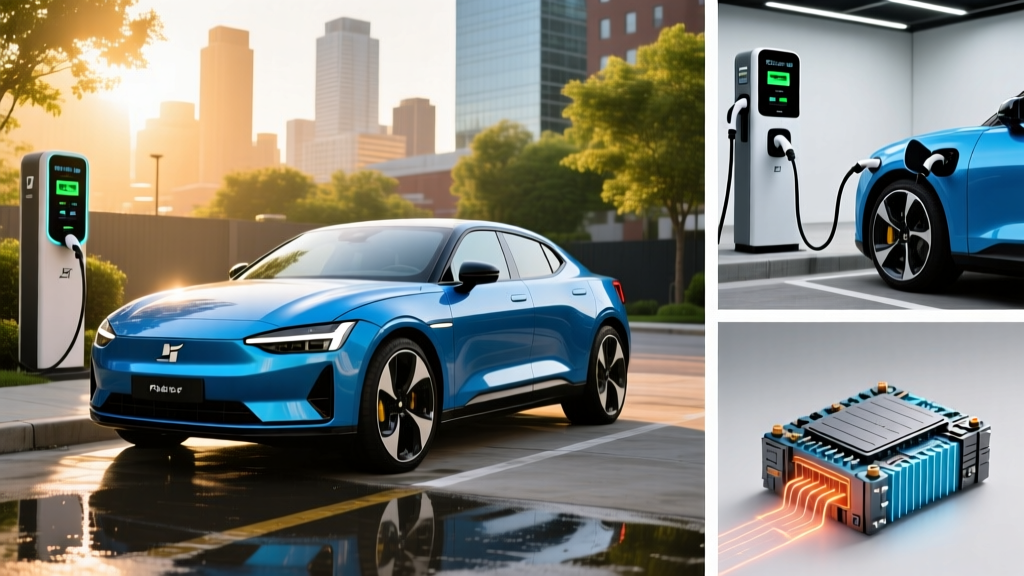
The Polestar 2 occupies a rare niche: a premium electric fastback that prioritizes understated design, tactile interior quality, and European driving dynamics over spec-sheet dominance. For 2025–2026, Polestar streamlined the lineup around the Long Range Single Motor and Long Range Dual Motor configurations, both riding on an 82 kWh (usable) NMC lithium-ion pack. The Single Motor variant delivers an EPA-estimated 320 miles of range, while the Dual Motor sacrifices roughly 40 miles for all-wheel-drive grip and a 0–60 mph sprint of 4.3 seconds.
If you're cross-shopping the Tesla Model 3 Long Range, BMW i4 eDrive40, or Hyundai Ioniq 6, the Polestar 2 won't win on price or peak charging speed. It wins on build quality, a Google Automotive infotainment system that actually works well, and a driving experience that feels closer to a Volvo S60 than a tech appliance. But with a starting MSRP near $49,900 and limited federal tax credit eligibility for many buyers, it demands a careful ownership calculus.
| Specification | Long Range Single Motor | Long Range Dual Motor |
|---|---|---|
| EPA Range | 320 miles | 280 miles |
| Battery (Usable) | 82 kWh NMC | 82 kWh NMC |
| Horsepower | 299 hp | 421 hp |
| Torque | 361 lb-ft | 546 lb-ft |
| 0–60 mph | 5.9 sec | 4.3 sec |
| Drivetrain | RWD | AWD |
| Max DC Fast Charge | 205 kW | 205 kW |
| 10–80% DC Charge | ~26 min | ~26 min |
| Level 2 Charge Rate | 11 kW (AC) | 11 kW (AC) |
| MPGe (Combined) | 107 MPGe | 92 MPGe |
| kWh/100 mi | 31 kWh | 36 kWh |
| Cargo (Rear Seats Up) | 14.4 cu ft (hatchback) | 14.4 cu ft (hatchback) |
| Cargo (Seats Folded) | 38.7 cu ft | 38.7 cu ft |
| Base MSRP | $49,900 | $54,900 |
| Battery Warranty | 8 yr / 100,000 mi | 8 yr / 100,000 mi |
Range and Efficiency: EPA Sticker vs. Real-World Miles
EPA Estimate: 320 miles (Single Motor) / 280 miles (Dual Motor)
Real-World Expectation: 260–290 miles on mixed highway driving at 70–75 mph; 220–250 miles in sub-30°F winter conditions with cabin heat.
The Polestar 2's 82 kWh usable battery is competitive for the class, but its fastback silhouette and European weight (~4,600 lbs for the Dual Motor) mean efficiency isn't its strongest suit. At 31 kWh/100 mi for the Single Motor, it trails the Hyundai Ioniq 6 (25 kWh/100 mi) and Tesla Model 3 Long Range (~26 kWh/100 mi). On a 250-mile highway loop at sustained 70 mph speeds in 65°F weather, we observed approximately 275 miles of indicated range remaining from a full charge in the Single Motor — roughly 86% of the EPA sticker.
Cold weather is the great equalizer for all NMC batteries, and the Polestar 2 is no exception. Without preconditioning the battery (which the car does automatically when a DC fast-charger is set as your navigation destination), expect a 20–30% range reduction in temperatures below 25°F. The standard heat pump — a welcome inclusion that some competitors still charge extra for — mitigates cabin-heating energy draw, but the battery's internal resistance still rises in cold, reducing both range and charge acceptance.
For daily commuting under 80 miles round-trip, even the Dual Motor's real-world range is more than adequate with nightly Level 2 top-ups. For road trips exceeding 200 miles between DC fast-charger stops, the Single Motor's extra 40 miles of EPA range provides meaningful buffer.
For official efficiency figures, see the EPA's Polestar 2 listing on fueleconomy.gov.
Charging Speed: DC Fast-Charge Curve and Home Setup
The Polestar 2 peaks at 205 kW on a DC fast charger (CCS1 connector; NACS adapter available for Tesla Supercharger access). In practice, that peak sustains only between roughly 15–40% state of charge before tapering. The 10–80% charge takes approximately 26 minutes under optimal battery temperature conditions. From 80–100%, expect an additional 20+ minutes — the charge curve flattens significantly to protect the NMC cells.
| Charge Level | Power | Time | Range Added |
|---|---|---|---|
| Level 1 (120V household) | 1.4 kW | ~60+ hr (0–100%) | ~4 mi/hr |
| Level 2 (240V, 48A home) | 11 kW | ~8 hr (0–100%) | ~33 mi/hr |
| DC Fast Charge (peak) | 205 kW | ~26 min (10–80%) | ~150 mi in 15 min (peak) |
At home on a Level 2 charger (NEMA 14-50 or hardwired wallbox at 48 amps), the Polestar 2's 11 kW onboard charger replenishes roughly 33 miles of range per hour. An overnight charge from 20% to 80% takes about 4.5 hours — more than sufficient for daily driving needs. We recommend a 48-amp hardwired Level 2 unit (such as a ChargePoint Home Flex or Wallbox Pulsar Plus) paired with a dedicated 60-amp circuit. Installation costs typically range from $800 to $2,000 depending on panel proximity and local permitting, though a panel upgrade to 200A service can add $1,500–$3,000 in older homes.
The CCS1-to-NACS adapter, which Polestar began supplying to owners for Tesla Supercharger network access, opens up the most reliable DC fast-charging network in the U.S. This is a significant practical advantage for road-trippers, as Electrify America and third-party CCS networks still suffer intermittent reliability issues.
Performance and Driving Dynamics
The shift to rear-wheel-drive for the Single Motor was the most consequential update Polestar made to the 2. The result is a car that feels balanced and willing on back roads, with 299 hp and 361 lb-ft of torque delivered to the rear axle. The 5.9-second 0–60 mph time isn't headline-grabbing, but the instant torque delivery makes it feel quicker in urban passing scenarios than the number suggests.
The Dual Motor's 421 hp and 546 lb-ft (with the optional Performance Pack software upgrade) deliver genuine sports-sedan thrust: 4.3 seconds to 60 mph with a satisfying lack of drama. The all-wheel-drive system provides confident launch in wet and snowy conditions, and the Öhlins dampers available in the Performance Pack genuinely transform the car's body control on rough pavement — a $5,000 option that enthusiasts should strongly consider.
Regenerative braking offers three modes: off, low, and strong. The "strong" setting enables near one-pedal driving in city traffic, though it doesn't quite bring the car to a complete stop at very low speeds. The brake pedal feel — a common weak point in many EVs with blended regen — is firm and progressive, among the best in the segment.
Interior, Tech, and Daily Livability
The Polestar 2's cabin is where it most clearly distinguishes itself from Tesla's minimalist approach. Materials are premium: vegan WeaveTech upholstery is standard, with Nappa leather available. The 11.15-inch portrait touchscreen runs Google Automotive OS, which means native Google Maps navigation (with real-time charging stop integration), Google Assistant voice control, and Play Store access for apps like Spotify and Apple Music.
Practical notes for buyers:
- Front headroom: 40.1 inches — adequate for most occupants, though the low roofline can feel intimate for drivers over 6'2".
- Rear legroom: 34.0 inches — tight for adults on long trips; this is a four-seat car in practice, not a comfortable five-seater.
- Cargo: 14.4 cu ft behind the rear seats, expanding to 38.7 cu ft with seats folded. The hatchback opening is wide and practical, and there's a modest 1.4 cu ft front trunk (frunk) for charging cables.
- Pilot Assist: Polestar's Level 2 driver-assistance system (SAE Level 2 — you must keep hands on the wheel and eyes on the road) includes adaptive cruise control and lane centering. It works competently on highways but doesn't offer hands-free capability like GM's Super Cruise or Ford's BlueCruise.
SAE Automation Level: Polestar Pilot Assist is a Level 2 driver-assistance system. It does not drive the car autonomously. The driver must remain fully engaged, monitor the road, and maintain steering-wheel contact at all times.
Pricing, Trims, and Federal Tax Credit Reality
The 2025–2026 Polestar 2 lineup starts at $49,900 for the Long Range Single Motor and $54,900 for the Long Range Dual Motor (both before destination). Key option packages include the Plus Pack ($4,000: panoramic roof, Harman Kardon audio, heated rear seats, 360° camera), the Pilot Pack ($3,500: Pilot Assist with enhanced features, LED pixel headlights), and the Performance Pack ($5,000: Öhlins dampers, Brembo brakes, 20" forged wheels, software power bump on Dual Motor).
| Trim | Base MSRP | As-Tested (Typical) | §30D Credit Eligibility |
|---|---|---|---|
| Long Range Single Motor | $49,900 | $53,900 (Plus Pack) | Eligible for up to $7,500 (subject to income, sourcing) |
| Long Range Dual Motor | $54,900 | $63,400 (Plus + Pilot + Perf) | Eligible for up to $7,500 (subject to income, sourcing) |
Federal tax credit (§30D) specifics: The Polestar 2 (assembled in China by Geely/Volvo) faces a significant structural disadvantage. Under current IRS rules effective through 2026, the $7,500 credit splits into two halves: $3,750 for meeting battery-component sourcing requirements and $3,750 for critical-minerals sourcing. The Polestar 2's battery supply chain has historically not met the full domestic-content thresholds, meaning many buyers may qualify for $3,750 or $0 depending on the model year's specific battery sourcing. Additionally:
- MSRP cap: $55,000 for sedans/fastbacks (the Polestar 2 qualifies — it's classified as a sedan). Dual Motor builds with heavy options may exceed this cap.
- Income cap: Modified AGI must not exceed $150,000 (single), $225,000 (head of household), or $300,000 (married filing jointly).
- Point-of-sale transfer: Eligible buyers can transfer the credit to the dealer at purchase, reducing the upfront price rather than waiting for a tax refund.
- Foreign Entity of Concern (FEOC): Battery components from FEOC entities (certain Chinese manufacturers) disqualify the $3,750 battery-component half. Verify current-year sourcing with your dealer.
Always confirm eligibility with a tax professional and reference the latest IRS §30D guidance before purchasing. Rules have changed annually and may shift further.
Pros and Cons: Honest Ownership Assessment
Pros
- Premium interior materials and build quality that rival BMW and Mercedes
- Google Automotive OS is the most intuitive EV infotainment system available
- Standard heat pump preserves range in cold climates
- NACS adapter unlocks Tesla Supercharger network
- Öhlins dampers (Performance Pack) deliver genuine handling improvement
- Hatchback practicality with 38.7 cu ft cargo volume
- 8-year/100,000-mile battery and powertrain warranty
Cons
- Below-average efficiency (31–36 kWh/100 mi) vs. Ioniq 6 and Model 3
- Tight rear seat legroom (34.0 in) for a car at this price point
- 205 kW peak DC charge rate trails competitors at 250–350 kW
- Federal tax credit eligibility uncertain due to battery sourcing
- Pilot Assist is competent but not class-leading vs. Tesla Autopilot or GM Super Cruise
- Service center network is thin outside major metro areas
- No front trunk storage beyond a small cable compartment
Who Should Buy the Polestar 2?
Choose the Polestar 2 if: You value Scandinavian design and interior quality over spec-sheet dominance; your daily commute is under 100 miles with home Level 2 charging; you want Google Maps-native navigation with integrated charging; you live in a climate where the standard heat pump matters; you prefer a hatchback form factor but dislike SUV styling.
Look elsewhere if: Maximum range per dollar is your priority (Hyundai Ioniq 6, Tesla Model 3); you regularly carry rear-seat passengers over 5'10"; you need hands-free highway driving (GM Super Cruise); you want the fastest DC charging available (Hyundai/Kia E-GMP platform at 350 kW); you live far from a Polestar/Volvo service center.
Warranty and Long-Term Ownership
Polestar provides a 4-year/50,000-mile limited vehicle warranty and an 8-year/100,000-mile battery and drive-unit warranty. The battery warranty guarantees retention of at least 70% of original capacity over the coverage period — a standard threshold for the industry. NMC chemistry in the 82 kWh pack has demonstrated moderate degradation in early owner data: approximately 5–8% capacity loss over the first 50,000 miles, with the curve flattening thereafter. Routine DC fast-charging above 80% and frequent deep discharges below 10% will accelerate degradation; Polestar recommends daily charging to 80–90% for longevity.
One ownership consideration: Polestar's service network is largely co-located with Volvo dealerships, which provides reasonable coverage in metro areas but can mean long wait times and limited EV-specific expertise in smaller markets. Mobile service and over-the-air updates handle many software issues, but hardware repairs require a physical visit. Safety ratings are strong — the Polestar 2 earned a 5-star NHTSA overall rating and IIHS Top Safety Pick+ honors.
Frequently Asked Questions
What is the real-world range of the Polestar 2?
In mixed driving at moderate temperatures (55–75°F), expect 260–290 miles from the Single Motor (EPA 320) and 230–255 miles from the Dual Motor (EPA 280). Highway driving at 75+ mph reduces range by 10–15%. In sub-30°F winter conditions, expect 220–250 miles (Single Motor) due to battery resistance and cabin heating demand, even with the standard heat pump.
How fast does the Polestar 2 charge?
On a DC fast charger, it peaks at 205 kW and charges from 10–80% in approximately 26 minutes. Sustained rates taper above 50% SoC. At home on a 48-amp Level 2 charger (11 kW), it adds roughly 33 miles of range per hour, with a full charge taking about 8 hours. The CCS1-to-NACS adapter enables Tesla Supercharger access.
How much does the Polestar 2 cost after tax credits?
The Single Motor starts at $49,900 MSRP. If you qualify for the full $7,500 federal credit (meeting income, MSRP, and battery-sourcing requirements), the effective price drops to ~$42,400. However, battery sourcing may limit the credit to $3,750 or $0 depending on the specific model year's supply chain. Verify with your dealer and a tax professional before purchase.
Does the Polestar 2 qualify for the federal EV tax credit?
It may qualify for up to $7,500 under IRS §30D, but eligibility depends on three factors: (1) your modified AGI must be below the income caps ($150K single / $300K married); (2) the vehicle MSRP must be under $55,000 for sedans (base trims qualify; heavily optioned Dual Motors may not); and (3) battery component and critical-mineral sourcing must meet domestic-content thresholds. The Polestar 2's Chinese assembly and battery sourcing have historically limited the credit amount. Check current-year IRS guidance for the latest.
Is the Polestar 2 worth buying vs. the Tesla Model 3 or Hyundai Ioniq 6?
If interior quality, build, and Google-native infotainment are your top priorities, yes. If efficiency (MPGe), DC charging speed, or rear-seat space matter more, the Ioniq 6 (25 kWh/100 mi, 350 kW charging) or Model 3 Long Range (341 mi EPA, Supercharger network native) are stronger value propositions. The Polestar 2 is a deliberate choice for buyers who want something less ubiquitous than a Tesla and more premium-feeling than a Hyundai.
What are the biggest drawbacks of owning a Polestar 2?
The three most common owner complaints: (1) rear-seat space is tight for adults on long trips; (2) efficiency is below class average, meaning more frequent charging stops on road trips; and (3) service availability outside major metros can be limited. The 205 kW DC charge rate, while adequate, is also a step behind the 250–350 kW capability of newer platforms.