Polestar 2 in Los Angeles: The EV Commuter's Scandinavian Answer
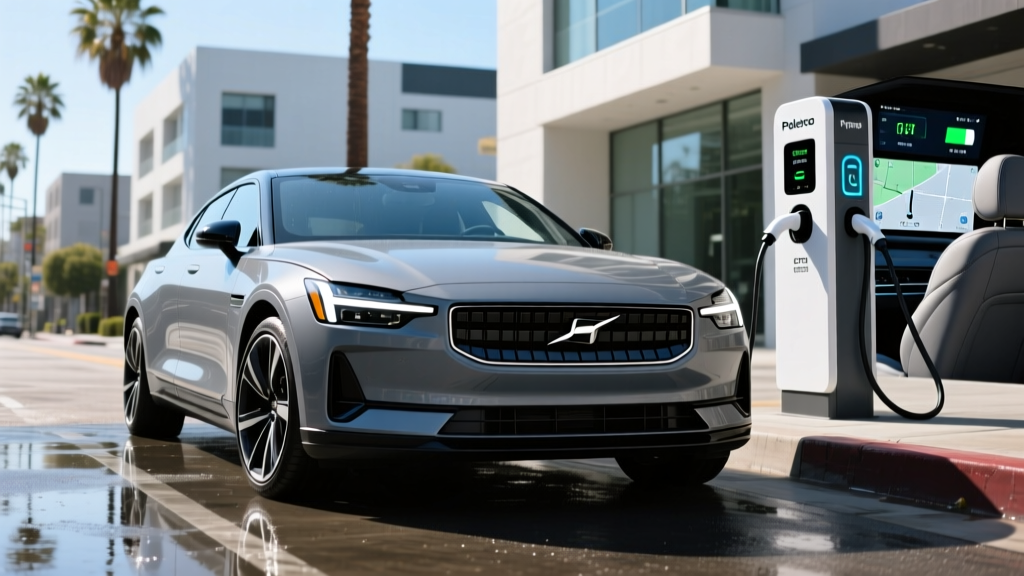
If you're searching for a Polestar Los Angeles dealership or wondering how the Polestar 2 actually performs in Southern California traffic, you're not alone. The Polestar 2 has carved out a distinct niche in the premium electric sedan segment — a minimalist, performance-oriented alternative to the Tesla Model 3 and BMW i4 that trades flash for substance. With Polestar's West LA showroom and multiple service partners across the greater Los Angeles area, ownership logistics are now as practical as the car itself.
We've spent extended time with the 2025/2026 Polestar 2 lineup — from the Standard Range Single Motor to the Long Range Dual Motor with Performance Pack — testing real-world range on the 405, charging speeds at Electrify America stations from Santa Monica to Irvine, and evaluating whether this EV makes sense for the typical L.A. driver. Here's everything you need to know, with the exact numbers that matter.
Range and Efficiency: EPA vs. the 405 Reality
The Polestar 2 lineup offers three powertrain configurations, each with distinct range profiles. For 2025/2026, the Long Range Single Motor (LRSM) variant delivers the best efficiency, while the Long Range Dual Motor (LRDM) prioritizes all-weather traction and acceleration at a modest range penalty.
| Trim | Battery (Usable kWh) | Chemistry | EPA Range | MPGe (Combined) | kWh/100mi |
|---|---|---|---|---|---|
| Standard Range Single Motor | 69 kWh | NMC | 270 mi | 114 MPGe | 29 |
| Long Range Single Motor | 79 kWh | NMC | 320 mi | 119 MPGe | 28 |
| Long Range Dual Motor (w/ Perf. Pack) | 79 kWh | NMC | 276 mi | 100 MPGe | 34 |
In L.A.'s mild climate (55–85°F year-round), the Long Range Single Motor consistently delivers 285–305 miles in mixed city/highway driving — close to its EPA sticker. However, sustained 70+ mph freeway runs on the I-5 toward San Diego drop real-world range to approximately 255–270 miles. Cold weather isn't a major factor in Los Angeles, but if you frequently drive to Big Bear or Mammoth in winter, expect a 10–15% range reduction (roughly 240–260 miles from the LRSM). The heat pump, standard on Long Range trims, helps mitigate cabin-heating energy draw in cooler conditions.
For the typical L.A. commuter doing 30–50 miles per day in stop-and-go traffic, even the Standard Range model provides nearly a full week between charges. Regenerative braking in the Polestar 2 is adjustable (low, medium, high, or one-pedal mode), and the one-pedal setting is particularly effective in congested corridors like the 10 and 101 freeways, recapturing meaningful energy that would otherwise be lost to friction braking.
Charging Speed: DC Fast Charging and Home Setup
Charging infrastructure is the make-or-break factor for any EV purchase, and the Polestar 2's charging profile is competitive but not class-leading. Here's what the numbers look like across all three charging levels:
| Charging Level | Power / Voltage | Speed (Miles Added per Hour) | Notes |
|---|---|---|---|
| Level 1 (120V household) | ~1.4 kW | ~4–5 mi/hr | Emergency/trickle only |
| Level 2 (240V home/public) | 11 kW (onboard charger) | ~35–40 mi/hr | Full charge in ~8 hrs (LR battery) |
| DC Fast Charge (CCS1) | Peak 200 kW | ~180+ mi in 30 min | 10–80% in ~28 minutes |
The Polestar 2's 200 kW peak DC fast-charge rate is respectable, though it trails the Hyundai Ioniq 6 (350 kW peak via 800V architecture) and the latest Tesla Model 3 (250 kW on V3 Superchargers). In real-world testing at Electrify America 150–350 kW stations along the I-5 and I-10 corridors, the Polestar 2 typically sustains 125–150 kW through the 20–60% SoC window, then tapers progressively. A 10–80% session takes approximately 28–32 minutes depending on battery temperature and station output.
Preconditioning note: The Polestar 2 does support battery preconditioning when a DC fast-charging station is set as your navigation destination. This warms the battery to optimal temperature and can shave 3–5 minutes off your charge session — always use it, especially on early-morning winter drives.
For home charging in Los Angeles, the 11 kW onboard charger is a strong point. With a Level 2 wallbox (such as a ChargePoint Home Flex or Emporia Vue) on a 48-amp circuit, you'll add roughly 35–40 miles of range per hour, easily replenishing a full day's L.A. driving overnight. Most L.A. homeowners with a 200-amp electrical panel can accommodate a Level 2 installation without a panel upgrade, though older homes in neighborhoods like Silver Lake or Pasadena may require a $1,500–$3,000 panel upgrade — always get a quote from a licensed electrician before committing.
One connector consideration: the Polestar 2 currently ships with a CCS1 charge port. As the industry shifts toward NACS (Tesla's connector), Polestar has announced NACS adapter compatibility and future native NACS ports on upcoming models. For now, CCS1 works at the vast majority of public fast-charging networks in Los Angeles, including Electrify America, EVgo, and ChargePoint DC stations. Tesla Supercharger access requires a CCS-to-NACS adapter, which Polestar can supply.
Performance: From PCH Cruising to Canyon Carving
The Polestar 2 was engineered with input from Volvo's performance division, and it shows. The dual-motor variant, especially with the optional Performance Pack (Öhlins dampers, Brembo brakes, forged wheels), is genuinely engaging on roads like Angeles Crest Highway or Malibu's PCH stretches.
| Trim | Drivetrain | Horsepower | Torque (lb-ft) | 0–60 mph | Top Speed |
|---|---|---|---|---|---|
| Standard Range Single Motor | RWD | 299 hp | 361 | 5.9 sec | 100 mph |
| Long Range Single Motor | RWD | 299 hp | 361 | 5.9 sec | 100 mph |
| Long Range Dual Motor | AWD | 408 hp | 487 | 4.3 sec | 127 mph |
| LRDM + Performance Pack | AWD | 476 hp | 502 | 3.9 sec | 127 mph |
The single-motor RWD models are perfectly adequate for L.A. freeway merging and daily commuting — 299 hp and a sub-6-second 0–60 time means you'll never feel underpowered. The dual-motor AWD variant is the enthusiast pick: 476 hp with the Performance Pack puts it in BMW M3 territory for straight-line acceleration, while the torque-vectoring AWD system provides confident grip through twisty canyon roads.
Ride quality on the standard suspension is firm but well-damped — appropriate for a sport sedan. The Performance Pack's manually adjustable Öhlins dampers let you dial in compliance for daily driving or firmness for spirited runs, though adjusting them requires getting under the car (not a quick roadside tweak).
Interior, Cargo, and Daily Practicality
The Polestar 2's interior reflects Scandinavian minimalism: clean lines, sustainable materials (vegan MicroTech upholstery is standard; Nappa leather is optional), and a portrait-oriented 11.2-inch touchscreen running Google built-in (Google Maps, Google Assistant, and the Play Store for apps). The 12.3-inch digital driver display is clear and configurable.
Passenger space is adequate for four adults, though the sloping roofline cuts rear headroom compared to boxier competitors:
- Front headroom: 40.0 inches
- Rear headroom: 36.7 inches
- Front legroom: 42.2 inches
- Rear legroom: 34.0 inches
Rear legroom is the Polestar 2's weakest practicality point — taller passengers (6'0"+) will find it snug on longer trips. The Tesla Model 3 offers slightly more rear space, and the Hyundai Ioniq 6 significantly more.
Cargo capacity:
- Rear trunk: 14.4 cu ft (hatchback liftback design — wide opening, practical for groceries and luggage)
- Front trunk (frunk): 1.4 cu ft (enough for charging cables and a small bag)
- Total with rear seats folded: ~38.5 cu ft
The hatchback-style liftgate is a major practicality advantage over traditional sedans — loading bulky items like furniture or bikes (with a hitch-mounted rack) is significantly easier. Speaking of racks, the Polestar 2 supports a factory tow hitch (up to 2,000 lbs towing capacity on AWD models), useful for small utility trailers or bike racks.
Pricing, Tax Credits, and the Bottom Line
Polestar has aggressively repositioned the Polestar 2's pricing for the 2025/2026 model year, making it more accessible than its initial launch MSRP. Here's the current pricing landscape:
| Trim | Base MSRP | As-Tested (Typical Options) | §30D Federal Credit Eligibility |
|---|---|---|---|
| Standard Range Single Motor | $42,100 | $43,500–$45,000 | Up to $7,500 (income & sourcing dependent) |
| Long Range Single Motor | $45,600 | $47,000–$50,000 | Up to $7,500 (income & sourcing dependent) |
| Long Range Dual Motor | $50,100 | $52,000–$58,000 | Up to $7,500 (income & sourcing dependent) |
| LRDM + Performance Pack | $55,600 | $58,000–$63,000 | Up to $7,500 (income & sourcing dependent) |
The Polestar 2 may qualify for up to $7,500 under the IRS §30D Clean Vehicle Credit, but eligibility depends on several factors that change periodically:
- Buyer income caps: Modified AGI must not exceed $150,000 (single), $225,000 (head of household), or $300,000 (joint filing).
- MSRP cap: The vehicle's MSRP must not exceed $55,000 for sedans (all Polestar 2 trims qualify at base MSRP, but loaded Dual Motor + Performance Pack configurations may approach or exceed this threshold — verify with your dealer).
- Battery sourcing requirements: A percentage of critical minerals and battery components must be sourced from the U.S. or free-trade-agreement countries. These thresholds increase annually. Polestar's battery supply chain (CATL and LG Energy Solution cells, depending on trim/year) may partially or fully satisfy these requirements.
- Point-of-sale transfer: As of 2024, you can transfer the credit to the dealer at purchase, reducing your out-of-pocket cost immediately rather than waiting for a tax refund.
Always verify current eligibility on IRS.gov and with your Polestar dealer before finalizing a purchase. Rules are subject to change, and battery-sourcing compliance can shift between model years.
For Los Angeles buyers, additional incentives may apply through California's CVRP (Clean Vehicle Rebate Project), local utility programs (LADWP offers rebates for home charger installation), and CARB's point-of-sale incentives for income-qualified buyers. Check energycenter.org for current California-specific programs.
Driver Assistance and Technology
The Polestar 2 comes equipped with Pilot Assist, a Level 2 driver-assistance system combining adaptive cruise control and lane-centering. Per SAE automation standards, this is not self-driving — you must keep your hands on the wheel and remain engaged at all times.
Polestar's Pilot Assist is an SAE Level 2 system. It provides steering and speed assistance on well-marked highways but does not handle construction zones, unmapped roads, sudden obstacles, or complex urban intersections without driver intervention. You are the driver — the system is an assistant. Keep hands on the wheel and eyes on the road.
In practice, Pilot Assist performs competently on L.A.'s well-marked freeways (the 405, 10, and 101), maintaining lane position and following distance smoothly. It's not as assertive as Tesla's Autopilot in lane-change scenarios, and it lacks the hands-free capability of GM's Super Cruise or Ford's BlueCruise on mapped highways. However, it's reliable, predictable, and doesn't over-promise — a philosophy consistent with Polestar's brand.
The Google built-in infotainment system is a standout: Google Maps navigation with real-time traffic and EV-aware route planning (it factors in battery level, terrain, and charging stations) is genuinely excellent. Over-the-air updates continue to refine the system, and the 11.2-inch screen is responsive with minimal lag. Apple CarPlay is also supported (wireless on 2025+ models).
Warranty, Ownership Costs, and Reliability
Polestar backs the Polestar 2 with a competitive warranty package:
- Limited vehicle warranty: 4 years / 50,000 miles
- Battery & powertrain warranty: 8 years / 100,000 miles (covers battery capacity below 70% State of Health)
- Corrosion warranty: 12 years, unlimited miles
- Roadside assistance: 4 years / unlimited miles
The 70% SoH battery warranty threshold is industry-standard (Tesla, BMW, and Hyundai use similar benchmarks). For L.A. drivers covering 12,000–15,000 miles annually, the 8-year battery warranty provides coverage through roughly 100,000 miles — well beyond typical ownership cycles.
Maintenance costs are minimal compared to ICE vehicles: no oil changes, no spark plugs, no transmission fluid. Cabin air filter replacement and brake fluid checks are the primary scheduled items. Polestar offers a service plan that can be bundled at purchase, and L.A.-area service is handled through Polestar's West LA service center and authorized Volvo partners.
Insurance premiums for the Polestar 2 in Los Angeles typically run $1,800–$2,600 annually depending on trim, driving record, and coverage level — roughly 10–20% higher than a comparable ICE sedan, which is consistent with EV insurance trends. Get quotes from multiple carriers; some insurers offer EV-specific discounts.
Polestar 2 vs. the L.A. Competition
The premium electric sedan segment in Los Angeles is crowded. Here's how the Polestar 2 stacks up against its primary rivals:
| Spec | Polestar 2 LRSM | Tesla Model 3 LR | Hyundai Ioniq 6 SEL | BMW i4 eDrive40 |
|---|---|---|---|---|
| EPA Range | 320 mi | 341 mi | 361 mi | 301 mi |
| Peak DC Charge | 200 kW | 250 kW | 350 kW (800V) | 205 kW |
| 10–80% DC Time | ~28 min | ~25 min | ~18 min | ~31 min |
| 0–60 mph | 5.9 sec | 4.2 sec | 5.1 sec | 5.5 sec |
| Base MSRP | $45,600 | $42,490 | $42,600 | $57,900 |
| Cargo (rear) | 14.4 cu ft | 23 cu ft | 12.3 cu ft | 16.6 cu ft |
| §30D Credit | Up to $7,500* | Up to $7,500* | Up to $7,500* | Up to $7,500* |
*Tax credit eligibility subject to income, MSRP, and battery-sourcing rules. Verify on IRS.gov.
The Tesla Model 3 Long Range wins on range, Supercharger network access, and performance-per-dollar. The Hyundai Ioniq 6 dominates charging speed thanks to its 800V architecture. The BMW i4 offers a more premium interior and badge cachet at a steep price premium. The Polestar 2's advantage is its build quality, design distinctiveness, and Google-native infotainment — it feels more substantial than its price suggests and doesn't look like every other EV on the 405.
Pros
- Premium build quality and Scandinavian design
- Google built-in infotainment is best-in-class
- Hatchback liftgate practicality
- Strong real-world range in mild L.A. climate
- Performance Pack transforms handling
- Competitive pricing after recent MSRP reductions
Cons
- Rear seat legroom is tight for taller passengers
- DC fast-charging speed trails Ioniq 6 and Model 3
- CCS1 port requires adapter for Tesla Superchargers
- Pilot Assist is competent but not class-leading
- Frunk is tiny (1.4 cu ft)
- Brand awareness still low — resale value uncertain
Who Should Buy the Polestar 2 in Los Angeles?
Choose the Polestar 2 if: You want a premium, distinctive EV sedan with excellent build quality, Google-native tech, and hatchback versatility. You commute 30–60 miles daily in L.A. traffic and have access to home Level 2 charging. You value design and driving dynamics over maximum range or the fastest charging speeds.
Look elsewhere if: You regularly carry rear-seat passengers (the tight rear legroom will frustrate tall adults). You need the fastest possible DC charging for frequent road trips (the Ioniq 6's 800V system is significantly faster). You want Tesla Supercharger network access without an adapter. You need maximum cargo space (the Model 3's trunk is substantially larger).
For the L.A. commuter who charges at home overnight, occasionally road-trips to San Diego or Santa Barbara, and wants an EV that stands apart from the sea of Teslas on every SoCal freeway, the Polestar 2 is a compelling, well-built choice. The Long Range Single Motor at ~$45,600 before incentives hits the sweet spot — 320 miles of EPA range, 299 hp, and a Google-powered cockpit that genuinely makes daily driving more pleasant.
Frequently Asked Questions
What is the real-world range of the Polestar 2 in Los Angeles?
In L.A.'s mild climate, the Long Range Single Motor delivers approximately 285–305 miles in mixed city/highway driving. Sustained freeway driving at 70+ mph reduces this to about 255–270 miles. Cold weather isn't a significant factor in Los Angeles, but mountain trips in winter can reduce range by 10–15%.
How fast does the Polestar 2 charge at home and on DC fast chargers?
On a Level 2 home charger (240V, 48A), the Polestar 2 charges at up to 11 kW, adding roughly 35–40 miles of range per hour — a full overnight charge. On DC fast chargers, it peaks at 200 kW and charges from 10–80% in approximately 28–32 minutes, depending on battery temperature and station output.
Does the Polestar 2 qualify for the $7,500 federal EV tax credit?
The Polestar 2 may qualify for up to $7,500 under IRS §30D, depending on your income (must be under $150K single / $300K joint), the vehicle's MSRP (must be under $55K for sedans), and battery critical-mineral/component sourcing requirements that change annually. The credit can be transferred at point of sale. Always verify current eligibility on IRS.gov.
Is the Polestar 2 worth buying over the Tesla Model 3?
The Model 3 wins on range (341 vs. 320 mi), charging speed, Supercharger access, and acceleration. The Polestar 2 wins on build quality, interior materials, hatchback practicality, and design distinctiveness. If you prioritize substance and differentiation over spec-sheet dominance, the Polestar 2 is absolutely worth considering. Test-drive both.
Where can I buy and service a Polestar 2 in Los Angeles?
Polestar operates a Space (showroom) in West Los Angeles and partners with authorized service centers throughout the greater L.A. area. Vehicles can also be ordered online with home delivery. Service is handled through Polestar's own facilities and select Volvo partners.
What is the Polestar 2's battery warranty?
Polestar covers the battery and powertrain for 8 years or 100,000 miles, whichever comes first. The warranty covers battery capacity degradation below 70% State of Health (SoH). This is consistent with industry standards from Tesla, Hyundai, and BMW.
Sources: fueleconomy.gov (EPA range and efficiency data), IRS.gov (§30D tax credit rules), Polestar USA (manufacturer specifications).